
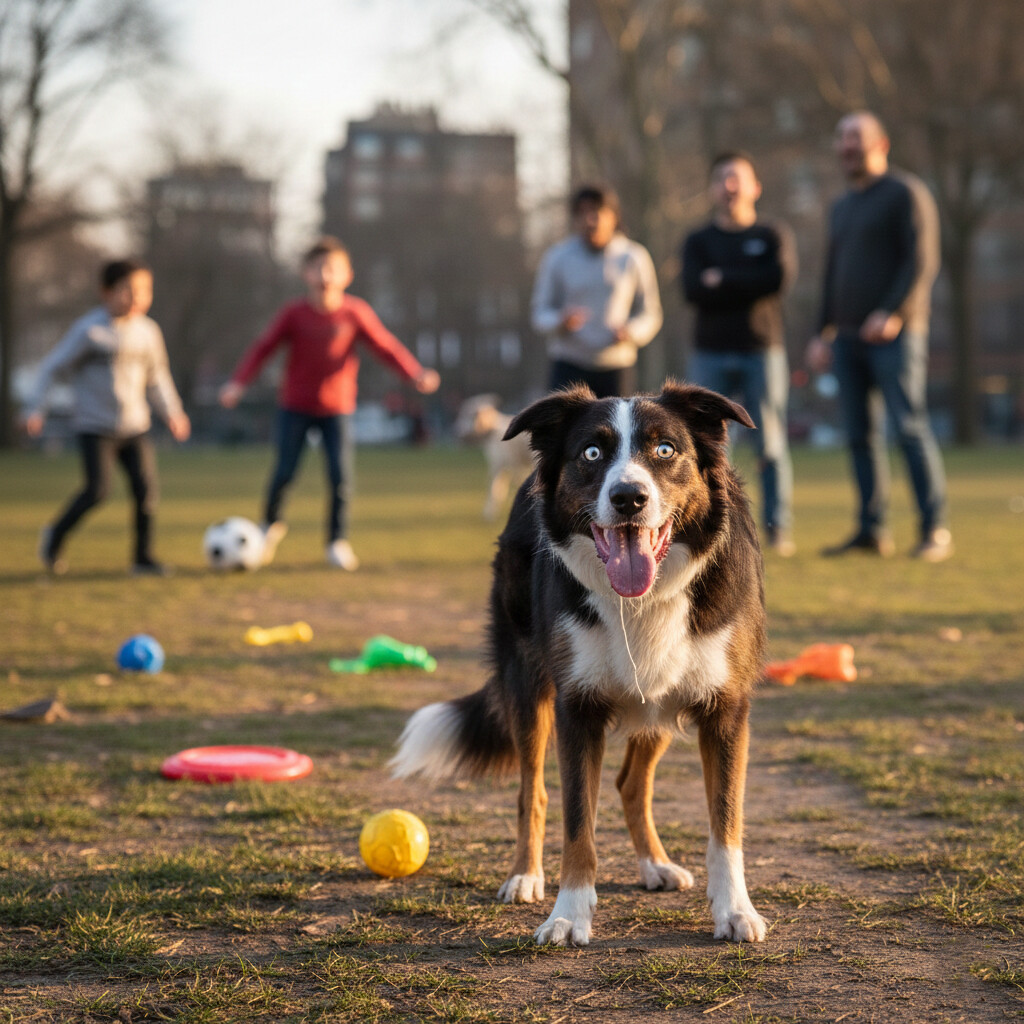
A dog is overstimulated when they are exposed to more sensory input (sights, sounds, smells, or activities) than they can process. Common signs include excessive panting, pacing, jumping/mouthing, “zoomies,” inability to focus or listen to commands, and displacement behaviors like sudden scratching or sniffing. If your dog seems “wired but tired” or hyperactive despite having exercised, they likely need a quiet break to decompress rather than more activity.
Summary Table
| Category | Common Signs | Quick Solution |
| Physical | Heavy panting, wide eyes (whale eye), shedding, lip licking. | Move to a quiet, dimly lit room. |
| Behavioral | Zoomies, mounting/humping, jumping, nipping, barking. | Offer a long-lasting chew or lick mat. |
| Focus | Sudden scratching, sniffing the ground, and yawning. | Practice “capture calm” or crate rest. |
| Displacement | Sudden scratching, sniffing the ground, yawning. | Remove the trigger or leave the environment. |
Signs Your Dog Is Overstimulated
We often think a tired dog is a happy dog. We take them for long runs, throw the ball for an hour, and send them to daycare, hoping they will come home and sleep. But sometimes, despite all the activity, your dog comes home “wired.” They might be jumping, biting at the leash, or running circles around the living room.
This is often mistaken for high energy or a lack of exercise. However, it is usually the opposite. Your dog is overstimulated.
Just like a toddler who misses a nap and has a tantrum, a dog that has had too much excitement, stress, or activity loses the ability to regulate their behavior. Recognizing the signs of overstimulation is the first step to helping your dog relax.
Read Also: Why Do Dogs Hide Their Toys?
What Is Overstimulation in Dogs?
Overstimulation happens when a dog’s threshold for sensory processing is exceeded. This can be caused by excitement (like playing fetch) or stress (like a crowded vet waiting room).
When a dog is overstimulated, their body is flooded with cortisol and adrenaline (stress hormones). Once these levels get too high, the dog enters a “fight, flight, or freeze” mode. They physically cannot calm down until those hormone levels drop, which takes time and a quiet environment.
Common Triggers
- Dog parks or daycare
- High-intensity games like fetch or tug
- Crowded places or loud noises (thunder, fireworks)
- Rough play with other dogs
- New environments with strong smells
Physical Signs of Overstimulation
The body language of an overstimulated dog is often subtle at first. If you miss the early whispers, your dog will eventually have to shout. Look for these physical changes that indicate your dog is struggling to cope.
1. Excessive Panting
Panting is normal after exercise. However, if your dog is panting heavily while standing still, or if it is a cool day and they haven’t run much, this is a stress response. “Stress panting” often looks different than “heat panting”—the tongue may be spatula-shaped (wide at the bottom), and the corners of the mouth pulled back tight.
2. “Whale Eye” and Dilated Pupils
When a dog is overwhelmed, their eyes widen. You might see the whites of their eyes (the sclera), often called “whale eye.” Their pupils may also be large and dilated, making their eyes look black and intense. This signals high arousal and vigilance.
3. Muscle Tension and Hard Stare
A relaxed dog has a loose, wiggly body. An overstimulated dog is stiff. You might notice:
- Rigid posture
- Locked knees
- A tail held high and stiff (even if it is wagging slowly)
- Fixating on objects or people (hard stare)
4. Lip Licking and Yawning
If your dog licks their lips or yawns when they aren’t hungry or tired, it is a displacement signal. They are trying to calm themselves down in a stressful situation.
5. Excessive Shedding
Have you ever petted a dog at the vet and ended up covered in hair? Acute stress causes hair follicles to open, leading to sudden, heavy shedding.
Behavioral Signs of Overstimulation
Behavior is usually where owners notice the problem. Sadly, these behaviors are often labeled as “bad” or “naughty” when they are actually cries for help.
1. The “Zoomies” (FRAPs)
Frenetic Random Activity Periods (FRAPs), or “zoomies,” are a classic sign of overstimulation. This isn’t just happy running; it is a frantic release of built-up energy. If your dog tucks their butt and sprints wildly in circles after a bath or a long walk, they are blowing off steam.
2. Jumping and Mouthing
When a dog’s brain is overloaded, they lose impulse control. A dog that knows how to sit politely might suddenly start jumping on you or grabbing your sleeves. This is common in puppies and adolescents. They are literally reaching out for interaction but lack the control to do it gently.
3. Humping or Mounting
This is rarely sexual in nature. Humping is a common displacement behavior. It happens when a dog is so excited or anxious that they don’t know what else to do with their body. You often see this at dog parks when play gets too rough.
4. Excessive Barking or Whining
Vocalization is a release valve. If your dog starts barking at nothing or whining incessantly despite having their needs met, their arousal levels are likely through the roof.
5. Inability to Listen
If you say “Sit” and your dog looks at you blankly or ignores you completely, they aren’t being stubborn. Their brain is so busy processing the environment that they literally cannot process your command.
Displacement Behaviors: The Silent Signs
Displacement behaviors are things a dog does when they are conflicted. They want to do one thing (like run away) but feel they can’t, so they do something completely unrelated instead.
Watch for sudden:
- Scratching: Stopping to scratch their neck or side intensely.
- Sniffing: Suddenly becoming very interested in a patch of grass to avoid interacting with another dog.
- Shake-off: Shaking their whole body (like they are wet) after a tense interaction. This is actually a good sign; it means they are literally “shaking off” the stress.
Puppies vs. Adult Dogs
Overstimulation looks slightly different depending on the age of the dog.
Puppies: The Toddler Meltdown
Puppies have very low stamina for stimulation. An overstimulated puppy turns into a “land shark.”
- Signs: Biting hands/feet, growling during play, refusing to settle, frantic running.
- The Fix: Enforced naps. Puppies rarely put themselves to bed. If they get bitey, put them in their crate or pen for a nap.
Adult Dogs: The inability to Switch Off
Adults have more stamina but can still get overwhelmed.
- Signs: Pacing, hyper-vigilance (reacting to every sound), reactivity on leash (lunging at cars/dogs).
- The Fix: Decompression walks and impulse control training.
Read Also: Why Do Dogs Yawn When Not Tired?
How to Help an Overstimulated Dog
Once you realize your dog is overstimulated, you need to intervene. You cannot “train” a dog in this state because their learning brain is offline. You must manage the situation to lower their arousal.
1. Remove the Trigger
If you are at a dog park, leave. If you are playing fetch, put the ball away. You cannot calm the dog while the source of excitement is still present.
2. The “Decompression” Walk
Instead of a fast-paced walk on a short leash, go for a “sniffari.”
- Put the dog on a long leash.
- Let them sniff whatever they want (as long as it’s safe).
- Sniffing lowers the heart rate and releases soothing endorphins.
3. Licking and Chewing
Licking and chewing are natural self-soothers for dogs.
- Lick Mats: Smear peanut butter or yogurt on a silicone mat.
- Chews: Bully sticks or yak chews act like a pacifier.
- Snuffle Mats: Scattering food in a fabric mat forces them to use their nose and slow down.
4. Create a Safe Space
Sometimes the dog just needs a timeout. This isn’t a punishment; it’s a break. Put them in a crate (covered with a blanket to block visual stimuli) or a quiet room with white noise.
Prevention: The Art of Doing Nothing
In our busy world, we often forget to teach dogs how to simply be. We constantly entertain them.
Train an “Off Switch”:
- Capture Calm: Keep treats in your pocket. Whenever your dog chooses to lie down and relax on their own, quietly place a treat between their paws without saying anything. You are rewarding the choice to do nothing.
- Place Training: Teach your dog to go to a specific mat or bed and stay there until released. This gives them a clear job to do when they are overwhelmed.
When to See a Professional
If your dog is constantly overstimulated, living in a state of high arousal every day, it becomes chronic stress. This can lead to health issues and aggression.
If you notice:
- Your dog cannot settle even in a quiet house.
- They react aggressively when overstimulated.
- They are losing weight or have digestive issues from stress.
It is time to consult a certified dog trainer or a veterinary behaviorist. They can help identify if there is an underlying anxiety issue or if medication might be needed to help the dog’s brain relax enough to learn.
Conclusion
Recognizing overstimulation is a superpower for dog owners. It changes your perspective from “My dog is being bad” to “My dog is having a hard time.”
By spotting the signs early, the panting, the whale eye, the zoomies, you can step in and be the advocate your dog needs. Sometimes, the best walk is a short one, and the best game is a quiet nap.