
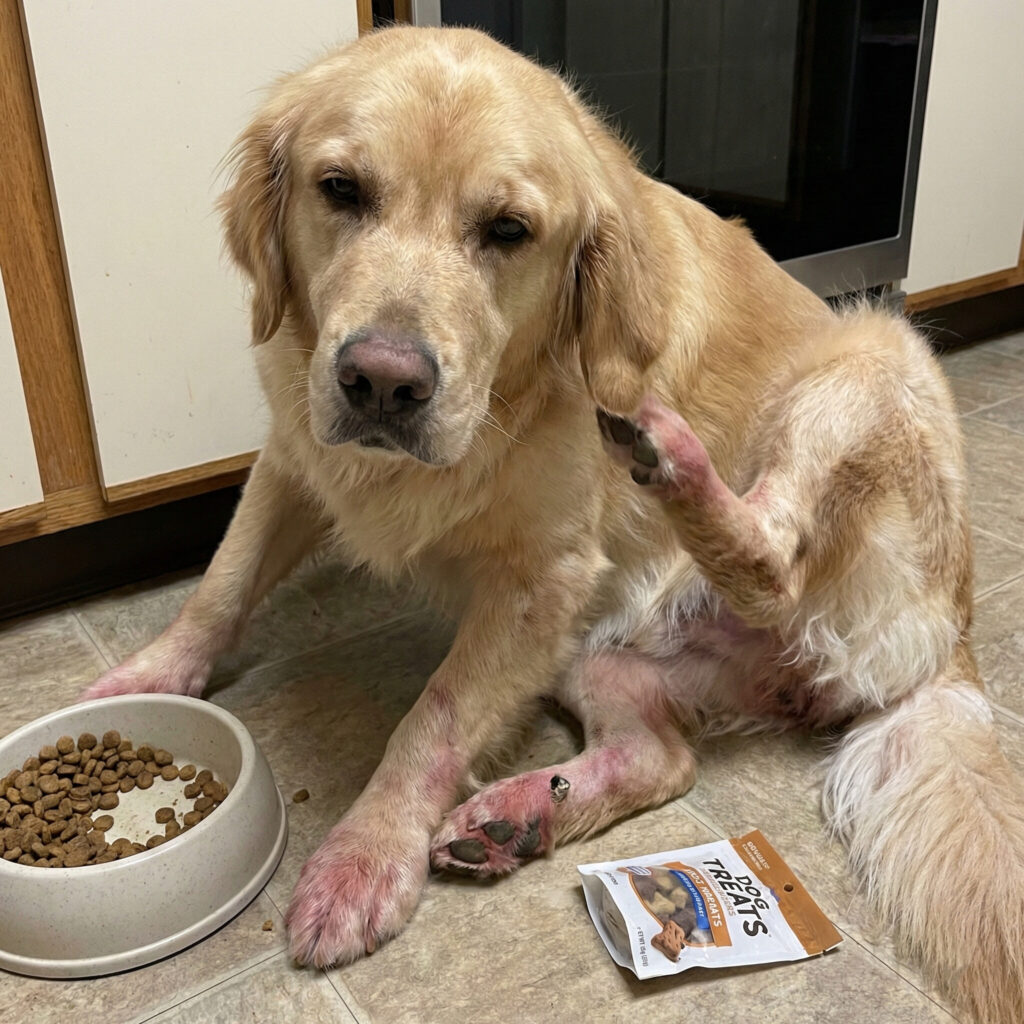
The most common signs of food sensitivities in dogs affect the skin and the digestive system. Look for persistent itching (especially around the paws, face, ears, and rear end), red or inflamed skin, hair loss, and chronic ear infections. Digestive signs include frequent vomiting, chronic diarrhea, soft stools, excessive gas, and frequent bowel movements. Unlike immediate allergic reactions, these signs usually develop gradually over time.
Summary Table
| Feature | Key Details |
| Primary Signs | Poor coat quality, scooting, low energy after eating, and behavioral changes due to discomfort. |
| Common Culprits | Often proteins like beef, dairy, chicken, lamb, or sometimes wheat and corn. |
| Diagnosis Gold Standard | An 8 to 12-week strict elimination diet trial guided by a veterinarian. |
| Difference from Allergy | True allergies are sudden immune reactions. Sensitivities are gradual, delayed reactions. |
| Treatment | Identifying and permanently avoiding the specific ingredient trigger. |
Is Your Dog’s Food Making Them Sick?
We all want our dogs to be healthy and happy. We buy them good food and expect them to thrive on it. But sometimes, the very food meant to nourish them can cause chronic health problems.
Food sensitivities (often called adverse food reactions by vets) are surprisingly common. Unlike a sudden allergic reaction to a bee sting, food sensitivities are a slow burn. The symptoms often build up over weeks or months, making it hard for a pet owner to connect the dots between the itchy skin and the kibble in the bowl.
It is painful to watch your dog constantly scratch or suffer from an upset stomach. Understanding the signs of a food sensitivity is the first step toward bringing them relief.
This guide breaks down the major indicators that your dog might be reacting negatively to their diet.
The Skin: The Biggest Indicator
The vast majority of dogs with food sensitivities show signs through their skin. If your dog is itchy, don’t just assume it is fleas or seasonal pollen. Food is a major trigger for dermatological issues.
The Itch That Won’t Quit
The hallmark sign of a food reaction is itching that doesn’t seem to have an obvious cause and happens year-round.
- Paws: Excessive licking and chewing of the feet is a classic sign. The saliva turns the fur between their pads a rust-red color.
- Face rubbing: You may see your dog rubbing their face on the carpet or couch constantly.
- Armpits and Groin: These warm areas are often intensely itchy and red.
If your dog scratches so much that they cause sores, scabs, or hair loss (alopecia), food is a likely suspect.
The “Ears and Rears” Connection
Veterinarians often look for the “ears and rears” pattern.
- Chronic Ear Infections: If your dog gets ear infections over and over, despite treatment, it is often due to an underlying food sensitivity. The food causes inflammation in the ear canal, creating a perfect environment for yeast and bacteria to grow. You might smell a foul odor or see dark discharge in the ears.
- Anal Gland Issues: Recurrent problems with anal glands, or constant “scooting” (dragging their bottom on the floor) even when their glands are empty, can indicate inflammation caused by diet.
Secondary Skin Infections
Because the dog is itchy, they scratch. Because they scratch, they break the skin. This broken skin allows bacteria and yeast to enter, causing secondary infections. These skin infections cause more itching, creating a vicious cycle.
You might see:
- Hot spots (moist, red, painful patches of skin)
- Greasy or smelly skin and coat
- Scaly or flaky patches like dandruff
The Gut: Digestive Signals
While skin issues are the most prominent sign, many dogs with food sensitivities also suffer from gastrointestinal (GI) distress. For some dogs, GI issues are the only sign.
Chronic Stomach Upset
Occasional vomiting might happen if your dog eats something off the sidewalk. However, if vomiting or regurgitation is a regular weekly occurrence, it is not normal.
Changes in Stool Quality
Your dog’s poop tells a story about their health. Watch for these signs:
- Chronic Diarrhea: Loose or watery stools that happen frequently.
- Soft Stools: Even if it isn’t full diarrhea, stools that are consistently soft or unformed can indicate gut inflammation.
- Mucus or Blood: Seeing slime (mucus) or bright red blood in the stool is a sign of irritation in the large intestine.
- Increased Frequency: A dog with food sensitivities often has to poop much more often—sometimes three, four, or more times a day.
Gas and Gurgling
Excessive flatulence (gas that clears the room) is a common sign that a dog isn’t digesting their food properly. You might also hear very loud rumbling or gurgling sounds coming from their stomach after they eat.
Other Subtle Signs
Sometimes the signs aren’t as obvious as raw skin or diarrhea. There are behavioral cues that suggest discomfort related to food.
- Lethargy after eating: If your dog seems exhausted or uncomfortable right after a meal, rather than energized, their digestion might be painful.
- Poor coat condition: A dull, brittle coat, or excessive shedding can suggest they aren’t absorbing nutrients properly due to gut inflammation.
- Behavioral changes: A dog in chronic discomfort may become irritable, anxious, or less interested in play.
Allergy vs. Sensitivity: What’s the Difference?
People often use the terms “food allergy” and “food sensitivity” interchangeably. While the symptoms look similar to those of pet owners, the biological process is different.
- True Food Allergy: This is rare. It is an immediate immune system reaction to a protein. Think of a person with a peanut allergy going into anaphylaxis. While dogs rarely get anaphylaxis from food, a true allergy usually involves sudden swelling of the face or hives.
- Food Sensitivity (Intolerance): This is much more common. It is a delayed response. It might involve the immune system, but it often involves the digestive system simply being unable to handle a certain ingredient. The reaction builds up slowly over time.
Because the symptoms overlap so much, veterinarians usually group them under the umbrella term “Adverse Food Reactions.” The treatment for both is the same: stop feeding the ingredient causing the problem.
The Usual Suspects: Common Triggers
What in the food is causing the problem? It is almost always the protein source.
Despite common marketing claims, grains like corn and wheat are less likely to cause sensitivities than animal proteins. A dog needs to have eaten an ingredient for a while to develop a sensitivity to it. Therefore, the most common ingredients in dog food are also the most common triggers.
According to veterinary studies, these are the top offenders in dogs:
- Beef
- Dairy products
- Chicken
- Wheat
- Lamb
It is rarely preservatives or artificial colors that cause the major symptoms described above, though some dogs can react to those too.
Read Also: Why Some Breeds Are More Vocal
How to Know for Sure: The Diagnosis Protocol
If you read the signs above and suspect your dog has a food sensitivity, you need a plan.
Crucial Warning: Do not waste money on saliva or hair tests sold online that claim to diagnose food allergies in dogs. Veterinary dermatologists agree these tests are highly inaccurate and a waste of money.
The only reliable way to diagnose a food sensitivity is a veterinary-guided Elimination Diet Trial.
This is a difficult process that requires 100% commitment from everyone in your household. It usually takes 8 to 12 weeks.
Step 1: The Diet Change
Your vet will prescribe a very specific food. It will usually fall into one of two categories:
- Novel Protein Diet: This food uses a protein and carbohydrate source your dog has never eaten before, such as venison and potato, or kangaroo and oats.
- Hydrolyzed Protein Diet: This is a veterinary prescription diet where the proteins have been broken down into tiny microscopic pieces so small that the dog’s immune system cannot recognize them to react against them.
Step 2: The Strict Phase
For the next 8 to 12 weeks, absolutely nothing else can pass your dog’s lips.
- No treats.
- No table scraps.
- No flavored medications (unless approved by your vet).
- No flavored toothpaste.
- No eating things off the ground outside.
If your dog eats a single chicken nugget during week six, you have to start the entire 12-week clock over again.
Step 3: Monitoring
During this time, you watch for improvement. Skin should heal, itching should stop, and stools should become firm.
Step 4: The Re-challenge
This is the step most owners skip, but it is vital. Once the dog is doing well, you must prove it was the old food causing the problem. You reintroduce the original food. If the itching or diarrhea returns within a few days to a week, you have a confirmed diagnosis of food sensitivity.
Conclusions
If you see these signs in your dog, schedule an appointment with your veterinarian. Do not try to guess and switch foods randomly. Switching from one chicken-based food to another chicken-based food won’t help if chicken is the problem.
Untreated food sensitivities lead to chronic pain, miserable itching, and expensive recurring infections. By identifying the signs early and committing to a proper diagnostic trial, you can give your dog a comfortable, itch-free life.