
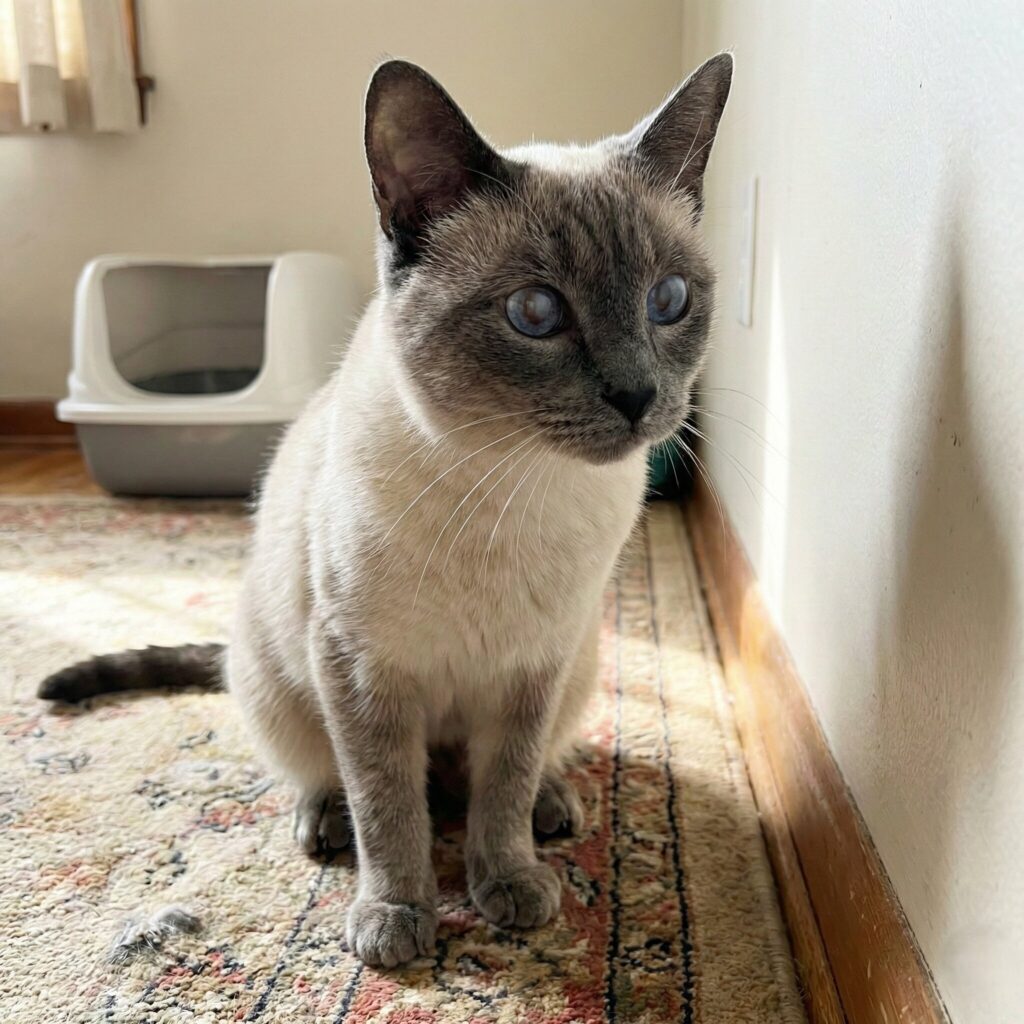
Cognitive decline in cats, often called Feline Cognitive Dysfunction (FCD), is a condition similar to dementia in humans. The most common signs follow the DISHA acronym: Disorientation, Interaction changes, Sleep-wake cycle disturbances, House soiling, and Activity level changes. If your older cat stares at walls, howls at night, or gets lost in familiar rooms, they may be suffering from cognitive decline.
Summary Table
| Key Sign (DISHA) | What to Look For | Management Strategy |
| Disorientation | Getting trapped in corners, staring at walls, forgetting door locations. | Keep furniture consistent; use nightlights; restrict access to dangerous areas. |
| Interactions | Nighttime howling (vocalization), sleeping all day, and pacing at night. | Respect their space; approach gently; use pheromone diffusers. |
| Sleep | Nighttime howling (vocalization), sleeping all day, pacing at night. | Increase daytime play; establish a calm bedtime routine; consult a vet for melatonin. |
| House Soiling | Urinating outside the box; forgetting where the box is. | Add more litter boxes; use low-entry trays; place boxes on every floor. |
| Activity | Aimless wandering, pacing, or lack of interest in toys. | Use food puzzles (simple ones); engage in gentle play; keep a strict daily schedule. |
Signs of Cognitive Decline in Cats
As cats age, their bodies change, but their brains do too. Feline Cognitive Dysfunction (FCD), often referred to as cat dementia, affects over 50% of cats aged 15 and older. It is a progressive condition where protein deposits (beta-amyloid) build up in the brain, affecting memory, learning, and awareness.
Recognizing the signs early is crucial because many of these symptoms can be managed to improve your senior cat’s quality of life.
Read Also: Cost of Care: Cat vs Dog Comparison
The DISHA Acronym: Identifying the Symptoms
Veterinarians use the acronym DISHA (sometimes DISHAA to include Anxiety) to categorize the symptoms of cognitive decline. If you notice any of these behaviors, it is time to visit the vet.
Disorientation
This is often the first sign owners notice. A cat with cognitive dysfunction may appear lost in their own home.
- Getting Stuck: They may walk into a corner or behind a chair and not know how to back out.
- Staring: You might catch them staring at walls or into space for long periods.
- Navigation Issues: They may struggle to find their food bowl or the litter box, even if it hasn’t moved.
- Door Confusion: They might wait at the hinge side of the door rather than the opening side.
Interactions
The way your cat socializes with you and other pets will change. This can manifest in two opposite ways.
- Withdrawal: A formerly friendly cat may become distant, hiding under beds or refusing to be petted.
- Clinginess: Some cats become “velcro cats,” following their male owner everywhere and becoming distressed if left alone even for a moment.
- Aggression: They may hiss or swat when touched because they are confused or do not recognize family members.
Sleep-Wake Cycle Changes
Cats are naturally crepuscular (active at dawn and dusk), but dementia drastically alters this rhythm.
- Nighttime Waking: The cat may sleep all day but wake up fully alert at 2:00 AM.
- Vocalization: This is a hallmark sign. The cat may wander the house at night, howling or crying loudly. This is often due to disorientation or anxiety caused by the darkness.
- Deep Sleep: During the day, they may find it difficult to wake up.
House Soiling
When a trained cat stops using the litter box, it is a major red flag. In FCD, this is not usually an act of rebellion but a loss of memory or control.
- Forgetting Location: They may simply forget where the box is.
- Loss of Urge: They may not realize they need to go until it is too late.
- Inappropriate Areas: You might find messes in corners, on piles of laundry, or near sleeping areas.
- Inability to Access: If the box is in a complex location (like a basement), they may be too confused to navigate the path.
Activity Level
Your cat’s general behavior and energy levels will shift.
- Aimless Wandering: They may pace back and forth in a specific pattern without any destination.
- Repetitive Motions: Licking the floor, chewing on air, or constant pacing.
- ** apathy:** A total lack of interest in toys, bird watching, or grooming (leading to a matted coat).
Anxiety
Anxiety is the final “A” often added to the list. Senior cats cope poorly with change.
- Separation Anxiety: Panic when the owner leaves the room.
- Phobias: New fears of noises or visitors.
- Restlessness: Inability to settle down comfortably.
Read Also: Cats vs Dogs: Which Is Better for Apartments?
Diagnosis: Ruling Out Other Issues
Cognitive decline is a “diagnosis of exclusion.” This means there is no single blood test for it. A veterinarian must first rule out other common senior cat diseases that mimic these symptoms.
- Hyperthyroidism: Causes increased vocalization, activity, and hunger.
- Kidney Disease: Causes house soiling and lethargy.
- Arthritis: Pain may cause aggression, house soiling (cannot climb into the box), and sleep issues.
- Hypertension (High Blood Pressure): Can cause blindness and disorientation, leading to howling.
Your vet will likely perform a physical exam, blood work (CBC and chemistry panel), urinalysis, and blood pressure checks. If these are clear, a diagnosis of Cognitive Dysfunction Syndrome (CDS) is made.
Treatment and Management
While FCD cannot be cured, you can slow its progression and manage the symptoms. The goal is to make the environment safe and predictable.
Environmental Enrichment
- Routine: Cats with dementia rely on routine. Feed them, play with them, and go to bed at the exact same time every day.
- Lighting: Use nightlights in hallways and near the litter box to help them navigate in the dark.
- Litter Boxes: Switch to low-entry litter boxes. Place one on every floor of the house so the cat never has to travel far.
- Safe Zones: If the house is too large, restrict the cat to a smaller, comfortable area with all their necessities (food, water, bed, box) easily accessible.
- Ramps: Use ramps for furniture if the cat has trouble jumping, which reduces anxiety.
Diet and Nutrition
Nutrition plays a massive role in brain health.
- Antioxidants: Diets rich in Vitamin E, Vitamin C, and beta-carotene can help fight oxidative damage in the brain.
- Omega-3 Fatty Acids: Supplements derived from fish oil (DHA and EPA) support cognitive function.
- Prescription Diets: Many vet brands offer senior diets specifically formulated for brain aging (often labeled as “Neurocare” or “Brain Protection”).
Read Also: Adaptability: Cats vs Dogs in New Environments
Medications and Supplements
Consult your vet about these options:
- Selegiline (Anipryl): A medication often used for dogs that can also help cats by increasing dopamine levels in the brain.
- Solliquin or Zylkene: Natural supplements that help reduce anxiety and promote calmness.
- Melatonin: Can help reset the sleep-wake cycle for cats that howl at night.
- Gabapentin: strict use for pain and anxiety management if arthritis is a complicating factor.
Conclusion
Seeing your cat age is difficult, but cognitive decline does not mean their life is over. By recognizing the signs of DISHA, Disorientation, Interactions, Sleep, House soiling, and Activity, you can adapt your home to meet their needs. Small changes, like adding nightlights, sticking to a routine, and visiting the vet for a proper management plan, can give your senior cat comfort and dignity in their golden years.