
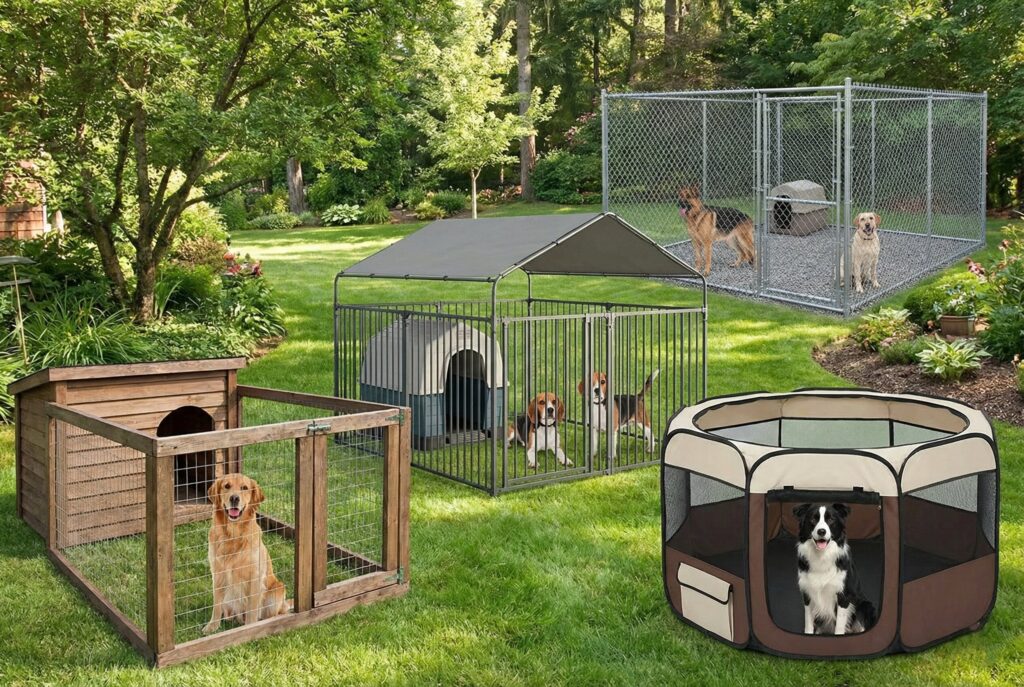
Every dog needs a safe space to enjoy the fresh air. While a fenced-in backyard is great, sometimes you need a more designated area. This is where an outdoor dog pen comes in handy. A well-designed pen provides a secure environment for your dog to relax, play, and get some sunshine without you having to worry about them wandering off or getting into trouble.
Whether you have a new puppy needing containment, a large dog that loves being outside, or you simply want to protect your garden beds, a dedicated dog run is a practical solution. It offers peace of mind for the owner and freedom for the pet.
Finding the right setup depends on your budget, your DIY skills, the size of your dog, and the layout of your yard. Some owners prefer the convenience of a ready-made kit that snaps together in an afternoon. Others enjoy the challenge of building a custom structure from scratch that matches their home’s aesthetic.
This guide covers over ten distinct ideas spanning both store-bought solutions and do-it-yourself projects. We will look at the materials, pros, and cons of each to help you decide on the best outdoor dog pen for your canine companion.
Key Considerations Before You Buy or Build
Before diving into specific designs, you must evaluate your needs. A chihuahua has vastly different containment requirements than a German Shepherd. Skipping this planning phase can lead to a wasted investment or an unsafe situation.
Sizing Requirements
The pen must be large enough for your dog to move freely. They should be able to stand up fully, turn around, lie down, and take several steps in any direction.
- Small breeds: Need less overall square footage, but tight spacing between bars.
- Large breeds: Require significant space to prevent frustration and pacing.
- Height: The fence must be tall enough that your dog cannot jump over it. For jumpers, consider a covered top.
Location and Placement
Where you put the pen is just as important as the pen itself.
- Shade: The area must have access to shade throughout the day to prevent overheating.
- Drainage: Avoid low spots in the yard where water collects. A muddy pen is messy and unhealthy.
- View: Dogs like to see what is going on. Placing them in a completely isolated corner can cause anxiety. However, too much stimulation (like facing a busy street) can cause barrier frustration and excessive barking.
Escape Prevention
Dogs are clever escape artists. You need to secure the “three dimensions” of the pen.
- Over: Ensure the fence is tall enough.
- Under: Many dogs will try to dig under the fence. You may need to bury wire mesh or use concrete pavers along the perimeter base.
- Through: Ensure the wire gauge is strong enough that a dog cannot chew through it, and the gaps are small enough that they cannot squeeze through.
Section 1: Store-Bought Outdoor Dog Pen Options
Store-bought pens offer convenience and speed. They usually come in kits with all necessary hardware. These are ideal if you aren’t confident in your carpentry skills or need a solution immediately.
1. The Modular Chain Link Kennel
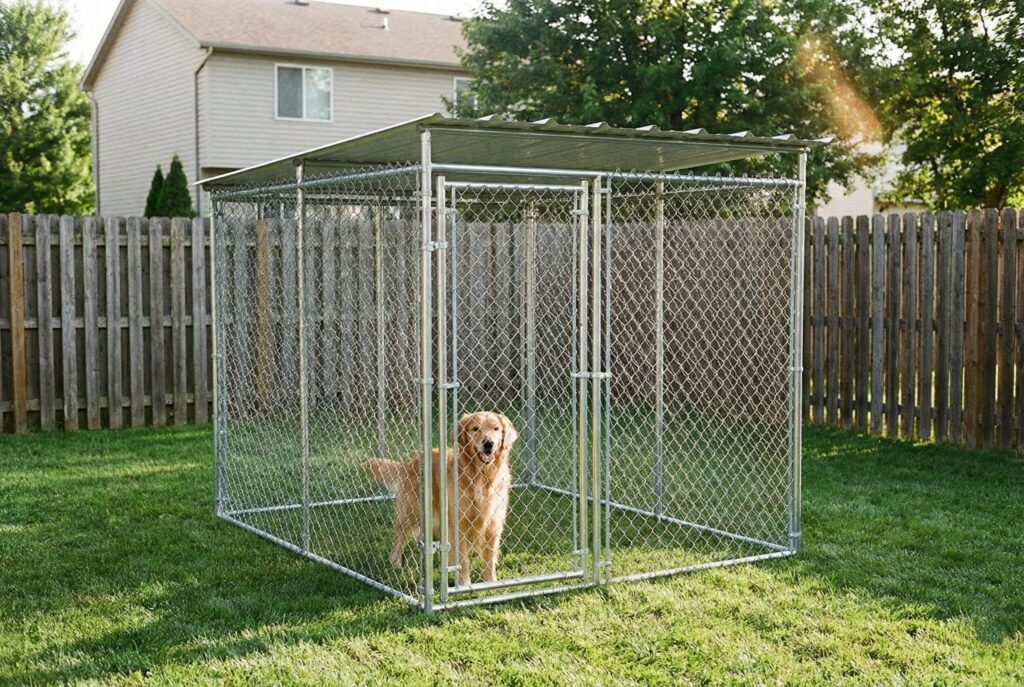
This is perhaps the most common type of backyard dog run. It consists of pre-assembled steel frames filled with chain link fabric that clamp together.
- The Good: They are durable, widely available at home improvement stores, and relatively easy to assemble with basic tools. Because they are modular, you can buy extra panels to expand the size later.
- The Bad: They are not the most attractive option. Lower-quality chain link can rust over time or be bent by very powerful dogs.
- Best For: Medium to large dogs that need a sturdy, no-nonsense containment area.
2. The Heavy-Duty Welded Wire Pen
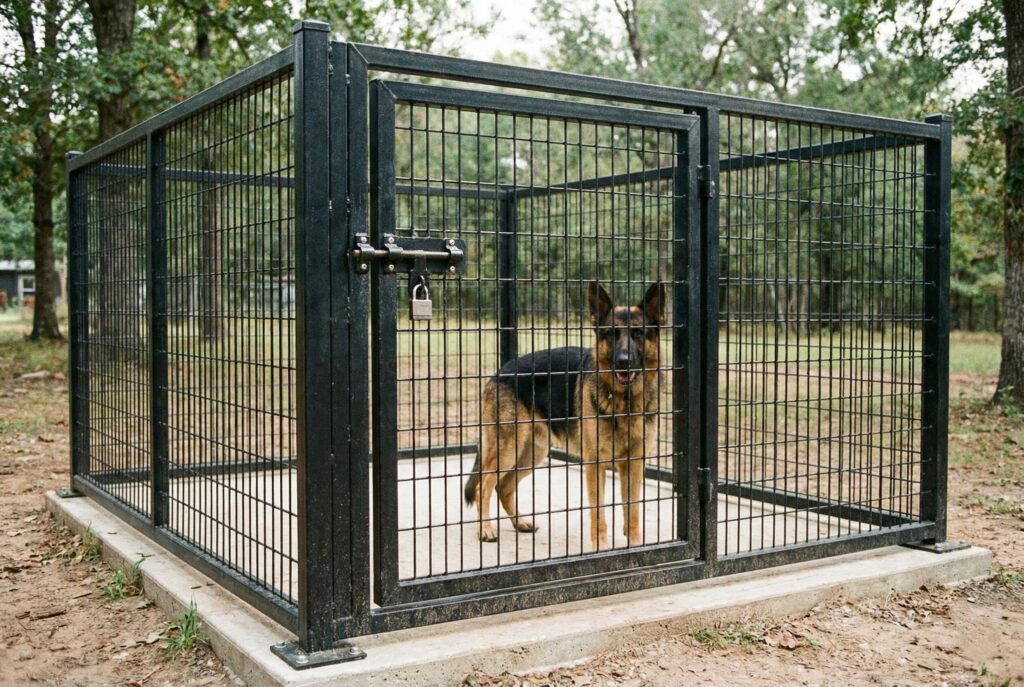
A step up from chain link, these pens use thick steel wires welded together at every intersection to form a grid. They usually have a powder-coated finish to resist rust.
- The Good: They are significantly stronger than chain link and look nicer. The welded grid is rigid, meaning a dog cannot push through it like they sometimes can with loose chain link fabric. They are very secure.
- The Bad: They are heavier and more expensive than chain link options.
- Best For: Strong dogs, large breeds, or dogs determined to chew or push their way out.
3. The Portable Metal Exercise Pen (X-Pen)
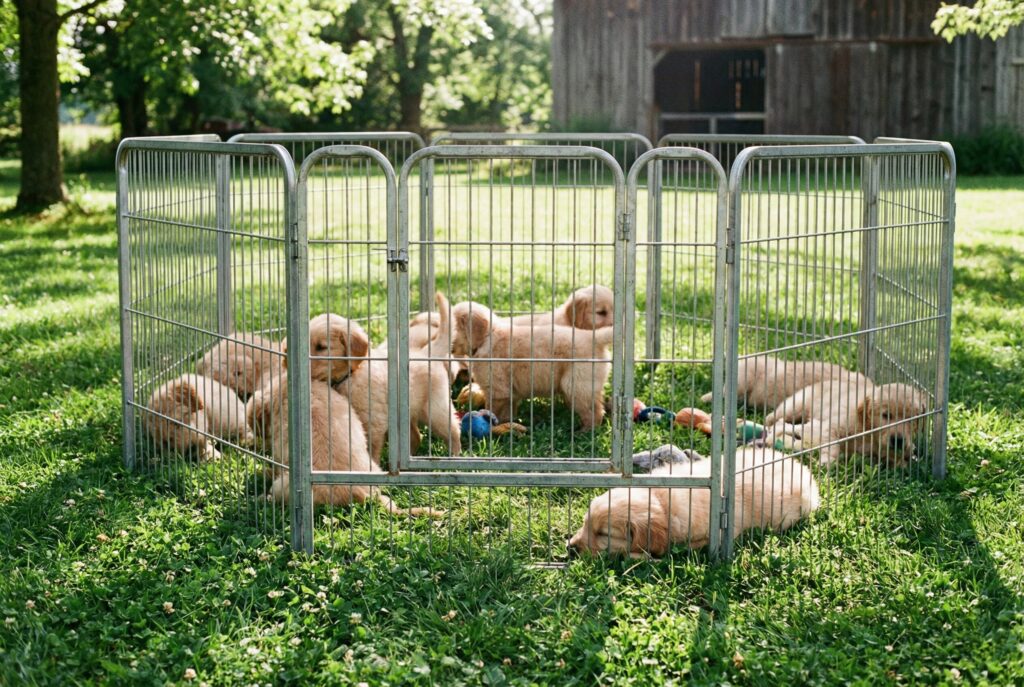
Often called an “x-pen,” these are composed of several wire panels hinged together. They can be arranged in a circle, square, or rectangle and folded flat for transport.
- The Good: Extremely portable and flexible. You can move it around the yard easily to prevent grass wear. It’s great for travel or camping. They are inexpensive.
- The Bad: They are not permanent structures. A large or determined dog can easily knock them over, jump them, or push them across the yard. They are not suitable for unsupervised, long-term outdoor use for adult dogs.
- Best For: Puppies, small dogs, temporary containment while you are gardening, or traveling.
4. The Covered Canopy Kennel
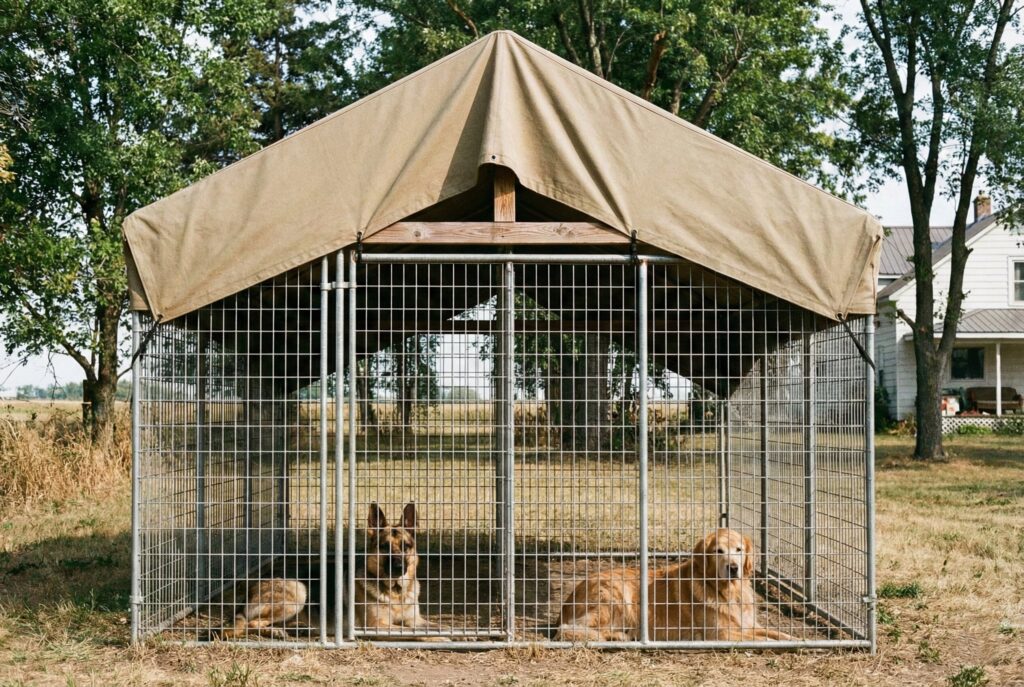
This is usually a modification of the chain link or welded wire kennel that includes a roof structure. The roof is typically a steel frame with a fitted tarp cover.
- The Good: Provides essential shade and protection from rain or light snow. It also prevents climbing dogs from escaping over the top.
- The Bad: Tarp covers eventually wear out from sun exposure and wind, and will need replacement. Heavy snow loads can collapse tarp roofs.
- Best For: Areas with hot sun, rainy climates, or canine escape artists who climb.
5. The Expandable Plastic Panel System
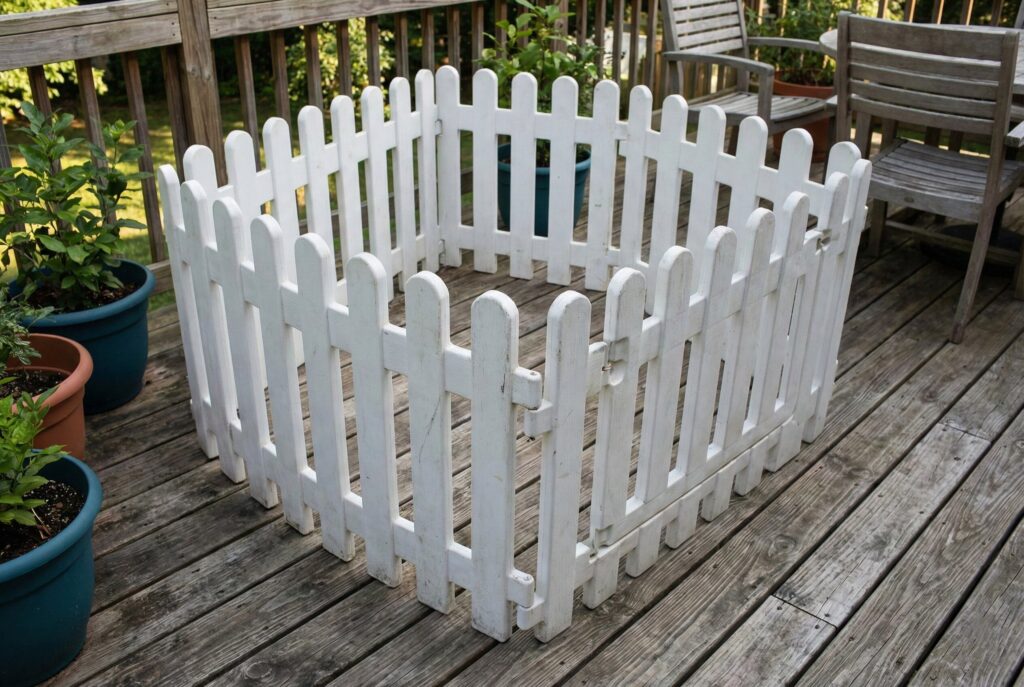
These are similar in concept to metal x-pens but are made of heavy-duty molded plastic. They snap together and are often used for indoor playpens, but they also work outdoors.
- The Good: Lightweight, easy to clean, weather-resistant (won’t rust), and often colorful. They are smooth and won’t scratch a puppy.
- The Bad: Not very tall or heavy. A medium-sized dog could easily jump out or push the panels over. Sunlight can make the plastic brittle over many years.
- Best For: Very small dog breeds or young puppies needing a temporary safe spot on the patio or grass.
Section 2: DIY Outdoor Dog Pen Projects
Building your own pen allows for complete customization. You control the materials, the size, and the final look. It often requires more effort but can save money or result in a higher-quality structure.
6. The Classic Wooden Post and Wire Fencing Run
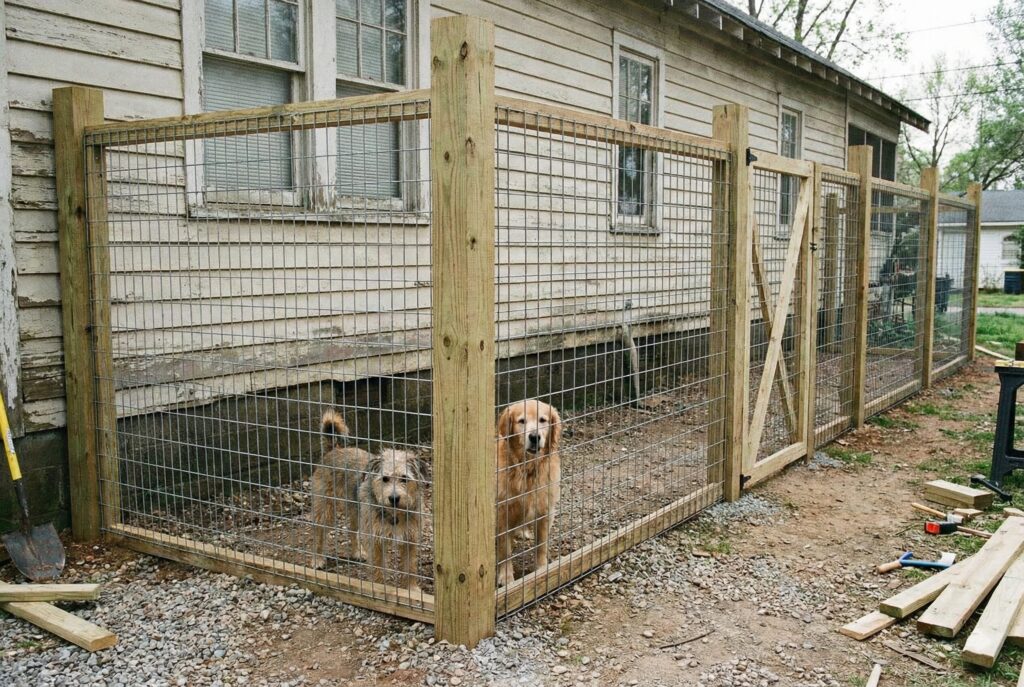
This is a permanent structure built similarly to a standard farm fence. You sink wooden 4×4 posts into the ground with concrete and attach heavy-duty welded wire fencing (like “hog wire” or horse fencing) between them.
- The Good: Very sturdy and permanent. It looks more attractive and natural than a metal cage. You can build it to virtually any size or shape to fit your yard’s landscape.
- The Bad: Requires significant labor, including digging post holes and mixing concrete. Wood requires maintenance (staining or sealing) to prevent rot.
- Best For: Homeowners who want a permanent, aesthetically pleasing dog run that blends into the landscape.
7. The Upcycled Pallet Pen
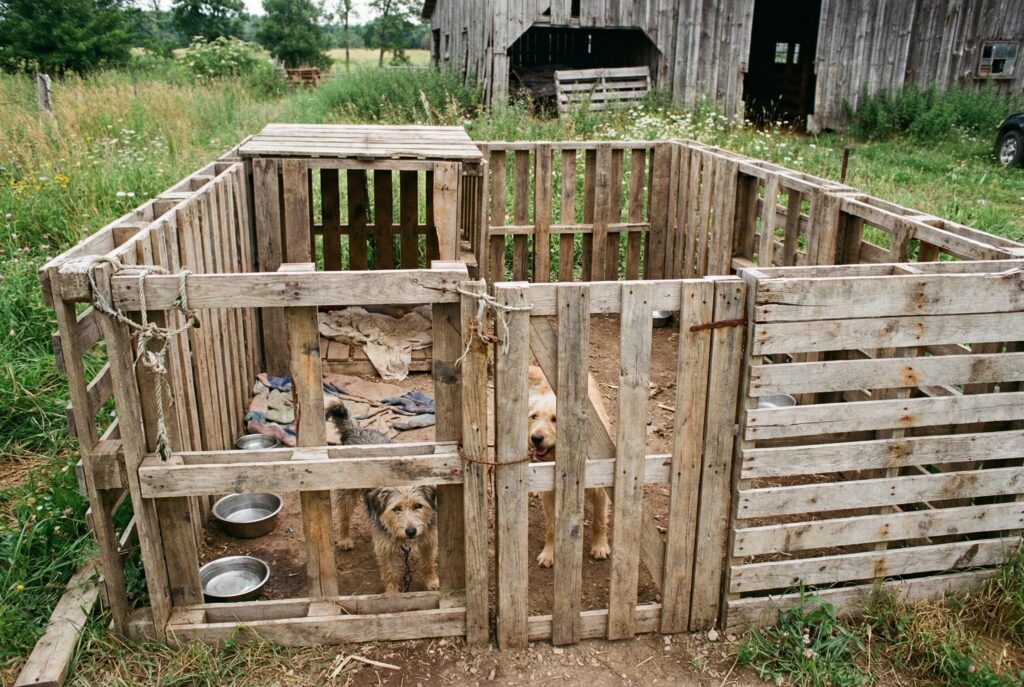
For those on a strict budget, wooden shipping pallets can be repurposed to create fences. The pallets are stood on end, joined together, and secured to posts driven into the ground.
- The Good: Extremely low cost if you can source pallets for free. It’s an eco-friendly upcycling project.
- The Bad: Pallets vary in quality and may contain splinters, nails, or chemicals. You must prepare them carefully by sanding and inspecting them. The look is rustic, which may not suit all neighborhoods. It may not be tall enough for large dogs.
- Best For: Tight budgets, crafty DIYers, and smaller dogs that don’t jump.
8. The Concrete Footer and Chain Link Run
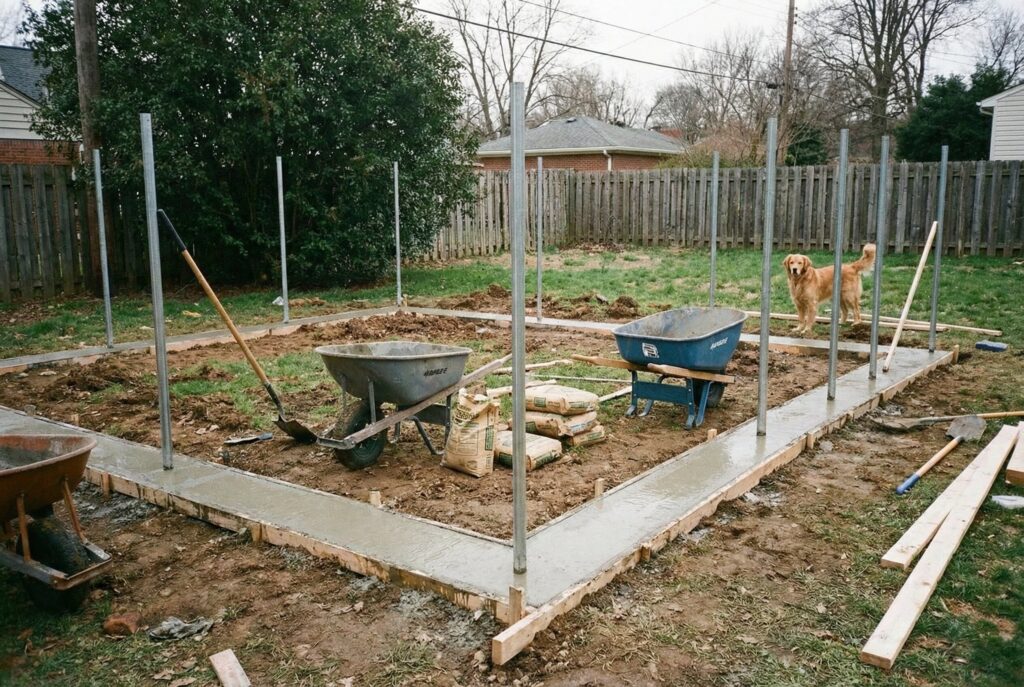
This is the ultimate escape-proof DIY project. Instead of just pounding posts in, you pour a continuous concrete footer around the perimeter of the pen area. Metal fence posts are set into this concrete, and chain link is attached.
- The Good: Impossible for a dog to dig under. Extremely durable and permanent. It is the gold standard for secure containment.
- The Bad: Most expensive and labor-intensive DIY option. It requires knowledge of concrete work. It is a permanent alteration to your property.
- Best For: High-energy diggers, escape artists, or kennel setups housing multiple dogs.
9. The “Natural Barrier” Pen
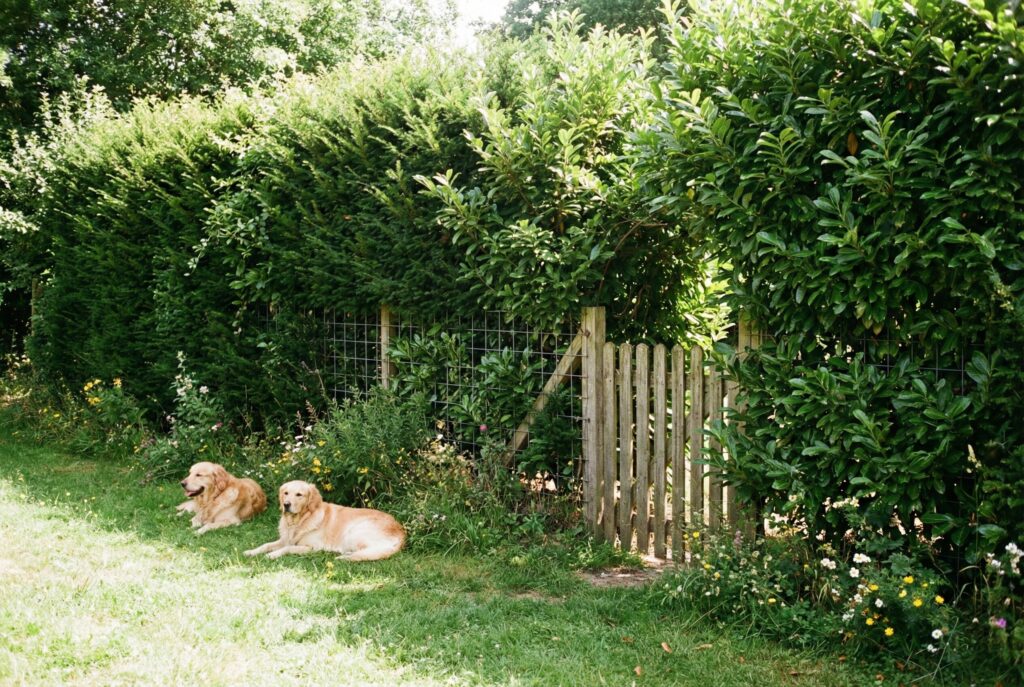
This approach uses existing landscaping features combined with fencing to create a pen. You might use the side of your house as one wall, an existing solid fence as another, and connect them with new wire fencing hidden by hedging or shrubs.
- The Good: Aesthetically pleasing, as it uses vegetation to hide the wire. It feels less like a cage and more like part of the garden.
- The Bad: It takes time for hedges to fill in. You must ensure the plants used are non-toxic to dogs. The vegetation needs regular trimming.
- Best For: Garden lovers who want the dog pen to be invisible or unobtrusive.
10. The Attached Porch or Deck Potty Pen
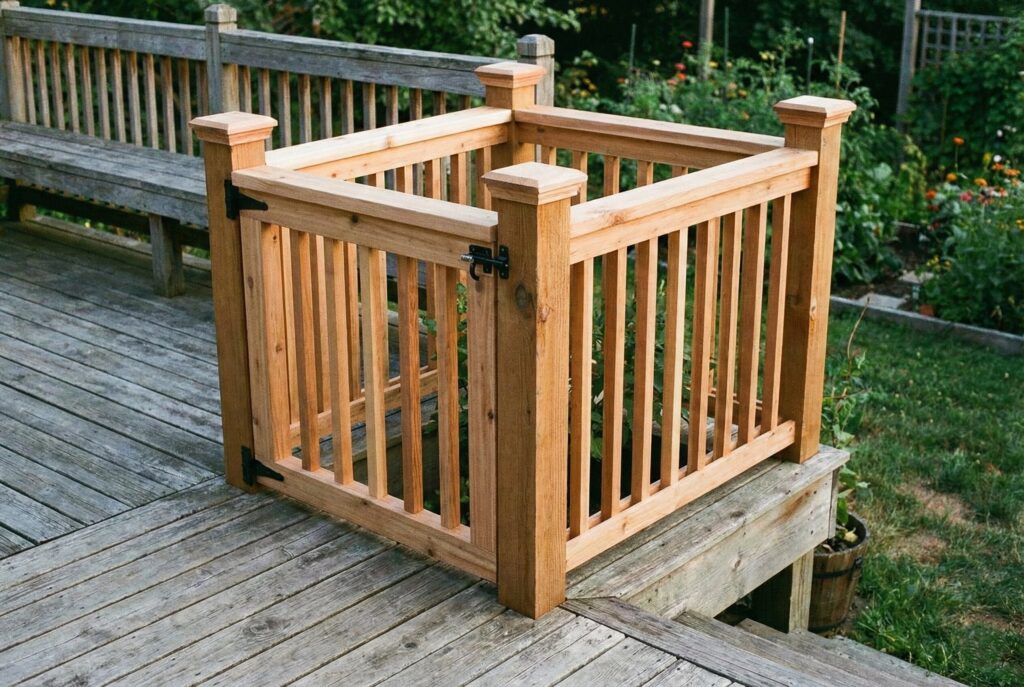
This is a smaller pen attached directly to a back door, porch, or deck. It usually involves building a small railed enclosure on an existing deck or extending a small fenced area onto the grass right off the patio steps.
- The Good: Extremely convenient for quick potty breaks, especially in bad weather or late at night. You don’t have to walk out into the yard.
- The Bad: Usually too small for real exercise. If it’s on a wood deck, you need a plan for cleaning up messes so urine doesn’t soak into the wood.
- Best For: Senior dogs, puppy potty training, or owners with limited mobility.
11. The Garage Convert
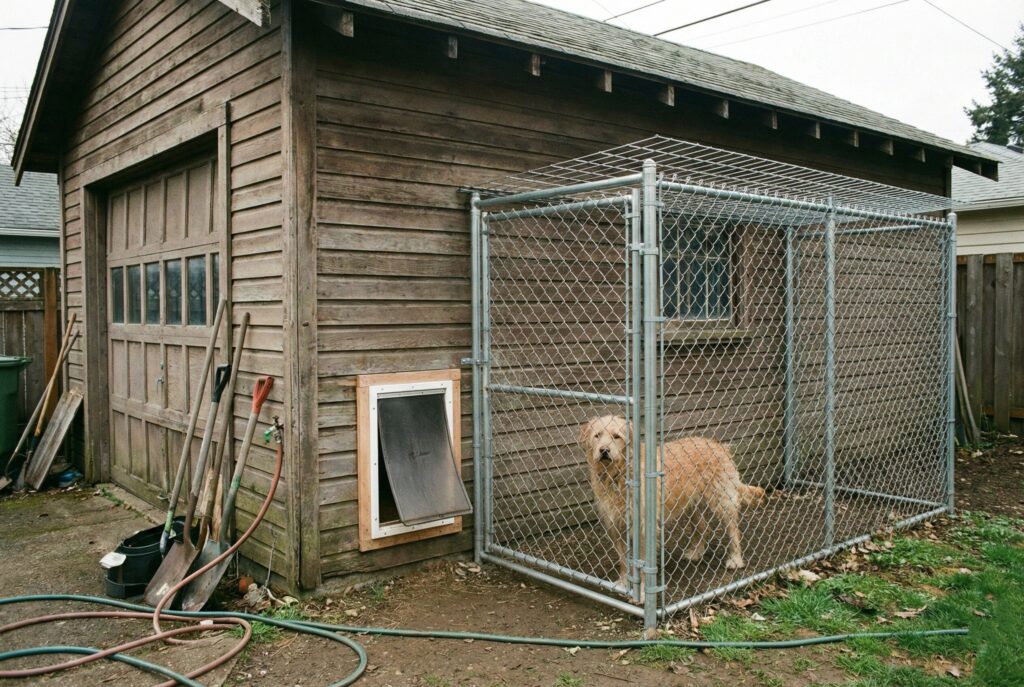
If you have an unused section of a garage with access to an exterior door, you can create an indoor/outdoor setup. You build a secure pen just outside the exterior door and install a dog door in that door.
- The Good: Gives the dog access to a climate-controlled indoor space (the garage) and fresh air outside. Excellent for all-weather use.
- The Bad: Requires cutting a hole in an exterior door for the dog flap. You lose garage storage space.
- Best For: Dogs left alone for longer periods during the workday who need shelter from extreme temperatures.
Bonus Section: Making the Pen Fun and Functional
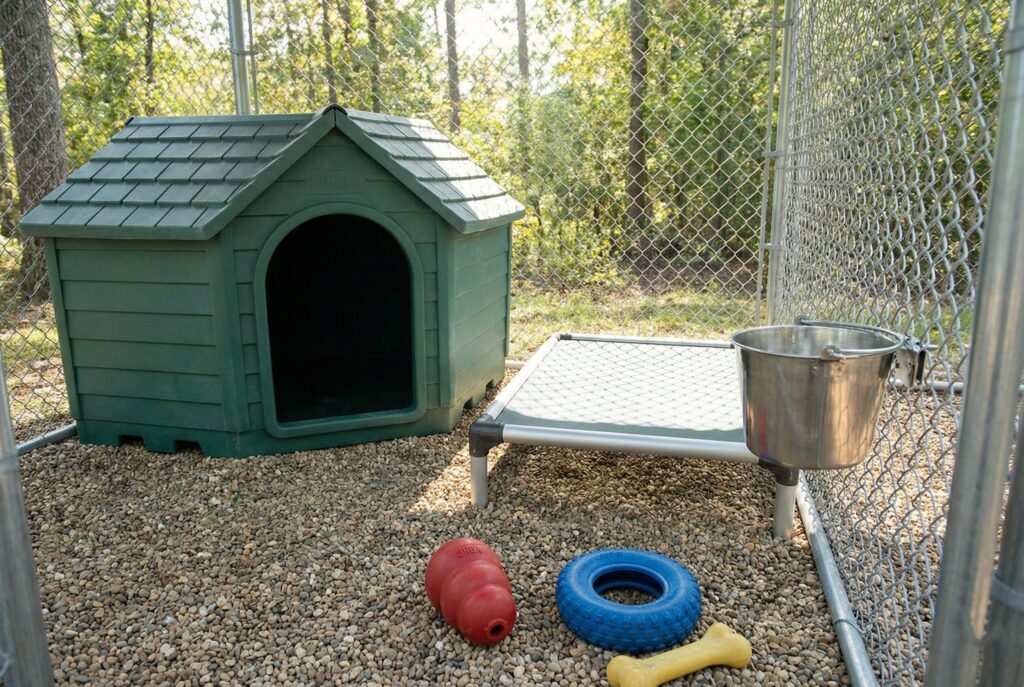
A pen should not just be a cage; it should be a comfortable environment. A bored dog in a pen will develop bad habits like barking or digging. You need to add elements of comfort and enrichment.
Essential Flooring Options
Don’t just leave it as bare dirt, which turns to mud.
- Pea Gravel: Easy to scoop waste, drains well, and discourages digging. Note: Some dogs may try to eat it.
- Concrete Pavers: Excellent for sanitation and preventing digging, but can be hot in summer and hard on joints. Better used just around the perimeter.
- Artificial Grass: Looks great, drains well, and is soft. It needs regular rinsing to prevent odors.
- Wood Chips/Mulch: Cheap and smells nice initially, but holds moisture, can harbor pests, and needs frequent replenishing. Ensure it is dog-safe wood (no cocoa mulch).
Shelter and Comfort
Even if the pen has a roof cover, a dog house inside the pen is recommended. It provides a den-like sense of security and a retreat from wind or cold drafts. Place a raised cot inside for them to lie on; elevated beds allow airflow underneath and keep them off cold or damp ground.
Enrichment Ideas
- A Digging Pit: If your dog loves to dig, give them a designated spot. Fill a small sandbox or a corner of the pen with loose sand and bury toys in it for them to find.
- Toys: Provide durable chew toys that can withstand outdoor elements.
- Water Access: Fresh water must always be available. Secure the bucket so it cannot be tipped over.
Conclusion
Choosing between a DIY project and a store-bought kennel depends on your specific needs, budget, and skill level. A store-bought welded wire kennel might be the perfect quick solution for a strong German Shepherd, while a custom-built wooden run might be the better choice for a homeowner concerned with backyard aesthetics.
Regardless of the structure you choose, remember that an outdoor pen is not a substitute for interaction, exercise walks, and time spent with the family. It is a tool to keep your dog safe when they are outdoors unsupervised. By selecting the right materials, ensuring security, and adding enrichment, you can create a backyard haven that your dog will enjoy.