
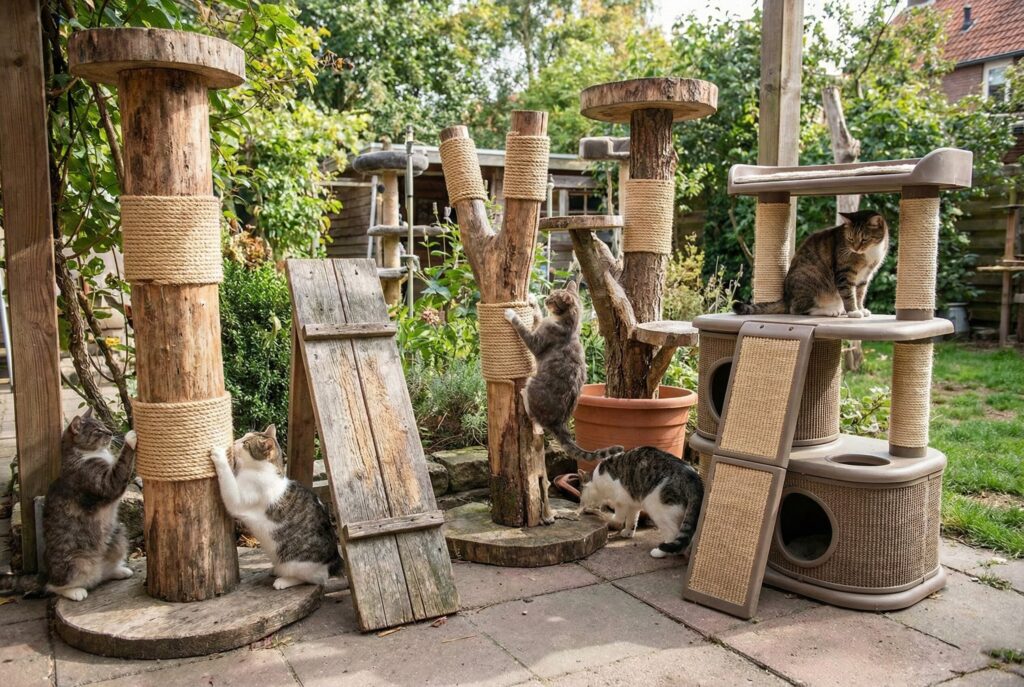
If you have an outdoor cat or a feline friend who loves spending time in an enclosed catio, you already know that scratching is a natural, unavoidable behavior. Cats scratch to stretch their muscles, shed the dead outer layers of their claws, and mark their territory using scent glands located in their paws.
However, when cats are outdoors, their scratching habits can quickly become a problem for your patio furniture, wooden fences, deck railings, and even the siding of your home. Providing a dedicated outdoor cat scratcher is the ultimate solution. It gives your cat an appropriate outlet for their instincts while saving your backyard investments.
In this comprehensive guide, we will explore everything you need to know about outdoor cat scratchers. We will cover the specific materials required to withstand the elements, review the best store-bought options on the market, and provide detailed step-by-step instructions for creative DIY outdoor cat scratchers.
Why Outdoor Cats Need Specific Scratching Furniture
You cannot simply take an indoor scratching post and place it on your lawn. Traditional indoor cat furniture is usually made with cardboard, plush carpeting, and untreated particleboard. If you leave these materials outside, they will absorb moisture from rain or morning dew. Within days, the cardboard will turn to mush, the particleboard will swell and crumble, and the carpeting will grow dangerous mold and mildew.
Outdoor cat scratchers must be built with weather-resistant materials. They need to withstand rain, extreme temperatures, and UV rays from the sun, all while remaining highly attractive to your cat. A well-designed outdoor scratching post provides essential feline enrichment, keeping your cat physically active and mentally stimulated in their outdoor environment.
Materials Matter: What Makes a Scratcher Weatherproof?
Before we look at specific products and DIY projects, it is crucial to understand which materials work best outdoors. Knowing this will help you choose the right store-bought product or select the best supplies for your DIY build.
Sisal Rope vs. Synthetic Sisal
Natural sisal rope is the gold standard for indoor scratchers because cats love the rough texture. However, natural sisal absorbs water. If placed in a fully exposed outdoor area, it will eventually rot. If you use natural sisal, the scratcher must be placed in a covered area, like under a patio roof or inside a covered catio.
For fully exposed areas, synthetic sisal or polypropylene rope is a better choice. It mimics the texture of natural sisal but is completely waterproof and resistant to rot and mildew.
Wood Choices
Untreated wood will warp and rot outdoors. For a long-lasting scratcher, look for naturally rot-resistant woods like cedar or redwood. These woods contain natural oils that repel insects and resist decay. Another option is pressure-treated lumber, which is treated with chemicals to prevent rot. If you use pressure-treated wood, you must wrap it entirely in rope so your cat does not ingest the chemicals while scratching or grooming.
The Core Structure
For the vertical post itself, PVC pipe is an excellent, fully waterproof alternative to wood. It will never rot, rust, or degrade in the rain. When weighed down properly, it provides a sturdy core for wrapping rope.
Top 5 Store-Bought Outdoor Cat Scratchers
If you prefer the convenience of purchasing a ready-made solution, the market offers several excellent weather-resistant options. Here are the top five store-bought outdoor cat scratchers, categorized by their best features.
1. The Weatherproof Synthetic Sisal Tower
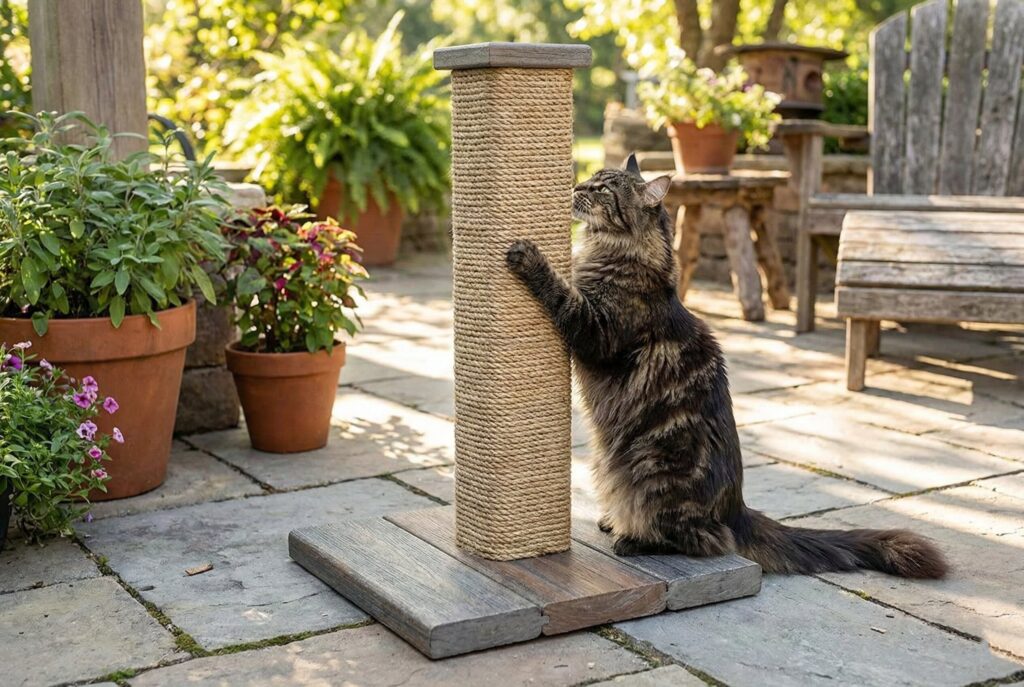
This type of scratcher is designed specifically to mimic the classic indoor scratching post but is built entirely with outdoor-rated materials.
Why Cats Love It
Cats naturally seek out tall vertical surfaces to get a full body stretch. A tower that is at least 30 to 36 inches tall allows an adult cat to reach high and pull their weight down, which is essential for healthy claw maintenance.
Weather Resistance Factor
The best models use a base made from recycled plastic or high-density polyethylene, often called poly-lumber. This material will never rot, splinter, or absorb water. The post itself is usually wrapped in synthetic polypropylene rope.
Placement Tips
Place this tower near the door your cat uses to go outside. Cats often want to stretch and scratch immediately after waking up from a nap or transitioning from indoors to outdoors.
2. Natural Wood Log Scratcher
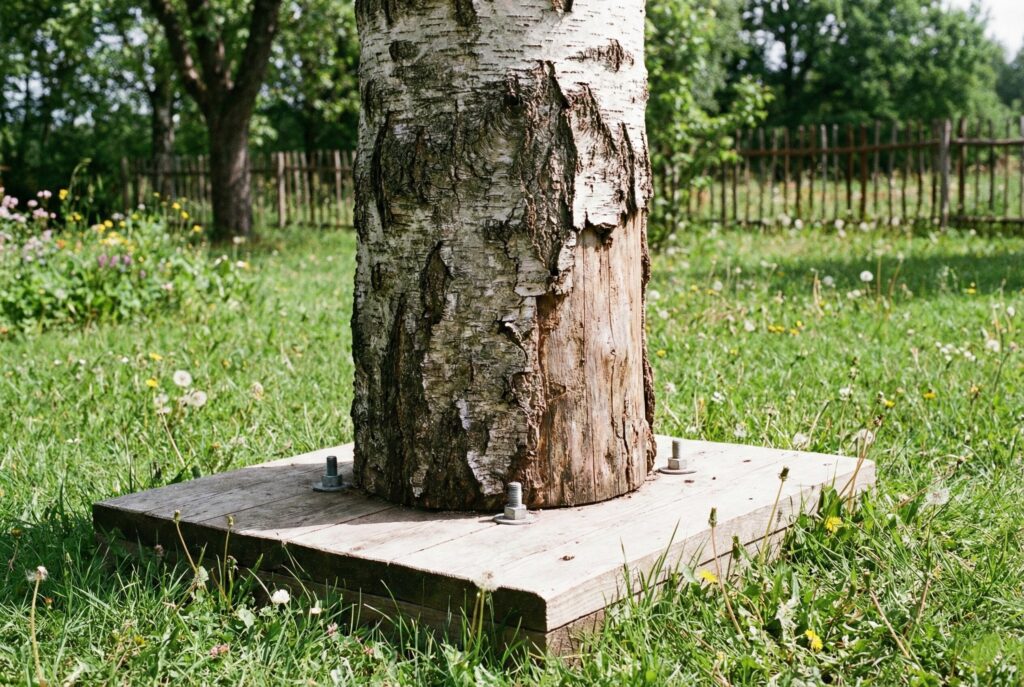
Sometimes, nature provides the best feline enrichment. Several pet companies sell sustainably sourced, natural hardwood logs designed specifically for scratching.
Why Cats Love It
Before the invention of the modern scratching post, cats used trees. Real tree bark offers the perfect amount of resistance for a cat’s claws. It shreds in a highly satisfying way, giving the cat visual and tactile feedback that they have successfully marked their territory.
Weather Resistance Factor
Logs are naturally meant to be outside. Over time, the bark will wear away, and the wood will age, but a thick hardwood log like oak or hickory will last for a very long time before needing replacement.
Placement Tips
Because these can be heavy, place the log on a flat, stable surface. If the log does not come with a wide base, you can partially bury the bottom of it in the ground for maximum stability.
3. A-Frame Outdoor Scratching Board
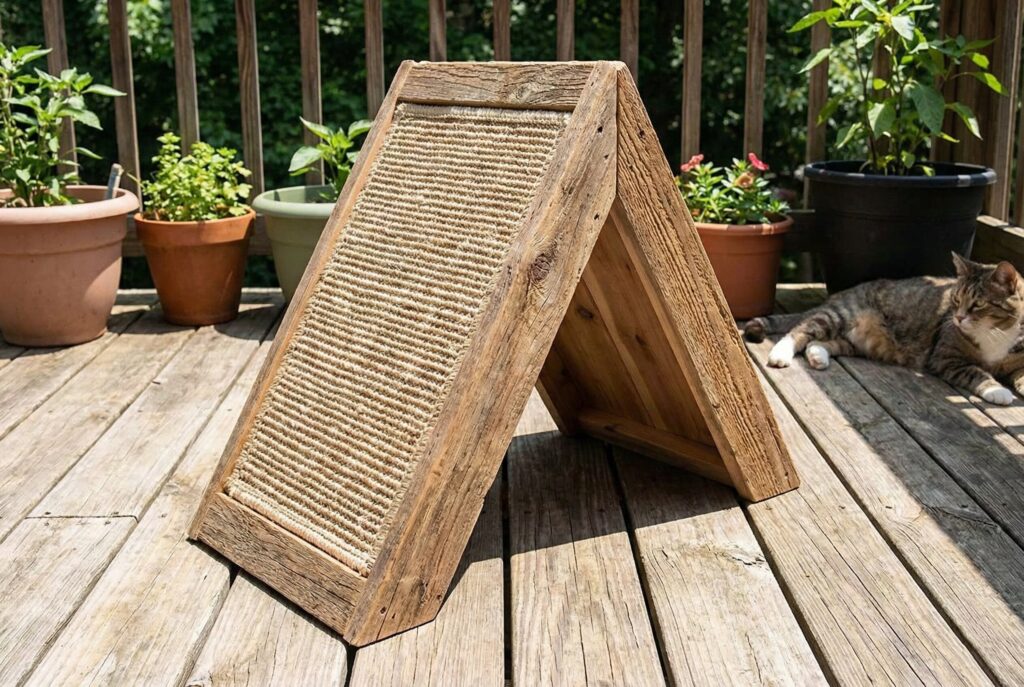
An A-frame scratcher looks like a small tent. It features two slanted sides, offering an angled scratching surface rather than a strictly vertical or horizontal one.
Why Cats Love It
Some cats prefer scratching at an angle. The A-frame design allows them to lean their body weight onto the board comfortably. The space underneath the A-frame also doubles as a small hiding spot or a shady place to take a nap during hot summer days.
Weather Resistance Factor
High-quality A-frame scratchers for outdoor use are usually built with cedar wood frames and feature tightly woven synthetic scratching pads that shed water easily.
Placement Tips
This shape is incredibly stable and will not easily tip over, making it great for placement directly on the lawn, a gravel patch, or a windy balcony.
4. Wall-Mounted Cedar Scratching Pad
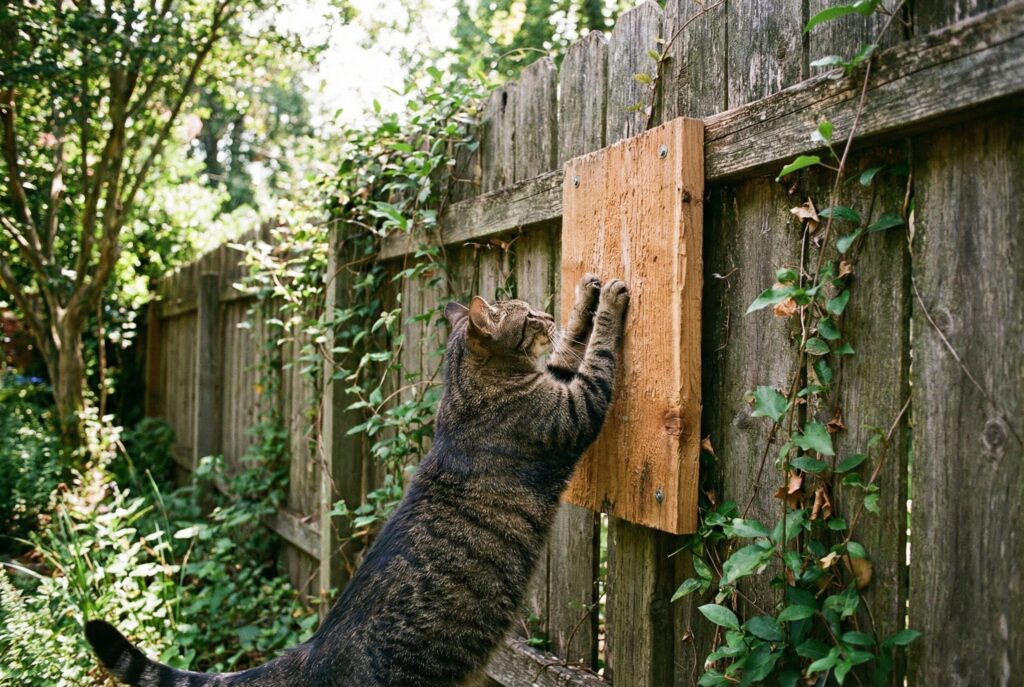
If you lack floor space on your balcony or patio, a wall-mounted scratcher is the perfect space-saving solution.
Why Cats Love It
Wall-mounted scratchers are highly rigid. Since they are bolted directly to a structure, they do not wobble or shift, providing the ultimate resistance for heavy scratchers. You can also mount them at the exact height that suits your specific cat’s stretching length.
Weather Resistance Factor
These are typically solid planks of cedar or redwood. Because they are mounted vertically on a wall or fence, rain washes right off them, preventing standing water from causing rot.
Placement Tips
Mount this pad directly over the spot on your fence or siding that your cat has already been trying to scratch. This redirects their behavior away from your property and onto the approved scratching zone.
5. Multi-Level Catio Scratching Tree
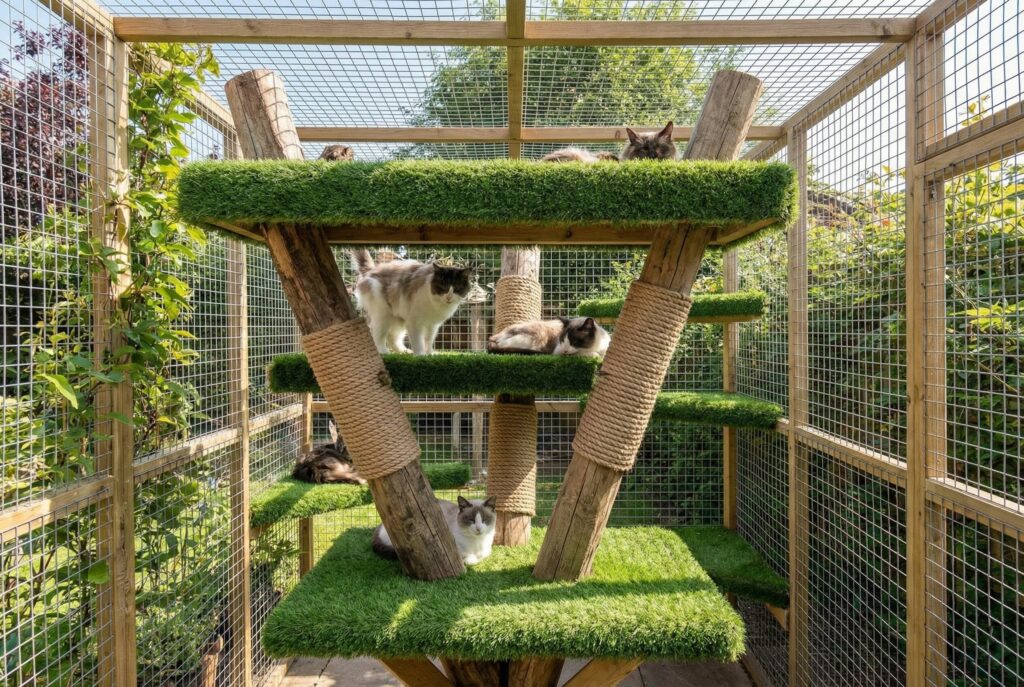
For cat owners with a dedicated outdoor enclosure or catio, a full-sized outdoor cat tree offers scratching surfaces combined with climbing and lounging areas.
Why Cats Love It
It provides the ultimate high-vantage point. Cats feel safest when they are up high, observing their territory. The support pillars of these trees double as massive scratching posts.
Weather Resistance Factor
Outdoor cat trees avoid plush fabrics entirely. Instead, they use artificial turf or outdoor patio cushion canvas for the perches, and treated wood or PVC for the core structures. The metal hardware is usually galvanized to prevent rust.
Placement Tips
Place the tree in a corner of the catio to give it extra stability, preferably in a spot that offers a mix of both sun and shade throughout the day.
Top 6 DIY Outdoor Cat Scratcher Ideas
If you are handy and want to save money, building your own outdoor cat scratcher is a highly rewarding weekend project. Building it yourself allows you to customize the size, shape, and materials to perfectly match your cat’s preferences and your backyard aesthetic. Here are six detailed DIY ideas.
6. The PVC Pipe and Synthetic Sisal Tower
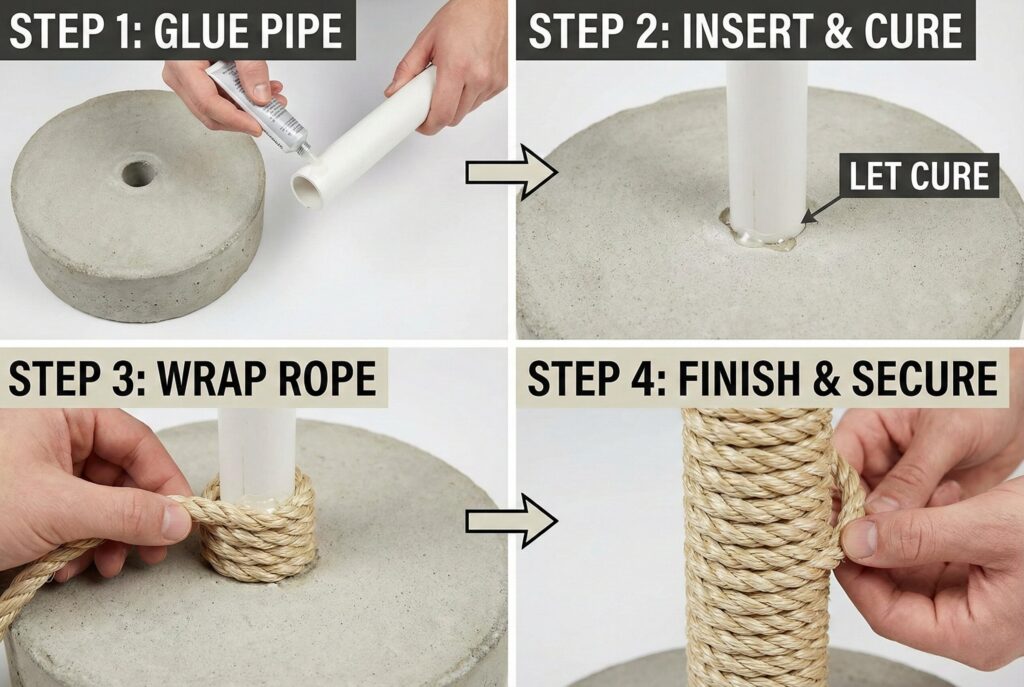
This is one of the most durable and cost-effective DIY projects you can undertake. PVC is entirely immune to weather.
Materials Needed
- 4-inch diameter PVC pipe (cut to 36 inches long)
- PVC end cap
- Outdoor wooden base (like a heavy piece of cedar or a large paving stone)
- Heavy-duty synthetic polypropylene rope (1/4 inch or 3/8 inch thickness)
- Waterproof outdoor construction adhesive
- Sand or gravel
How to Build It
- Attach the PVC pipe to your base. If using a heavy paving stone, you can use strong construction adhesive to glue the pipe to the stone. If using a wooden base, secure a wooden block to the center of the base, and slide the PVC pipe tightly over it.
- Fill the inside of the PVC pipe with sand or gravel. This adds significant weight to the post, ensuring your cat cannot tip it over while pulling on it.
- Glue the PVC end cap securely onto the top of the pipe to keep rain out.
- Starting from the bottom, apply a thick line of waterproof construction adhesive around the pipe.
- Press the end of the synthetic rope into the glue and begin wrapping it tightly around the pipe. Add glue continuously as you wrap upward.
- Once you reach the top, secure the end of the rope with extra adhesive and let the entire post cure for 24 hours before letting your cat use it.
7. The Upcycled Tire and Rope Scratcher
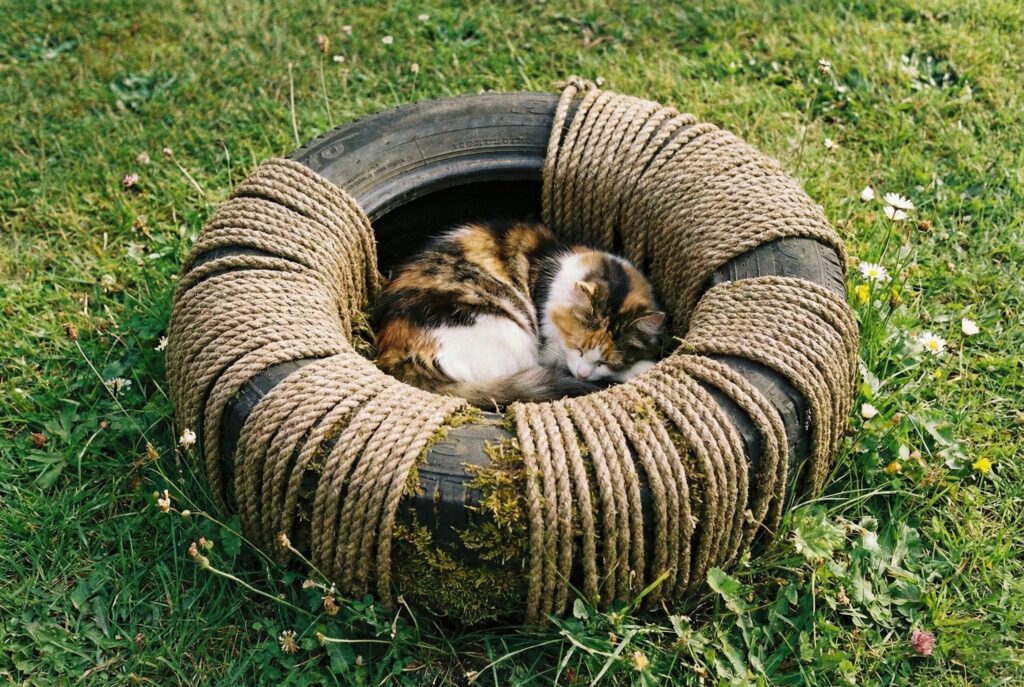
This project is fantastic for horizontal scratchers, cats who prefer to scratch the ground or carpets rather than vertical posts.
Materials Needed
- One old, clean automobile tire
- Thick synthetic sisal or manila rope (requires a large amount, typically 100 feet or more)
- Hot glue gun with weather-resistant glue sticks, or construction adhesive
- A heavy-duty scrub brush and soap
How to Build It
- Thoroughly scrub the tire with soap and water to remove all road grime, oil, and debris. Let it dry completely in the sun.
- Start at the bottom inside rim of the tire. Apply a generous amount of adhesive and secure the rope.
- Wrap the rope tightly around the tire, passing it through the center hole and over the outside tread.
- Continue wrapping, keeping the loops as tight against each other as possible so no black rubber shows through. Apply glue every few inches to keep the rope from slipping.
- Once fully wrapped, tuck the final end of the rope under an existing loop and glue it down heavily.
- Lay the tire flat in the yard. The heavyweight makes it an immovable horizontal scratching pad.
8. Deck Railing Wrap
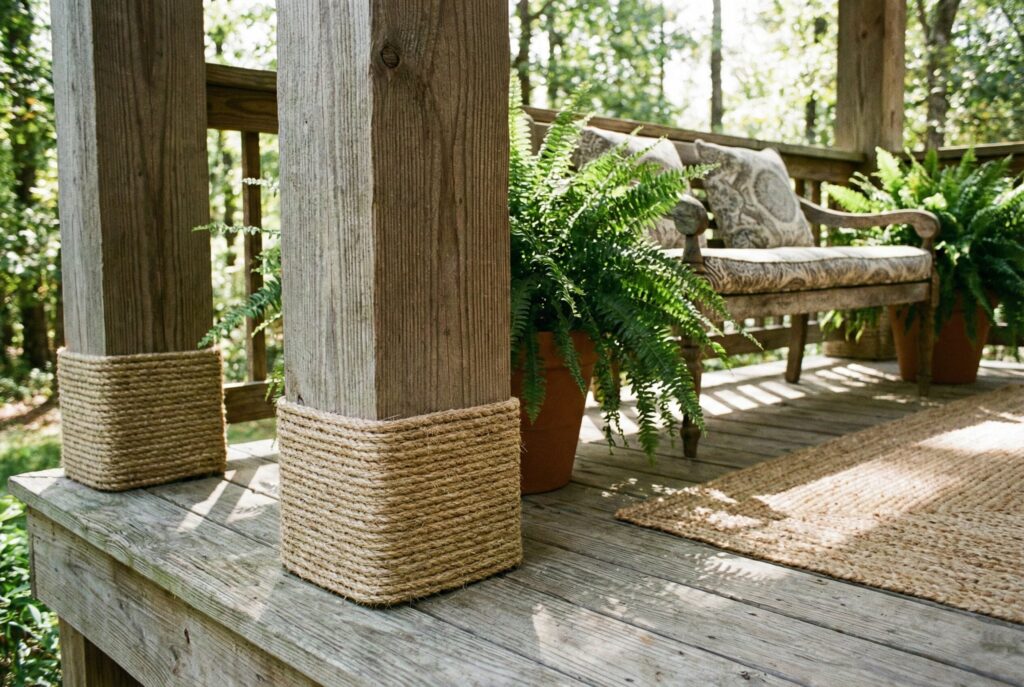
If your cat is already destroying the wooden posts that hold up your deck or patio cover, do not fight them—join them. This DIY project turns an existing architectural feature into a cat scratcher.
Materials Needed
- Waterproof plastic sheeting or heavy-duty trash bags
- Synthetic sisal rope
- Heavy-duty staples and a staple gun
- Outdoor waterproof tape
How to Build It
- Identify the post your cat loves to scratch.
- To protect the wood of the post from holding moisture against it, wrap the bottom three feet of the post in waterproof plastic sheeting. Secure it flat with outdoor tape.
- Take your synthetic sisal rope and staple one end firmly to the bottom of the post, right near the deck floor.
- Wrap the rope tightly around the post, working your way up. Because you are wrapping a square post, pull very tight at the corners to ensure the rope does not gap.
- Every five or six wraps, shoot a staple into the rope at the back of the post to keep the tension locked in.
- When you reach the desired height, staple the end securely.
9. The Weighted Concrete Base Post
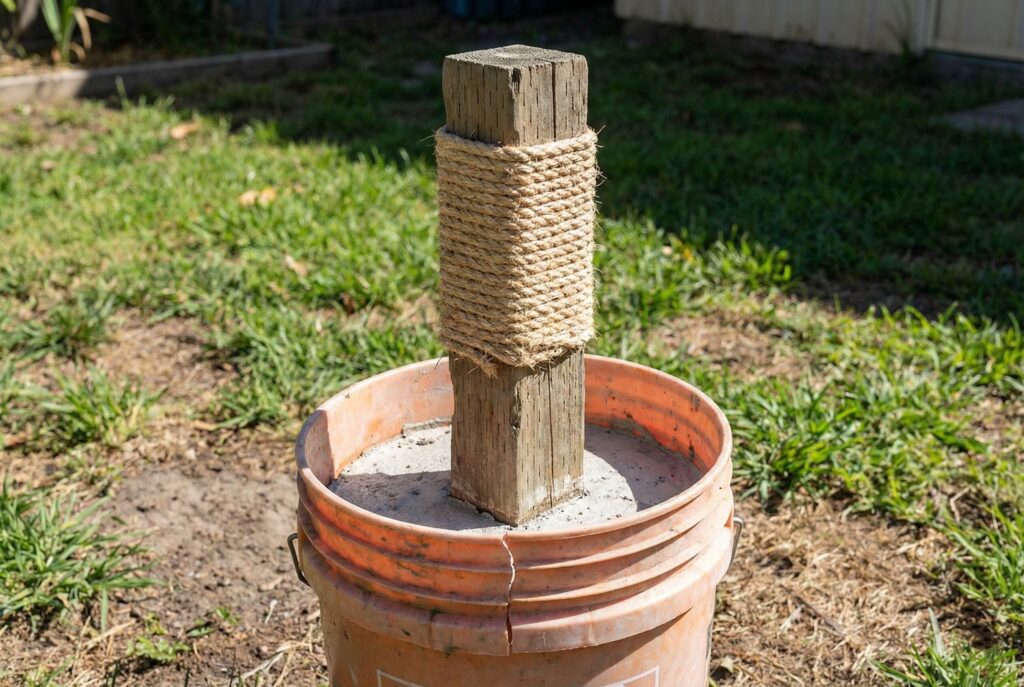
This project is ideal for people who live in very windy areas or have large, heavy cats like Maine Coons who easily tip over standard scratchers.
Materials Needed
- One 5-gallon plastic utility bucket
- One bag of fast-setting concrete mix
- One pressure-treated 4×4 wooden post (about 4 feet long)
- Water
- Synthetic sisal rope
- Staples
How to Build It
- Place the 5-gallon bucket on a flat, level surface outdoors.
- Stand the 4×4 post straight up in the center of the bucket.
- Follow the instructions on the concrete bag and pour the dry mix into the bucket around the post, adding water as directed.
- Hold the post perfectly level while the fast-setting concrete hardens (usually 20 to 30 minutes).
- Once the concrete is fully cured (allow 24 hours), drill a few small drainage holes in the bucket just above the concrete line so rainwater does not pool inside.
- Wrap the exposed top half of the 4×4 post tightly with synthetic sisal rope, stapling it securely at the top and bottom.
10. The Natural Tree Stump Station
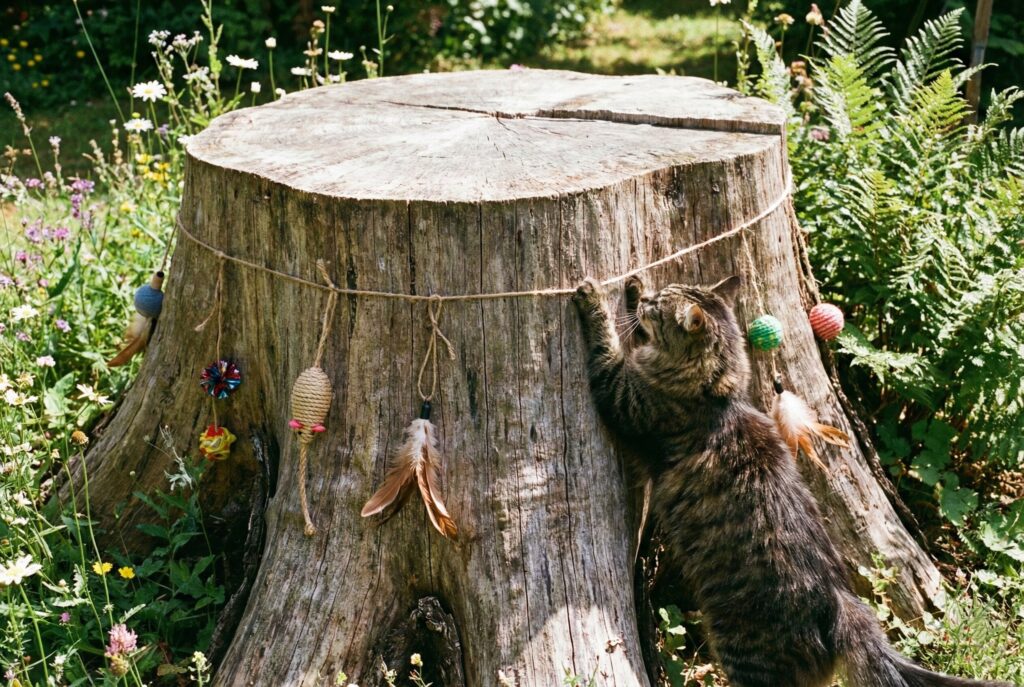
This is perhaps the easiest DIY project, relying entirely on natural materials.
Materials Needed
- A large, clean tree stump (preferably oak, maple, or apple wood)
- Sandpaper
- Non-toxic outdoor wood sealer (optional)
How to Build It
- Source a heavy tree stump from a local firewood supplier or arborist. Make sure it has not been treated with pesticides.
- Inspect the stump for sharp, dangerous splinters or protruding branches and sand them down to keep your cat safe.
- If you want the stump to last longer, you can coat the flat top and bottom with a non-toxic wood sealer to prevent rapid rotting from ground moisture. Leave the bark on the sides completely natural.
- Place the stump in your garden. The rough bark acts as the perfect natural scratching surface.
11. DIY Cedar Plank and Faux Grass Scratcher
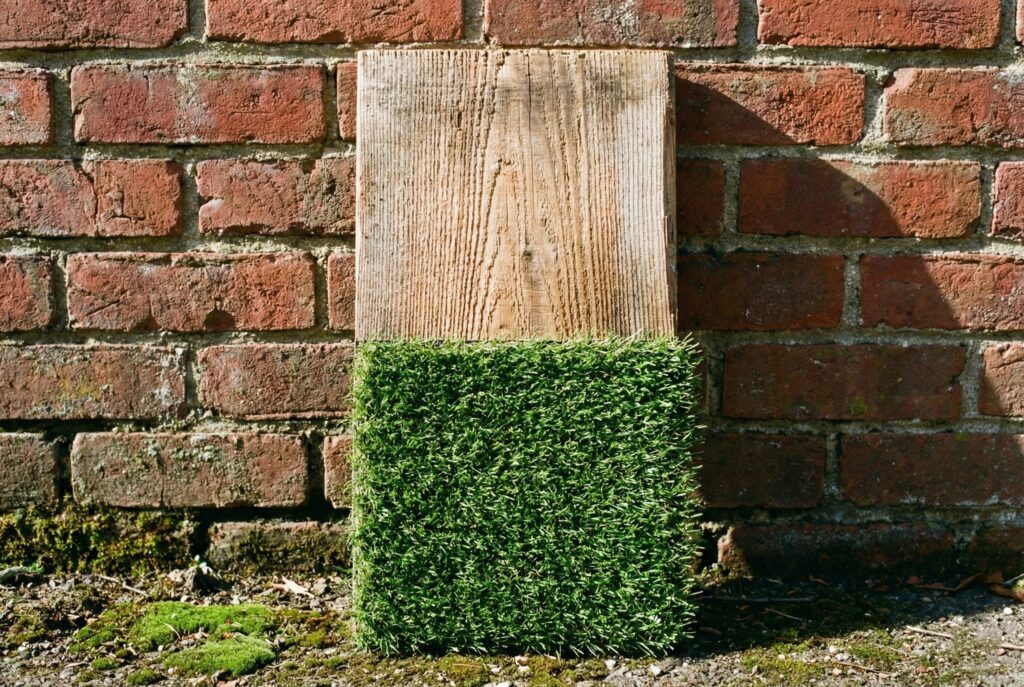
Some cats love the texture of grass for scratching. This project combines the durability of cedar with the unique texture of artificial turf.
Materials Needed
- One thick cedar wood plank (1 inch thick by 12 inches wide by 3 feet long)
- A remnant piece of artificial outdoor turf
- Outdoor adhesive
- Staple gun
How to Build It
- Cut the artificial turf to cover the top half of your cedar plank.
- Apply a generous layer of outdoor adhesive to the back of the turf and press it onto the wood.
- Secure the edges of the turf tightly with your staple gun to prevent the cat from pulling it off.
- Leave the bottom half of the cedar plank bare. Cedar is soft enough for cats to sink their claws into, giving them two different textures on one board.
- Lean the plank securely against an outdoor wall or lay it flat on the patio.
How to Encourage Your Cat to Use the Outdoor Scratcher
Simply placing a new piece of cat furniture outside does not guarantee your cat will use it. Cats are creatures of habit. If they have already established a habit of scratching your patio chairs, you will need to actively redirect their behavior to the new outdoor cat scratcher.
Strategic Placement
Location is everything. Cats scratch to leave visible and scent markers for other animals. They usually choose prominent, highly visible locations. Do not hide the scratcher behind a bush or in a remote corner of the yard. Place it right next to the object they were previously scratching, or place it on the main walking path they use when patrolling the yard.
Using Attractants
For indoor scratchers, catnip is the go-to attractant. However, dry catnip quickly blows away in the wind or loses its potency in the humidity outdoors. Instead of dry flakes, use a highly concentrated catnip spray. Spray the liquid generously onto the rope or wood. Alternatively, use silvervine powder, which is a natural plant alternative to catnip that many cats find even more irresistible. You can rub silvervine directly into the fibers of the rope.
Positive Reinforcement
When you introduce the scratcher, gently play with a wand toy near it. Drag the toy up the post so your cat naturally grabs the rope while trying to catch the toy. As soon as their paws touch the scratching surface, offer verbal praise and a high-value treat. Never forcefully grab your cat’s paws and drag them on the post, as this will only create a negative association and frighten them.
Deterring Unwanted Scratching
While encouraging the use of the new scratcher, you must make their old, unwanted scratching spots undesirable. If they scratch your wooden deck posts, temporarily wrap those posts in double-sided sticky tape or aluminum foil. Cats detest the sticky feeling and the sound of foil. Once they abandon the deck post and consistently use the new outdoor scratcher, you can remove the tape and foil.
Maintenance and Care for Outdoor Cat Furniture
Even the most weather-resistant outdoor cat furniture requires occasional maintenance to remain safe and functional.
Rope will eventually fray and break under the constant assault of sharp claws and harsh weather. When you notice the synthetic sisal or natural rope hanging loose, do not throw the whole post away. Simply strip off the damaged section, purchase a new bundle of rope, and re-wrap the post using construction adhesive.
Regularly check the structural integrity of the scratcher. Look for rusted staples that might cut your cat’s paws and pull them out with pliers. If you used wood in your DIY build, inspect the base for early signs of rot, especially after the rainy season.
If you live in an area with harsh, snowy winters and your cat stays indoors during those months, bring the scratcher inside or move it to a garage or shed. Winterizing the furniture will significantly extend its lifespan, ensuring it is ready for your cat when spring arrives.
Conclusion
Providing an outdoor cat scratcher is a simple but vital way to improve your cat’s quality of life while protecting your outdoor home environment. Whether you choose to invest in a durable, store-bought synthetic tower, utilize a natural log, or roll up your sleeves to build a custom PVC and rope scratching post, your feline companion will deeply appreciate having a dedicated place to stretch and flex their claws. By choosing the right weather-resistant materials and placing the scratcher strategically in your yard, you can easily redirect their natural instincts and keep both your cat and your patio furniture completely happy.