
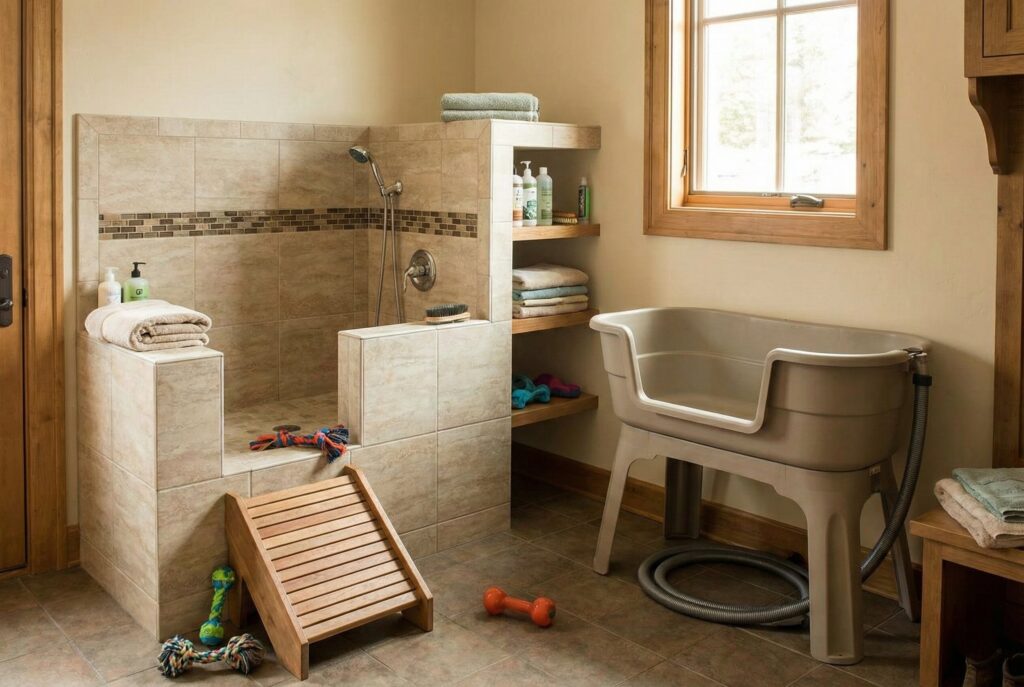
If you own a dog, you know the struggle of bath time. Wrestling a wet, muddy dog into your clean family bathtub usually results in a sore back, scratched acrylic tubs, and a bathroom covered in dirty water. Taking your dog to a professional groomer every time they find a mud puddle is expensive and time-consuming. The solution is an indoor dog bathing station.
Adding a dedicated dog wash station to your home is one of the best home improvement projects for pet owners. It keeps the mess contained, saves your back from bending over a low tub, and makes pet care a much easier task. Whether you want a weekend DIY project in your mudroom or a quick store-bought solution for your laundry room, there is an option for every budget and dog breed size.
In this comprehensive guide, we will cover over ten brilliant indoor dog bathing station ideas, split between custom DIY builds and convenient store-bought tubs. We will also dive into the essential plumbing, materials, and accessories you need to make your pet grooming area perfect.
[Visual Prompt: A wide, bright shot of a beautifully designed mudroom featuring a custom dog wash station with white subway tile, a happy Golden Retriever sitting inside, and neatly folded towels on a shelf above.]
Why You Need a Dedicated Indoor Dog Wash Station
Before diving into the specific ideas, it is helpful to understand why a dedicated canine washing station is worth the investment.
First, it protects your home. Dogs inevitably track in dirt, mud, snow, and allergens. Having a station near an entryway, like a mudroom or garage, means you can wash off those muddy paws before your dog ever sets foot on your living room rug or hardwood floors.
Second, it protects your body. Standard human bathtubs are installed at floor level. Bending over to scrub a squirming dog puts massive strain on your lower back and knees. A raised dog bathing station puts your pet at an ergonomic height, allowing you to stand comfortably while you wash them.
Third, it saves money. Professional dog grooming is expensive. If you pay a groomer frequently just for a standard wash and dry, a home dog wash station will easily pay for itself within a year. It also adds unique resale value to your home, as pet-friendly home features are highly sought after by home buyers.
Finally, it keeps your plumbing safe. Human bathtubs are not designed to handle thick dog fur. Dedicated dog tubs can be fitted with heavy-duty hair catchers and larger drains to prevent costly plumbing clogs.
DIY Indoor Dog Bathing Station Ideas
If you are handy and want a wash station that perfectly matches your home decor, a DIY build is the way to go. You can customize the size to fit your specific dog breed and choose materials that complement your existing space.
1. The Mudroom Walk-In Pet Shower
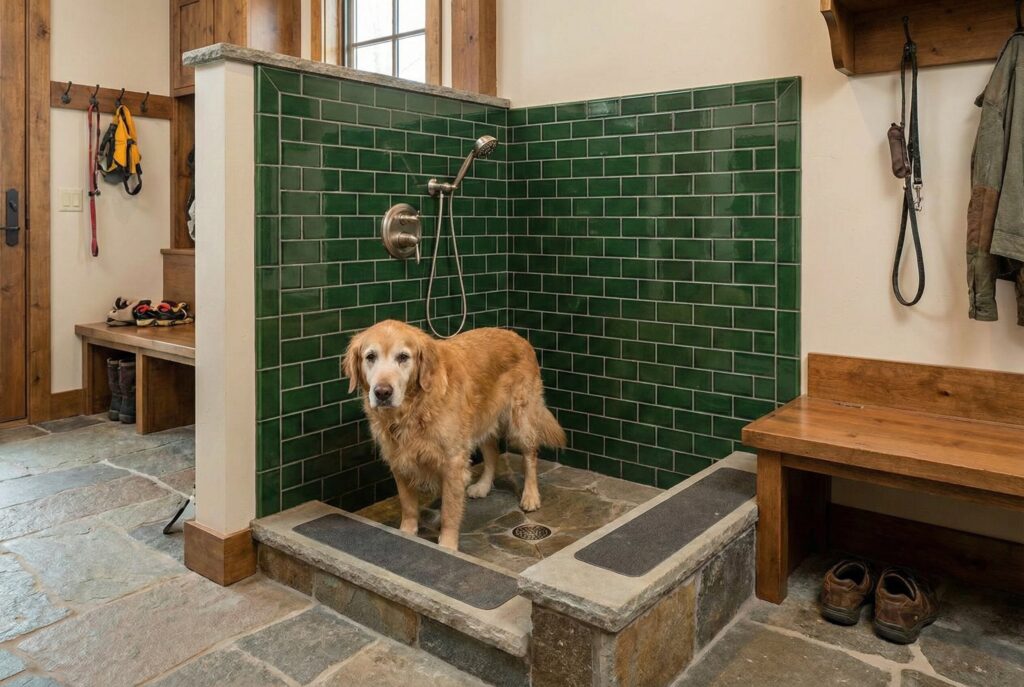
Building a walk-in shower specifically for your dog in the mudroom is the ultimate luxury pet care feature. This idea involves dedicating a corner of your mudroom to a floor-level or slightly elevated shower pan, surrounded by waterproof tile.
Best For: Large breeds, senior dogs, and dogs with mobility issues who cannot be lifted.
Key Materials: Shower pan, waterproof membrane, wall and floor tiles, grout, floor drain with hair trap, and handheld shower fixture.
How it Works: You frame a small area just like you would a human shower. Because it is for a dog, you only need to tile the walls about three to four feet high. A low curb keeps the water contained while allowing easy access for heavy dogs like Mastiffs or German Shepherds.
Pros: Highly durable, beautiful aesthetic, easy access for large or aging dogs.
Cons: Requires advanced plumbing and tiling skills, permanent installation, and higher upfront material costs.
2. The Laundry Room Utility Sink Upgrade
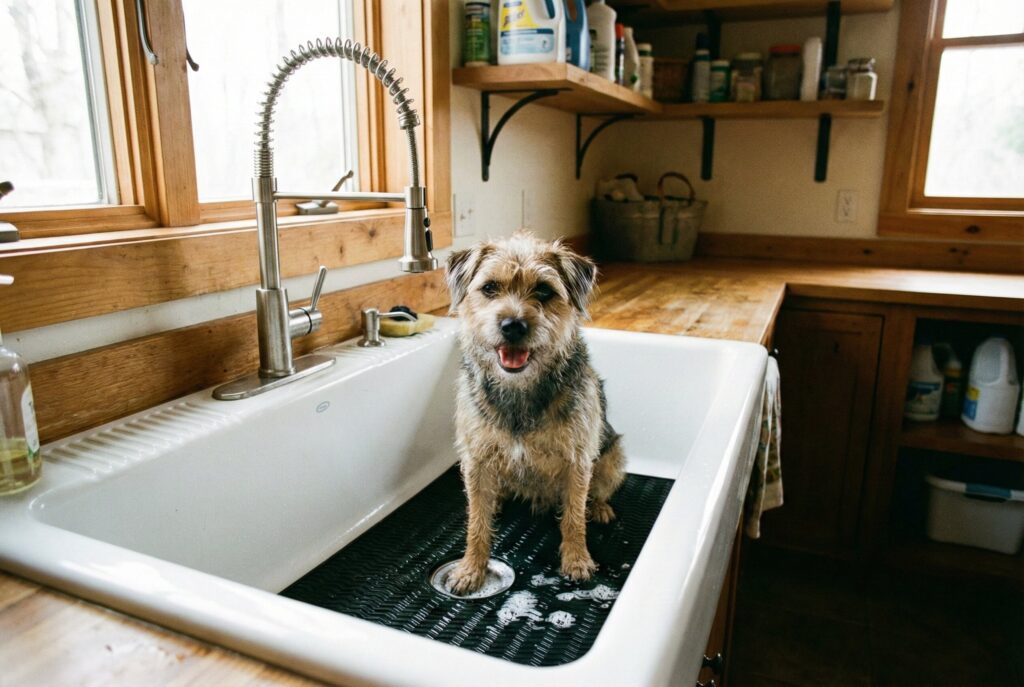
If you have a small dog and an existing utility sink in your laundry room, you can easily upgrade it into a functional dog bathing station with minimal construction.
Best For: Small breeds, puppies, and toy dogs (under 25 pounds).
Key Materials: Deep utility sink, pull-down faucet sprayer, non-slip silicone sink mat, step stool.
How it Works: You swap out your standard laundry faucet for one with a long, flexible pull-down sprayer hose. Place a thick, non-slip rubber mat at the bottom of the sink so your dog feels secure and does not slide around. You can keep a small set of pet stairs nearby so your dog can walk right up to the sink edge.
Pros: Extremely budget-friendly, utilizes existing plumbing, perfect ergonomic height for washing small dogs.
Cons: Not suitable for medium or large dogs; deep sinks can sometimes feel cramped for the dog.
3. The Garage Wash Bay
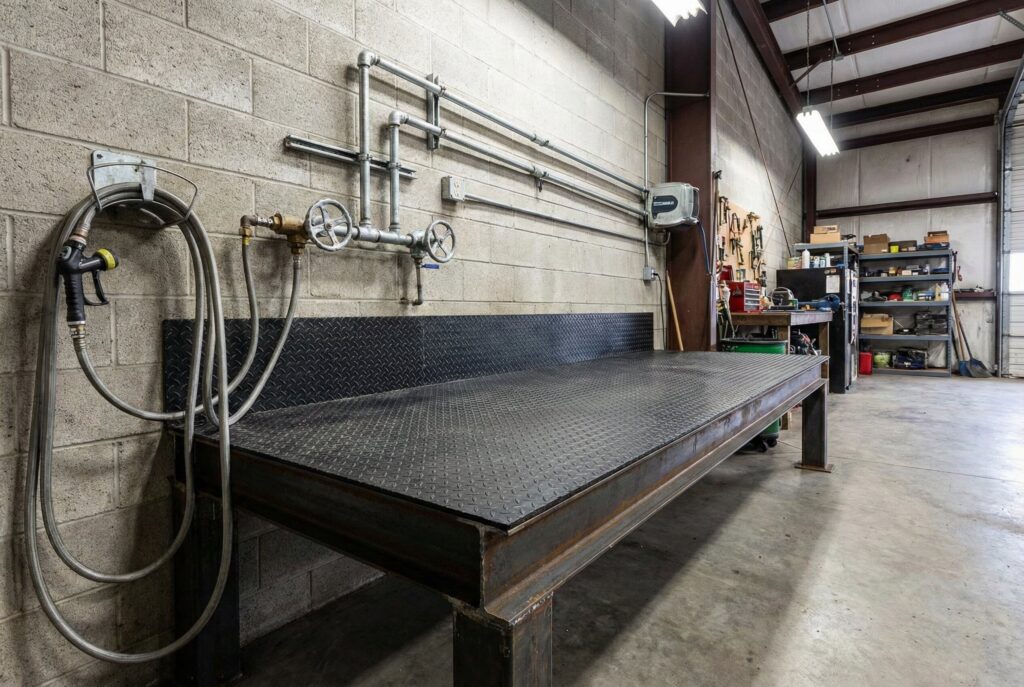
For dog owners who do not want to sacrifice interior square footage, the garage offers a perfect location. A garage wash bay can handle the messiest dogs and the biggest shake-offs without worrying about damaging drywall or flooring.
Best For: Very messy dogs, hunting dogs, large breeds, and multiple-dog households.
Key Materials: 2×4 lumber for a raised base, waterproof marine-grade plywood, rubber flooring or FRP (Fiberglass Reinforced Plastic) wall panels, utility faucet, and floor drain.
How it Works: Build a raised wooden platform to bring the dog up to your waist level. Cover the platform with heavy-duty rubber matting. Line the surrounding garage walls with FRP panels, which are cheap and completely waterproof. You will need to route hot and cold water pipes from the house and ensure you have a drainage solution, either routing to a floor drain or a greywater setup if local codes allow.
Pros: Keeps all the mess completely out of the house, easy to clean, great for heavily soiled dogs.
Cons: Garages can be cold in the winter without a heater, requires running new plumbing lines through the garage wall.
4. The Elevated Farm Trough Tub
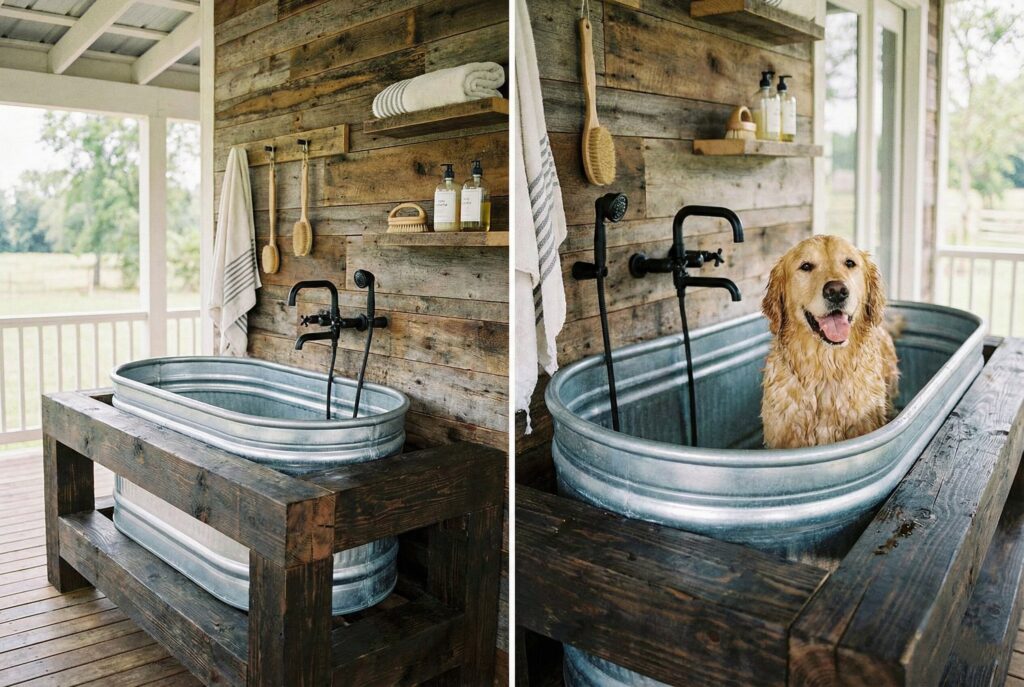
Using a galvanized steel stock tank (often used for farm animals) is a trendy, rustic, and highly durable way to build a custom dog bath.
Best For: Medium to large breeds, farmhouse-style home decor.
Key Materials: Oval galvanized stock tank (usually 2 to 4 feet long), heavy-duty lumber (4x4s and 2x4s), hole saw for metal, standard tub drain assembly, silicone sealant.
How it Works: You build a sturdy wooden base to support the weight of the metal tub and the water. Using a hole saw, you cut a drainage hole in the bottom of the stock tank and install a standard tub drain, sealing it heavily with waterproof silicone. Plug it directly into your home’s waste line.
Pros: Very stylish, extremely durable metal construction, deep walls prevent water from splashing out.
Cons: Metal can be cold on the dog’s paws (a thick rubber mat is required inside), and cutting metal requires specific power tools.
5. The Spare Bathroom Conversion
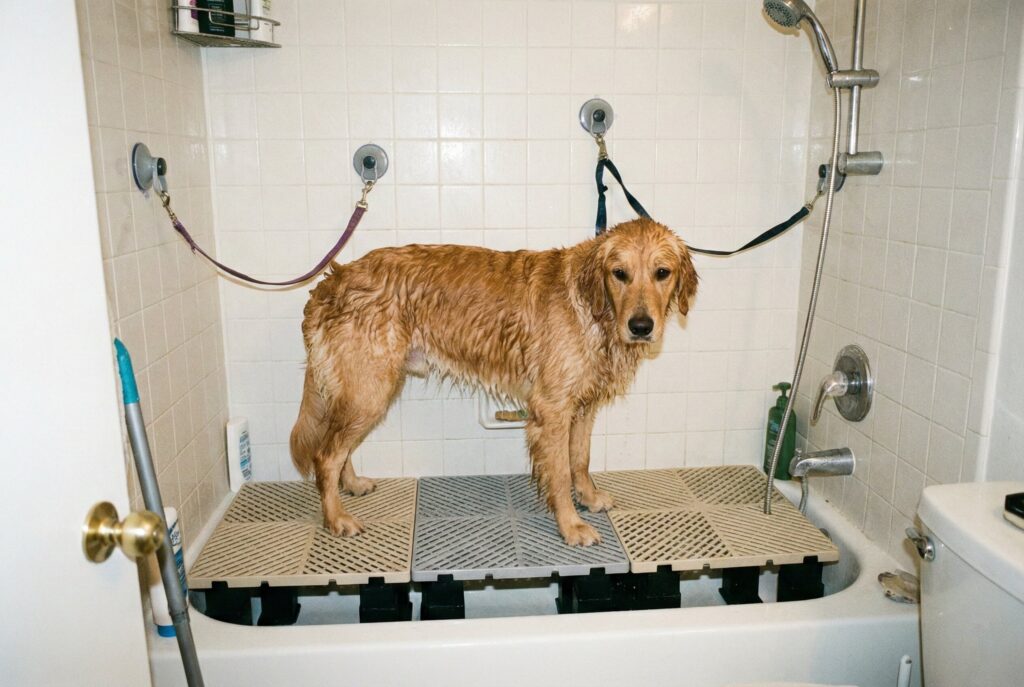
If you have an unused guest bathroom, you can convert the existing bathtub or shower into a dedicated pet grooming room.
Best For: Medium breeds, renters, or homeowners who do not want to do heavy demolition.
Key Materials: Over-the-tub elevated dog washing grate, extra-long showerhead hose, suction cup grooming tethers, splash guards.
How it Works: Instead of tearing out the tub, you adapt it. You can purchase or build heavy-duty PVC and mesh grates that sit across the top edges of your existing bathtub. This raises the dog to a comfortable height while the water drains directly into the tub below. Add a long handheld sprayer to your shower pipe.
Pros: Reversible if you sell the house, utilizes an existing room with waterproof walls and plumbing.
Cons: Takes up a human bathroom, and lifting a heavy dog onto the raised grate can be difficult.
6. The Under-Stairs Dog Cave and Shower
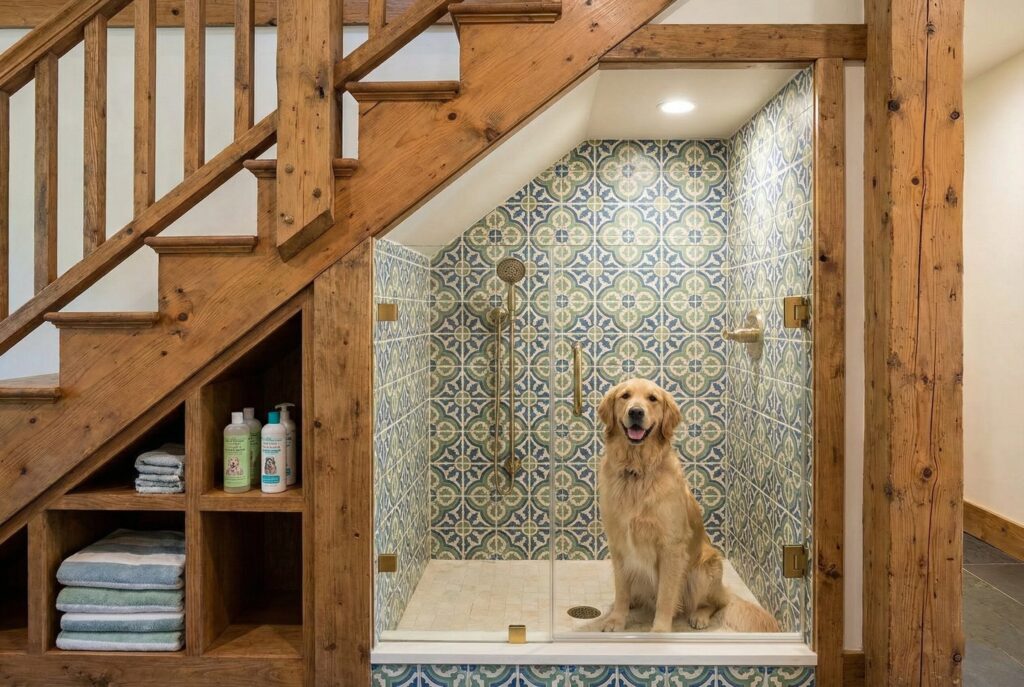
Utilizing the dead space under a staircase is a genius way to add a dog wash station without giving up any usable floor space in your home.
Best For: Small to medium breeds, homes with limited square footage.
Key Materials: Custom shower pan, tile, glass splash guard, recessed lighting, plumbing extensions.
How it Works: You open up the drywall under a staircase, ensuring you do not remove any load-bearing studs. You frame out a small, low-ceiling shower stall. Because dogs do not need overhead clearance like humans, the sloped ceiling of a staircase is perfectly fine. You install a drain and water lines, tile the space, and add a small glass door to keep water from splashing into the hallway.
Pros: Excellent use of wasted space, highly customized, keeps the dog wash out of the way.
Cons: Space can be cramped for the human washing the dog, and it requires complex plumbing routing depending on where your main lines are.
Store-Bought Indoor Dog Bathing Station Ideas
If you want a professional-grade setup without the hassle of framing, drywalling, and tiling, buying a pre-made dog bathing station is the best route. These units are designed specifically for canine ergonomics and just need to be hooked up to water and drainage.
7. Stainless Steel Professional Grooming Tub
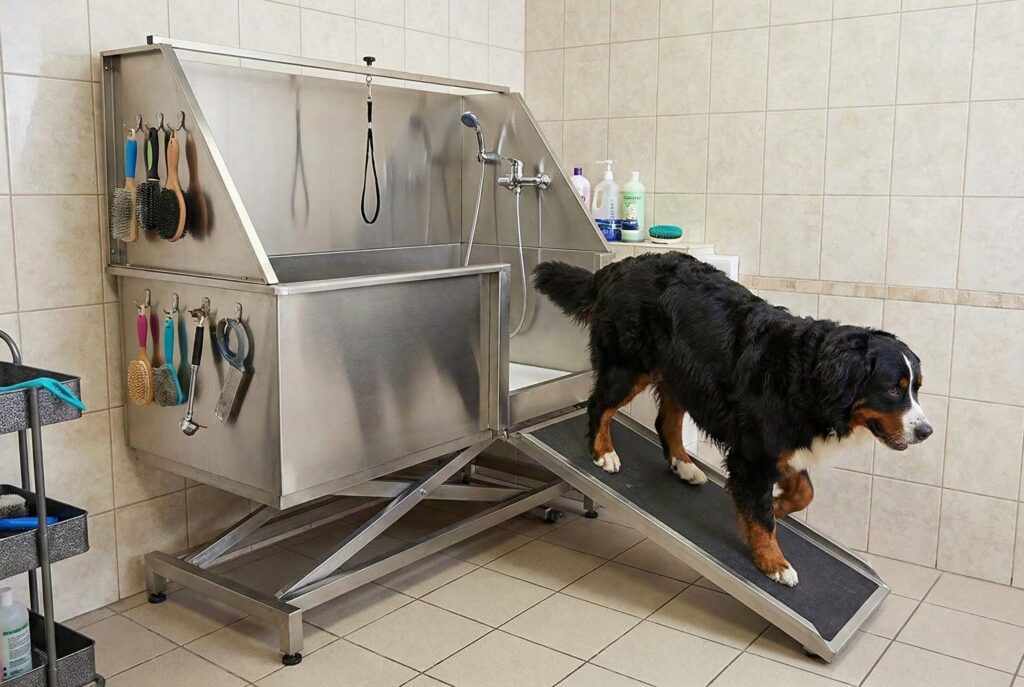
This is the gold standard for indoor dog bathing. Professional grooming tubs are what you see in commercial pet salons, but they are increasingly popular for residential mudrooms and garages.
Best For: All dog sizes, especially giant breeds, heavily shedding dogs, and homes that want a permanent, indestructible fixture.
Key Features to Look For: 304-grade stainless steel (to prevent rust), slide-out or fold-down access ramps, removable floor grates, heavy-duty hair strainers, and high backsplashes.
Pros: Will last a lifetime, completely waterproof, easy to sanitize, includes tie-down rings to keep dogs secure, and ramps save you from lifting heavy pets.
Cons: Very expensive, has a sterile industrial look that may not match cozy home decor, and is heavy and difficult to move.
8. Plastic Elevated Booster Bath
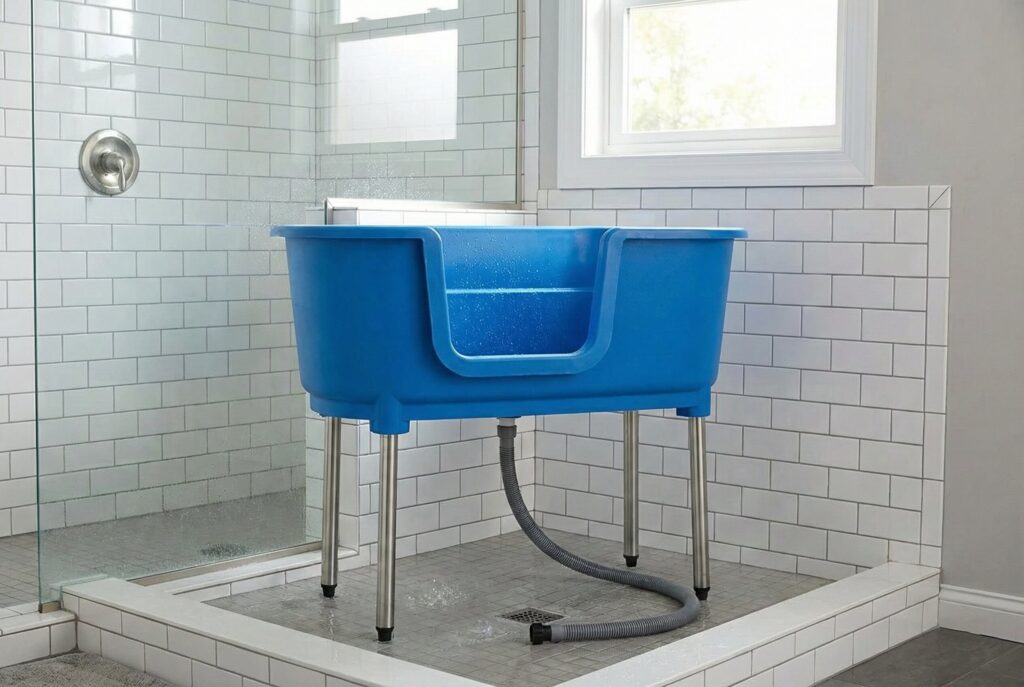
A booster bath is a lightweight, highly functional tub designed to be placed in a bathtub, garage, or even outside. It is one of the most popular mid-range options for dog owners.
Best For: Small to large breeds, people who need a semi-portable indoor/outdoor solution.
Key Features to Look For: Snap-on legs, non-slip textured bottom, directional drain hose, and adjustable restraint collars.
Pros: Very affordable, lightweight, puts the dog at the perfect height, can be placed inside an existing human shower stall, and is easy to assemble.
Cons: Not as sturdy as metal or built-in stations; large, rowdy dogs can potentially rock the tub.
9. Freestanding Acrylic Pet Tub
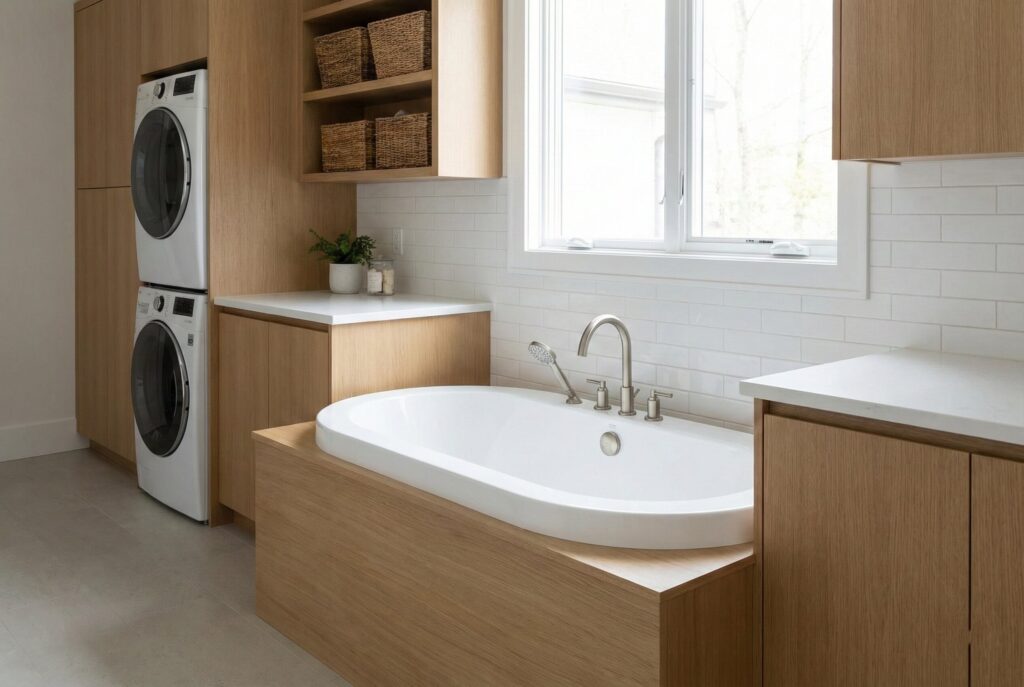
These look very similar to standard human freestanding bathtubs but are designed with specific dimensions for dogs. They are elevated on a pedestal or cabinet base.
Best For: Small to medium breeds, homeowners who prioritize interior design and aesthetics.
Key Features to Look For: Scratch-resistant acrylic or composite material, integrated storage underneath, seamless design.
Pros: Looks like high-end furniture or standard plumbing fixtures, very visually appealing, the cabinet space underneath is great for storing dog shampoo and towels.
Cons: Can easily scratch from sharp dog nails if not protected by a mat, usually not big enough for dogs over 50 pounds.
10. Walk-In Dog Shower Kit
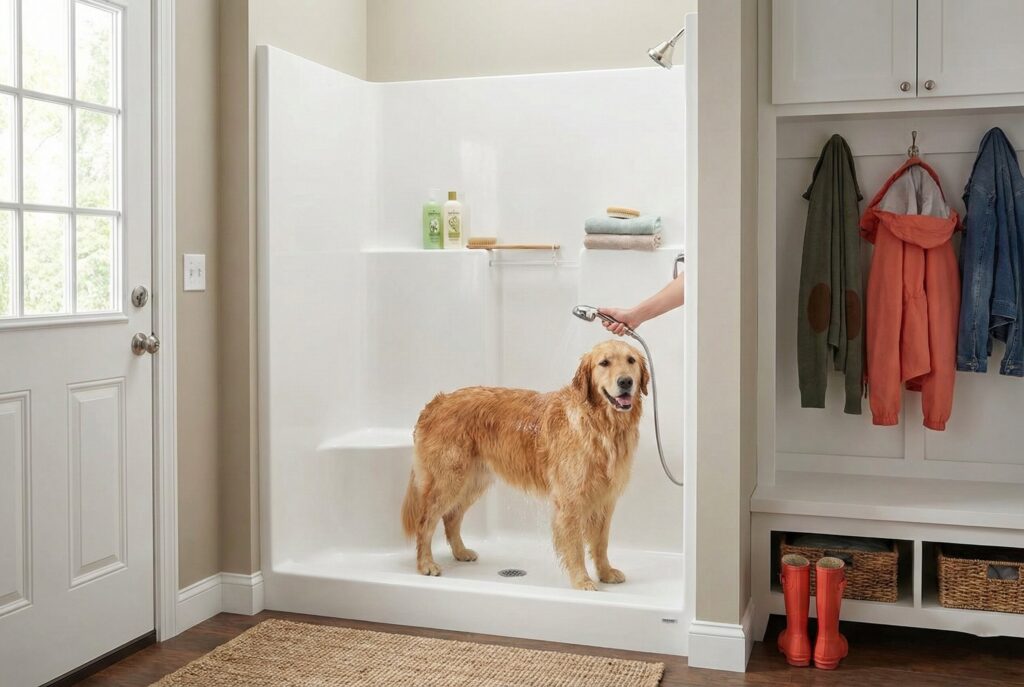
Instead of tiling a custom shower, you can buy prefabricated dog shower kits. These are essentially miniature versions of human shower enclosures, complete with a pan and wall surrounds.
Best For: Medium to large dogs, quick basement or utility room installations.
Key Features to Look For: Multi-piece interlocking fiberglass or acrylic walls, low step-in threshold, molded accessory shelves.
Pros: Much faster to install than custom tile, perfectly waterproof out of the box, easy to wipe down and clean.
Cons: Limited size options, looks somewhat utilitarian, requires professional plumbing installation for the floor drain.
11. Foldable Portable Dog Tub
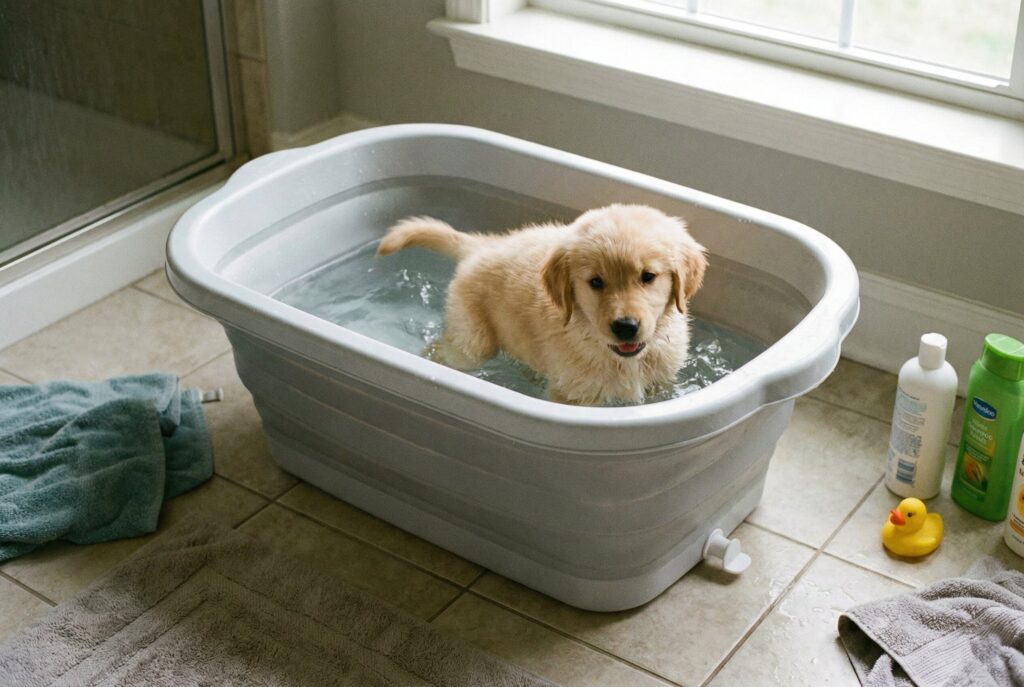
For apartment dwellers or those with very limited space, a foldable dog tub offers a temporary indoor bathing station that can be packed away.
Best For: Small dogs, apartment living, traveling.
Key Features to Look For: Thick, puncture-resistant silicone folds, sturdy locking legs, built-in drain plug.
Pros: Takes up zero space when not in use, very cheap, requires no installation.
Cons: You still have to bend down to the floor to wash the dog, water must be drained into a floor drain or manually dumped, not durable enough for large dogs.
12. High-End Custom Fiberglass Pet Wash Station
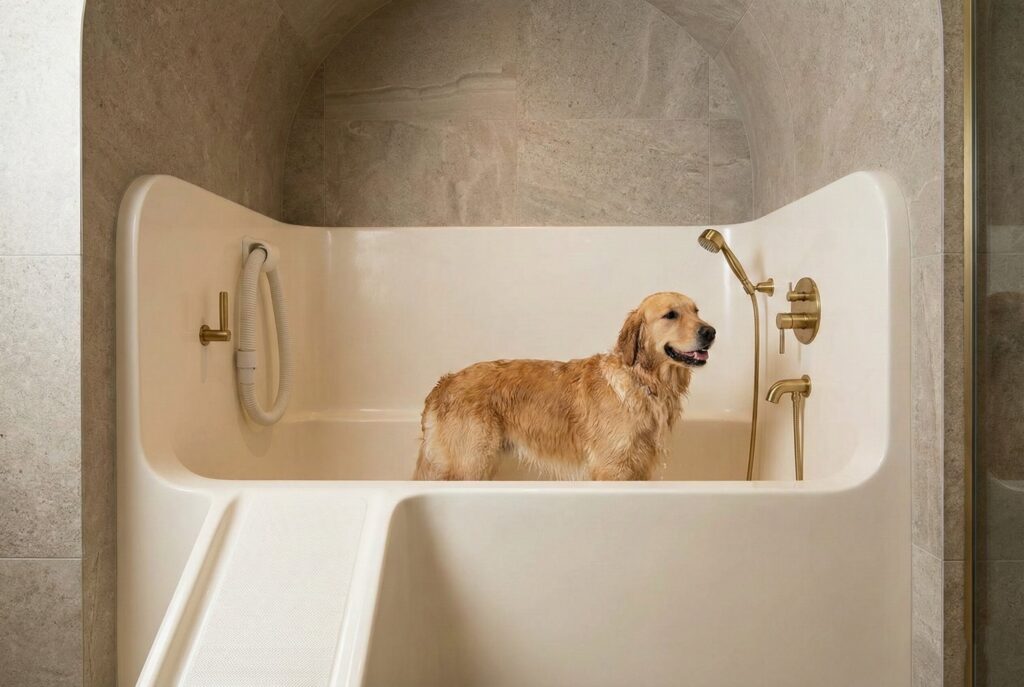
These are premium, all-in-one units often seen in luxury apartment complexes or high-end veterinary clinics. They are molded from a single piece of fiberglass.
Best For: Luxury homes, large breeds, pet owners looking for a seamless, easy-to-clean surface.
Key Features to Look For: Gel-coat finish, integrated steps, built-in pet dryers, and thermostatic mixing valves.
Pros: No seams for dirt or bacteria to hide in, incredibly sturdy, professional appearance, very comfortable for the dog.
Cons: The most expensive store-bought option requires a large dedicated footprint in the home.
Important Considerations Before Building or Buying
Choosing the right idea from the list above is just the first step. To make your indoor dog bathing station truly functional, you need to pay attention to plumbing, surfaces, and ergonomics.
Plumbing and Drainage
Dog fur and mud are the enemies of home plumbing. Standard human sink and tub drains are usually 1.5 inches in diameter. If you are building a custom dog wash, try to upgrade your drain pipe to 2 inches or even 3 inches to handle muddy water and debris without slowing down.
Furthermore, you absolutely must install a high-quality hair catcher. Dog hair will quickly clump and form massive clogs in your P-trap. Look for an inline hair trap or a heavy-duty stainless steel mesh drain cover that can be emptied after every bath.
Water Temperature Control
Dogs are sensitive to water temperature. A sudden blast of hot water can burn them, and freezing cold water will make them hate bath time. Install a thermostatic mixing valve. This plumbing device allows you to pre-set the maximum water temperature (usually around 85 to 90 degrees Fahrenheit for dogs), ensuring that no matter how you turn the knobs, the water will never get too hot.
Non-Slip Surfaces
A slippery surface will cause your dog to panic, making bath time a nightmare for both of you. If you are building a tiled shower, use small mosaic tiles for the floor; the extra grout lines provide excellent traction for dog paws. If you are using a stainless steel, plastic, or acrylic tub, purchase a heavy-duty, suction-cup rubber bath mat to give your dog a secure footing.
Ergonomic Height
The entire point of an indoor dog wash station is to save your back. Measure your waist height. The bottom of the washing tub (where the dog’s feet rest) should ideally sit around your mid-thigh to waist level. This allows you to stand completely straight while massaging shampoo into their coat. If you have a large dog, ensure you incorporate a ramp or steps so you do not injure yourself lifting an 80-pound animal.
Must-Have Accessories for Your Dog Wash Station
Once the tub or shower is installed, accessorizing the station will streamline your grooming routine.
- Handheld Showerhead with Pause Button: You need a hose that is at least 5 to 6 feet long to reach under your dog’s belly. A showerhead with a pause toggle allows you to stop the water flow with one hand while you lather the dog with the other, saving water and reducing panic.
- Grooming Tethers and Suction Cups: Even well-behaved dogs will try to jump out when they are wet. Install a D-ring on the wall or use a heavy-duty suction cup tether to attach a grooming loop to your dog’s collar or harness. This keeps them securely in the tub.
- Built-in Storage Niches: When building a custom dog shower, frame out a recessed wall niche (just like in a human shower) to hold dog shampoo, conditioner, and ear wipes. If using a store-bought tub, install floating shelves nearby. You want all your supplies within arm’s reach so you never have to turn your back on a wet dog.
- High-Velocity Pet Dryer: Towel drying leaves dogs damp for hours, which can cause skin irritation and a “wet dog” smell in your house. Keep a high-velocity pet blow dryer mounted on the wall next to the station. These blast water out of the coat rather than using high heat, drying your dog safely and quickly.
- Silicone Lick Mat: Smear peanut butter or dog-safe yogurt on a silicone lick mat with suction cups, and stick it to the wall of the wash station. Licking soothes dogs and acts as an excellent distraction while you scrub their paws and wash their faces.
Conclusion
An indoor dog bathing station is a transformative addition to any pet-friendly home. By choosing the right setup, whether that is a quick utility sink upgrade, a rustic trough tub, or a professional stainless steel basin, you will eliminate the mess, save money on groomers, and make bath time a stress-free bonding experience for you and your dog. Evaluate the size of your dog, the available space in your home, and your budget to decide which of these ideas is the perfect fit.