
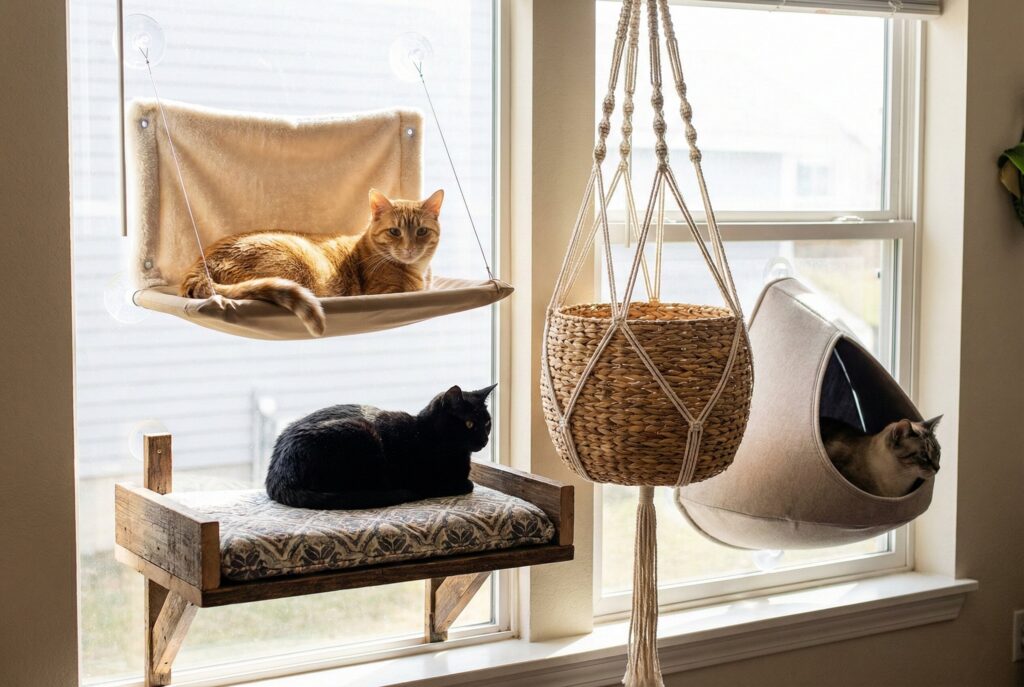
If you share your home with a feline friend, you know that the window is not just a source of light. It is “Cat TV.” Birds, squirrels, passing cars, and falling leaves provide endless entertainment for indoor cats. A window perch is more than just a bed; it is an essential piece of enrichment furniture that supports your cat’s mental health and natural instincts.
Finding the right perch can be tricky. You have to consider your window type, your cat’s size, and your home decor style. This guide breaks down over 10 distinct ideas, ranging from easy store-bought solutions to rewarding DIY projects. We will cover safety, installation, and how to choose the perfect spot for your kitty to sunbathe and survey their kingdom.
Why Your Cat Needs a Designated Window Spot
Before diving into the designs, it is helpful to understand the biology behind this behavior. Cats are predators and territorial observers. In the wild, high vantage points allow felines to spot prey and avoid larger predators.
Mental Stimulation
Indoor cats live safe lives, but they can easily become bored. Boredom often leads to destructive behaviors like scratching furniture or overeating. A window perch gives them a dynamic, ever-changing environment to watch. It keeps their brains active as they track movements outside.
Temperature Regulation
Cats have a higher comfortable body temperature than humans. They seek out heat sources to conserve energy. A sunny window is the perfect natural heater. A perch allows them to soak up warmth without lying on a cold floor or drafty sill.
Safety and Security
Height gives cats a sense of security. When they are up high, they can see everything happening in the room without being in the middle of foot traffic. This is especially important in households with dogs or small children. A window perch serves as a safe retreat where they can relax undisturbed.
Key Factors to Consider Before You Buy or Build
Not all perches work for all windows. Taking a few measurements and assessing your specific situation will save you time and money.
Window Type and Mechanics
- Double Hung/Sash Windows: These slide up and down. They often have a small ledge that can be utilized for clamp-style perches.
- Casement/Crank Windows: These open outward. You generally cannot use perches that require closing the window to secure them. Suction cup models are usually best here.
- Bay Windows: These offer deep sills but might have odd angles. Custom cushions or free-standing perches work well here.
Weight Capacity
This is the most critical safety factor. If you have a large breed like a Maine Coon or a Ragdoll, or if you have two cats who like to cuddle, you need a heavy-duty solution. Standard suction cup perches often hold up to 30-40 pounds, but shelves drilled into studs can hold 50 pounds or more. Always check the manufacturer’s rating or your hardware specs.
Rental vs. Owned Home
If you rent, you likely cannot drill holes into the window frame or walls. You will need non-invasive options like suction cups, tension rods, or freestanding trees. Homeowners have more flexibility to install permanent, sturdy shelves.
1. The Classic Suction Cup Hammock (Store Bought)
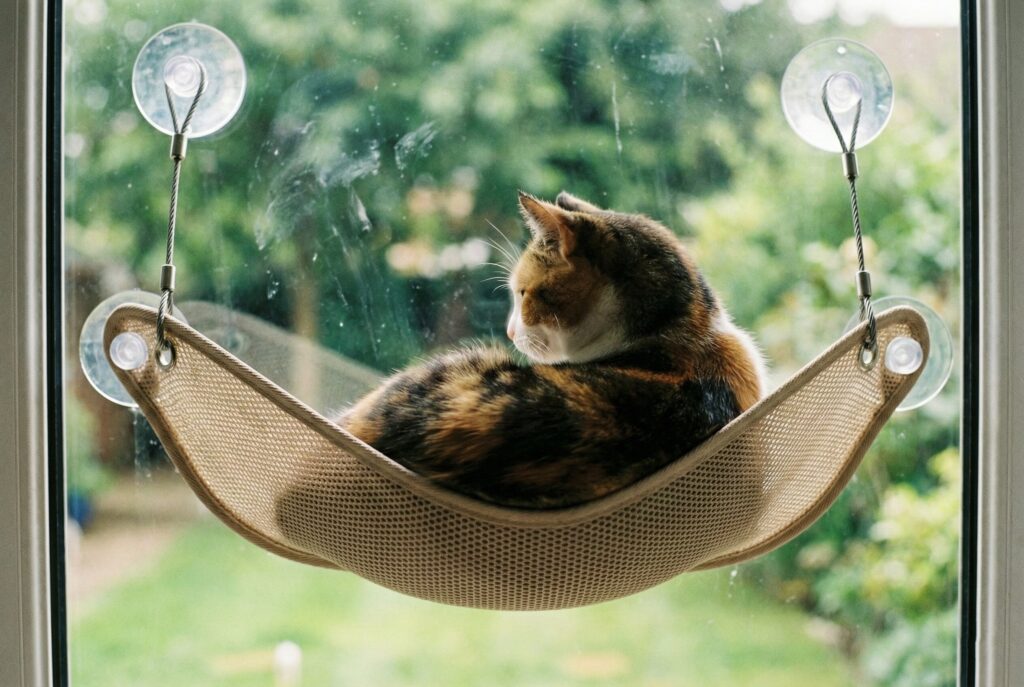
This is currently one of the most popular options on the market. It uses industrial-strength suction cups to attach a fabric hammock directly to the window glass. It creates a floating effect that looks modern and saves floor space.
Why It Works
It is incredibly easy to install and move. If you realize your cat prefers the east-facing window over the south-facing one, you can switch it in seconds. Most models use a breathable mesh fabric, which keeps cats cool in the summer while they bake in the sun.
Best For: Renters, apartments with limited space, and glass windows without grids.
Installation Tip: Clean the glass thoroughly with alcohol before attaching the cups. Warm the suction cups in warm water to make them more pliable and increase the vacuum seal.
2. The Window Sill Extender (DIY Friendly)
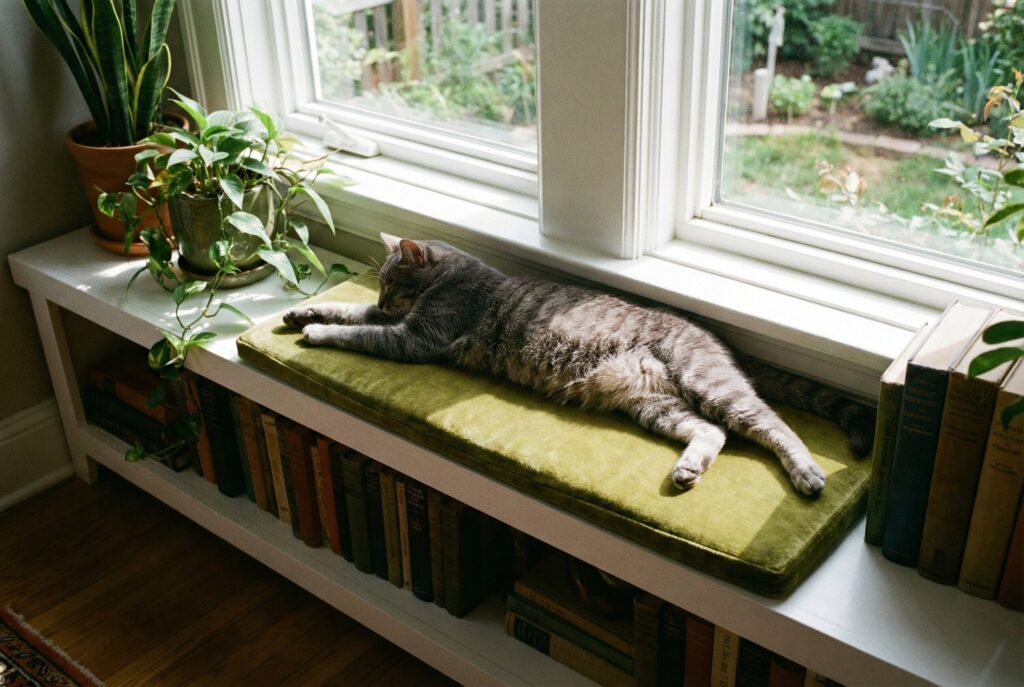
Many modern homes have very shallow window sills that are barely two inches deep. A cat cannot comfortably perch there. A sill extender is a solid shelf that attaches to the existing sill to widen it.
How to Build It
You can buy pre-made extenders that use Velcro or clamps. For a DIY version, cut a piece of wood to the width of your window and your desired depth (usually 10-12 inches). Use shelf brackets (L-brackets) to secure the wood to the wall beneath the window. This creates a permanent, sturdy ledge.
Best For: Homeowners, heavy cats, and windows with traditional wooden trim.
3. The Hanging Macramé Cat Bed (Boho Style)
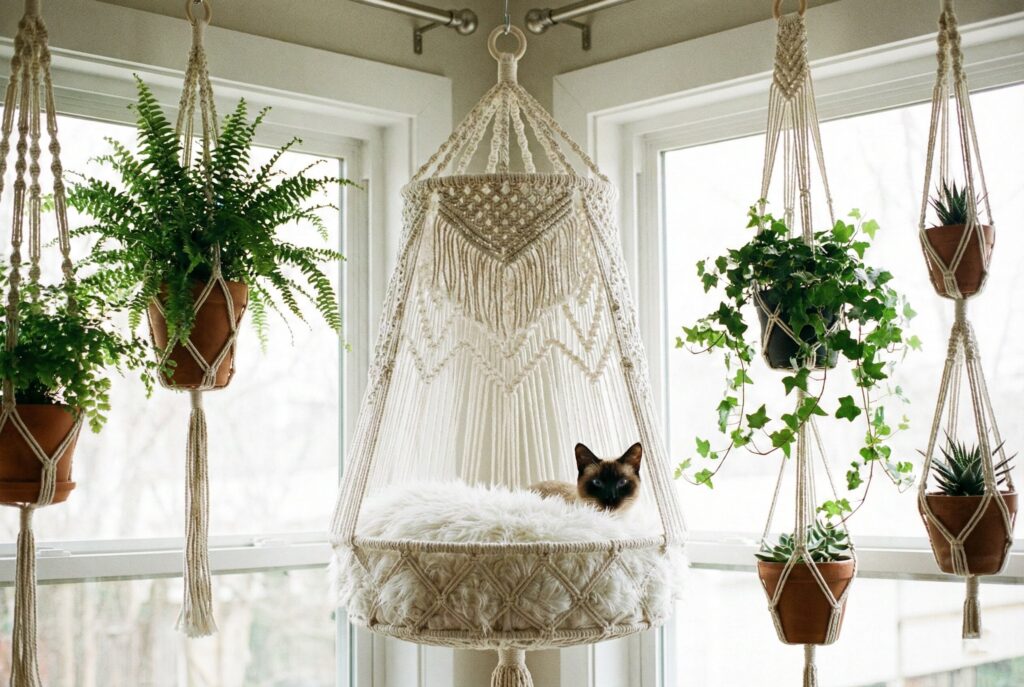
For those who want their cat furniture to look like art, a macramé hanger is a beautiful choice. This style hangs from a curtain rod or a ceiling hook in front of the window, featuring a woven basket or cushion at the bottom.
Why It Works
It adds texture and warmth to your room decor. It swings gently, which some cats find soothing. Because it hangs from above, it does not require contact with the glass or the sill, making it great for windows with uneven surfaces.
Best For: Boho-chic interiors, smaller cats (under 12 lbs), and owners who love aesthetics.
4. The Radiator Bed (Warmth Focus)
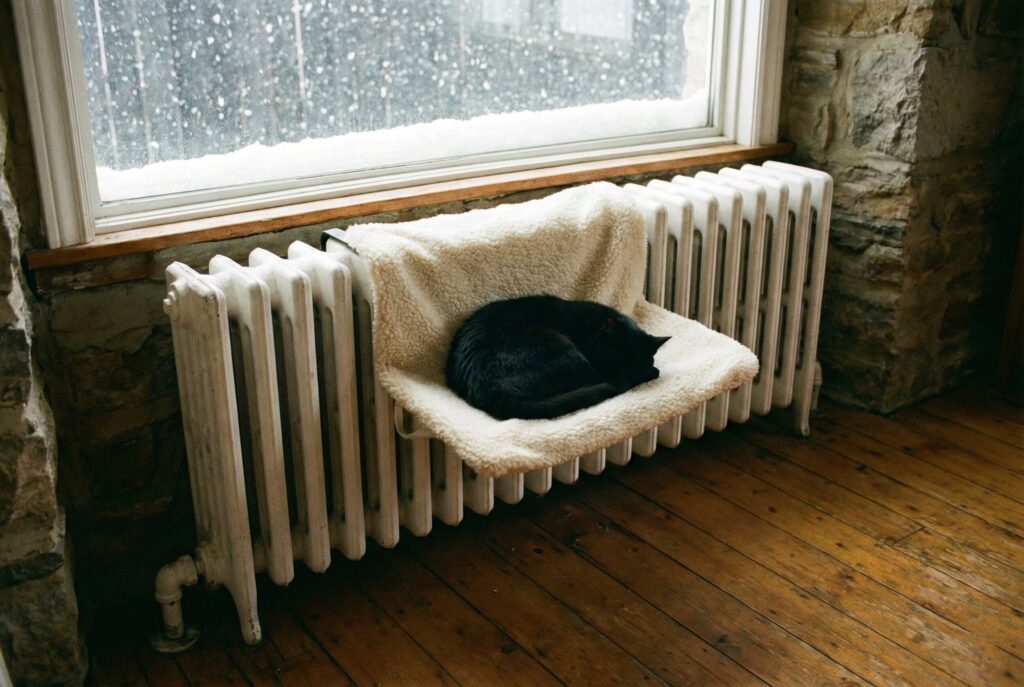
In many older homes and apartments, radiators are positioned directly under windows. A radiator bed hooks over the top of the radiator. This utilizes the “dead space” and provides the ultimate heated seat during winter.
Why It Works
It combines the view from the window with the heat from the radiator. Most store-bought models have a metal frame covered in plush faux fur. The heat radiates up through the bed, keeping stiff joints warm, excellent for senior cats.
Best For: Cold climates, senior cats with arthritis, and homes with traditional radiators.
5. The Cat Tree with High-Rise View (Furniture)
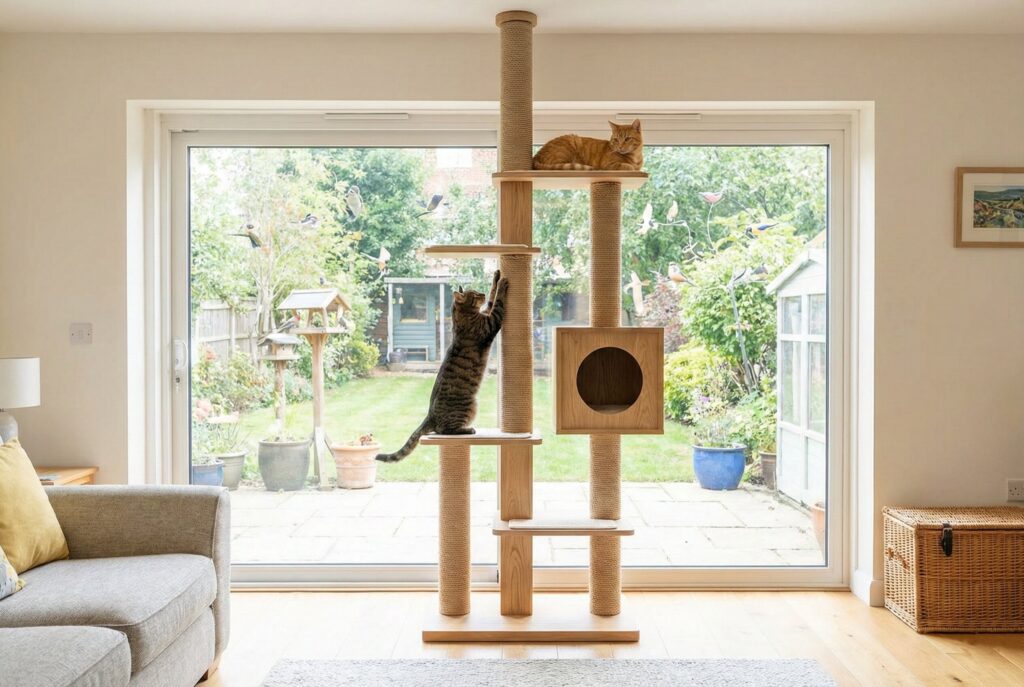
Sometimes the best window perch isn’t attached to the window at all. A tall, sturdy cat tree placed strategically in front of a window offers multiple levels of viewing.
Why It Works
This is the safest option for very large cats or multi-cat households. There is no risk of suction cups failing or shelves pulling out of the drywall. It also offers vertical territory, allowing cats to climb and scratch before settling down for a nap. Look for a tree with a flat “penthouse” bed at the top that aligns with the window height.
Best For: Multiple cats, heavy cats, and renters who cannot mount anything.
6. The Floating Shelf Perch (Minimalist)
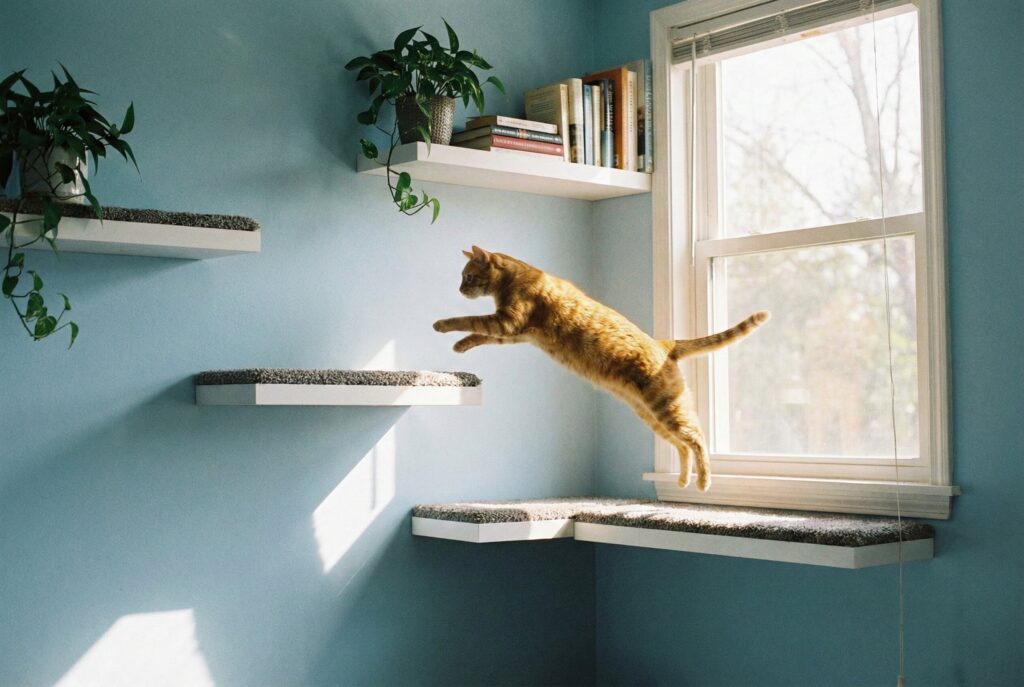
If you dislike the look of bulky cat trees, floating shelves are the answer. These are installed directly into the wall studs next to or under the window. They appear to float without visible brackets.
Design Tip
Create a “staircase” of floating shelves leading up to the main window perch. This allows the cat to climb up easily. You can cover the tops of the shelves with carpet squares or cork for traction.
Best For: Modern minimalist homes, agile cats, and permanent installations.
7. The “Catio” Window Box (Outdoor Feel)
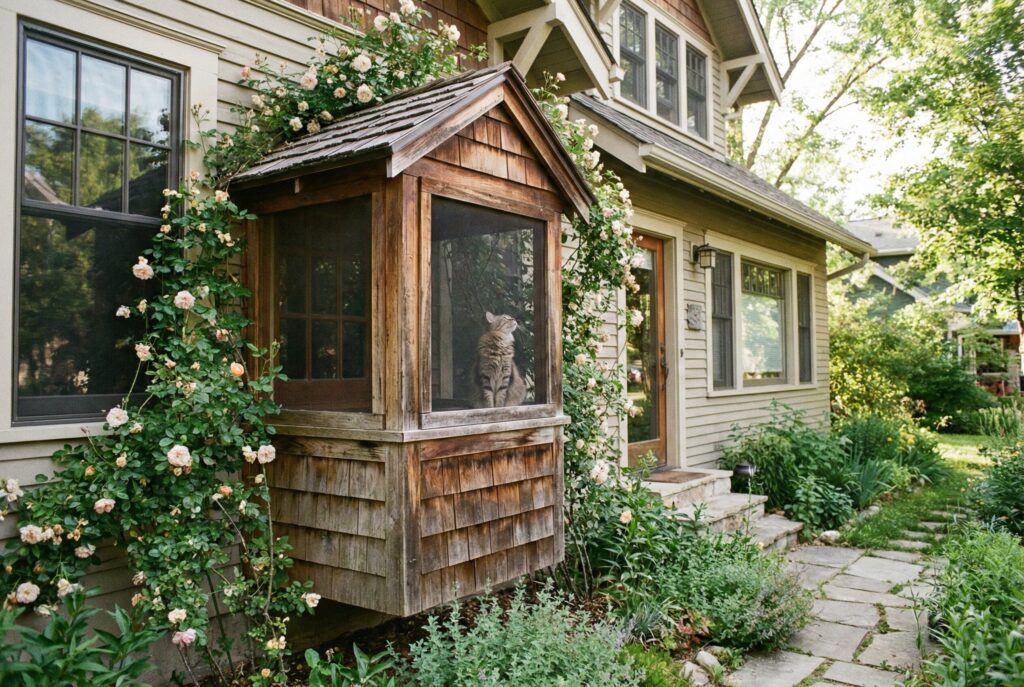
This is the ultimate upgrade. A window box catio is a screened-in enclosure that protrudes from the window, allowing your cat to technically be “outside” while remaining safe behind wire mesh.
How to Implement
These can be bought as kits or built using wood framing and hardware cloth. The unit sits in the window track like an air conditioner unit. It allows fresh air, smells, and sounds to reach your cat, providing superior sensory enrichment compared to looking through glass.
Best For: Indoor cats who crave the outdoors, homeowners, and mild climates.
8. The Corner Window Ledge (Space Saver)
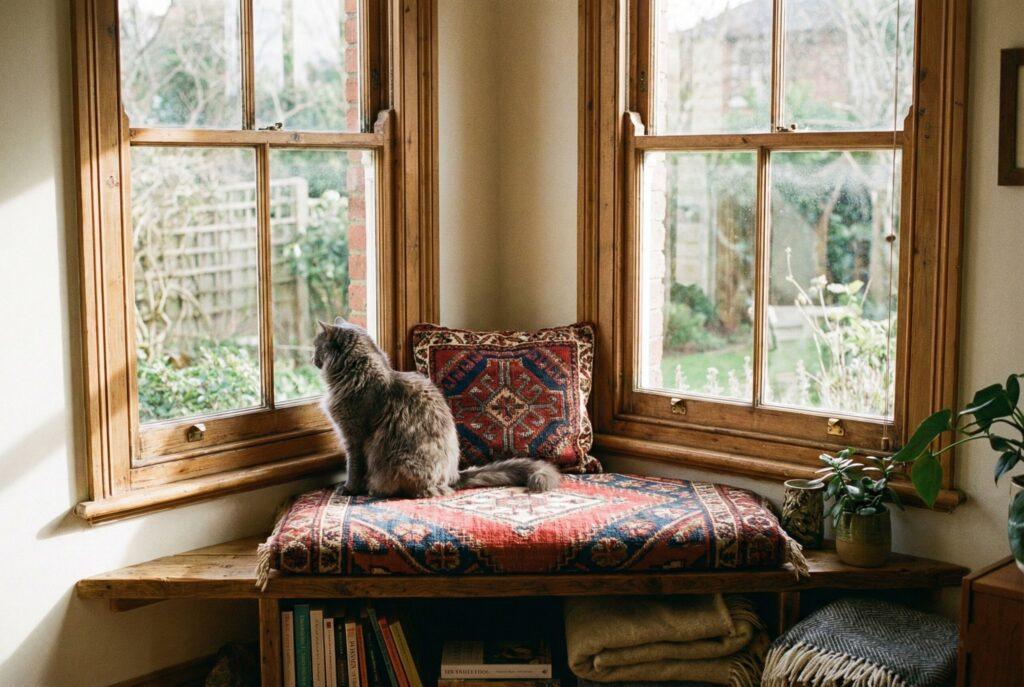
Corner windows are architecturally beautiful but hard to furnish. A custom corner shelf is a brilliant use of this space.
DIY Approach
Cut a piece of plywood into a triangle or a rounded quarter-circle shape. Use heavy-duty brackets to mount it to the studs on both converging walls. This creates a deep, cozy corner where a cat can feel protected on two sides while looking out.
Best For: Corner windows, small rooms, and shy cats who like feeling enclosed.
9. The Pod or Bubble Perch (Modern Design)
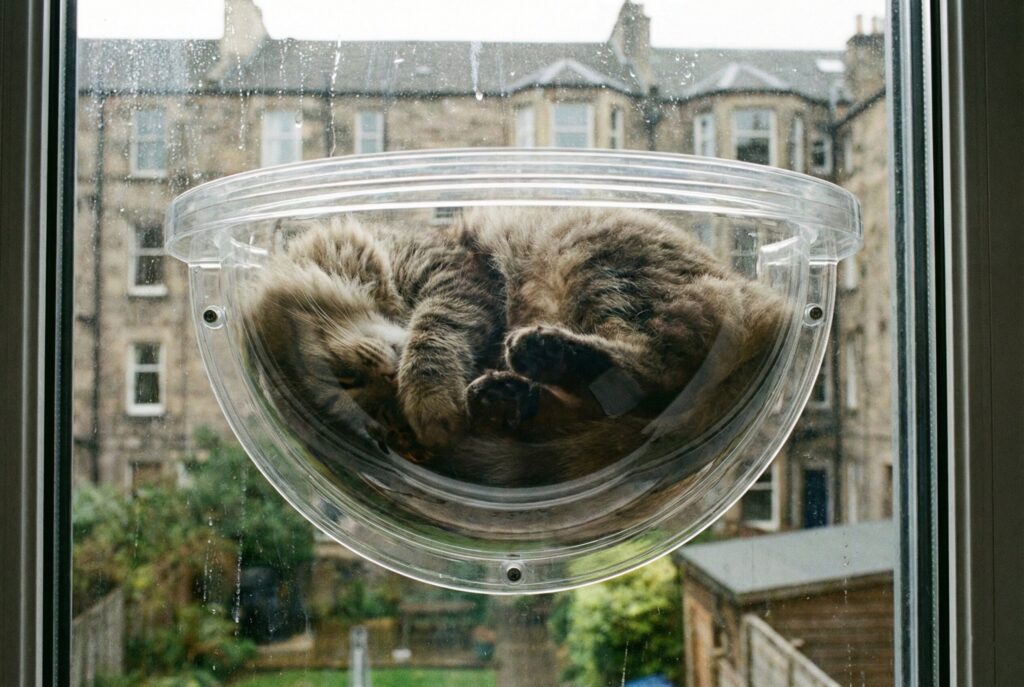
These are distinct from standard hammocks. They usually feature a clear acrylic bowl or a semi-enclosed plastic “pod” that suctions to the window.
Why It Works
The clear acrylic bowl allows you to see your cat’s paws and belly from underneath (a very cute perspective). The pod style offers a sense of privacy and enclosure, which makes anxious cats feel safer than they would on an exposed open platform.
Best For: Modern decor, Instagram-worthy photos, and cats who like to curl up tightly.
10. The Ladder or Step-Up Perch (Senior Cats)
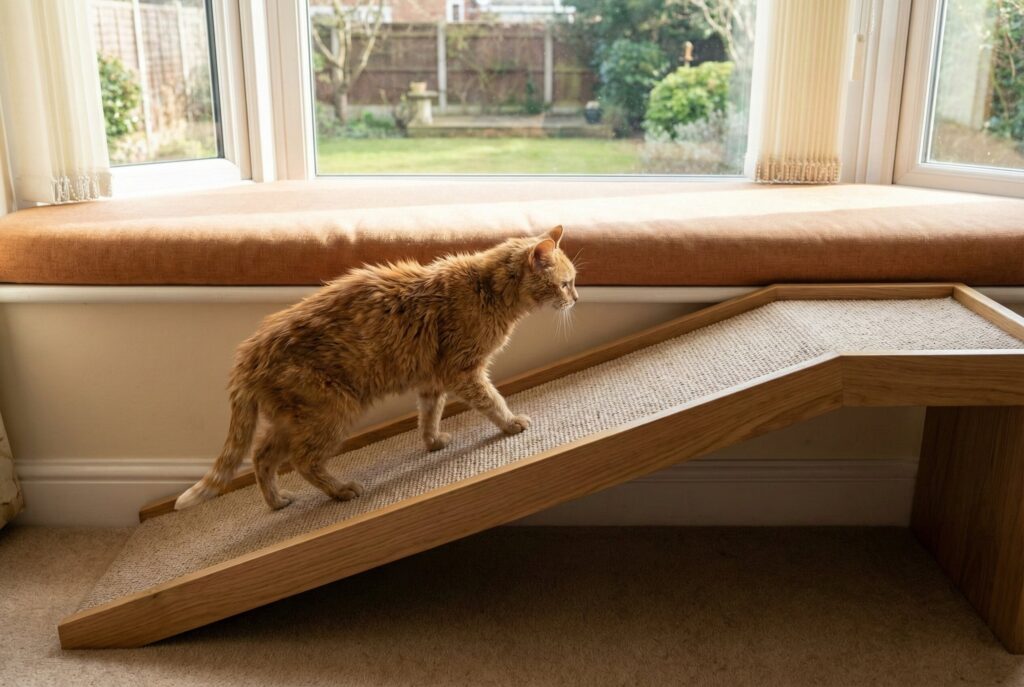
As cats age, jumping onto high sills becomes painful or impossible. A step-up perch integrates a set of stairs or a ramp leading up to the window platform.
DIY or Buy
You can buy pet stairs and place them next to a windowsill. Alternatively, you can build a window box that has a built-in ramp with a sisal scratching surface. This turns the accessibility feature into a dual-purpose scratcher.
Best For: Geriatric cats, cats with mobility issues, and munchkin breeds.
11. The PVC Pipe Hammock (Budget DIY)
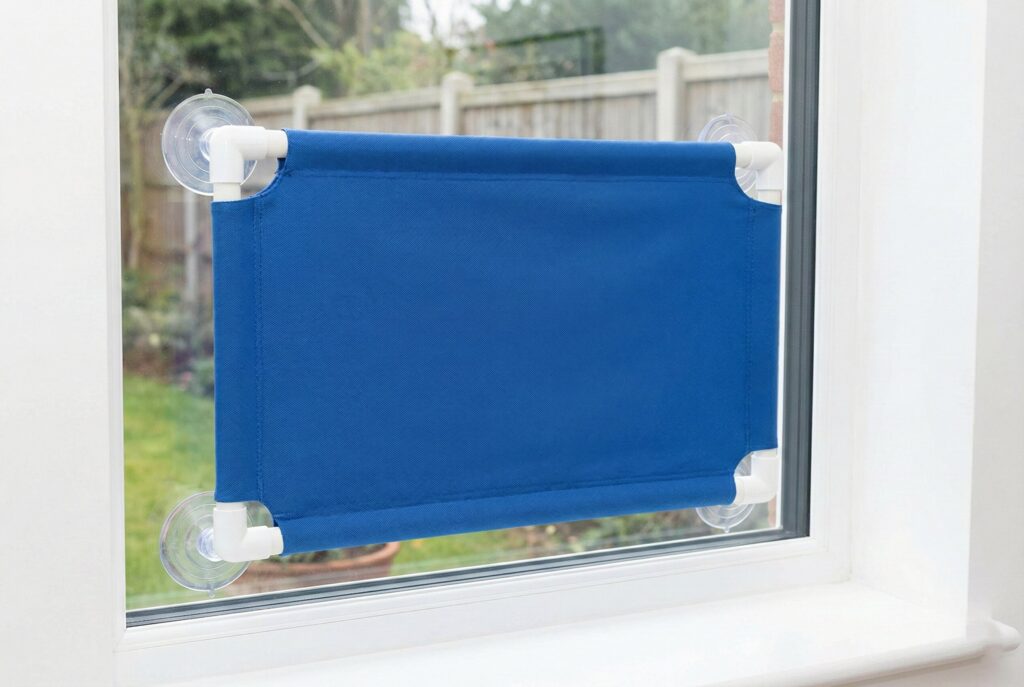
If you are handy and on a budget, PVC pipe is an excellent material. It is lightweight, cheap, and easy to cut.
How to Build
Construct a rectangular frame using PVC pipes and elbow connectors. Sew a simple fabric sleeve to slide over the pipes before connecting the final side. Use industrial suction cups (available at hardware stores) that can screw into the PVC frame, or attach chains to hang it from the curtain rod hardware.
Best For: DIY beginners, budget-conscious owners, and easy cleaning (PVC can be wiped down).
12. The Industrial Pipe & Wood Ledge (Rustic DIY)
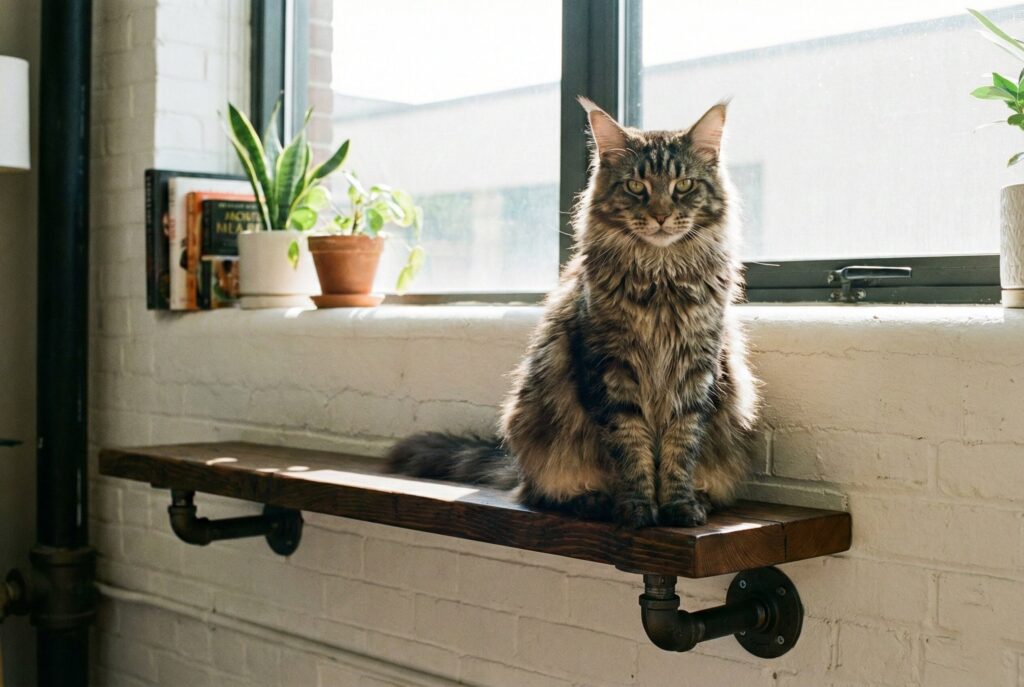
This is a sturdy, stylish option for those who love the “farmhouse” or industrial look. It uses black iron plumbing pipes and flanges as the support brackets for a wooden shelf.
How to Build
Screw iron flanges into the wall studs below the window. Thread iron pipes and elbows to create the L-shape support. Place a stained wood plank on top and secure it with pipe straps. This is incredibly strong and can hold even the heaviest cats.
Best For: Heavy cats, rustic/industrial decor, and permanent installation.
Step-by-Step Guide to a Safe DIY Installation
Building the perch is only half the battle. Installing it correctly is vital to prevent falls and injuries.
1. Finding the Studs
Never rely on drywall anchors alone for a perch that will hold a jumping animal. When a cat jumps off, the force exerted is much higher than their static body weight. Use a stud finder to locate the wooden beams behind your wall. Always screw your brackets into these studs.
2. Securing Suction Cups
If using a suction model, maintenance is key.
- Clean: Use glass cleaner or rubbing alcohol on the window. Dust and oil are the enemies of suction.
- Check: Press the cups firmly to release air bubbles.
- Re-check: Check the seal once a month. Temperature changes (hot sun to cold nights) can cause the suction to loosen over time.
3. Choosing the Right Fabric
If you are sewing a cushion or hammock, choose durable, washable fabrics.
- Canvas/Denim: Durable and resists claws.
- Faux Fur/Sherpa: Warm and cozy, great for winter.
- Outdoor Fabric: Fade-resistant if the window gets intense direct sunlight.
Making the Perch Irresistible
You bought it or built it, but your cat won’t use it. This is a common frustration. Here is how to encourage them.
Scent Marking
Place a blanket or t-shirt that smells like you (or them) on the new perch. Cats rely heavily on scent. If it smells like the factory or fresh wood, they might be wary.
Catnip and Treats
Sprinkle a little high-quality catnip on the perch. You can also feed them treats only when they jump up there. This creates a positive association with the spot.
Bird Feeders
The view is the main attraction. Place a bird feeder outside the window near the perch. Once your cat realizes that the perch offers a front-row seat to the bird show, they will never leave.
Maintenance and Hygiene
Window sills collect a lot of hair, dander, and dust.
Vacuuming
Vacuum the cushion or fabric weekly to remove hair and flea eggs.
Washing
Choose perches with removable, machine-washable covers. If the cover is not removable, spot clean with a pet-safe enzymatic cleaner.
Glass Care
Cats will press their noses against the glass. Keep the window clean using non-toxic cleaners (vinegar and water is a great, safe choice) so your cat isn’t inhaling harsh chemical fumes while sunbathing.
Conclusion
Creating a window perch for your cat is one of the kindest things you can do for them. It bridges the gap between their safe indoor world and the exciting outdoor world. Whether you opt for a quick suction-cup hammock or a custom-built industrial shelf, the result is the same: a happier, more stimulated, and relaxed cat.
Start by assessing your window space today. Look at the light, check the view, and pick a project from this list. Your cat will thank you with purrs and slow blinks from their new favorite spot.