
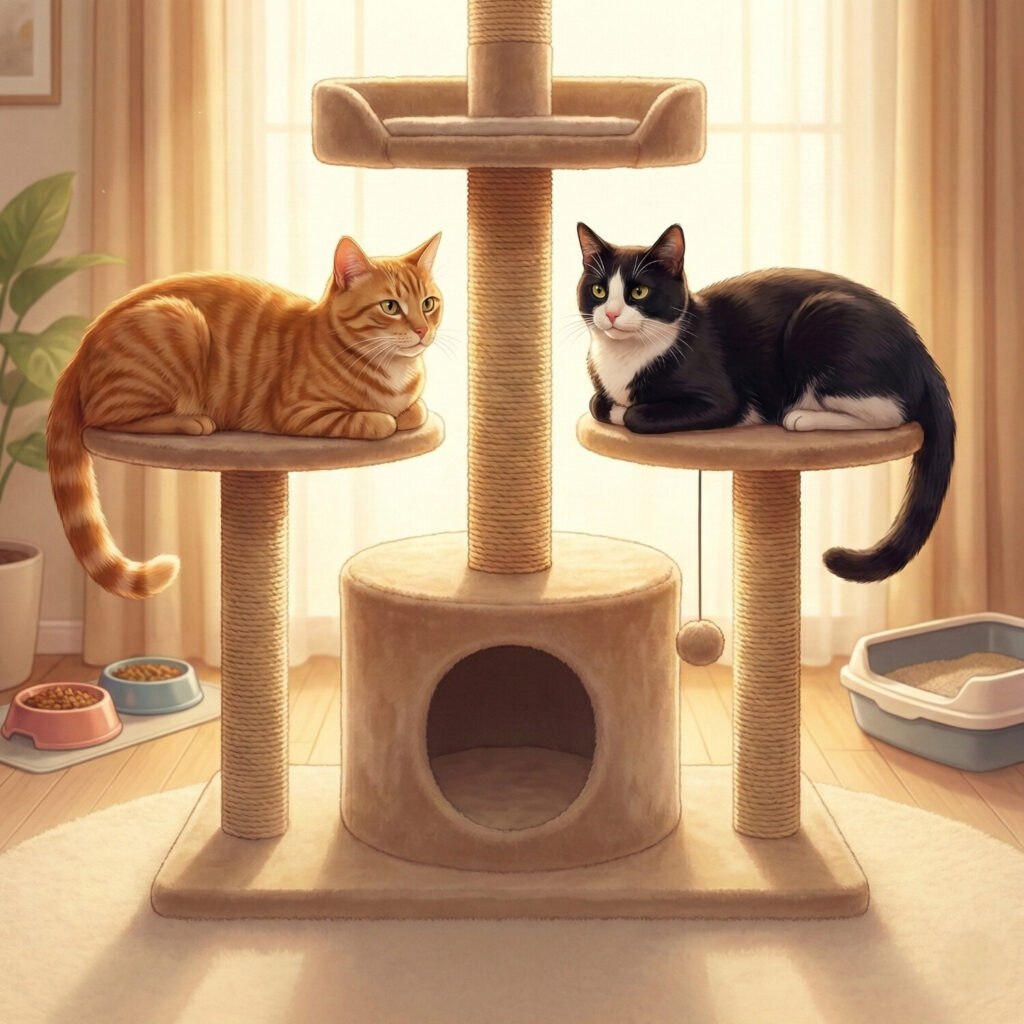
To reduce aggression between household cats, first separate them to de-escalate tension. Reintroduce them slowly using scent swapping and visual barriers. Ensure each cat has its own resources, including food bowls, litter boxes, and vertical space, to prevent territorial disputes. Consult a veterinarian to rule out pain or illness as a cause of the aggression.
Summary Table
| Strategy | Action Step | Goal |
| Medical Check | Visit the vet immediately | Rule out pain or illness causing lashing out |
| Separation | Keep cats in different rooms | Reset the hierarchy and lower stress levels |
| Resource Allocation | Add more bowls, beds, and boxes | Eliminate competition for basic needs |
| Scent Swapping | Exchange bedding between cats | create a communal group scent |
| Vertical Space | Install cat trees and shelves | Allow cats to exist in the same room without contact |
| Play Therapy | Schedule daily interactive play | Burn off energy and build confidence |
How to Reduce Aggression Between Household Cats
Before you can stop cats from fighting, you must understand why it is happening. Cats are territorial animals. In the wild, they avoid conflict by staying away from each other. In a home, they are forced to share a limited amount of space. This unnatural proximity often leads to stress and physical confrontation.
Aggression is rarely random. It usually stems from fear, territory disputes, redirected frustration, or medical issues. Identifying the specific trigger is the first step toward peace.
Read Also: How to Stop Cats From Waking You at Night
Types of Aggression
- Territorial Aggression: This occurs when a cat feels an intruder has invaded its domain. It is common when a new cat is introduced or when a resident cat reaches social maturity.
- Redirected Aggression: A cat sees a trigger, like a stray cat outside the window, but cannot attack it. Instead, it attacks the nearest housemate.
- Fear Aggression: A defensive reaction where a cat feels cornered and strikes out to protect itself.
- Pain-Induced Aggression: A cat in physical pain, perhaps from arthritis or dental disease, will growl or bite to avoid being touched or bothered.
Step 1: Rule Out Medical Causes
Sudden changes in behavior are often physical, not psychological. If two cats have lived together peacefully for years and suddenly start fighting, one of them is likely sick or in pain.
Cats are masters at hiding illness. By the time you notice symptoms, the condition may be advanced. A cat with a toothache, urinary tract infection, or joint pain has a shorter fuse. They may lash out when a housemate approaches them playfully.
Take both cats to the veterinarian for a full wellness exam. Blood work and a physical checkup can reveal hidden issues. If a medical problem is found, treating it often resolves the aggression without further training.
Step 2: Immediate Separation
If the fighting involves fur flying, blood, or fear urination, you must separate the cats immediately. Do not yell or hit the cats, as this adds to their stress.
Place the aggressor in a “sanctuary room” with all necessary supplies. This includes a litter box, food, water, and a comfortable bed. This is not a punishment. It is a cooling-off period.
Benefits of Separation
- Safety: It prevents physical injury and expensive vet bills.
- Stress Reduction: It lowers cortisol levels for both cats, allowing them to relax.
- Reset Button: It breaks the cycle of staring, stalking, and attacking.
Keep them separated until both cats are eating and using the litter box normally. This could take a few days or even weeks depending on the severity of the conflict.
Step 3: The Reintroduction Process
Once the cats are calm, you cannot simply open the door. You must treat them as strangers meeting for the first time. This process creates positive associations rather than negative ones.
Phase A: Scent Swapping
Cats communicate primarily through scent. They need to get used to each other’s smell without the threat of physical contact.
- Rub a clean sock or washcloth on the cheek of Cat A. This collects facial pheromones, which are “friendly” scents.
- Place the sock near Cat B, but not directly in their food or bed. Let them investigate it at their own pace.
- Reward Cat B with a high-value treat if they sniff the sock calmly.
- Repeat the process for the other cat.
- Swap bedding or blankets between the two distinct areas.
Phase B: Visual Access
Once the cats accept the scents without hissing, allow them to see each other from a distance. Use a baby gate or crack the door slightly (secured with a doorstop).
- Feed the cats on opposite sides of the closed door.
- Gradually move the bowls closer to the door each day.
- The goal is for them to associate the presence of the other cat with the pleasure of eating.
Phase C: Short Supervised Meetings
Allow the cats to be in the same room for short periods. Keep these sessions brief, perhaps only 5 minutes.
- Distract both cats with toys or treats.
- Do not force them to interact. Ignoring each other is a win.
- If you see staring or flattened ears, separate them immediately.
Step 4: Optimize Your Home Environment
Competition for resources is a major driver of aggression. In a multicat household, you must follow the “N+1 Rule.” This means you need one of every resource for each cat, plus one extra.
Litter Boxes
Litter box guarding is a common bullying tactic. One cat may lay in wait and ambush the other as they exit the box. This causes the victim to eliminate outside the box or hold it in, leading to health issues.
- Place litter boxes in different rooms.
- Do not line them up side-by-side, as cats view this as one large box.
- Choose open locations where a cat cannot be trapped.
Food and Water Stations
Feeding cats from a single bowl forces them to compete. Even if they eat from separate bowls placed next to each other, the proximity creates tension.
- Create separate feeding stations in different parts of the house.
- Utilize puzzle feeders to slow down eating and provide mental stimulation.
- Ensure water sources are fresh and plentiful.
Vertical Territory
Cats live in three dimensions. Increasing vertical space effectively increases the square footage of your room.
- Cat Trees: Tall structures allow cats to survey their territory from a safe vantage point.
- Shelving: Install shelves or walkways on the walls.
- Window Perches: Give each cat a view of the outside.
Vertical space allows a timid cat to navigate a room without crossing paths with a dominant cat. The aggressor can claim the high ground, which boosts their confidence without requiring a fight.
Step 5: Energy Management and Play
A bored cat is a dangerous cat. Pent-up energy often manifests as aggression. If a cat does not have a hunting outlet, they may hunt their housemate.
Interactive Play
You must engage your cats in play that mimics the predatory sequence: stare, stalk, chase, pounce, and kill.
- Use wand toys to simulate birds or insects.
- Conduct two 15-minute play sessions every day.
- Focus heavily on the aggressor to drain their energy.
- End the play session with a protein-rich snack to complete the “hunt-eat-groom-sleep” cycle.
Environmental Enrichment
Provide solo activities for when you are not home.
- Food Puzzles: Make them work for their dry food.
- Cat TV: Leave a video of birds or squirrels playing on a screen.
- Scent Enrichment: Bring in a paper bag with a few leaves or pinecones from outside for them to investigate.
Read Also: Can Cats Learn Their Names?
Step 6: Using Pheromones and Calming Aids
Synthetic pheromones can help lower the ambient tension in a home. Products like Feliway mimic the facial pheromones cats use to mark their territory as safe.
- Diffusers: Plug these into the rooms where the cats spend the most time.
- Sprays: Use sprays on bedding or inside carriers.
- Calming Collars: These release pheromones directly around the cat’s head.
While pheromones are not a cure-all, they “take the edge off” and make behavior modification training more effective.
Step 7: Identifying and Managing Triggers
You must become a detective to solve long-term aggression. Keep a journal of when fights occur. Note the time of day, the location, and what happened immediately before.
Common Triggers
- Redirected Aggression: If a cat sees a rival outside, block the view. Apply opaque window film to the bottom half of windows.
- Resource Guarding: If fights happen near the food bowl, move the bowls further apart or to different rooms.
- Transition Times: Fights often happen during high-activity times, like when owners come home from work. Preempt this by tossing treats to separate areas as soon as you walk in the door.
When to Hire a Professional
Some cases of aggression are too complex for an owner to handle alone. If you have tried medical management, reintroduction, and environmental modification without success, seek professional help.
Look for a certified animal behaviorist (CAAB) or a board-certified veterinary behaviorist. These experts can prescribe psychoactive medications (like fluoxetine or gabapentin) to help reduce a cat’s anxiety threshold. Medication is rarely a permanent solution but can provide a bridge to allow training to work.
Long-Term Maintenance
Peace in a multicat household is an active process. You cannot relax once the fighting stops. Maintain the N+1 rule for resources forever. Continue daily play sessions.
Keep an eye out for subtle signs of bullying, such as one cat blocking a doorway or staring the other down.
Recognize that “friends” might not be the realistic goal. “Tolerance” is a victory. If your cats can exist in the same room without hissing or fighting, you have succeeded. They do not need to cuddle or groom each other to have a good quality of life.
Important Don’ts
- Do not punish: Spray bottles, yelling, or physical discipline will only make the cats fear you and increase their overall anxiety.
- Do not force interaction: Holding two cats close to each other will result in scratches and bites.
- Do not ignore the warning signs: A low growl or a twitching tail is a request for space. Respect it before it escalates to a bite.
Conclusion
Reducing aggression between household cats requires patience, observation, and a willingness to change your home environment.
By ruling out medical issues, ensuring ample resources, and managing energy through play, you can turn a war zone back into a peaceful sanctuary. Start today by separating the combatants and giving everyone a chance to reset.