
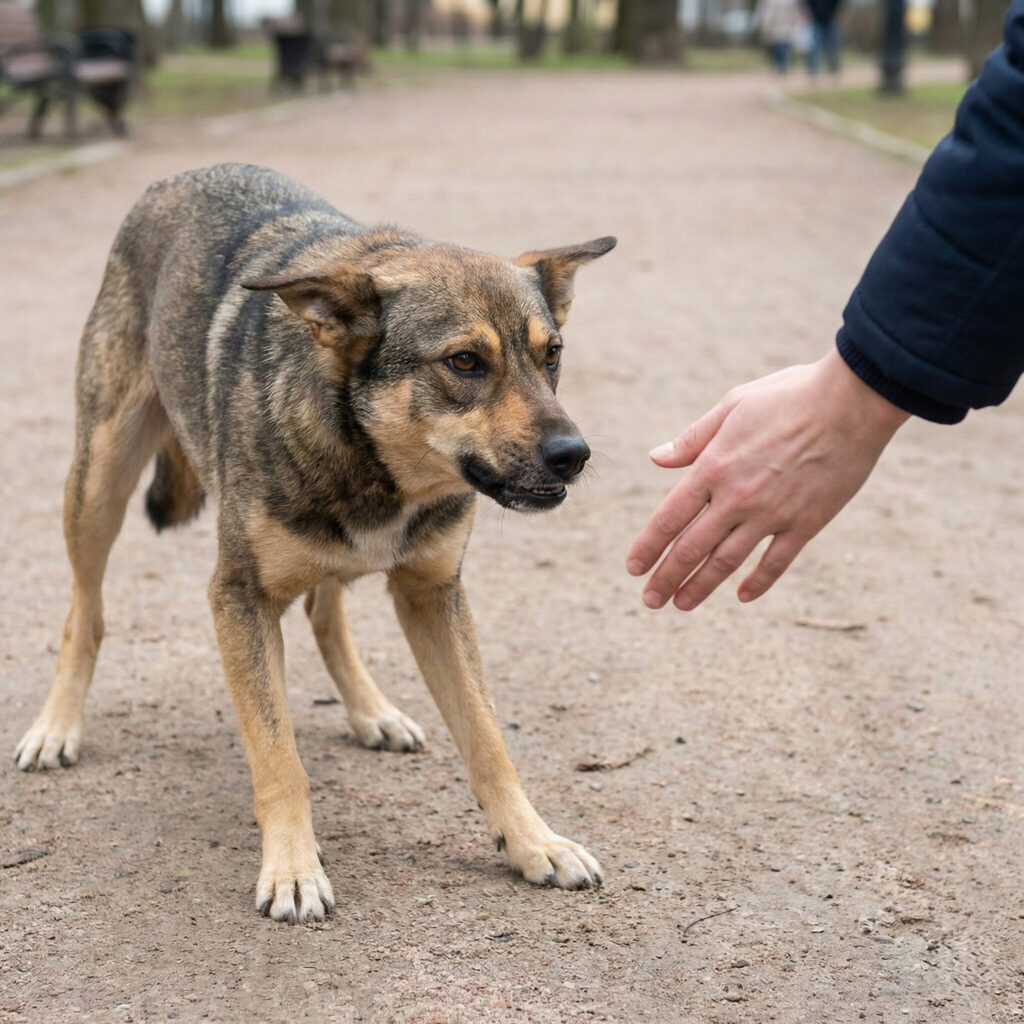
A dog rarely bites “out of the blue.” They almost always provide a series of warning signs before escalating to aggression. To read these signs, you must look at the dog’s entire body, not just the tail. Early, subtle warning signs include yawning when not tired, lip licking, turning the head away, and showing the whites of the eyes (“whale eye”). Escalated warnings include a stiff body posture, freezing in place, a hard, direct stare, and a low growl. Imminent danger signs include snarling (lifting lips to show teeth), snapping air, and lunging. If you see these signs, stop what you are doing, avoid eye contact, and give the dog space immediately.
Summary Table
| Signal Level | Key Behaviors to Look For | What It Means | Recommended Action |
| Subtle (Early Warning) | Lip licking, yawning, blinking, turning head away, moving slowly, “whale eye” (half-moon eye). | The dog is uncomfortable, anxious, or stressed. They are trying to calm the situation. | Stop interacting immediately. Give the dog space. Assess the environment for stressors. |
| Escalated (Clear Warning) | Freezing still, stiff body posture, hard direct stare, low growl, hair standing up on back (piloserection), tucked tail. | The dog feels threatened and is preparing to defend itself. The stress has increased. | Do not move toward the dog. Slowly back away without turning your back. Do not stare. |
| Imminent Danger (Red Alert) | Snarling (showing teeth), snapping jaws at the air, deep guttural barking, lunging forward, muzzle punch. | The dog is seconds away from biting. They have exhausted other options. | Get a barrier between you and the dog if possible. Retreat immediately to safety. |
How to Read Warning Signs Before a Dog Bite
Dog bites are often described as happening “out of the blue” or without warning. In reality, this is rarely true. Dogs are excellent communicators. They speak volumes through their body language every moment of the day. The problem is that humans are often poor at interpreting this language.
We tend to focus on vocalizations like barking, or we misinterpret signals, assuming a wagging tail always means friendliness. Failing to understand what a dog is saying can lead to tragic, preventable situations. By learning to read canine body language, you can respect a dog’s boundaries, reduce their stress, and significantly lower the risk of a bite.
This guide will walk you through the progression of warning signs, from the easiest to miss to the ones you cannot ignore.
The Canine “Ladder of Aggression”
Dogs do not want to bite. Physical conflict is dangerous and energy-expensive for them. Most dogs will try many other behaviors to defuse a situation before they resort to using their teeth.
Behaviorists often refer to the “Ladder of Aggression.” This is a concept showing how a dog escalates their behavior if their initial warnings are ignored.
A dog starts at the bottom of the ladder with subtle signs of discomfort. If the threat (which might be you petting them when they don’t want it) continues, they move up the ladder to more obvious warnings. A bite happens at the top of the ladder when all lower rungs have failed to make the threat go away.
Your goal is to notice the signs at the bottom of the ladder so the dog never has to climb to the top.
The Subtle Whispers: Early Signs of Discomfort
These are the signals most frequently missed by dog owners. They are quiet and non-threatening. Dogs use these signals, sometimes called “appeasement signals” or “calming signals,” to tell you they are stressed and wish to avoid conflict.
If you see these, the dog is politely asking for space.
Yawning When Not Tired
We yawn when we are sleepy. Dogs yawn when they are sleepy, but they also yawn when they are stressed. A stress yawn is often more intense than a sleepy yawn. If you are hugging a dog and they let out a big yawn, they are likely telling you the hug is making them uncomfortable.
Lip Licking or Tongue Flicking
This is a very common sign of anxiety. The dog will quickly flick their tongue out to lick their nose or lips. It happens fast, so you have to be watching for it. It is distinct from licking chops after eating a tasty treat.
Turning the Head or Body Away
If you approach a dog and they turn their head to the side, they are not ignoring you. They are actively trying to diffuse tension. In dog language, a direct approach can be rude or threatening.
Turning away is a polite gesture indicating they do not want trouble. If you continue to get in their face, you are ignoring this polite request.
The “Whale Eye”
This is a classic warning sign. Whale eye occurs when a dog turns their head slightly away from you but keeps their eyes fixed on you. This reveals the white part of the eye (the sclera) in a crescent or half-moon shape. It indicates the dog is highly anxious and feeling trapped.
Read Also: How Portion Sizes Affect Dog Energy Levels
The Clear Talk: Escalating Signals
If the subtle whispers are ignored, the dog will speak louder. These signs indicate rising tension and preparation for a potential “fight or flight” response.
Freezing and Stiffness
A relaxed dog has a loose, wiggly body. A dog preparing for trouble will become rigid. If you are petting a dog and they suddenly go completely still, stop immediately. This “freeze” is a major red flag. It is the moment the dog is deciding whether to flee or fight.
The Hard Stare
A friendly dog has a soft gaze. Their eyes might be slightly squinted or blinking. A threatened dog will lock onto you with a hard, unblinking stare. The eyes may appear cold and intensely focused. This is a direct challenge or threat assessment.
Piloserection (Hackles Raised)
This is when the hair along the dog’s spine stands up, similar to goosebumps on a human. It usually happens over the shoulders and right above the tail. It is an involuntary reaction to arousal. While it can sometimes happen during intense play, it is most often a sign of fear, anxiety, or aggression. The dog is trying to make themselves look bigger.
Low Growling
A growl is a clear communication. Do not punish a dog for growling. If you punish the growl, you are removing the warning system.
A dog that has been taught not to growl may go straight from freezing to biting with no auditory warning at all. A growl means “stop what you are doing right now.”
The Shout: Imminent Danger Signals
These signs mean a bite is seconds away. The dog has run out of patience.
Snarling (Showing Teeth)
Snarling is different from a submissive grin. When a dog snarls, they lift their lips vertically to expose their canine teeth and incisors. The nose often wrinkles up. This is a very clear threat display.
Snapping at Air
This is a warning shot. The dog snaps their jaws in the air near a person or another animal without making contact. They are demonstrating that they can bite and are choosing to miss, but the next one will connect.
Lunging or Muzzle Punching
A lunge is a sudden forward movement toward the threat. A “muzzle punch” is when the dog bumps you hard with their closed mouth. It is the very last step before an open-mouthed bite.
Read Also: Can Dogs Get Bored of Their Food?
Decoding Key Body Parts
To truly understand dog language, you must look at the whole dog, not just one part. However, knowing what specific parts are doing is helpful.
The Truth About Tail Wagging
The biggest myth is that a wagging tail means a happy dog. A tail wag is simply a sign of arousal or emotional engagement.
- The Happy Wag: The tail is usually held at a neutral mid-level position. The wag is wide, sweeping, and often involves the whole hind end of the dog wagging back and forth.
- The Danger Wag: The tail is held high and stiff, like a flagpole. The wag is tight, fast, and vibrating. This indicates high arousal and potential aggression. A tail tucked tightly between the legs indicates extreme fear, which can also lead to a fear-bite.
Ears
- Relaxed: Usually held naturally to the side or slightly back.
- Alert/Aroused: Pricked forward, pointing toward the area of interest.
- Fearful/Stressed: Pinned flat back against the head.
Mouth
A relaxed dog usually has a slightly open mouth with the tongue relaxed. When tension rises, the mouth closes tight. As tension peaks, the lips may pucker forward (offensive pucker) or pull back at the corners (defensive/fear grimace).
Common Scenarios That Lead to Bites
Context is everything. A behavior in one situation might mean something different in another. Be extra vigilant in these scenarios.
Resource Guarding
Many dogs will protect things they find valuable. This could be food, a bone, a favorite toy, a sleeping spot, or even a specific person. If a dog stiffens when you approach them while they have a “high-value” item, back off. Never try to forcibly take an item from a guarding dog.
Fear and Pain
A frightened dog is a dangerous dog. If a dog is cornered, hiding under a bed, or restrained at the vet, their fight-or-flight response is triggered. If they cannot flee, they will fight. Similarly, a dog in pain from an injury or illness may bite if touched near the sore spot, even if they have never bitten before.
Read Also: How Food Changes Can Affect Dog Digestion
What to Do When You See Warning Signs
If you notice any of the warning signs mentioned above, your immediate goal is to de-escalate the situation.
- Stop immediately: Stop moving, stop petting, stop talking.
- Avert your gaze: Do not stare at the dog. Look down or to the side. This is a calming signal.
- Give space slowly: Do not turn your back and run. Back away slowly and calmly to give the dog the distance they are asking for.
- Remove the stressor: If you know what is causing the stress (e.g., a child nearby, another dog), calmly remove the stressor from the environment.
Teaching Children to Read Signs
Children are the most common victims of dog bites because their behavior is often frightening to dogs. They move quickly, speak loudly, and stare directly at dogs. They also tend to hug dogs around the neck, which is highly threatening to a canine.
You must teach children to respect a dog’s space.
- Never disturb a sleeping or eating dog.
- Do not hug dogs. Teach them to pet on the shoulder or chest instead of the head.
- “Be a Tree”: Teach children that if a strange or scary dog approaches, they should stand still like a tree, fold their branches (arms) in, and look at their roots (feet). Boring trees get ignored by dogs.
Conclusion
Reading a dog’s body language is a skill that requires practice. By paying attention to the subtle whispers of discomfort, you can prevent the need for the dog to shout with a bite. Respecting a dog’s signals builds trust and ensures safety for everyone involved.
Remember, a good dog can still bite if put in an impossible situation. It is our job as humans to ensure they aren’t placed in those situations.