
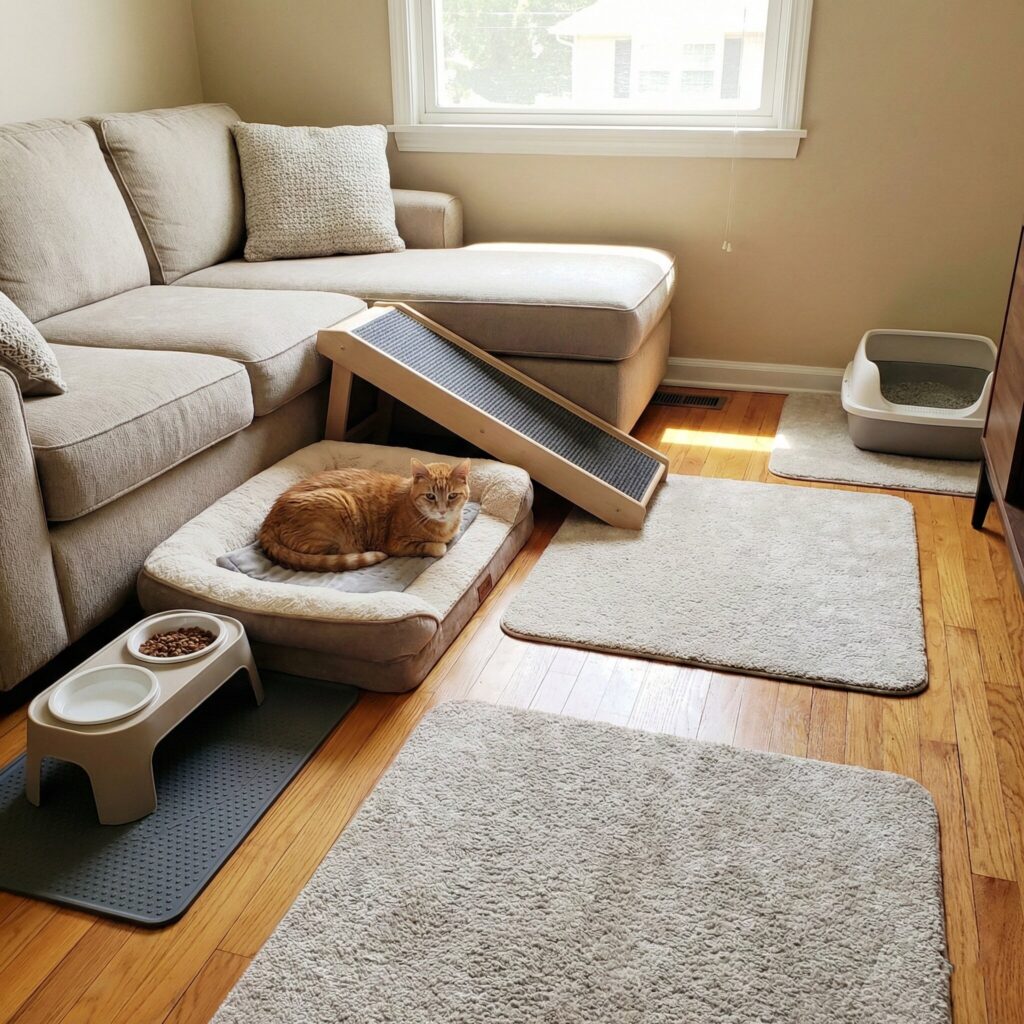
To make your home senior-cat-friendly, focus on accessibility and comfort. Switch to low-entry litter boxes and place them on every floor to prevent accidents. Use ramps or pet stairs to help cats reach furniture and window perches without jumping. Install nightlights to aid failing vision, and swap to elevated, tilted food bowls to reduce neck strain. Finally, invest in orthopedic bedding to support arthritic joints and keep the home warm and draft-free.
Summary Table
| Area of Focus | Recommended Adjustment | Benefit for Senior Cat |
| Mobility | Pet stairs and ramps | Reduces impact on arthritic joints |
| Litter Box | Low-entry, open boxes | Easier access; prevents accidents |
| Dining | Elevated, tilted bowls | Reduces neck strain and aids digestion |
| Sleep | Orthopedic, heated beds | Soothes joint pain and maintains body temp |
| Flooring | Non-slip rugs or mats | Provides traction on slippery surfaces |
| Lighting | Nightlights in hallways | Helps navigation with poor eyesight |
| Grooming | Daily brushing & trimming | Compensates for reduced flexibility |
How to Make Your Home Senior-Cat Friendly
As cats age, their needs change dramatically. The high jumps and frantic sprints of kittenhood are replaced by a need for stability, warmth, and easy access. Making your home senior-cat-friendly isn’t just about adding new gear; it is about observing your cat’s changing physical abilities and modifying their environment to match.
Senior cats, typically those over 11 years old, often suffer from osteoarthritis, reduced vision, and cognitive dysfunction. These conditions can make a standard home environment difficult or even dangerous to navigate.
By making strategic changes to your furniture, flooring, and layout, you can significantly improve your aging pet’s quality of life.
Improving Accessibility and Mobility
The most common issue for aging cats is arthritis. Jumping up on a bed or a windowsill can become painful or impossible. You need to look at your home from the perspective of a cat who can no longer jump.
Install Ramps and Stairs
If your cat loves sleeping on your bed or watching birds from a high window, do not force them to give up these pleasures. Install pet stairs or carpeted ramps.
- Carpeted Surfaces: Ensure the stairs have traction. Wooden stairs can be slippery.
- Gradual Incline: Ramps should not be too steep. A gentle slope is easier for a cat with stiff hips.
- Stability: The steps must be heavy enough not to wobble when the cat climbs them.
Modify Flooring for Traction
Hardwood, tile, and laminate floors are slippery. Senior cats often have weaker muscles and less stability. A slip can result in a soft tissue injury that takes weeks to heal.
- Yoga Mats: Cut up yoga mats and place them in feeding areas or in front of litter boxes.
- Area Rugs: Place runners in hallways and area rugs in the main living spaces. This creates a “pathway” of traction.
- Trim Paw Fur: Long hair between toe pads can cause sliding. Keep this fur trimmed to help their pads grip the floor.
Optimizing the Litter Box Setup
Litter box issues are the number one reason senior cats are surrendered to shelters. Often, the cat is not being “naughty”; they simply cannot physically use their old box anymore.
Switch to Low-Entry Boxes
Standard litter boxes often have high sides to keep litter in. For a cat with arthritis, lifting their legs over a 5-inch rim is painful.
- Cut an Entry: You can modify a plastic storage bin by cutting a low entrance on one side.
- Baking Sheets: For cats with severe mobility issues, large potting trays or baking sheets can serve as makeshift litter pans with very low rims.
Location Matters
If your cat has to go down to the basement to use the box, they might not make it in time. Stairs are a barrier.
- One on Every Floor: Ensure there is at least one box on every level of your home.
- Avoid Obstacles: Do not place the box behind baby gates or in areas that require jumping to access.
- Nightlights: Place a nightlight near the litter box. Senior cats often have poor night vision, and a dark room can be disorienting.
Dining and Hydration Adjustments
Weight loss and dehydration are significant risks for senior cats. The mechanics of eating can actually become difficult if they have dental disease or neck pain.
Elevated and Tilted Bowls
Eating from a bowl on the floor forces a cat to crouch and lower their neck below their stomach. This is uncomfortable for arthritic cats and can cause regurgitation.
- Height: Raise the bowl by 4 to 6 inches.
- Tilt: A slight tilt keeps the food gathered at the bottom, making it easier to scoop up without chasing kibble around the rim.
- Whisker Fatigue: Use wide, shallow dishes to prevent sensitive whiskers from touching the sides.
Encourage Water Intake
Kidney function declines with age, making hydration critical.
- Multiple Stations: Place water bowls in several rooms, not just the kitchen. If a cat is resting in the bedroom, they may not walk to the kitchen for a drink.
- Fountains: Many cats prefer running water. A quiet water fountain can encourage them to drink more.
- Dietary Moisture: Switch to wet food or add water to dry kibble to increase fluid intake passively.
Creating Comfort and Sleep Zones
Senior cats sleep up to 20 hours a day. They lose muscle mass and body fat as they age, making them more susceptible to the cold and pressure sores.
Orthopedic Bedding
A thin blanket on the floor is no longer sufficient.
- Memory Foam: Look for beds made of solid orthopedic foam, which distributes weight evenly and supports joints.
- Egg Crate Foam: This is also effective for airflow and cushioning.
- Washable Covers: Senior cats may have occasional accidents. Ensure the bed cover is waterproof or easily machine washable.
Warmth is Key
Arthritic joints stiffen up in the cold.
- Heated Beds: Use pet-safe heated pads or beds that plug in. Ensure the cord is chew-proof.
- Self-Warming Materials: If you don’t want to use electricity, use beds lined with Mylar (space blanket material) that reflects the cat’s body heat back to them.
- Sun Spots: clear clutter from window sills where the sun hits. Place a soft pad there.
Safety and Cognitive Support
Just like humans with dementia, senior cats can suffer from Cognitive Dysfunction Syndrome (CDS). They may get lost in their own home, vocalize at night, or forget simple routines.
Stick to a Routine
Cats rely on predictability.
- Consistent Furniture: Avoid rearranging the furniture. Blind or confused cats navigate by memory. Moving a sofa can cause them to bump into things or become distressed.
- Clutter-Free Paths: Keep hallways and main walkways clear of shoes, bags, and boxes.
Sensory Aids
- Scent Markers: Use synthetic pheromones (like Feliway) in areas where the cat spends the most time. This signals safety and reduces anxiety.
- Lighting: As mentioned earlier, nightlights are essential. Total darkness can cause panic in cats with cognitive decline.
Grooming Assistance
An older cat is often a stiff cat. They may no longer be able to twist their spine to groom their lower back or hind legs. This leads to matting, which is painful and pulls on the skin.
Assisted Grooming
- Daily Brushing: Use a soft-bristled brush. Metal rakes might be too harsh for their thinning skin.
- Wipes: Use pet-safe grooming wipes to clean their back end if they cannot reach it.
- Nail Trimming: Senior cat nails do not retract as well and can grow thick and curved, sometimes growing into the paw pad. Check visuals weekly and trim as needed.
Enrichment for the Senior Mind
Just because they can’t chase a laser pointer for an hour doesn’t mean they want to be bored. Mental stimulation slows cognitive decline.
- Food Puzzles: Use easy food puzzles that require them to bat a lever to get a treat.
- Window TV: Place a bird feeder outside a window that has a comfortable perch. This provides hours of passive entertainment (“Cat TV”).
- Low-Impact Play: Use wand toys to gently move a feather along the ground. Let them catch it easily. Do not make them jump.
Conclusion
Making your home senior-cat-friendly requires empathy and observation. Watch how your cat moves. Do they hesitate before jumping on the sofa? Do they meow before using the litter box? These are signs that you need to intervene.
By adding ramps, improving lighting, and choosing the right bedding, you turn your home into a sanctuary where your cat can enjoy their golden years in comfort and dignity. Small changes in your environment make a massive difference in their daily happiness.