
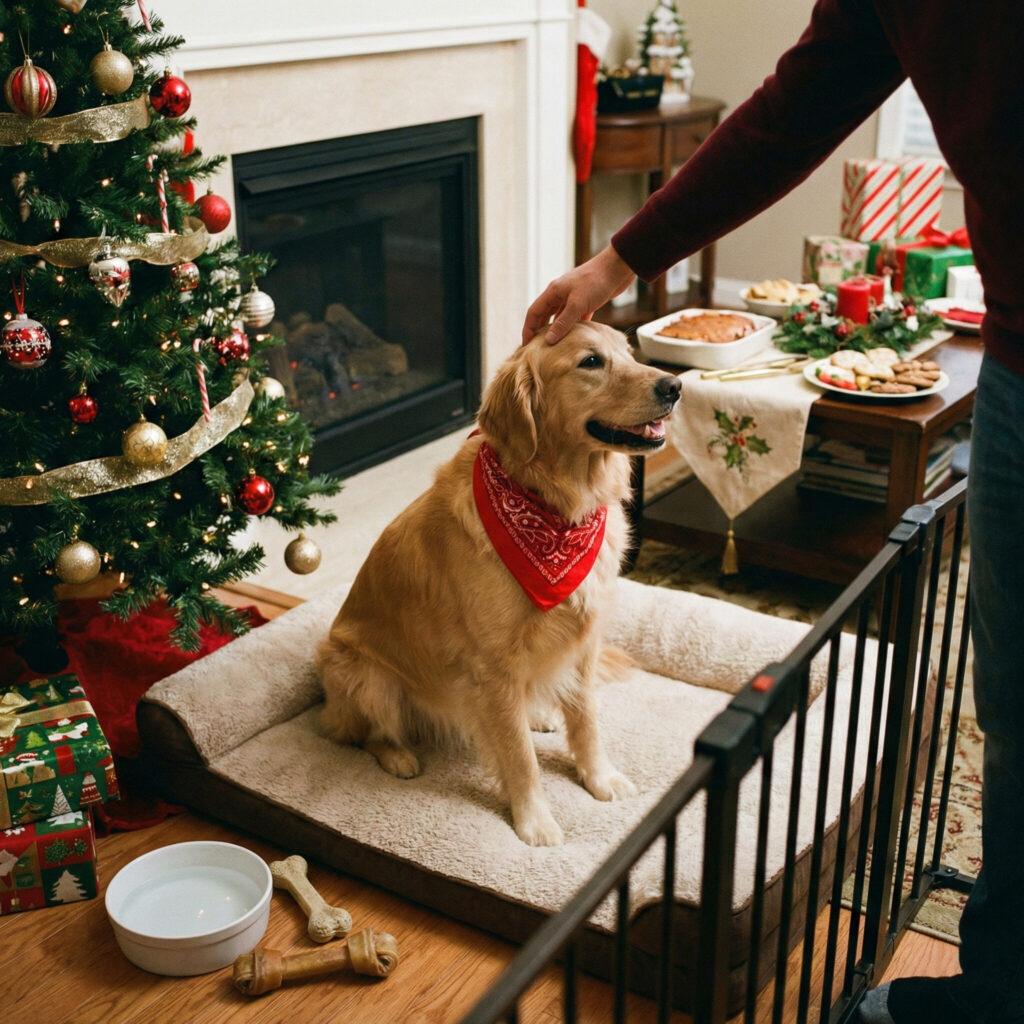
To keep your dog safe during the holidays, you must manage their environment actively. Keep toxic foods like chocolate, onions, and foods with xylitol completely out of reach. Secure decorations like tinsel, lights, and breakable ornaments to prevent choking or electric shock. Create a quiet, secure “safe zone” for your dog away from loud guests or fireworks, and always double-check doors to prevent escapes during parties.
Summary Table
| Hazard Category | Specific Danger | Why It Is Dangerous | How To Prevent It |
| Toxic Food | Chocolate, Xylitol, Grapes | Can cause organ failure, seizures, or death. | Keep all human food and candy dishes high up or locked away. |
| Table Scraps | Cooked Bones, Fatty Skin | Bones splinter in the stomach; fat causes pancreatitis. | Stick to normal dog food. Offer plain green beans as a treat instead. |
| Decorations | Tinsel, Ribbons | If swallowed, these can slice up intestines (linear foreign body). | Avoid tinsel completely. Discard wrapping ribbons immediately after opening gifts. |
| Electrical | Light strands, extension cords | Chewing cords leads to severe burns or electrocution. | Cover cords with protectors or tape them down. Unplug lights when unsupervised. |
| Plants | Mistletoe, Holly, Lilies | Ingestion can cause severe vomiting, diarrhea, or heart issues. | Use artificial plants. Keep real plants on high shelves or in rooms the dog cannot enter. |
| Guests/Noise | Open doors, loud parties, fireworks | Dogs may bolt out doors due to fear or excitement. | Create a secure sanctuary room. Ensure ID tags are current. |
The Importance of Holiday Dog Safety
The holidays are a time for family, food, and celebration. However, the very things that make the holidays fun for humans can be dangerous for our dogs. Their routine is disrupted, strange people are in the house, and tempting new objects are everywhere.
A busy holiday season often means we are distracted. It only takes a few seconds for a curious dog to eat something toxic or chew on a dangerous wire. By understanding the common risks, you can pet-proof your celebrations and avoid an expensive, stressful trip to the emergency animal hospital.
This guide breaks down the major hazards and provides simple steps to ensure your dog enjoys the season safely.
Read Also: What Dogs Need When You’re Away All Day
Section 1: Food Hazards to Avoid
Food is the center of many holiday gatherings, but it is also the number one source of emergency vet visits during these times. Dogs are opportunistic eaters. If they can reach it, they will try to eat it.
The “Absolutely Not” Food List
Never feed your dog these items, and ensure guests know the rules too.
- Chocolate: All chocolate contains theobromine and caffeine, which are toxic to dogs. Dark chocolate and baking chocolate are the most dangerous. It affects the heart and nervous system.
- Xylitol (Birch Sugar): This artificial sweetener is found in sugar-free gum, candy, peanut butter, and some baked goods. Even tiny amounts can cause a life-threatening drop in blood sugar and liver failure.
- Grapes and Raisins: These can cause sudden kidney failure. Raisins are often hidden in holiday breads, cookies, and stuffing.
- Onions, Garlic, and Chives: These ingredients damage a dog’s red blood cells, leading to anemia. They are common in holiday savory dishes, gravy, and stuffing.
- Macadamia Nuts: These nuts can cause weakness, vomiting, tremors, and hyperthermia in dogs.
- Alcohol: Dogs are very sensitive to alcohol. Ingestion can cause coma and respiratory failure. Be careful with sweet holiday drinks left on low tables.
The Danger of Table Scraps
It is tempting to give your dog leftovers from a big holiday meal, but this is rarely a good idea.
Cooked bones, such as turkey or ham bones, are brittle. They easily splinter when chewed. These sharp shards can puncture the stomach or intestines, requiring emergency surgery.
Fatty foods are another major risk. Turkey skin, ham fat, and rich gravies are difficult for dogs to digest. Eating a large amount of fat at once can trigger pancreatitis. This is a painful, serious inflammation of the pancreas that requires hospitalization.
Safe Holiday Treats
If you want your dog to participate in the feast, offer these safe alternatives in small amounts:
- Plain turkey breast meat (no skin, no bones, no seasoning).
- Plain steamed green beans.
- Plain canned pumpkin (not pumpkin pie filling).
Section 2: Decoration Dangers
Decking the halls changes your dog’s environment. Suddenly, there are new, shiny things to chew on and play with. You must look at your decorations from your dog’s perspective.
The Christmas Tree
The tree itself can be a hazard.
- Anchor the Tree: A curious dog may try to climb the tree or pull on branches. Ensure the stand is stable. You may need to anchor the top of the tree to the wall or ceiling with fishing line to prevent it from falling over onto your pet.
- Tree Water: Stagnant water in the tree stand can breed bacteria. Furthermore, some people add fertilizers or aspirin to the water to keep the tree fresh. If your dog drinks this, they can get sick. Cover the tree stand so your dog cannot drink from it.
- Ornaments: Hang breakable glass ornaments high up where a wagging tail won’t knock them off. If a dog steps on or tries to eat broken glass, it causes serious injury. Salt-dough ornaments are also dangerous because the high salt content is toxic if eaten.
Lights and Wires
Holiday lights mean extra electrical cords running across floors. Puppies and bored dogs often chew on cords. If they chew through to the wire, they can suffer severe electrical burns to their mouth or fatal electrocution.
- Cover exposed cords with plastic cord protectors.
- Tape cords down to the floor so they cannot be pulled.
- Always unplug lights when you are not in the room to supervise your dog.
The Tinsel and Ribbon Trap
Tinsel, curling ribbon on gifts, and yarn are incredibly dangerous to cats and dogs alike.
Veterinarians call these items “linear foreign bodies.” If a dog swallows a long piece of string or ribbon, one end can get stuck in the stomach while the rest passes into the intestines. As the intestines try to move the ribbon along, they bunch up like fabric on a drawstring. The ribbon can slice through the intestinal wall.
This is a life-threatening emergency. It is best to avoid tinsel entirely. When opening gifts, immediately collect and discard all ribbons and bows.
Read Also: How Travel Affects Dogs
Section 3: Toxic Holiday Plants
Festive greenery brings the outdoors inside, but many traditional holiday plants are poisonous to dogs.
- Mistletoe and Holly: These are highly toxic. Eating the berries or leaves can cause severe gastrointestinal upset, cardiovascular problems, and breathing difficulties.
- Poinsettias: While often feared, poinsettias are generally only mildly toxic. Eating them may cause drooling or vomiting, but they are rarely fatal. Still, it is best to keep them out of reach.
- Amaryllis and Lilies: These beautiful flowering plants are dangerous. Lilies are especially toxic to cats, but they also cause stomach issues in dogs. Amaryllis ingestion can cause salivation, vomiting, and abdominal pain.
The safest option is to use artificial silk plants. If you must have real plants, place them on high shelves or mantels where your dog absolutely cannot reach them, even by standing on hind legs.
Section 4: Managing Guests and Doors
Holiday parties mean people coming and going. This creates two major risks: escapes and anxiety.
The Open Door Problem
As guests arrive with armloads of gifts or food, the front door often stays open longer than usual. A dog excited by the new arrivals, or scared by the noise, might slip past legs and bolt out the door.
- Secure Your Dog First: Before guests start arriving, put your dog in a crate or a closed room.
- Watch the Door: If your dog is loose during the party, assign one family member to act as the “door monitor” to ensure the dog isn’t nearby whenever the door opens.
- Check ID Tags: Before the holiday season begins, double-check that your dog’s collar ID tags are legible and your phone number is current. Ensure their microchip registration is also up to date.
Overwhelmed Dogs
Not all dogs love parties. Strangers, loud laughter, music, and grabby children can be terrifying for some pets. A stressed dog is more likely to snap or bite out of fear.
- Educate Guests: Tell guests, especially children, not to disturb the dog when they are eating or sleeping. Ask them not to feed the dog anything.
- Create a “Safe Zone”: Set up a sanctuary space for your dog in a quiet bedroom or laundry room. Put their bed, water, and favorite toys there. Close the door and play soft music or white noise to drown out the party sounds. This gives your dog a place to retreat when they feel overwhelmed.
Read Also: How to Create a Calm Environment for Anxious Dogs
Section 5: Holiday Noise and Anxiety
New Year’s Eve fireworks, poppers, and loud noisemakers cause panic in many dogs. The booming sounds trigger a flight response.
If you know there will be fireworks, prepare ahead of time:
- Exercise Early: Take your dog for a long walk early in the day to tire them out before the noise starts.
- Secure the Area: Ensure fences are secure, and gates are locked. Dogs can jump surprisingly high when panicked.
- Use Calming Aids: Anxiety wraps (like a Thundershirt) can help some dogs. You can also talk to your veterinarian about prescribing anti-anxiety medication for the specific event.
- Provide Distractions: Give your dog a high-value, long-lasting chew treat, like a frozen peanut butter stuffed toy, during the fireworks to distract them.
Section 6: Routine and Travel Safety
Dogs thrive on routine. The chaos of the holidays disrupts their schedule, which causes stress. Try to keep their feeding times and walking times as close to normal as possible. This small bit of consistency helps them feel secure.
Traveling with Your Dog
If you are traveling for the holidays, plan for your dog’s safety in the car.
- Restraint: Use a crash-tested dog seatbelt harness or a secured crate. A loose dog in the car is a projectile in an accident and can distract the driver.
- Never Leave Them Alone: Do not leave your dog alone in a parked car. Weather can be unpredictable; cars can quickly become too cold in winter or too hot if the sun comes out.
- Pack Essentials: Bring their regular food, water, bowls, leash, and copies of their vaccination records. Changing food abruptly during travel can cause diarrhea.
Conclusions
By taking these preventative steps, you can relax and enjoy the festivities, knowing your furry family member is safe and sound. Always keep the number and address of the nearest 24-hour emergency vet clinic handy on your fridge and in your phone, just in case.