
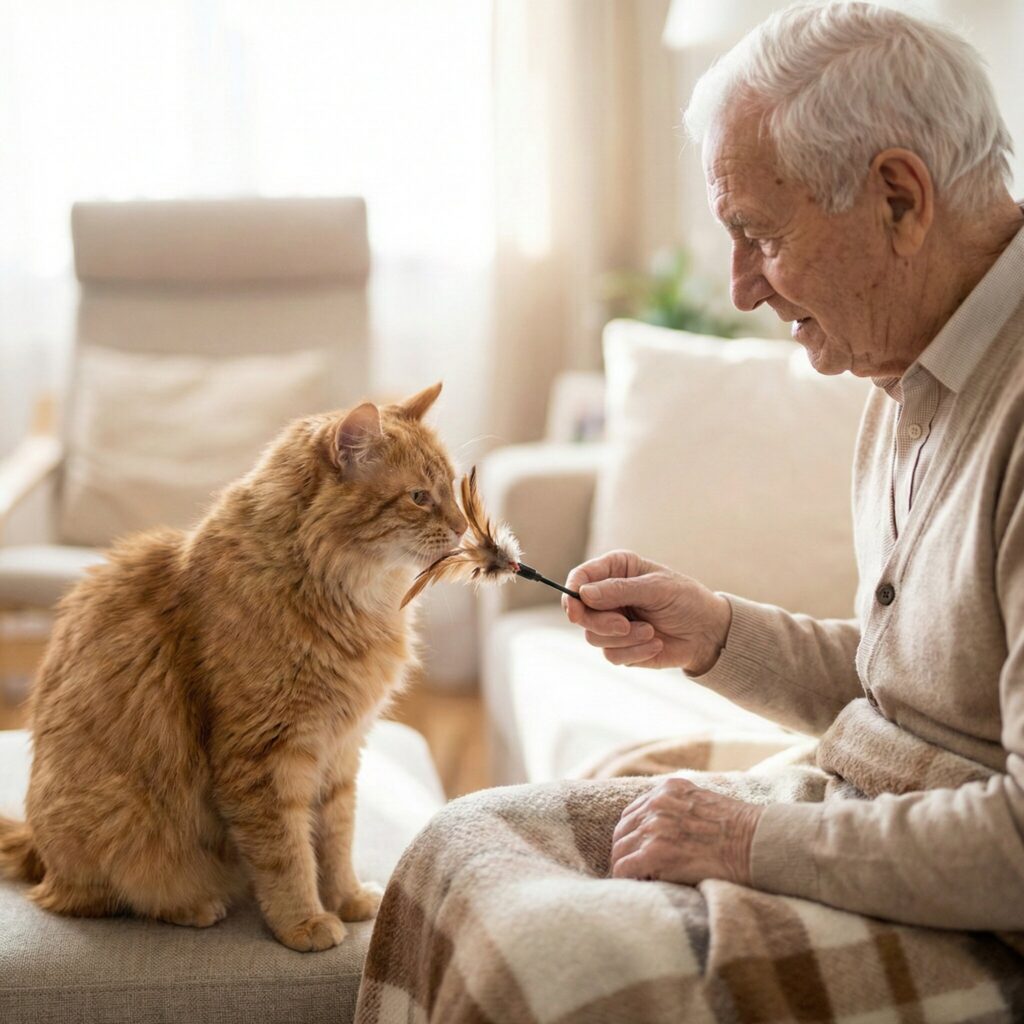
To help a senior cat stay active, focus on low-impact, frequent play sessions using wand toys or slow-moving laser pointers to accommodate stiffer joints. Modify their environment with ramps or stairs to make climbing accessible and introduce puzzle feeders to stimulate natural hunting instincts. Ensure regular veterinary checkups to manage pain from conditions like arthritis, which often inhibits movement.
Summary Table
| Strategy | Benefit | Implementation Tip |
| Gentle Interactive Play | Maintains muscle tone without straining joints. | Use wand toys moved slowly along the ground; keep sessions short (5-10 mins). |
| Environmental Access | Encourages climbing and vertical exploration. | Add pet stairs or ramps near sofas, beds, and window perches. |
| Food Puzzles | Stimulates mental activity and physical movement. | Start with easy treat dispensers to avoid frustration, then increase difficulty. |
| Scent Enrichment | Engages the brain and encourages investigation. | Introduce silver vine, catnip, or safe outdoor scents (like leaves) occasionally. |
| Pain Management | Removes physical barriers to movement. | Consult a vet about joint supplements (Glucosamine/Chondroitin) or Solensia. |
How to Help a Senior Cat Stay Active
As cats age, their energy levels naturally dip. The zoomies become less frequent, and naps become longer. However, keeping a senior cat active is critical for maintaining muscle mass, managing weight, and preventing cognitive decline. An inactive senior cat is at higher risk for obesity, which puts immense pressure on ageing joints.
The goal isn’t to make them sprint like a kitten but to encourage consistent, gentle movement. This guide covers practical, entity-optimised strategies to keep your ageing feline fit and happy.
Read Also: How to Help a Senior Cat Stay Active
1. Rule Out Medical Issues First
Before increasing activity, you must ensure pain isn’t the reason for your cat’s lethargy. Feline arthritis (osteoarthritis) is incredibly common in older cats but often goes undiagnosed because cats mask pain well.
If your cat hesitates to jump, avoids stairs, or matts up near the tail (due to inability to twist), they may be in pain.
- Schedule a Senior Wellness Exam: Ask your vet specifically about joint health.
- Discuss Pain Management: Treatments like Solensia (a monthly injection for arthritis pain) or oral supplements can transform an inactive cat into a playful one.
- Check Vision and Hearing: Sensory loss can make cats fearful of moving quickly.
2. Modify the Environment for Accessibility
Senior cats often stop exploring their “vertical territory” (cat trees, shelves, beds) because it hurts to jump up or down. When they stop climbing, they lose core strength. You can reverse this by making the world easier to navigate.
Install Ramps and Stairs
Bridging the gap between the floor and their favourite spots encourages movement.
- Pet Stairs: Place sturdy foam or wooden stairs next to your bed or the sofa.
- Ramps: Carpeted ramps are excellent for cats with severe stiffness who cannot manage steps.
- Intermediate Steps: Use ottomans or sturdy boxes to create a “ladder” system to high windows or cat trees.
Rethink Flooring
Slippery floors (hardwood, tile) are difficult for senior cats. If they slip, they may become afraid to run or play.
- Area Rugs and Runners: Create “roads” of carpet throughout your house. This gives your cat the traction they need to trot confidently.
- Yoga Mats: These provide excellent grip and cushioning for play sessions.
Read Also: Common Mobility Issues in Older Cats
3. Adapt Your Play Style
The high-intensity play that worked when your cat was two years old might be frustrating or painful now. You need to switch from “hard hunting” to “gentle stalking.”
The “Ground Prey” Technique
Older cats often cannot perform mid-air backflips. Keep the “prey” on the floor.
- Wand Toys: Drag a feather or plush toy slowly across the floor, mimicking a mouse or bug. Make it disappear behind furniture to trigger their stalking instinct.
- Slow Movement: Move the toy slower than you think is necessary. Senior cats prefer to watch and plan their attack rather than chase endlessly.
- Texture Matters: Use soft toys that are easy to bite and grab. Avoid hard plastic toys that might hurt sensitive teeth.
Shorter, More Frequent Sessions
Endurance fades with age. Instead of one 20-minute marathon, aim for:
- Three to four sessions per day.
- 2 to 5 minutes per session.
- Stop before the cat is exhausted. If they start panting or lying down heavily, you have gone too long.
4. Utilise Mental Stimulation (Brain Games)
Physical activity is linked to mental alertness. A bored cat is a sedentary cat. Cognitive dysfunction syndrome (feline dementia) can cause aimless wandering or inactivity, but mental engagement helps slow this decline.
Puzzle Feeders
Make them work for their food. This engages their “seeking” drive.
- Beginner Puzzles: Start with a simple ball that dispenses dry food when rolled.
- Lick Mats: Spread wet food or creamy treats on a textured silicone mat. The act of licking is soothing and keeps them in one place while working their neck and shoulder muscles.
- Hide and Seek: Place small piles of kibble or treats in different corners of the house so the cat has to walk from room to room to “hunt” their dinner.
Visual Entertainment
- Bird Feeders: Install a bird feeder outside a low window. Place a sturdy bench or perch inside so the cat can watch comfortably. This “Cat TV” keeps them alert and moving their head and tail, which counts as micro-exercise.
- Aquariums: Even a small fish tank (with a secure lid) can provide hours of mental stimulation.
5. Leverage Scent Enrichment
Cats experience the world through their nose. New scents can act as a powerful motivator to investigate and move around.
- Catnip and Silver Vine: About 70% of cats respond to catnip. If your cat doesn’t, try Silver Vine (Matatabi), which is often more potent. A pinch of this on the carpet can induce a session of rolling and bunny-kicking, which is great exercise.
- Safe Outdoor Scents: Bring in a few dry autumn leaves, a pinecone, or a clean branch from outside. The “wild” smell will encourage your cat to sniff and circle the object.
- Cardboard Boxes: Put the new scent inside a fresh cardboard box. The combination of a new hiding spot and a new smell is irresistible.
Read Also: What Is Single Kitten Syndrome?
6. Diet and Supplements for Mobility
Fueling your cat correctly supports their activity levels. An overweight cat will not want to move.
- Weight Management: If your senior cat is heavy, work with your vet to reduce calories. Losing even half a pound can significantly reduce joint strain.
- Omega-3 Fatty Acids: High-quality fish oil supplements act as natural anti-inflammatories for stiff joints.
- Joint Supplements: Look for products containing Glucosamine HCL and Chondroitin Sulfate. These help repair cartilage and improve fluid motion.
7. Routine and Consistency
Senior cats are creatures of habit. They are more likely to participate in an activity if it happens at the same time every day.
- Morning Routine: Play for 5 minutes before you feed them breakfast. This mimics the natural “hunt-eat-groom-sleep” cycle.
- Evening Routine: A gentle play session before bed can help them sleep through the night and reduce nocturnal restlessness.
Frequently Asked Questions
Is it safe for senior cats to jump?
It is generally safe if they are willing, but you should discourage high-impact jumps (like from a tall fridge to the floor). Provide intermediate steps to reduce the impact on their landing.
Why does my old cat sleep all day?
Senior cats require more sleep than kittens, often up to 18-20 hours a day. However, total lethargy during awake hours can indicate pain or illness. If they are awake but refuse to move, consult a vet.
Can I walk my senior cat on a leash?
If your cat was trained to walk on a leash when young, yes. However, starting leash training with a geriatric cat can be stressful. Stroller walks are a great alternative that provides sensory stimulation without physical stress.
Conclusion
Helping a senior cat stay active requires patience and observation. It is not about forcing exercise but removing the barriers like pain, slippery floors, or boredom that prevent it. By introducing accessible ramps, engaging in low-impact floor play, and managing their health, you can ensure your cat’s golden years are filled with happy, healthy movement.