
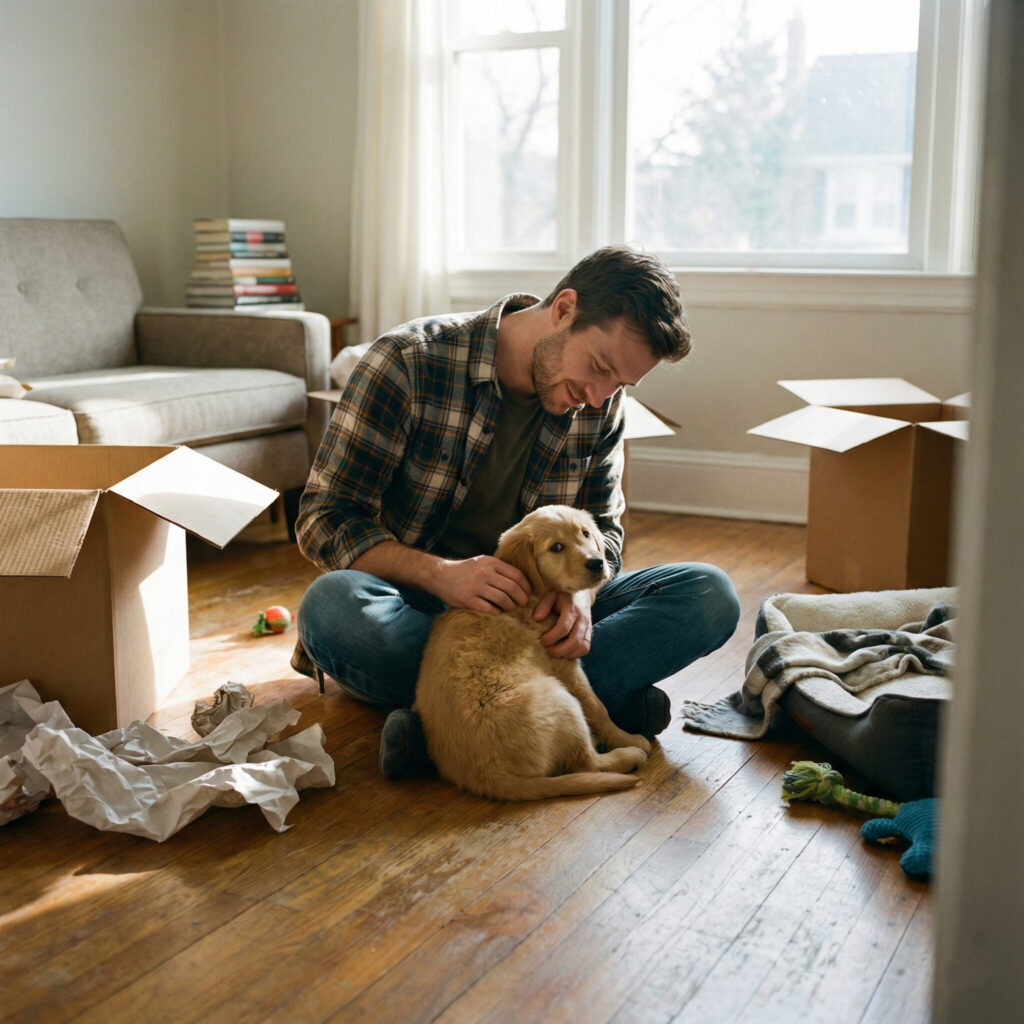
To help a puppy adjust to a new home, establish a consistent routine immediately for feeding, potty breaks, and sleeping. Create a safe, designated space, like a crate or playpen, to provide security. Keep the environment calm and quiet for the first few days, introduce family members slowly, and use positive reinforcement to build trust. Patience and consistency are key to reducing anxiety and helping them settle in.
Summary Table
| Adjustment Factor | Actionable Tip | Why It Matters |
| Routine | Set fixed times for meals, potty breaks, and naps. | Predictability reduces anxiety and builds confidence. |
| Safe Space | Set up a crate or cozy corner with blankets. | Gives the puppy a retreat when overwhelmed. |
| First Night | Keep the crate near your bed or use a heartbeat toy. | Reduces loneliness and helps them sleep better. |
| Potty Training | Take them out every 2 hours and immediately after naps. | Prevents accidents and establishes good habits early. |
| Socialization | Introduce new sights and sounds gradually, not all at once. | Prevents overstimulation and fear. |
| Handling Crying | Comfort calmly but avoid rewarding whining with play. | Teaches independence without causing abandonment stress. |
How to Help a Puppy Adjust to a New Home
Bringing a new puppy home is exciting, but it can also be stressful for both you and your new furry friend. For a puppy, leaving their mother and littermates to enter a strange environment is a huge life change. The key to a smooth transition is preparation, patience, and a predictable routine.
This guide covers everything you need to know to make your puppy’s first days and weeks as comfortable as possible.
Read Also: When Puppies Develop Fear Periods
1. Prepare Your Home Before They Arrive
The adjustment period actually begins before you even pick up your puppy. If your home is chaotic or unprepared, your puppy will feel that stress. “Puppy-proofing” isn’t just about safety; it is about creating an environment where your puppy can succeed.
Gather Essential Supplies
Having everything ready means you can focus on bonding rather than shopping.
- Crate and Bedding: A crate acts as a den where the puppy feels safe.
- Food and Water Bowls: heavy ceramic or stainless steel bowls are best, so they don’t tip over.
- High-Quality Puppy Food: Stick to the same brand the breeder or shelter used for the first few weeks to avoid stomach upset.
- Collar, Leash, and ID Tag: Safety first.
- Chew Toys: Essential for teething puppies.
- Enzymatic Cleaner: For cleaning up accidents completely so the puppy doesn’t mark the spot again.
Create a “Safe Zone”
Designate one area of the house as the puppy’s territory for the first few days. This could be a kitchen, a laundry room, or a section of the living room gated off with an x-pen. Limiting their freedom initially prevents them from getting overwhelmed and reduces accidents.
2. Managing the First 24 Hours
The first day is the most critical. Your goal is to keep things calm, quiet, and positive.
The Car Ride Home
Ideally, bring a second person to hold the puppy or sit next to their crate during the drive. Keep the car quiet, no loud music. If the drive is long, stop for potty breaks in safe areas away from other dogs (since your puppy may not be fully vaccinated).
The Introduction to the House
When you arrive, do not carry the puppy straight inside. Take them immediately to their designated potty spot. If they go, praise them heavily and give a treat. This sets the precedent that “outside is for bathroom.”
Once inside, keep them on a leash and let them explore one room at a time. Let them sniff and investigate at their own pace. Avoid crowding them with too many people.
The First Night
Nights are often the hardest part of the adjustment. Your puppy is used to sleeping in a “puppy pile” with warm bodies. Suddenly sleeping alone can be scary.
- Location: Place the crate next to your bed for the first few nights. Hearing your breathing can comfort them.
- Comfort Items: Ask the breeder for a blanket that smells like the mother, or use a “Snuggle Puppy” toy that mimics a heartbeat.
- Potty Breaks: Be prepared to wake up. Puppies generally cannot hold their bladder through the whole night. If they cry, take them out quietly (no playing), then put them back to bed.
Read Also: How Puppies Learn Social Boundaries
3. The Power of Routine
Dogs thrive on routine. Knowing what comes next reduces anxiety. You should establish a schedule immediately.
Sample Daily Schedule
- Morning: Wake up, immediate potty break, breakfast, potty break again.
- Mid-Morning: Playtime, training session (5 minutes), nap in crate.
- Noon: Lunch (if under 4 months), potty break, play.
- Afternoon: Nap time. Puppies need 18-20 hours of sleep a day.
- Evening: Dinner, potty break, evening walk or play.
- Bedtime: Final potty break, lights out.
Sticking to this structure helps the puppy learn house rules faster and feel secure in their new environment.
4. Handling Separation Anxiety and Crying
It is normal for a puppy to whine or cry when left alone. This is their instinctual way of calling for their pack.
Start Small
Don’t leave the puppy alone for 4 hours on day one. Practice separation while you are still in the house. Put them in their crate or pen, give them a stuffed Kong toy, and walk out of the room for 30 seconds. Come back before they panic. Gradually increase the time to minutes, then hours.
The “No Reaction” Rule
If your puppy cries in the crate for attention (and you know they don’t need to use the bathroom), do not let them out. If you open the door while they are crying, you teach them that crying = freedom. Wait for a split second of silence before opening the door.
5. Socialization: The Rule of 7s
Socialization is not just about meeting dogs; it is about experiencing the world. However, flooding a new puppy with too many experiences can backfire and cause fear.
Gentle Exposure
Introduce new things slowly. Let them watch the vacuum cleaner from a distance before turning it on. Let them meet one new person at a time, not a whole party of guests.
The Positive Association Game
Every time the puppy encounters something new (a man with a beard, a person in a hat, a loud truck, a slippery floor), give them a treat. You are wiring their brain to think New Thing = Good Thing.
6. Diet and Nutrition Transition
Stress often causes stomach upset in puppies (diarrhea is common in the first few days). To minimize this:
- Do not switch food immediately. Keep them on the breeder’s food for at least two weeks.
- Transition slowly. When you do switch, mix 25% new food with 75% old food for a few days, then 50/50, then 75/25.
- Hydration. Ensure fresh water is always available. Dehydration can happen fast with excited puppies.
Read Also: Why Do Puppies Cry at Night?
7. Establishing Boundaries Early
It is tempting to let a cute puppy do whatever it wants, but unlearning bad habits is harder than preventing them.
- Furniture: If you don’t want a 60lb dog on the couch later, don’t let the 10lb puppy on the couch now.
- Biting: Puppies explore with their mouths. If they nip you, make a high-pitched “Ow!” sound and stop playing immediately. This teaches bite inhibition.
- Jumping: Only pet the puppy when all four paws are on the floor.
8. Common Mistakes to Avoid
Even well-meaning owners make mistakes that can delay the adjustment process.
- Giving Too Much Freedom: A puppy should not have free roam of the house. They will get into trouble or have accidents in hidden corners. Keep them supervised or in their safe zone.
- Overstimulating: Puppies get “overtired” just like toddlers. If your puppy is biting frantically and running wild, they likely need a nap, not more play.
- Punishing Accidents: Never scold a puppy for peeing in the house unless you catch them in the exact act. If you find a mess later, just clean it up. Scolding them later only teaches them to be afraid of you.
Conclusion
Helping a puppy adjust to a new home takes time. The “3-3-3 Rule” is a great benchmark to keep in mind:
- 3 Days: To decompress and stop feeling overwhelmed.
- 3 Weeks: To learn your routine and start feeling like they belong.
- 3 Months: To feel fully at home and build trust.
Be patient. The sleepless nights and accidents are temporary. By providing a safe, consistent, and loving environment, you are building the foundation for a confident, well-behaved dog that will be your companion for years to come.