
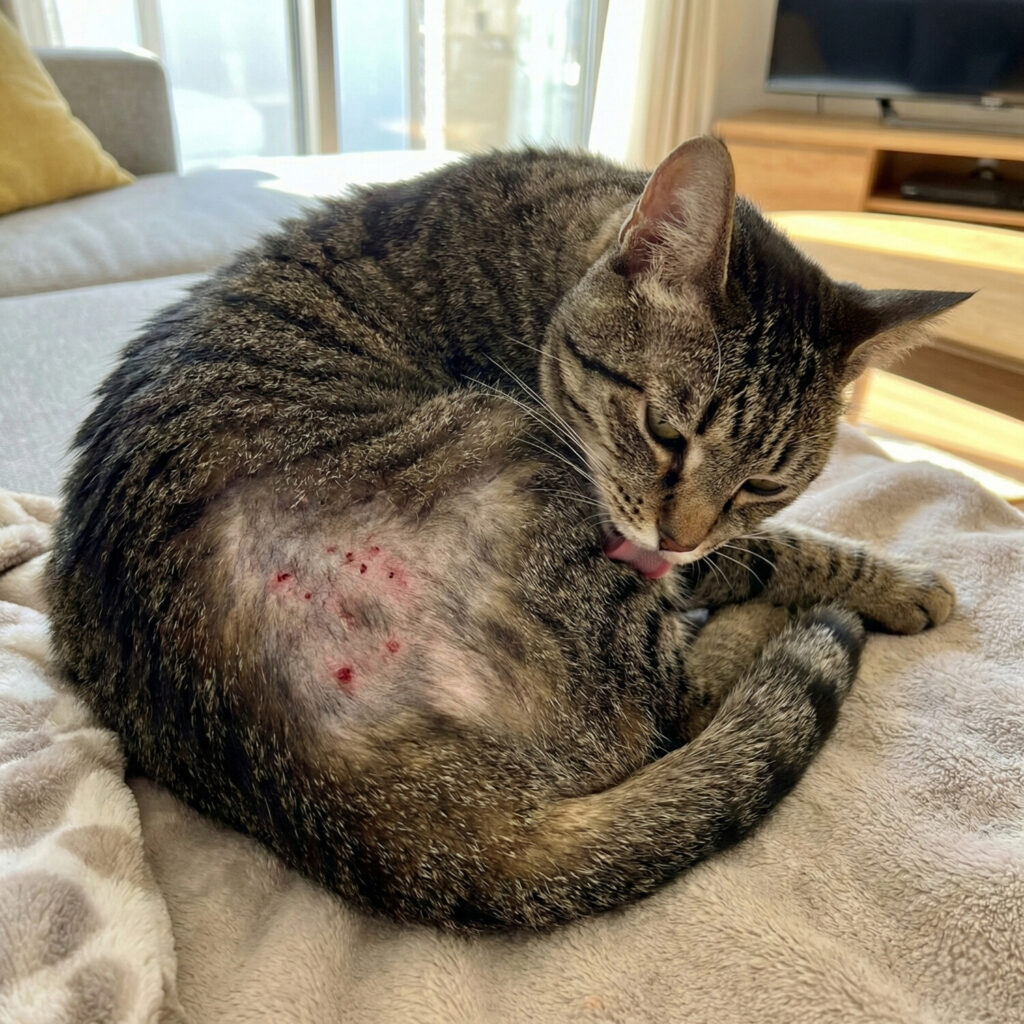
How Do I Know If My Cat Has Skin Allergies? To detect skin allergies in cats, look for excessive scratching, licking, or chewing of the fur. Common physical signs include redness, scabs, hair loss (alopecia), and small bumps on the skin. You may also notice chronic ear infections or paw chewing. A veterinarian diagnoses allergies through skin scrapings, blood tests, or an elimination diet to rule out food triggers.
Summary Table: How Do I Know If My Cat Has Skin Allergies?
| Category | Details |
| Primary Symptom | Intense itching (pruritus), over-grooming, and scratching. |
| Visual Signs | Red skin, scabs (miliary dermatitis), hair loss, acne, ear wax. |
| Top Causes | Flea bites, food ingredients (chicken, beef), environmental triggers (pollen, dust). |
| Diagnosis | Flea combing, food elimination trials, intradermal skin testing. |
| Treatment | Antiparasitics, hypoallergenic diets, antihistamines, steroids, immunotherapy. |
How to Detect Skin Allergies in Cats
Skin allergies are one of the most common reasons cat owners visit the veterinarian. A cat that constantly scratches or licks itself is not just grooming. It is often suffering from itchy skin caused by an allergic reaction. This condition can make your pet miserable and lead to painful infections if left untreated.
Detecting these allergies early is crucial for your cat’s comfort and health.
This guide breaks down exactly what to look for, the common culprits behind the itch, and how to work with your vet to find a solution. We will cover everything from simple flea bites to complex food sensitivities.
Read Also: Signs of Dehydration in Cats
What Are Skin Allergies in Cats?
A skin allergy occurs when a cat’s immune system overreacts to a substance that is typically harmless. This substance is called an allergen. When the cat touches, inhales, or eats the allergen, the body releases histamines. This chemical reaction causes inflammation, redness, and extreme itchiness.
Unlike humans who get hay fever and sneeze, cats usually show allergy symptoms through their skin. This condition is broadly known as feline atopic dermatitis. It can affect cats of any age or breed.
Top Signs and Symptoms of Skin Allergies in Cats
Identifying an allergy starts with observation. You know your cat best. If their behavior changes, it is time to investigate.
1. Excessive Scratching and Grooming
The most obvious sign is itching. If your cat stops in the middle of playing to scratch or spends hours grooming the same spot, this is a red flag. Over-grooming often occurs on the belly, paws, and base of the tail.
The tongue of a cat is rough like sandpaper. Constant licking will eventually strip away the fur and damage the skin.
2. Hair Loss (Alopecia)
You might find clumps of fur around the house or notice bald patches on your cat. This is usually self-inflicted hair loss caused by excessive licking. You might see a clean strip of bald skin down the back or on the stomach.
3. Miliary Dermatitis
This term refers to a specific skin reaction that feels like millet seeds. If you pet your cat and feel small, crusty bumps near the tail or neck, this is miliary dermatitis. It is a classic sign of an allergic reaction, especially to flea bites.
4. Sores and Hot Spots
When a cat scratches too much, they break the skin. This can create open sores or raw, red areas known as hot spots. These areas can easily become infected with bacteria or yeast. They may ooze, bleed, or smell bad.
5. Ear Infections
Allergies often cause inflammation in the ear canals. You might see your cat shaking its head or scratching its ears. Upon inspection, the ears might look red or contain dark, waxy discharge.
6. Chin Acne
Surprisingly, acne can be a sign of allergies, particularly to plastic bowls or food. It looks like black dirt or small pimples on the chin.
Read Also: Why Does My Cat Sleep Above My Head on My Pillow?
The Three Main Types of Cat Skin Allergies
To solve the problem, you must identify the source. Allergies generally fall into three categories.
1. Flea Allergy Dermatitis (FAD)
This is the most common skin disease in cats. It is not just the presence of fleas that causes the itch. It is an allergic reaction to the flea’s saliva.
- The Reaction: A single flea bite can cause a cat with FAD to scratch for weeks.
- The Signs: Intense biting at the base of the tail, scabs on the neck, and hair loss on the back legs.
- Detection: Use a flea comb to look for fleas or “flea dirt” (black specks that turn red when wet).
2. Food Allergies
Food allergies are less common than flea allergies but are still significant. They develop over time. A cat can suddenly become allergic to food they have eaten for years.
- Common Triggers: Beef, fish, chicken, and dairy products. Grains like corn and wheat are less common causes compared to proteins.
- The Signs: Scabs around the head and neck are very common with food allergies. You might also see gastrointestinal issues like vomiting or soft stools.
- Detection: This requires a strict elimination diet prescribed by a vet.
3. Environmental Allergies (Atopy)
Just like humans react to pollen, cats can react to particles in the air or environment.
- Common Triggers: Pollen (tree, grass, weed), mold spores, dust mites, and household cleaning chemicals.
- The Signs: Itching can be seasonal (pollen) or year-round (dust mites).
- Detection: This is often a diagnosis of exclusion, meaning the vet rules out fleas and food first.
Read Also: When Is a Cat Considered a Senior?
How Veterinarians Diagnose Skin Allergies
You cannot diagnose the specific allergy just by looking at the cat. You need veterinary testing. The process is a step-by-step investigation.
Step 1: The Physical Exam and History
The vet will ask about your cat’s diet, lifestyle, and when the itching started. They will check the pattern of the hair loss and look for parasites.
Step 2: Cytology and Skin Scrapings
The vet may take a sample from the skin surface or ear discharge. They look at this under a microscope to check for mites, bacterial infections, or yeast infections. Bacterial infections are often secondary issues caused by the scratching.
Step 3: Flea Control Trial
Even if you do not see fleas, the vet will likely start aggressive flea control. This rules out Flea Allergy Dermatitis. All pets in the home must be treated for this to work.
Step 4: Elimination Diet Trial
If fleas are ruled out, food is the next suspect.
- The Process: You feed your cat a special hypoallergenic diet for 8 to 12 weeks.
- Hydrolyzed Protein: These diets use proteins broken down so small that the immune system does not recognize them.
- Novel Protein: These diets use a protein the cat has never eaten, such as duck or venison.
- Strict Rules: No treats, no table scraps, and no flavored medicines during the trial.
Step 5: Intradermal Skin Testing or Blood Tests
If food is not the cause, the vet may test for environmental allergies.
- Skin Prick Test: A specialist injects small amounts of allergens under the skin to see which ones cause a reaction. This is the gold standard.
- Blood Test (RAST): This measures antibodies in the blood. It is easier to do but can be less accurate than skin testing.
Read Also: Signs of Anxiety in Cats
Treatment Options for Skin Allergies
Once you know the cause, you can start treatment. The goal is to stop the itch and prevent infection.
Treating Flea Allergies
The solution is strict flea prevention. You must use a high-quality spot-on treatment or oral medication recommended by your vet. You must also treat your home environment to kill flea eggs and larvae in carpets and bedding.
Treating Food Allergies
If the elimination diet works, you have two choices. You can keep the cat on the special prescription food indefinitely. Or, you can slowly reintroduce single ingredients (like chicken) to see which one triggers the reaction. Once the trigger is found, simply avoid that ingredient.
Treating Environmental Allergies
This is the hardest type to cure, so management is the goal.
- Immunotherapy (Allergy Shots): Based on test results, a lab creates a serum containing the specific allergens. You give your cat shots or oral drops to slowly build up their immunity. This takes time but offers long-term relief.
- Corticosteroids: Drugs like prednisolone are very effective at stopping the itch quickly. However, long-term use can cause side effects like diabetes or heart issues.
- Cyclosporine: This is an immune-suppressing drug that helps reduce skin irritation without the side effects of steroids.
- Antihistamines: Drugs like diphenhydramine can help some cats, but they are generally less effective in pets than in humans.
Home Care and Management Tips
You can do several things at home to help a cat with skin allergies.
Maintain a Clean Environment
- Vacuum frequently to remove dust mites and pollen.
- Wash your cat’s bedding weekly in hot water.
- Use air purifiers with HEPA filters to capture airborne allergens.
- Avoid using strong chemical cleaners or scented plug-ins.
Skin Support
- Fatty Acid Supplements: Omega-3 fatty acids (fish oil) help improve the skin barrier and reduce inflammation naturally.
- Bathing: While cats dislike water, medicated shampoos can soothe inflamed skin and remove allergens from the fur. Ask your vet for a recommendation.
Monitoring
Keep a journal of your cat’s symptoms. Note when the itching is worst. Does it happen after eating? Does it happen in the spring? This data helps your vet adjust the treatment plan.
Read Also: What Different Cat Tail Positions Really Mean
When to See a Vet Immediately
Do not wait if you see these signs:
- Open wounds that are bleeding or oozing pus.
- The cat is lethargic or hiding.
- The cat refuses to eat.
- Rapid hair loss over a large area.
Severe infections can enter the bloodstream and cause systemic illness. Early intervention saves money and saves your cat from suffering.
Frequently Asked Questions
Can stress cause skin issues in cats?
Yes. Stress can lead to “psychogenic alopecia.” This is when a cat over-grooms to soothe itself. It mimics an allergy. A vet can determine if the cause is medical or behavioral.
Are certain cat breeds more prone to allergies?
While any cat can get allergies, breeds like Siamese and Abyssinians may have a genetic predisposition to skin issues.
Can I give my cat human allergy medicine?
Never give human medication without specific dosage instructions from a vet. Some ingredients in human drugs, like acetaminophen or decongestants, are toxic to cats.
Conclusion
Detecting skin allergies in cats requires patience and observation. It is a puzzle that you solve with your veterinarian. By identifying the specific signs, whether it is miliary dermatitis, ear infections, or bald patches, you can narrow down the cause.
Whether the culprit is a flea, a chicken dinner, or dust under the sofa, there is a treatment that can help. A comfortable, itch-free cat is a happy cat. If you suspect your pet is struggling with allergies, book an appointment today to start the road to relief.