
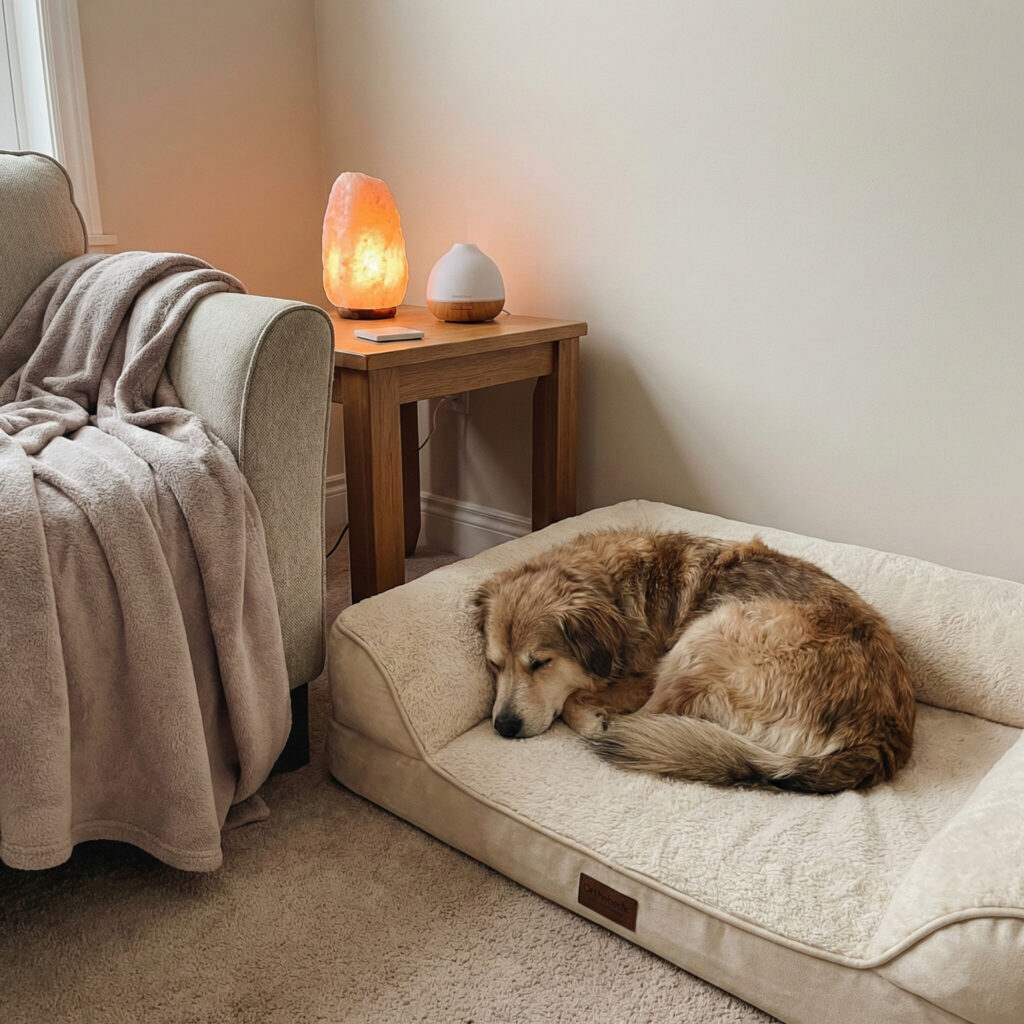
To create a calm environment for an anxious dog, establish a dedicated “safe zone,” such as a covered crate or a quiet corner with comfortable bedding away from household traffic. Manage sensory triggers by using white noise machines to drown out frightening sounds and closing curtains to block visual stimuli like passersby. Incorporate comforting scent cues using dog appeasing pheromone diffusers. Finally, adhere to a strict daily routine for feeding and walks, as predictability significantly reduces stress in dogs.
Summary Table
| Strategy Area | Key Actions to Take | Why It Works |
| Physical Space | Create a dedicated “den” or safe zone (e.g., a covered crate). | Provides a secure retreat where the dog feels protected from threats. |
| Auditory Environment | Use white noise machines, fans, or calming classical music designed for dogs. | Masks triggering noises like thunder, fireworks, or street traffic. |
| Visual Environment | Use window film or close blinds/curtains. | Block view of triggers outside that cause reactive barking or fear. |
| Olfactory Environment | Plug in Dog Appeasing Pheromone (DAP) diffusers. | Mimics comforting scents emitted by mother dogs to calm puppies. |
| Routine | Feed, walk, and go to bed at the same times daily. | Predictability removes uncertainty, lowering baseline anxiety levels. |
| Mental State | Provide puzzle toys and daily exercise. | Burns off nervous energy that otherwise feeds anxiety. |
How to Create a Calm Environment for Anxious Dogs
Dealing with a dog experiencing anxiety is stressful for both the pet and the owner. Whether your dog suffers from general nervousness, noise phobias (like thunderstorms or fireworks), or separation anxiety, their physical surroundings play a massive role in their overall mental state.
While environmental changes may not “cure” severe anxiety disorders on their own, they are the necessary foundation for any successful treatment plan. A chaotic environment will feed anxiety, while a structured, calm environment sets the stage for relaxation.
This guide details practical steps to transform your home into a sanctuary for your nervous dog, using simple strategies free of confusing jargon.
Read Also: Indoor Enrichment Ideas for Dogs
1. Establish a Designated Safe Zone
The single most important step in calming an anxious dog is providing them with a retreat. This is a space where nothing bad ever happens, and they are never disturbed.
The Concept of a Den
Dogs are den animals by nature. When they feel threatened or overwhelmed, their instinct is to find a small, dark, and secure space to hide. If you do not provide one, they will often try to create one themselves under a bed, behind a couch, or in a closet.
Setting Up the Safe Zone
Your goal is to create this den comfortably and deliberately.
- Location Matters: Choose a low-traffic area of the house. A corner of a bedroom or a quiet home office is better than the middle of a busy living room or near the main entryway.
- Crate Training as a Tool: If your dog is already crate-trained and enjoys it, the crate is the perfect safe zone. To make it den-like, cover the top and sides with a breathable blanket to make it dark and cozy inside. Leave the door open so they can enter and exit freely when you are home.
- Alternative Options: If your dog dislikes crates, you can create a safe zone using an exercise pen tucked into a corner, or simply a high-sided, very comfortable dog bed placed under a sturdy table.
- Comfort Items: Stock the safe zone with their favorite blankets. Items that smell like you (like an old t-shirt) can provide additional comfort. Keep a special chew toy that stays only in this area.
The Golden Rule of the Safe Zone: Never force the dog into this space as punishment, and never pull them out of it. When they are in their zone, they are off-limits to children, guests, and other pets.
2. Manage Auditory Triggers (Sound)
For many dogs, noise is a primary trigger for anxiety. Sudden sounds like fireworks or thunder, or persistent sounds like construction or heavy traffic, keep their nervous system on high alert.
You need to create a “sound buffer” in your home.
White Noise and Sound Masking
You don’t need silence; you need consistent, non-threatening sound to drown out the scary noises.
- White Noise Machines: A standard white noise machine placed near their safe zone is highly effective. The constant static sound smooths out sudden environmental noises.
- Fans or Air Purifiers: A loud box fan or a running air purifier can serve the same purpose as a white noise machine.
- Bioacoustically Designed Music: Research has shown that specific types of music can calm dogs. Look for classical music specifically compiled for dogs (often characterized by slower tempos and simpler melodies). Playing this quietly near their safe zone can lower their heart rate.
- The Sound Bureau: Avoid leaving the television or talk radio on loudly if the content varies wildly in volume, as sudden loud commercials or yelling on screen can be startling.
3. Manage Visual Triggers (Sight)
If your dog is “reactive”, meaning they bark, lunge, or pace when they see things outside, your windows are a source of constant stress. Every person, dog, or squirrel that passes by is a potential threat that your dog feels they must monitor.
This constant monitoring is exhausting and keeps anxiety levels high. You must reduce their visual access to these triggers.
Visual Barriers
- Window Film: Apply frosted or decorative window film to the lower half of windows that face streets or sidewalks. This lets natural light in but blurs the view outside, so the dog cannot identify specific triggers.
- Curtains and Blinds: Keep curtains closed during high-traffic times of the day.
- Alternative Views: If possible, set up their resting area in a room that looks out onto a quiet backyard rather than a busy street.
By removing the visual stimuli, you allow your dog’s brain to rest from constant patrolling duty.
Read Also: How Much Daily Activity Does a Dog Need?
4. Utilize Olfactory Calming Aids (Smell)
A dog’s sense of smell is their primary way of interpreting the world. You can use this to your advantage by introducing scents that signal safety.
Dog Appeasing Pheromones (DAP)
When a mother dog nurses her puppies, she releases a pheromone that has a naturally calming, reassuring effect on the litter. Scientists have replicated this scent synthetically.
It is odorless to humans and other pets like cats, but dogs can detect it.
- Diffusers: The most popular method is a plug-in diffuser, similar to an air freshener. Plug this in right next to your dog’s designated safe zone. It provides a constant zone of calming signals.
- Sprays: Pheromone sprays can be applied directly to bedding or blankets in the crate just before a stressful event (like a thunderstorm or you leaving the house). Wait 10 minutes after spraying before letting the dog lie down on it due to the alcohol carrier in most sprays.
- Collars: Pheromone-infused collars mean the dog carries the calming scent wherever they go.
A Note on Essential Oils: Be cautious with essential oils. While some humans find lavender calming, a dog’s nose is far more sensitive, and some oils can be toxic to pets. Pheromones are generally a safer, more species-specific option for canine anxiety.
5. The Power of Routine and Predictability
Anxiety often stems from the unknown. An anxious dog spends a lot of time worrying about what is going to happen next.
By creating a highly predictable daily routine, you remove that worry. When a dog knows exactly when they will eat, when they will go out, and when they will sleep, their baseline anxiety level drops significantly.
Building the Routine
Try to keep these events at roughly the same time every single day, including weekends:
- Morning wake up and potty break.
- Meal times.
- Daily walks or exercise sessions.
- Play sessions or training time.
- Final evening potty break and bedtime.
A structured day tells the dog that you are in charge of resources and schedule, so they don’t need to worry about it.
6. Burn Off Nervous Energy
A bored dog is often an anxious dog. If a dog has too much pent-up physical and mental energy, that energy will likely manifest as anxiety, pacing, destruction, or hyper-vigilance.
You must provide outlets for this energy daily.
Physical Exercise
The amount depends on the breed and age, but most anxious dogs benefit from more exercise than they currently get. A tired body makes for a calmer mind. Walks where they are allowed to sniff freely (called “decompression walks”) are better for anxiety than fast-paced runs, as sniffing is naturally calming for dogs.
Read Also: Best Sleeping Arrangements for Dogs
Mental Stimulation
Mentally tiring out a dog is often more effective at reducing anxiety than physical exercise. 15 minutes of intense brain work can be equal to an hour of walking.
- Puzzle Toys: Never feed an anxious dog out of a bowl. Make them work for their food using puzzle feeders, snuffle mats, or treat-dispensing balls. This engages their brain in a constructive task.
- Training: Short, positive reinforcement training sessions (teaching tricks or basic obedience) require focus and burn mental energy.
- Chewing and Licking: Both chewing and licking are self-soothing behaviors that release endorphins in a dog’s brain. Provide long-lasting chews (like bully sticks) or connectable rubber toys filled with soft food and frozen. Give these to the dog in their safe zone to help them settle.
7. Check Your Own Energy
Dogs are masters at reading human body language and emotions. They look to their owners to determine how they should feel about a situation.
If you are stressed, anxious, or anticipating that your dog is about to panic, your dog will sense that tension, and their anxiety will increase. You confirm their belief that there is something to be worried about.
Being a Calm Leader
- During Storms/Fireworks: If your dog is scared of thunder, go about your business calmly. Do not excessively coddle the dog with “Oh my poor baby, it’s okay” in a high-pitched, worried voice. Instead, calmly sit near their safe zone, read a book, or watch TV. Your calm demeanor signals that the noise is not a threat.
- During Departures: If your dog has separation anxiety, make your departures and arrivals very boring. Do not make a big scene of saying goodbye or hello. Ignore the dog for 5 minutes before you leave and 5 minutes after you return until they are calm.
Conclusion
Creating a calm environment is the essential first step in helping an anxious dog. These strategies build a foundation of safety that allows your dog to relax.
However, for severe cases of anxiety, environmental changes alone may not be enough. If your dog is injuring themselves, damaging your home, panicking to the point of urination/defecation, or if their quality of life is severely impacted despite these changes, you need professional support.
Consult your veterinarian. They can rule out underlying medical causes for the behavior. They may also recommend anti-anxiety medication, which can act as a bridge, lowering the dog’s panic threshold enough so that environmental changes and behavior modification training can actually take effect.
Working with a certified professional dog trainer or a board-certified veterinary behaviorist is often necessary for complex anxiety cases.