
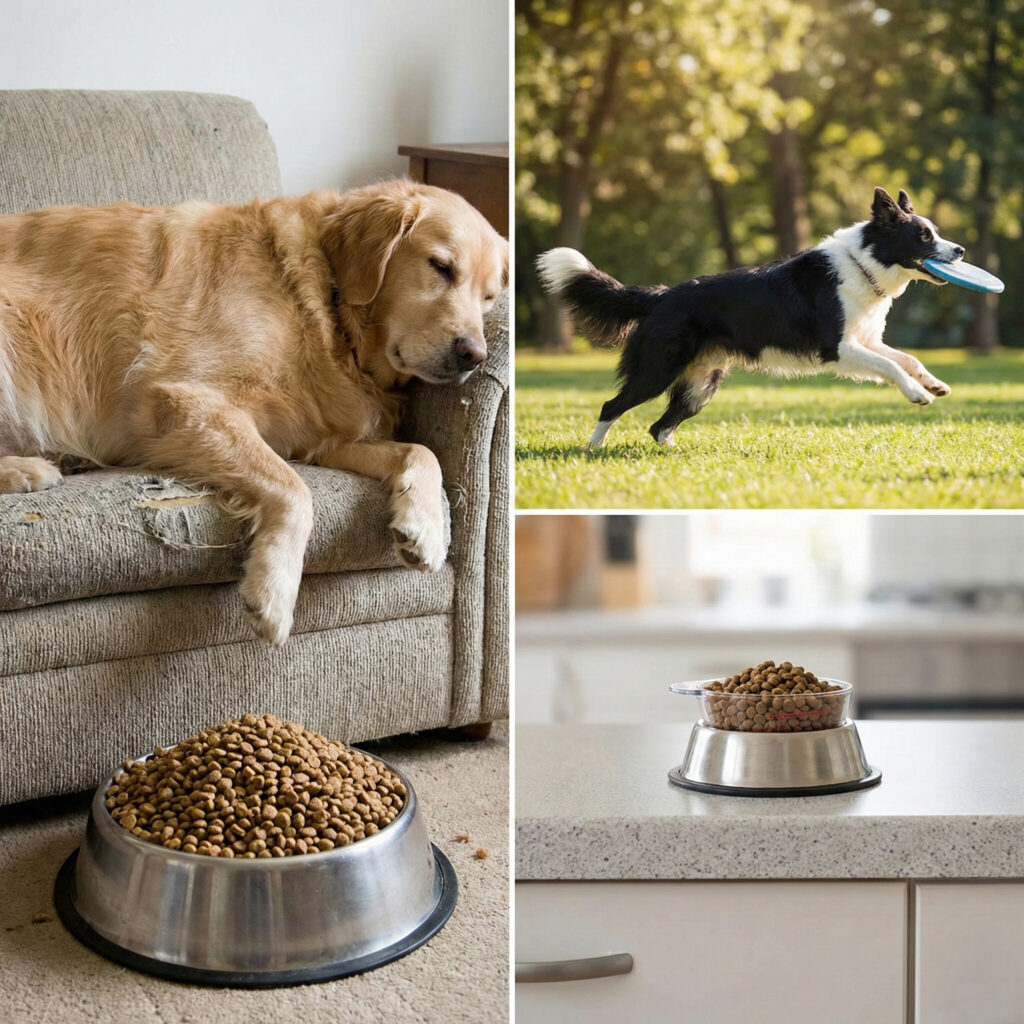
Yes, portion sizes directly control your dog’s energy levels. Food is fuel. Too much food forces the body to spend excessive energy on digestion, leading to immediate lethargy (a “food coma”) and long-term obesity that makes movement difficult. Too little food denies the dog the necessary calories for basic functions, causing weakness and low energy. Finding the exact right portion based on your dog’s specific needs is the only way to ensure steady, healthy energy throughout the day.
Summary Table
| Portion Size | Immediate Energy Effect | Long-Term Health Impact | Overall Activity Level |
| Overfeeding | Energy crash post-meal due to heavy digestion. | Low. The dog becomes reluctant to move due to its weight. | Low. The dog becomes reluctant to move due to weight. |
| Underfeeding | Weakness, constant hunger, irritability. | Malnutrition, muscle loss, weakened immune system. | Low. The dog lacks the fuel to run or play. |
| Correct Amount | Steady energy release, alert and ready to play. | Ideal body weight, healthy joints, strong metabolism. | High/Normal. Active appropriate to age and breed. |
How Portion Sizes Affect Dog Energy Levels
We all want our dogs to be happy, active, and ready for adventure. Whether it’s chasing a ball in the park or going for a long hike, your dog needs energy to enjoy life.
Many dog owners look at complex supplements or expensive toys to boost their dog’s vitality. However, the most significant factor controlling your dog’s energy is often the simplest one: what is in their bowl, and specifically, how much of it is there.
It is easy to mistake love for food. Giving that extra scoop or those few extra treats feels like kindness. But when it comes to energy mechanics in the canine body, incorrect portion sizes are a disaster.
This guide will explain exactly how the amount of food your dog eats dictates how they feel and act.
Read Also: Can Dogs Get Bored of Their Food?
The Basics: Food is Fuel
To understand energy, we need to understand calories. A calorie is simply a unit of energy.
Think of your dog’s body like a car engine. The food they eat is the gasoline. Their metabolism is the engine that burns that gas to create movement and keep vital organs running.
Every time your dog eats, their body has to process that fuel. It breaks down proteins, fats, and carbohydrates into usable energy.
- Basal Metabolism: This is the energy your dog needs just to exist—breathing, pumping blood, and keeping their brain working while resting.
- Active Metabolism: This is the extra energy needed for walking, barking, playing fetch, and running around the yard.
The goal of portion control is to match the “gas” going into the tank exactly with the energy the engine needs to burn that day.
The Danger of Overfeeding: The Energy Crash
Overfeeding is the most common nutritional problem in modern dogs. It is estimated that over half of the dogs in the United States are overweight or obese.
Many owners believe that more food equals more energy. The opposite is true. Overfeeding destroys energy levels in two distinct ways: immediate digestion issues and long-term health consequences.
The Immediate Effect: The “Food Coma”
When a dog eats a meal that is too large, their body goes into overdrive to process it.
Digestion is hard work. It requires significant energy and blood flow. When the stomach is overloaded, the body diverts blood away from the muscles and brain and sends it to the digestive tract to handle the massive influx of food.
This results in what is scientifically called “post-prandial somnolence,” commonly known as a food coma. Your dog isn’t lazy; their body is exhausted from trying to digest a huge meal. They become lethargic, sleepy, and unwilling to go for a walk right after eating.
The Long-Term Effect: Canine Obesity
If you consistently overfeed your dog, the excess calories that aren’t burned off immediately are stored as fat.
Obesity is the ultimate energy killer. Carrying extra body weight is exhausting. Imagine wearing a heavy backpack every minute of the day, you wouldn’t want to run around either.
- Joint Pain: Excess weight puts immense strain on joints, leading to arthritis. Movement becomes painful, so the dog stops moving.
- Respiratory Strain: Overweight dogs have a harder time breathing during exercise. They tire quickly and pant heavily after only minor exertion.
- Heat Intolerance: Fat acts as insulation. Obese dogs overheat much faster, making them sluggish, especially in warmer weather.
A vicious cycle is created: the dog eats too much, gains weight, has less energy to exercise, burns fewer calories, and gains even more weight.
Read Also: How Food Changes Can Affect Dog Digestion
The Problem with Underfeeding: Running on Empty
While less common in well-cared-for pets than overfeeding, underfeeding is equally detrimental to energy levels.
If overfeeding is flooding the engine, underfeeding is trying to drive with an empty tank.
If your dog does not receive enough calories to cover their basal metabolism and their activity level, their body enters conservation mode.
- Low Blood Sugar: Just like humans, dogs experience drops in blood sugar (hypoglycemia) if they don’t eat enough. This causes weakness, dizziness, and mental fog.
- Muscle Wasting: If the body isn’t getting enough energy from food, it will start breaking down its own muscle tissue for fuel. This makes the dog physically weaker and less capable of sustained activity.
- Nutrient Deficiencies: Chronic underfeeding means the dog isn’t getting essential vitamins and minerals. Iron deficiency, for example, leads to anemia, which severely impacts oxygen delivery in the blood and causes extreme fatigue.
An underfed dog won’t just be skinny; they will be dull, lethargic, and potentially irritable because they are chronically hungry.
Finding the “Goldilocks” Zone
The goal is to find the portion size that is “just right.” This is the sweet spot where the dog has enough fuel to be vibrant and active without having any excess to store as fat.
The challenge is that there is no single universal portion size. The suggested feeding guidelines on the back of a dog food bag are huge generalizations. They are often based on active, un-neutered dogs and can lead to overfeeding for the average house pet.
Your dog’s energy requirements depend on several key factors.
Key Factors Influencing Calorie Needs:
- Age: Growing puppies burn massive amounts of energy and need frequent, calorie-dense meals. Senior dogs have slower metabolisms and generally need fewer calories to maintain their weight.
- Breed and Size: A tiny Chihuahua has a very different metabolic rate from a giant Mastiff. Small dogs often burn energy faster relative to their size than giant breeds.
- Activity Level: This is crucial. A working farm dog that runs 10 miles a day needs significantly more food than a Bulldog whose main activity is napping on the sofa. You must feed the dog you have, not the active dog you wish you had.
- Neuter Status: Spaying or neutering a dog changes their hormones and typically slows their metabolism. Fixed dogs usually require fewer calories than intact dogs to stay trim.
Read Also: Wet vs Dry Dog Food: Behavioral Differences
How to Determine the Right Portion Size for Maximum Energy
You cannot guess the right portion size by eyeballing it. You need to take active steps to calculate it.
1. Use a Real Measuring Cup
The most common mistake owners make is using a “scoop” that isn’t a standard measurement. A random plastic cup or a coffee mug is not an accurate measuring tool.
If your vet says your dog needs one cup of food twice a day, use an actual 8-ounce measuring cup. The difference between a level cup and a heaping cup can add up to hundreds of extra calories a week.
2. Learn the Body Condition Score (BCS)
Forget the number on the scale for a moment. The best way to judge if your dog is at a healthy weight (and therefore has healthy energy levels) is by feeling their body. Veterinarians use a Body Condition Score chart, usually ranked from 1 (emaciated) to 9 (obese), with 4-5 being ideal.
The Rib Check:
Stand behind your dog and gently run your hands along their ribcage.
- Ideal Energy Weight: You should be able to feel the ribs easily without pressing hard, like running your fingers over the back of your hand. You should see a “waist” tucked in behind the ribs when looking from above.
- Overweight (Low Energy Risk): You have to press firmly to find the ribs because they are covered by a layer of fat. There is no defined waist.
- Underweight (Low Energy Risk): The ribs, spine, and hip bones are sharply visible from a distance.
3. Consult Your Veterinarian
Your vet can calculate your dog’s specific “Resting Energy Requirement” (RER) based on their ideal weight. They can then adjust that number based on whether your dog is lazy, active, or needs to lose weight. This is the most accurate way to determine daily caloric needs.
Read Also: How Feeding Schedules Affect Dog Behavior
Signs Your Dog’s Portion Sizes Are Wrong
Watch your dog’s behavior. They will tell you if their fuel intake is off balance.
Signs you might be OVERFEEDING (leading to energy drain):
- The dog immediately naps after every meal.
- They are reluctant to go for walks or stop playing fetch quickly.
- They pant heavily after very minor exercise, like walking up stairs.
- You cannot easily feel their ribs.
- They have chronic digestive issues like gas or loose stool.
Signs you might be UNDERFEEDING (leading to energy drain):
- The dog seems obsessed with food, scavenging constantly or begging aggressively.
- Their coat is dull and dry, and they shed excessively.
- They seem weak or stumble occasionally during play.
- Their hip bones or spine are prominently visible.
- They are irritable or anxious.
Conclusion
Food is not just love; it is biology. The link between portion sizes and dog energy levels is undeniable. By feeding too much, you burden their system and weigh them down. By feeding too little, you starve their energy reserves.
Achieving high, sustained energy levels in your dog requires effort. It means ignoring those puppy-dog eyes begging for seconds, using a real measuring cup every single time, and regularly checking their body condition.
When you find that perfect balance, the reward is incredible: a vibrant, healthy companion with the energy to enjoy a long and active life by your side.