
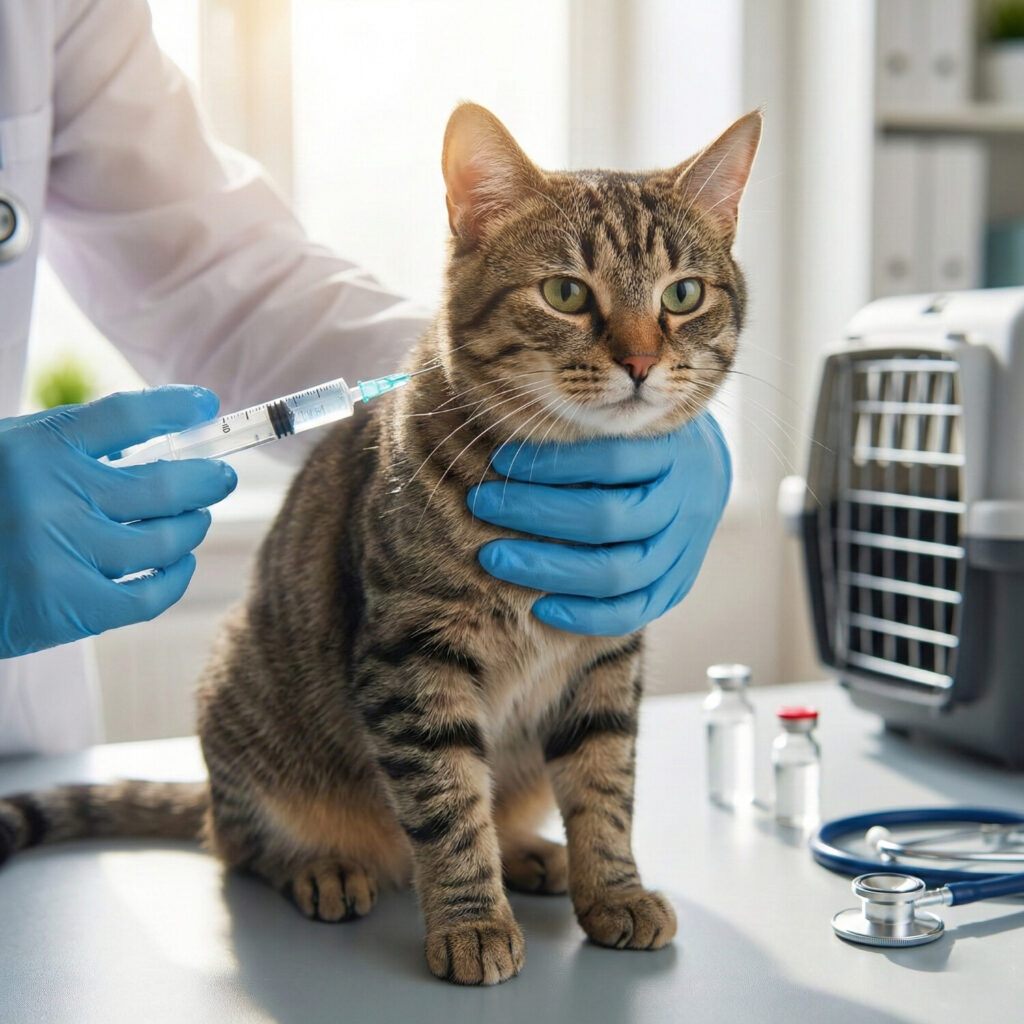
Adult cats generally need core vaccines (FVRCP and Rabies) every one to three years depending on the vaccine type and local laws. Kittens require a series of shots starting at 6 to 8 weeks old and ending around 16 weeks. Non-core vaccines like FeLV are given annually based on lifestyle risks such as outdoor access.
Summary Table: Cat Vaccination Schedule
| Vaccine Name | Type | Frequency for Adult Cats | Who Needs It? |
| Rabies | Core | Every 1 or 3 years (depends on law) | All cats (Required by law in most states) |
| FVRCP | Core | Every 3 years | All cats (Indoor and Outdoor) |
| FeLV | Non-Core | Every 1 year | Outdoor cats or those living with infected cats |
| Bordetella | Non-Core | Every 1 year | Cats in shelters or boarding facilities |
| Chlamydia | Non-Core | Every 1 year | Cats in multi cat environments with history of infection |
Why Cat Vaccinations Matter
Vaccinating your cat is one of the most effective ways to ensure they live a long and healthy life. Vaccines work by preparing the immune system to fight off future infections.
When a cat receives a vaccine, their body produces antibodies. If they encounter the actual disease later, these antibodies recognize the threat and destroy it before it causes serious harm.
This protection is vital not just for your individual pet but for the entire cat population. Widespread vaccination creates herd immunity which slows the spread of deadly contagious diseases. Even indoor cats benefit from this protection because viruses can enter your home on shoes or clothing.
Additionally, some diseases like rabies are zoonotic. This means they can spread from animals to humans. Vaccinating your cat protects your human family members as well.
Read Also: How to Detect Skin Allergies in Cats
Understanding Core vs Non Core Vaccines
Veterinarians divide vaccines into two main categories. Understanding the difference helps you make informed decisions about your cat’s healthcare plan.
1. Core Vaccines
Core vaccines are the essential shots that every cat should receive regardless of their lifestyle. These vaccines protect against diseases that are highly contagious, widely distributed, and often fatal.
The major veterinary organizations including the American Association of Feline Practitioners (AAFP) classify the following as core vaccines.
Rabies Vaccine
Rabies is a viral disease that attacks the central nervous system. It is almost always fatal once symptoms appear. Because rabies poses a significant threat to human health, this vaccine is required by law in most US states.
Even if your cat never goes outside, if they bite someone or if a bat enters your home, proof of rabies vaccination is legally critical.
FVRCP Vaccine
This is often called the “feline distemper” shot, but it actually protects against three different diseases in a single injection.
- Feline Panleukopenia (FPV): This is a highly contagious parvovirus that attacks rapidly dividing cells in the bone marrow and intestines. It can be deadly, especially for kittens.
- Feline Herpesvirus-1 (FHV-1): This virus causes severe upper respiratory infections. Symptoms include sneezing, eye discharge, and fever. It is a major cause of feline flu.
- Feline Calicivirus (FCV): This virus also affects the respiratory system and often causes painful ulcers in the mouth. It can lead to joint pain and limping in some cases.
2. Non-Core Vaccines
Non-core vaccines are optional. They are recommended based on your cat’s specific lifestyle and risk factors. Your veterinarian will assess these risks during your annual exam.
Feline Leukemia Virus (FeLV)
FeLV is a viral infection that weakens the immune system and can cause cancer. It is transmitted through close contact like grooming, sharing food bowls, or fighting.
The AAFP recommends vaccinating all kittens against FeLV because they are highly susceptible. For adult cats, it is considered non-core and is usually reserved for cats that go outdoors or live with an FeLV positive housemate.
Bordetella Bronchiseptica
This bacterium causes respiratory infections often linked to kennel cough in dogs. This vaccine is typically only recommended for cats entering high density environments like boarding kennels or shelters.
Chlamydia Felis
This bacterium causes conjunctivitis which is an inflammation of the eye tissues. Vaccination is generally reserved for cats in multi cat households where this specific infection has been confirmed.
Read Also: Seasonal Changes That Affect Cat Behavior
The Kitten Vaccination Schedule
Kittens are born with immature immune systems. They receive temporary protection from their mother’s milk in the form of maternal antibodies. However, these antibodies interfere with vaccines.
As the maternal antibodies fade, the kitten becomes vulnerable to disease but also becomes able to respond to vaccines. This is why kittens need a series of shots spaced out over several weeks.
6 to 8 Weeks Old
- FVRCP: First dose.
- Exam: Physical checkup to look for congenital issues or parasites.
10 to 12 Weeks Old
- FVRCP: Second dose.
- FeLV: First dose (highly recommended for all kittens).
14 to 16 Weeks Old
- FVRCP: Third dose.
- FeLV: Second dose.
- Rabies: Single dose (usually given at 12 or 16 weeks depending on the product).
6 Months to 1 Year
Some veterinarians recommend a booster dose around 6 months of age to ensure the immune system responds correctly, especially if the kitten still has high maternal antibodies at 16 weeks.
The Adult Cat Vaccination Schedule
Once a cat reaches adulthood, their vaccination needs change. The goal shifts from building immunity to maintaining it. Over vaccination is a concern for many pet owners, so modern protocols favor extending the interval between shots when possible.
The One Year Booster
One year after the final kitten series, your cat needs a booster for all the core vaccines. This is a critical step. It ensures that the immune memory is fully established. After this one year booster, the schedule typically spreads out.
Rabies Schedule for Adults
The frequency of the rabies shot depends on the specific vaccine brand used and state laws.
- 1 Year Vaccine: Must be given annually.
- 3 Year Vaccine: Can be given every three years.
- Legal Note: You must keep your rabies certificate. If your cat bites someone or is picked up by animal control, this document proves they are vaccinated.
FVRCP Schedule for Adults
Current guidelines suggest that low risk adult cats do not need this shot every year.
- Standard Protocol: Every 3 years.
- High Risk: Cats in shelters or catteries might need it more often.
FeLV Schedule for Adults
- Indoor Cats: If your cat lives strictly indoors and does not interact with FeLV-positive cats, they likely do not need this booster after the one year mark.
- Outdoor Cats: Cats that go outside should receive this vaccine every year.
Read Also: How to Reduce Shedding in Cats
Indoor vs Outdoor Cat Needs
Your cat’s lifestyle is the biggest factor in determining their vaccine schedule. It is helpful to categorize your cat to see what they really need.
Strictly Indoor Cats
These cats never leave the house and have no contact with strange animals.
- Needs: FVRCP (every 3 years) and Rabies (as required by law).
- Skip: FeLV (after kitten series), Bordetella, Chlamydia.
Indoor Outdoor Cats
These cats spend time in the backyard or roam the neighborhood. They are at higher risk of fighting and exposure to viruses.
- Needs: FVRCP, Rabies, and FeLV (Annually).
- Consider: Regular deworming and flea prevention are also crucial for this group.
Multi Cat Household Cats
If you have multiple cats, the risk status of one affects the others. If one cat goes outside, they can bring diseases home to the indoor only cats. In this case, even the indoor cats might need more robust protection.
Risks and Side Effects of Vaccination
Vaccines are generally safe, but like any medical procedure, they carry some risk. Most side effects are mild and resolve quickly.
Common Mild Reactions
- Lethargy: Your cat may sleep more than usual for a day or two.
- Decreased Appetite: They might eat less for 24 hours.
- Mild Fever: A slightly elevated temperature is normal as the immune system activates.
- Lump at Injection Site: A small, firm swelling may appear where the shot was given. This usually disappears within a few weeks.
Serious Reactions
While rare, severe allergic reactions can happen. These typically occur within minutes or hours of the vaccination.
- Symptoms: Vomiting, facial swelling, difficulty breathing, or collapse.
- Action: Seek immediate veterinary care if you notice these signs.
Feline Injection Site Sarcoma (FISS)
This is a very rare but serious type of tumor that can develop at the site of an injection. It occurs in roughly 1 in 10,000 to 30,000 cats. Because of this risk, veterinarians now follow strict protocols on where to inject.
- Right Rear Leg: Rabies vaccine.
- Left Rear Leg: FeLV vaccine.
- Right Front Shoulder: FVRCP vaccine.
- Tail: Some vets inject in the tail to make potential surgical removal easier.
By injecting into the limbs rather than the neck or back, it is easier to treat the tumor if one develops. The risk of FISS is low, but it is the main reason why vets avoid giving unnecessary vaccines.
Read Also: How Do Cats Communicate With Humans?
Senior Cat Considerations
As cats age, their immune systems undergo a process called immunosenescence. This means their immune response becomes weaker and less efficient.
Do Senior Cats Still Need Vaccines?
Yes, but the approach should be tailored. An elderly cat with a chronic illness like kidney disease might be a candidate for reduced vaccination. However, because their immune system is weaker, they are also more susceptible if they do catch a disease.
- Antibody Titer Testing: Instead of automatically vaccinating, you can pay for a titer test. This is a blood test that measures the level of antibodies in your cat’s system. If the levels are high, the cat is still protected and does not need a booster. This is a great option for senior cats to avoid over vaccination.
The Cost of Vaccinating Your Cat
Budgeting for vaccines is part of responsible pet ownership. Costs vary widely by location and clinic type.
Average Costs
- Rabies: $20 to $40.
- FVRCP: $25 to $50.
- FeLV: $30 to $55.
- Exam Fee: Most vets require a wellness exam before vaccinating, which can add $50 to $80 to the bill.
Low Cost Options
If these prices are prohibitive, look for low cost vaccine clinics in your area. Many animal shelters and municipalities offer rabies clinics where shots are provided for a nominal fee or even for free.
Pet supply stores also frequently host mobile vet clinics with reduced rates.
Legal Requirements for Cat Owners
In the United States, the legal requirement for cat vaccination focuses almost exclusively on rabies. Rabies is a public health issue, so the government regulates it strictly.
State Laws
Most states require all cats over the age of 3 or 4 months to be vaccinated against rabies. This law applies even to indoor cats. If your unvaccinated cat bites a guest, the local health department can mandate a long quarantine period at your expense or even euthanasia to test for the virus.
Travel Requirements
If you plan to travel with your cat across state lines or internationally, you will need a health certificate. This document requires proof of up to date rabies vaccination. Some airlines also require this documentation before allowing a pet in the cabin.
Read Also: What Cat Purring Really Means
How to Prepare for the Vet Visit
Making the vaccination appointment less stressful helps your cat and your veterinarian.
Before the Appointment
- Carrier Training: Leave the carrier out a few days early so the cat gets used to it.
- Medical Records: Bring previous vaccine history if you are visiting a new vet.
- Questions: Write down any changes in behavior or lifestyle to discuss.
During the Appointment
- Stay Calm: Cats can sense your anxiety. Speak in a low and soothing voice.
- Discuss Lifestyle: Be honest about whether your cat goes outside or if you foster other cats. This ensures the vet recommends the right non-core vaccines.
After the Appointment
- Monitor: Keep an eye on your cat for the next 24 hours.
- Comfort: Give them a quiet warm place to rest.
- Treats: Positive reinforcement helps them recover from the stress.
Frequently Asked Questions
Can I vaccinate my cat at home?
While you can buy some vaccines at farm supply stores, it is not recommended. Vaccines must be stored at specific temperatures to remain effective. If the cold chain was broken during shipping, the vaccine might be useless.
Furthermore, vets cannot legally recognize a rabies vaccine given by an owner. You will not get a legal rabies certificate unless a licensed professional administers the shot.
Does my 15 year old cat really need shots?
It depends. If your 15 year old cat is strictly indoors and has no contact with other animals, your vet might waive the FVRCP and FeLV. However, the rabies vaccine is usually still required by law regardless of age. Discuss titer testing with your vet as an alternative.
What if I miss a booster?
If you are only a few weeks late, just book an appointment as soon as possible. If you are years overdue, your vet might recommend a series of two shots spaced a few weeks apart to “restart” the immune memory, similar to the kitten series.
Why does my indoor cat need a leukemia shot?
Most vets recommend the initial kitten series for FeLV even for indoor cats. This protects them in case they accidentally escape outdoors or if your living situation changes in the future. After the first year booster, most indoor cats can stop receiving this vaccine.
Final Thoughts on Feline Vaccination
Vaccination is a cornerstone of preventative medicine. It is much cheaper and safer to prevent a disease than to treat it. By following the AAFP guidelines and maintaining a relationship with your veterinarian, you can protect your cat from preventable suffering.
Remember that “Core” means essential for all. “Non-Core” means lifestyle dependent. Start with the kitten series, get the one-year booster, and then move to a maintenance schedule of every three years for core vaccines.
Always keep your rabies certificate current to comply with the law. A personalized vaccine schedule is the best gift you can give your feline companion.