
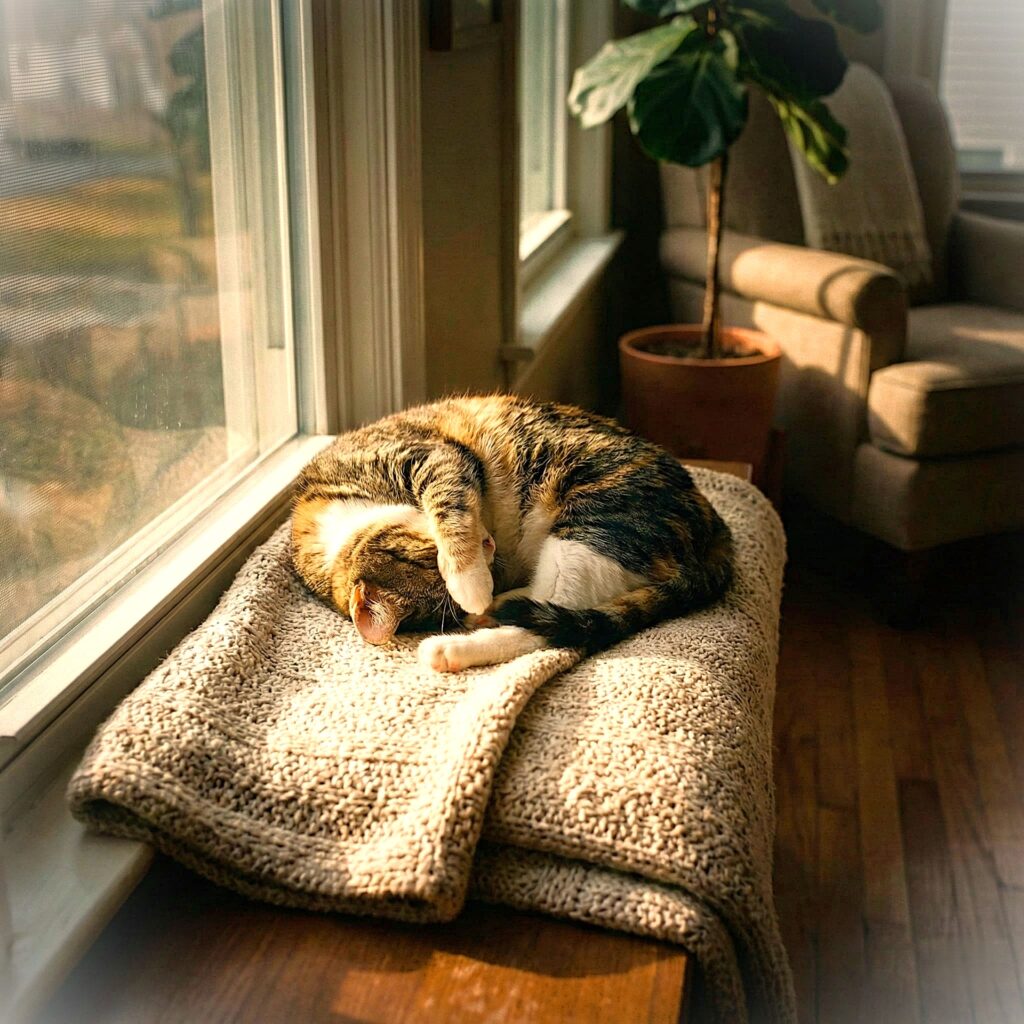
Cats typically sleep between 12 and 16 hours a day. However, this varies significantly by age. Kittens and senior cats often sleep up to 20 hours a day for growth and conservation, while healthy adults average 15 hours. Cats are crepuscular, meaning they are biologically programmed to be most active at dawn and dusk, spending the rest of the day in a mix of light “catnaps” and deep REM sleep to conserve energy for hunting.
Summary Table: Daily Sleep Needs of Cats by Age
| Life Stage | Age Range | Average Sleep Per Day | Primary Reason for Sleep |
| Kitten | 0 – 6 months | 18 – 20+ hours | Brain development, growth hormones, and physical maturation. |
| Adolescent | 7 months – 2 years | 12 – 16 hours | High energy bursts followed by deep rest; establishing adult patterns. |
| Adult | 3 – 10 years | 12 – 16 hours | Energy conservation for “hunting” (play), temperature regulation, and boredom. |
| Senior | 11+ years | 16 – 20 hours | Slower metabolism, reduced mobility, joint comfort, and cognitive changes. |
How Much Sleep Do Cats Really Need? Detailed Breakdown
You wake up, and your cat is asleep. You leave for work, and they are curled up on the sofa. You come home, and they are still snoozing. It often feels like our feline friends spend their entire lives asleep. If you are a cat owner, you have likely wondered if this is normal laziness or if something is wrong.
The truth is, cats are not lazy. They are evolutionary masterpieces designed for short bursts of intense energy followed by long periods of recovery.
While humans generally need 7 to 9 hours of rest, cats require double that amount to function correctly. Understanding why they sleep so much helps you spot the difference between a happy, rested pet and one that might be hiding a health issue.
Read Also: Why Do Cats Knock Things Over?
The Evolutionary Reason Cats Sleep So Much
To understand your house cat, you have to look at their wild ancestors. Domestic cats share 95.6% of their DNA with tigers. In the wild, predators do not know when their next meal is coming. Hunting requires massive amounts of energy. A wild cat must sprint, jump, stalk, and wrestle prey.
If they burned energy constantly like humans, they would starve. Evolution taught them to shut down their systems completely when not hunting to conserve calories.
Your indoor cat typically has a full bowl of kibble, but their biology still tells them they need to save up energy for a hunt that might happen at any moment.
Sleep Needs by Age Group
Not all cats sleep the same amount. The number of hours your cat spends dozing depends heavily on where they are in their life cycle.
1. Newborns and Kittens (18 to 24 Hours)
Kittens are sleep machines. For the first few weeks of life, they sleep almost constantly. This is not just rest; it is work. During sleep, a kitten’s body releases growth hormones essential for developing strong bones and muscles. Their brains are also building millions of neural connections.
- Deep Sleep: Kittens spend more time in REM (rapid eye movement) sleep than adults. This is when you see their paws twitching or mouths moving.
- Safety: In the wild, a silent, sleeping kitten is safer from predators than a crying, moving one.
2. Adolescent Cats (12 to 16 Hours)
As a cat reaches the “teenager” phase (around 6 to 12 months), their sleep patterns shift. They become balls of chaotic energy. You will notice them sleeping deeply for a few hours, then waking up with the “zoomies,” sprinting across furniture and attacking toys. This cycle mimics the adult hunt-eat-sleep routine but with more intensity.
3. Adult Cats (12 to 16 Hours)
A healthy adult cat settles into a predictable rhythm. They usually sleep between 12 and 16 hours. However, this sleep is often lighter than a kitten’s sleep. Adults are more attuned to their environment. A crinkle of a treat bag or the sound of a strange car can wake them instantly.
4. Senior Cats (16 to 20 Hours)
As cats age (usually 11 years and older), they revert to kitten-like sleep durations. This happens for several reasons:
- Slower Metabolism: They process energy more slowly and tire more easily.
- Joint Pain: Arthritis often makes moving uncomfortable, so they prefer to stay still.
- Cognitive Decline: Similar to humans, older cats may have disrupted internal clocks, causing them to sleep more during the day and wander at night.
Read Also: How Sleep Patterns Differ Between Cats and Humans
The “Catnap” vs. Deep Sleep
Humans usually have one long sleep cycle at night. Cats are polyphasic sleepers, meaning they sleep multiple times throughout the day and night. But not all sleep is the same.
The Catnap (Light Sleep)
About 75% of a cat’s sleeping time is actually “light snoozing.” In this state:
- Ears can swivel toward noises.
- Eyes may be slightly open.
- Muscles are not fully relaxed.
- They can wake up and run instantly if needed. This is a survival mechanism. They are resting their bodies but keeping their senses sharp for predators or prey.
Deep Sleep
The remaining 25% is deep sleep. This is critical for immune system health and body repair.
- The cat is curled up tightly or stretched out completely limp.
- They are harder to wake up.
- Dreaming occurs here. You might see whiskers twitching or hear soft squeaks.
- Body position is usually vulnerable (like exposing the belly), indicating they feel safe.
Why Is My Cat Awake at 3 AM?
Many owners believe cats are nocturnal (active at night). This is a myth. Cats are crepuscular.
- Nocturnal: Active at night (like owls).
- Diurnal: Active during the day (like humans).
- Crepuscular: Active at dawn and dusk.
In the wild, prey animals like mice and birds are most active when the sun is rising or setting. Cats are hardwired to be awake during these low-light hours.
This is why your cat might sleep all day while you are at work and then decide to sit on your face or meow loudly at 5:00 AM. They are not trying to be annoying; their biological alarm clock just went off for “hunting time.”
Read Also: Why Do Cats Meow More at Night?
Factors That Influence Sleep Habits
Beyond age and biology, external factors change how much your cat sleeps.
Activity Levels
Indoor cats often sleep out of sheer boredom. If a cat has no stimulation, no toys, no window to look out of, no other pets, they will sleep to pass the time. Active play sessions can actually help regulate their sleep, ensuring they sleep more soundly at night rather than napping excessively during the day.
Weather
Just like humans, cats get sleepy when it is raining or cold. Low atmospheric pressure can make them lethargic. Conversely, on hot days, cats will sleep to regulate their body temperature, staying still to avoid generating excess body heat.
Diet
Cats fed low-quality food filled with carbohydrates may have energy crashes (sugar crashes) that lead to lethargy. A high-protein diet provides steady energy levels.
Additionally, the size of the meal matters. Big predators like lions eat a massive meal and then sleep for days. If your cat eats a huge portion, expect a “food coma” immediately after.
Read Also: Why Do Cats Suddenly Get the Zoomies?
Warning Signs: When Sleep Becomes a Problem
Because cats sleep so much naturally, it is difficult to tell when they are sick. You must look for changes in patterns rather than the hours themselves.
Signs of Sleeping Too Much (Lethargy)
If your cat typically greets you at the door but suddenly stops, or if they are sleeping in unusual places (like the litter box or hiding under a bed), this is a red flag.
- Illness: Kidney disease, diabetes, and infections often cause fatigue.
- Depression: Cats grieving the loss of a companion or owner may sleep to withdraw from the world.
- Arthritis: If it hurts to get up, they will choose to stay asleep.
Signs of Sleeping Too Little (Insomnia)
A cat that cannot settle down is equally concerning.
- Hyperthyroidism: Common in older cats, this condition speeds up metabolism. The cat becomes ravenous, hyperactive, vocal, and loses weight despite eating.
- Anxiety: A stressed cat feels unsafe closing its eyes. They may “fake sleep” (lying still but watching the room) or pace constantly.
- Cognitive Dysfunction: Similar to dementia, this causes confusion. Cats may forget day/night cycles and wander the house yowling at night.
How to Help Your Cat Get Better Sleep
You cannot change your cat’s biology, but you can adjust their routine to fit your lifestyle better.
1. Create a Routine
Cats crave predictability. Feed them at the same times every day. Do not leave food out 24/7 (free feeding), as this mimics grazing rather than hunting. Scheduled meals help set their internal clock.
2. The “Hunt, Eat, Groom, Sleep” Cycle
You can hack your cat’s biology to make them sleep when you sleep.
- Step 1: Play with them vigorously 30 minutes before bed (Hunt).
- Step 2: Feed them a meal immediately after play (Eat).
- Step 3: They will naturally groom themselves after eating (Groom).
- Step 4: They will fall into a deep sleep (Sleep).
3. Provide Enrichment
Reduce “boredom sleeping” by giving them things to do when you are not home.
- Puzzle feeders that dispense treats.
- Window perches to watch birds (“Cat TV”).
- Vertical climbing trees.
4. Respect Their Rest
Teach children and guests never to wake a sleeping cat. Because deep sleep is rare and essential for their health, startling them out of it can cause anxiety and behavioral issues like scratching or biting.
Conclusion
If your cat is sleeping 16 hours a day, do not worry; it is likely a sign of a happy, healthy, and well-adjusted pet. They are saving their energy for the “wild hunt” (even if that just means chasing a laser pointer later).
However, you are the best judge of your cat’s normal behavior. If their 15-hour nap turns into a 22-hour coma, or if they suddenly stop sleeping and pace the house, contact your veterinarian. Sleep is a barometer for health. By observing their snoozing habits, you can ensure your feline friend lives a long, rested, and energetic life.