Salt is a common kitchen staple for humans, but for cats, it can be a deadly poison. Because cats are small, it does not take much salt to cause severe health problems or even death.
This condition is technically called salt poisoning or hypernatremia. Here is everything you need to know about the toxic doses, symptoms, and what to do if you suspect your cat ate salt.
The Lethal Dose: How Much is Too Much?
The amount of salt that affects a cat depends on their weight and health, but the margin for error is very small.
- Toxic Dose: Signs of poisoning can start appearing if a cat eats as little as 0.5 to 1 gram of salt per kilogram of body weight. For an average 10-pound (4.5 kg) cat, this is less than ½ of a teaspoon.
- Lethal Dose: Salt becomes fatal at around 4 grams per kilogram of body weight. For an average 10-pound cat, eating roughly 1 tablespoon of salt can be deadly.
The Bottom Line: A single teaspoon of table salt is dangerous for a cat. A tablespoon can kill them.
Warning Signs and Symptoms
Symptoms usually start quickly. You may see signs within 30 minutes to 3 hours after ingestion.
Early Signs (Mild to Moderate)
If your cat has eaten a small amount, you might see:
- Vomiting: This is usually the first sign.
- Diarrhea: Often watery.
- Extreme Thirst: The cat will drink water frantically.
- Excessive Urination: Frequent trips to the litter box.
- Lethargy: Acting tired, weak, or hiding.
Severe Signs (Emergency)
If the poisoning progresses or the dose was high, the salt draws water out of the brain cells. This causes neurological failure. Look for:
- Stumbling: Walking like they are drunk (ataxia).
- Tremors: Shaking or shivering.
- Seizures: Uncontrollable convulsions.
- Coma: Unresponsive.
- Death: Without treatment, this can happen within 24 hours.
Common Hidden Sources of Salt
You probably aren’t feeding your cat spoonfuls of salt, but they can ingest it accidentally from common household items.
1. Homemade Playdough and Ornaments
This is one of the most common causes of fatal salt poisoning in pets. Homemade playdough (often used for Christmas ornaments or kids’ crafts) contains a massive amount of salt. Even a small bite is enough to kill a cat.
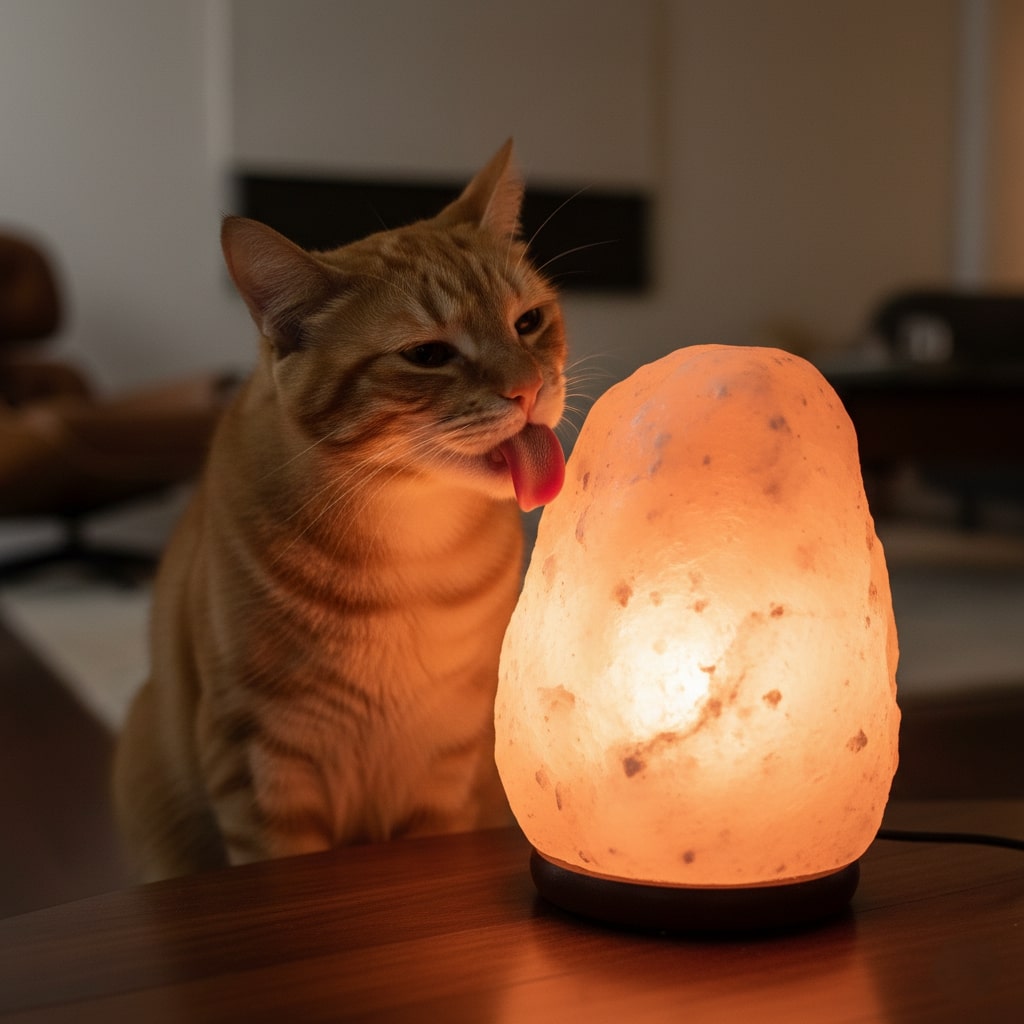
2. Salt Lamps
Many cats enjoy licking Himalayan salt lamps because of the texture and taste. Over time, or during a long licking session, they can ingest a toxic amount.
3. De-icing Salts (Rock Salt)
In winter, cats may walk on sidewalks treated with rock salt. When they groom themselves later, they lick the salt off their paws.
4. Human Food
- Cured meats (ham, bacon, salami).
- Potato chips and pretzels.
- Canned soups or brine (like tuna water intended for humans, not cats).
5. Seawater
If you take your cat to the beach, drinking ocean water can quickly lead to dehydration and salt toxicity.
What to Do (And What NOT to Do)
If you suspect your cat ate salt, treat it as a medical emergency.
Immediate Steps
- Remove the source: Take the salt, food, or item away immediately.
- Call the Vet: Call your veterinarian or the Pet Poison Helpline immediately.
- Provide fresh water: If the cat is conscious and can swallow, allow them to drink small amounts of fresh water.
What NOT to Do
- Do NOT induce vomiting: Do not give hydrogen peroxide or try to make the cat throw up unless a vet specifically tells you to. This can cause severe dehydration or chemical burns.
- Do NOT wait: Salt poisoning moves fast. Waiting “to see if they get better” can result in brain damage.
How Vets Treat It
Treatment focuses on restoring the balance of fluids and electrolytes in the cat’s body.
- IV Fluids: The vet will likely give intravenous fluids to flush the salt out. This must be done carefully; lowering sodium levels too fast can cause brain swelling.
- Electrolyte Monitoring: They will constantly check blood work.
- Medication: Drugs may be given to control seizures or nausea.
Summary
- Less than a teaspoon of salt is toxic to a cat.
- Homemade playdough and salt lamps are major hazards.
- Vomiting and stumbling are key warning signs.
- Time is critical: Get to a vet immediately.