
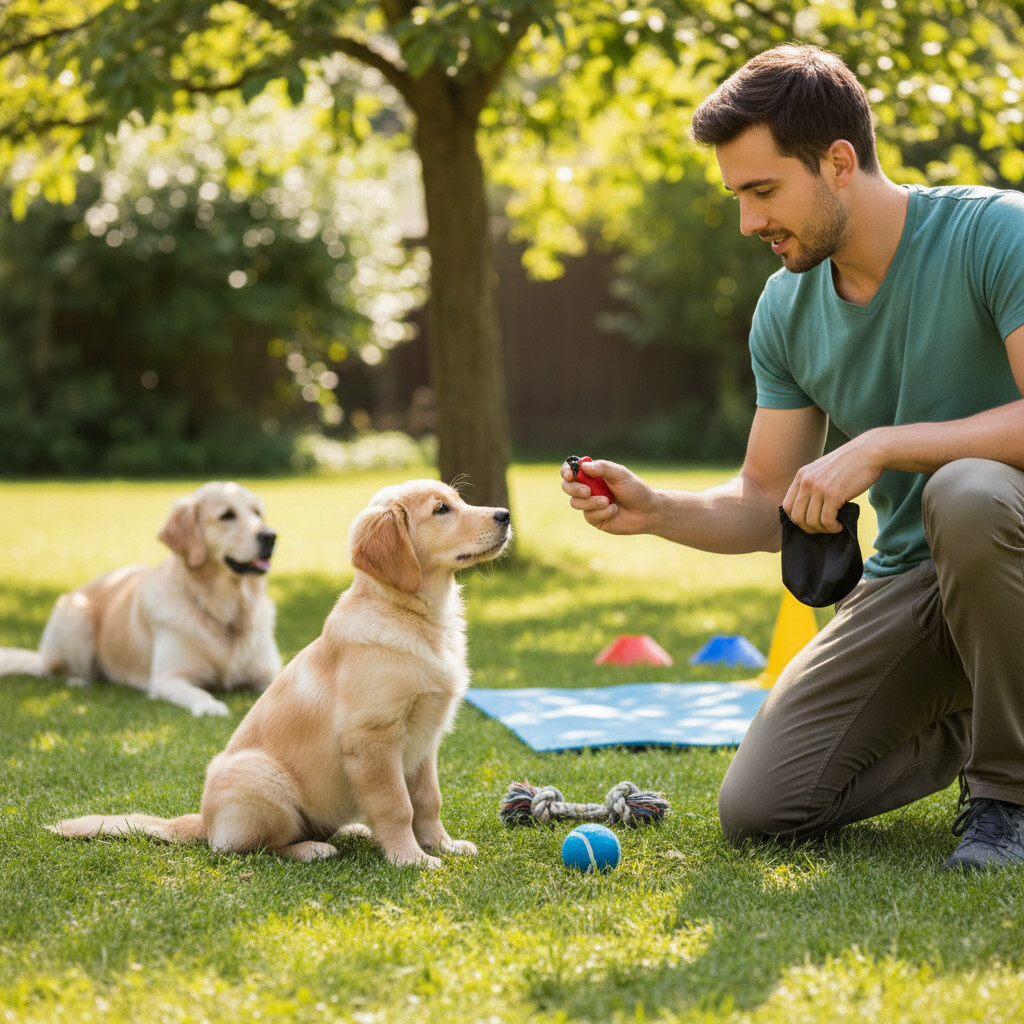
Most puppies learn basic commands like “sit” and “stay” within 4 to 6 months. However, fully potty training a puppy usually takes 4 to 6 months, while achieving reliable behavior and complete obedience, especially outdoors or around distractions, typically takes about 1 year to 18 months. Training is not a one-time event but a continuous process that evolves as the dog matures from puppyhood through adolescence into adulthood.
Summary Table
| Phase | Puppy Age | Primary Focus | Expected Duration |
| The Sponge Phase | 8 – 12 Weeks | Potty basics, name recognition, crate comfort | 2 – 4 weeks for basics |
| Socialization | 12 – 16 Weeks | Meeting new people/dogs, loose leash intro, bite inhibition | Ongoing (Critical window) |
| The Teen Phase | 6 – 12 Months | Reinforcing commands, managing rebellion, impulse control | 6 months (Variable) |
| Maturity | 1 – 2 Years | Advanced obedience, off-leash reliability, consistency | Lifetime maintenance |
How Long Does Puppy Training Take?
Bringing a new puppy home is exciting, but it also brings a major question: “When will my dog be trained?” The honest answer is that training is a journey, not a destination. While you can teach a puppy to sit in five minutes, getting them to sit while a squirrel runs by might take a year of practice.
The timeline depends heavily on what you define as “trained.” If you mean “housebroken and knows their name,” that happens relatively quickly. If you mean “calm, polite, and follows commands off-leash,” that takes significant time and maturity.
This guide breaks down exactly what to expect at every stage of your puppy’s life, helping you set realistic goals and avoid frustration.
Read Also: Why Puppies Chew Everything
Factors That Influence Training Speed
Before diving into the timeline, it is important to understand why one puppy might learn faster than another.
Breed Characteristics
Genetics plays a huge role.
- Working breeds (like Border Collies or German Shepherds) learn commands very fast but require intense mental stimulation, or they will find destructive ways to entertain themselves.
- Stubborn or independent breeds (like Huskies or Beagles) are intelligent but often ask, “What’s in it for me?” before obeying.
- Companion breeds (like Cavaliers or Bichon Frises) are generally eager to please but may struggle more with potty training due to smaller bladders.
Your Consistency
Dogs do not speak English; they speak “pattern.” If you let your puppy jump on the couch on Tuesday but scold them for it on Wednesday, training will take twice as long. Everyone in the household must follow the same rules.
Training History
If you adopt an older puppy, they may have “baggage” or bad habits that take longer to undo than starting from scratch. Unlearning a behavior is harder than learning a new one.
Phase 1: The Foundation (8 to 12 Weeks)
This is the chaotic but adorable phase. Your puppy has just left their mother and littermates. Their attention span is incredibly short, literally seconds.
Potty Training Basics
Timeframe: 2 to 4 months for reliability.
At this age, your puppy does not have full physical control over their bladder. They aren’t trying to be bad; they just can’t hold it.
- Goal: The puppy begins to prefer going to the bathroom outside rather than on your rug.
- Reality: Expect accidents. Success here relies on your schedule, not the dog’s memory. You need to take them out every hour and immediately after sleeping, eating, or playing.
Name Recognition
Timeframe: 1 to 2 weeks.
Your puppy needs to learn that the sound you are making refers to them. Use their name, and when they look at you, give them a treat. This is the foundation of the “Recall” (come when called) command.
Crate Training
Timeframe: 1 to 4 weeks.
Creating a safe space is vital. The goal is for the puppy to enter the crate willingly for naps and at night without panicking. The first few nights will involve whining, but most puppies settle in within a week if you make the crate positive and comfortable.
Read Also: Puppy Growth Spurts Explained
Phase 2: Socialization and Basics (12 to 16 Weeks)
This is often called the “Golden Window” for socialization. What your puppy experiences now will shape their personality for life.
Socialization
Timeframe: Critical until 16 weeks.
This does not just mean playing with other dogs. It means exposure to:
- Different surfaces (grass, concrete, wood).
- Loud noises (vacuums, traffic, thunder).
- People (men with beards, children, people in hats).
- Handling (having their paws, ears, and mouth touched).
If a puppy is not exposed to these things now, they may be fearful or aggressive toward them later.
Bite Inhibition
Timeframe: 2 to 4 months.
Puppies explore the world with their mouths. They are teething and will chew on your hands and furniture. You aren’t trying to stop the biting entirely yet (they need to chew), but you are teaching them how hard they can bite. This is called “bite inhibition.” When they bite too hard, stop playing immediately.
Basic Obedience Commands
Timeframe: 2 to 4 weeks.
Your puppy is a sponge right now. They can easily learn:
- Sit
- Down
- Stay (for short durations)
- Leave it
Note: They will perform well in your quiet living room. They will likely fail to do them in a busy park. That is normal.
Phase 3: The “Teenage” Phase (6 to 12 Months)
Just when you think your puppy is trained, they hit adolescence. Hormones surge, and their brain structure actually changes. This is the most common age for dogs to be surrendered to shelters because owners think the dog is “broken.” They aren’t broken; they are teenagers.
Regression
Timeframe: Lasts a few months.
A dog that has come when called for months might suddenly run the other way. They may chew furniture they haven’t touched since they were 10 weeks old.
- Solution: Go back to basics. Keep them on a long leash even in the yard. Increase the value of your treats (use chicken or cheese instead of dry kibble). Be patient.
Proofing Commands
Timeframe: 6 to 12 months.
“Proofing” means teaching your dog to obey commands in different environments with high distractions.
- Can they “Sit” when a stranger walks by?
- Can they “Stay” while you throw a ball?
- Can they “Leave it” when a piece of hot dog falls on the floor?
This is the longest part of the training. It requires repetition in the park, at the pet store, and on walks.
Read Also: How to Help a Puppy Adjust to a New Home?
Specific Skills: How Long Do They Take?
Here is a breakdown of the specific behaviors owners want most and how long they actually take to master.
1. Potty Training (Housebreaking)
- Basic Understanding: 3 to 4 months.
- Full Reliability: 6 months.
- Why does it take time? It is physical, not just mental. Puppies generally can hold their bladder for one hour for every month of age. A 2-month-old puppy can only hold it for 2 hours. You cannot train biology to move faster.
2. Leash Walking
- Basic Understanding: 2 to 4 weeks.
- Loose Leash (No Pulling): 6 to 12 months.
- Why does it takes time: The world is exciting. Walking at a slow human pace is unnatural for a dog. It takes a lot of impulse control for a dog to ignore smells and squirrels to walk by your side.
3. Stop Biting/Nipping
- Reduction: 4 months.
- Cessation: 6 to 7 months.
- Why it takes time: Puppies lose their baby teeth and grow adult teeth between 4 and 6 months. During this time, chewing soothes their gum pain. Once the adult teeth are in, the urge to mouth everything decreases significantly.
4. Recall (Coming When Called)
- Indoors: 2 weeks.
- Outdoors (Off-Leash): 1 year+.
- Why it takes time: This is the hardest command because the environment is always more interesting than you are. Reliable off-leash recall requires thousands of repetitions and a strong bond. Many trainers recommend keeping a long line (leash) on the dog until they are at least one year old.
Common Setbacks to Watch Out For
Even with perfect training, you will face bumps in the road.
Fear Periods
Puppies go through developmental “fear periods” (often around 8-10 weeks and again around 6-14 months). During these times, they may suddenly be terrified of a trash can or a statue they have walked past a hundred times.
- What to do: Do not force them to approach the scary object. Let them observe from a distance and reward them for remaining calm. Forcing them can create a lifelong phobia.
The “Un-Training” Effect
This happens when you accidentally reward bad behavior.
- Example: The dog barks at you, so you look at them and say “Quiet.” You just gave them attention. To the dog, barking worked.
- Example: The dog jumps on you, and you push them off. To a dog, physical contact is play. You just played with them.
Read Also: When Puppies Develop Fear Periods
The One-Year Mark: The Turning Point
By the time your dog reaches their first birthday, you will see a massive shift. If you have been consistent, the hard work pays off here. The dog is physically mature, can hold their bladder for long periods, and has a longer attention span.
However, high-energy breeds may not “settle down” mentally until they are two or three years old. Training at this stage shifts from “teaching new things” to “maintenance.” You still need to reward good behavior, but you won’t need to carry a treat pouch everywhere you go.
Conclusion
So, how long does puppy training take?
- Basics: 6 months.
- Reliability: 1 year.
- Mastery: A lifetime.
If you view training as a way to communicate with your best friend rather than a chore list to complete, the time will pass much faster. Celebrate the small wins, the first time they signal to go out, the first time they ignore a squirrel, or the first night they sleep through without whining.
Consistency, patience, and positive reinforcement are your best tools. Stick with it, and you will have a well-behaved companion for years to come.