
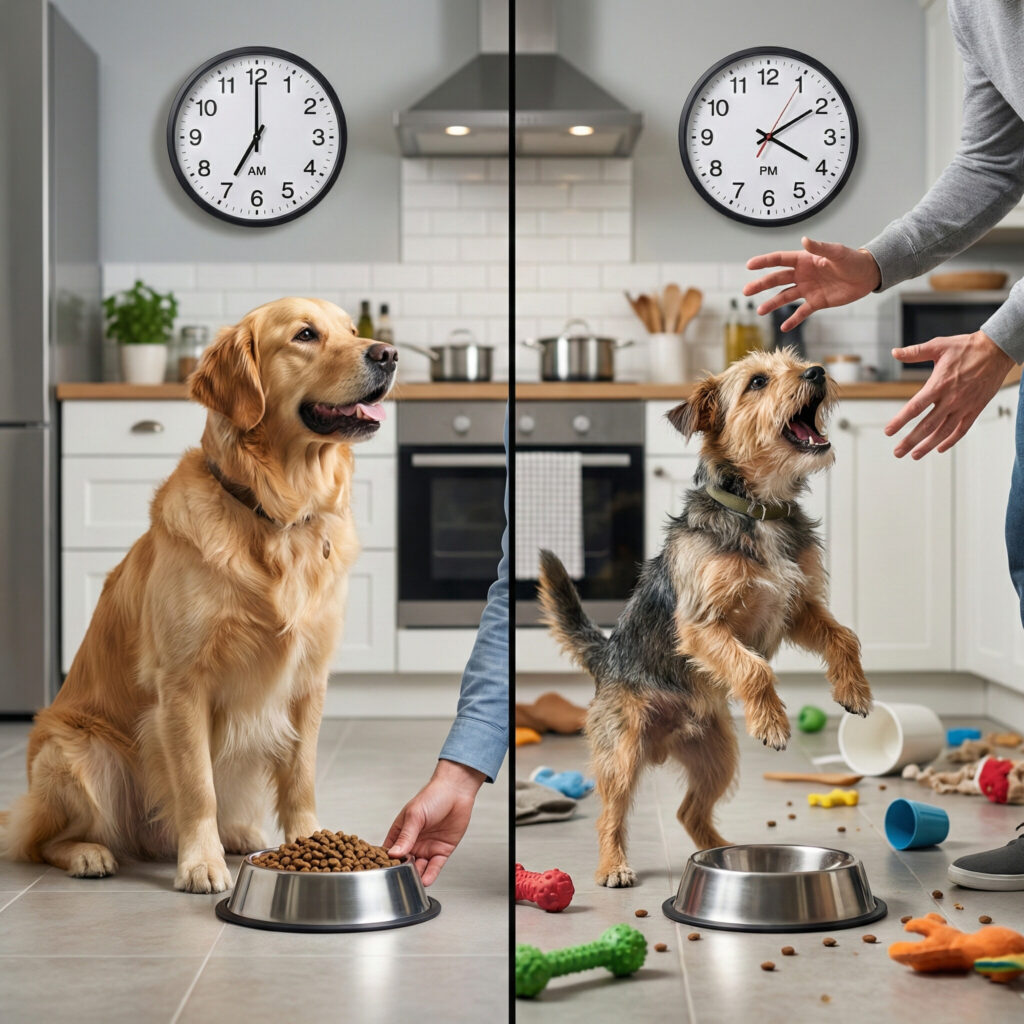
Feeding schedules significantly influence a dog’s behavior by establishing a predictable routine, which reduces anxiety and builds trust. Scheduled feeding (providing food at set times) generally leads to better behavior than free feeding (leaving food out all day). It enhances potty training success, prevents resource guarding, increases motivation for training, and regulates energy levels. A consistent schedule aligns with a dog’s natural circadian rhythm, promoting better sleep and emotional stability.
Summary Table
| Feature | Scheduled Feeding | Free Feeding |
| Behavioral Impact | Promotes calmness and discipline; reduces anxiety through predictability. | Can lead to boredom, pickiness, or territory guarding. |
| Training Utility | High. Food drive remains consistent, making treats more valuable. | Low. Food is always available, reducing motivation to work for treats. |
| Potty Training | Excellent. Predictable input leads to predictable output. | Poor. Hard to predict when the dog will need to go out. |
| Aggression Risk | Low (if managed correctly), but prevents guarding of a permanent bowl. | Moderate/High. A constantly present bowl can trigger resource guarding. |
| Health Monitoring | Easy to spot appetite changes immediately. | Difficult to notice if a dog has stopped eating or is overeating. |
| Best For | Single-dog homes, active grazers, and dogs with low food drive. | Single-dog homes, active grazers, dogs with low food drive. |
How Feeding Schedules Affect Dog Behavior
Food is the primary motivator for most dogs. It is not just fuel; it is a critical resource that dictates how they interact with their environment and their owners. When you control the food, you control a major part of your dog’s world. This does not mean being dominant or harsh. It means being a provider of structure.
Dogs are crepuscular animals by nature, meaning they are often most active at dawn and dusk. In the wild, their ancestors did not have full bowls of kibble waiting for them all day. They hunted, ate, and rested. Their bodies and minds are wired to anticipate food events.
When you implement a feeding schedule, you tap into this primal psychology. You become the reliable source of good things. This builds a bond based on trust and leadership.
Conversely, a lack of structure around food can lead to a dog feeling like they must manage the resource themselves, which often manifests as behavioral issues.
Read Also: What Happens When Dogs Eat Too Fast
Type 1: The Effects of Free Feeding on Behavior
Free feeding is the practice of leaving a bowl of food out so the dog can eat whenever they want. While this seems convenient for the owner, it can have subtle and negative effects on a dog’s behavior.
Loss of Motivation
For many dogs, food is currency. If money grew on trees in your backyard, you might not be as motivated to go to work. The same applies to dogs. If food is always available for free, they are less likely to work for it during training sessions.
You may find your dog ignores commands or seems “stubborn.” Often, they are just not hungry enough to care about the treat you are offering.
Development of Picky Habits
Free feeding often creates picky eaters. When a dog knows the food will be there in an hour, they have no urgency to eat. They may take a bite, walk away, and come back later.
This grazing behavior makes it incredibly difficult for owners to use high-value rewards because the dog is never truly hungry.
Resource Guarding
In some dogs, especially in multi-dog households, a permanent food bowl becomes a source of stress. One dog may feel the need to “guard” the bowl even when they aren’t eating, just to ensure the other dog doesn’t get it. This leads to low-level growling, “staring down” the other dog, or outright fighting.
Type 2: The Effects of Scheduled Feeding on Behavior
Scheduled feeding involves offering food for a specific window of time (usually 15-20 minutes) once or twice a day. If the dog doesn’t eat, the bowl is removed. This is the method recommended by most veterinarians and behaviorists.
Increased Focus and Bonding
When you provide meals at specific times, your dog learns that you are the provider. This naturally increases their focus on you. You will notice that around feeding time, your dog becomes very attentive. This is the perfect window to practice “sit,” “stay,” or “wait” commands. The meal becomes a reward for good behavior, reinforcing the bond between you.
Reduction in Anxiety
Anxiety in dogs often stems from uncertainty. A dog that doesn’t know when their next meal is coming, or a dog that feels responsible for guarding a bowl all day, is a stressed dog. A strict schedule provides a safety net. The dog learns the routine: “We wake up, we go out, we eat.” This predictability is calming. They don’t need to worry about food because they know exactly when it appears.
Energy Regulation
Food is energy. When a dog eats a large meal, their blood sugar rises, giving them a burst of energy, followed by a period of rest for digestion. Scheduled feeding allows you to time these energy bursts.
For example, feeding your dog shortly before you leave for work might give them energy when you want them to settle. Feeding them after a morning walk ensures they are tired and full, leading to a nap while you are gone.
Read Also: How to Choose Healthy Dog Treats
How Schedules Impact Potty Training
If you are raising a puppy or retraining an adult dog, a feeding schedule is non-negotiable. The gastrointestinal tract of a dog is a reflex system. When food goes in, waste needs to go out. This is known as the gastrocolic reflex.
Predictable Output
With free feeding, a dog eats a little bit here and there. This means they will need to poop a little bit here and there, at unpredictable times. This makes housebreaking a nightmare. With scheduled feeding, most dogs will need to relieve themselves 15 to 30 minutes after eating.
Faster Housebreaking
Because you know exactly when the dog ate, you can take them outside at the critical moment. When they succeed, you praise them. This creates a clear loop: Eat -> Go Outside -> Potty -> Reward. This cycle is impossible to establish accurately without scheduled meals.
Aggression and Resource Guarding
Resource guarding occurs when a dog becomes defensive over an item they perceive as highly valued. This is a natural instinct, but it is dangerous in a home environment.
The Problem with “Always Available”
You might think leaving food out removes the scarcity, so the dog won’t guard it. However, for a prone dog, the bowl becomes a permanent territory marker. They may feel they must patrol the area around the bowl 24/7. This creates a state of chronic stress.
The Scheduled Solution
Scheduled feeding removes the object of obsession. The bowl is down, the dog eats, and the bowl is picked up. There is nothing left to guard.
Furthermore, you can use mealtime to teach the dog that humans approaching the bowl is a good thing. You can drop high-value treats into the bowl while they eat, teaching them that your presence adds value rather than taking it away.
The Role of Circadian Rhythms
Just like humans, dogs have a circadian rhythm, an internal body clock that regulates sleep, hormone release, and metabolism.
Sleep Patterns
Feeding times set the body clock. If a dog eats a heavy meal very late at night, digestion can interfere with sleep quality. They may need to go outside in the middle of the night, disrupting the household.
Conversely, feeding too early in the evening might result in a “bilious vomiting syndrome” (hunger pukes) in the early morning because the stomach has been empty for too long.
Timing for Behavior Management
- The Morning Burst: Feeding breakfast triggers metabolism. If you have a high-energy dog, feed them after their morning exercise. If you feed them first, they have a full tank of fuel and nowhere to burn it, which can lead to destruction or hyperactivity.
- The Evening Calm: Dinner should be timed to allow for digestion and a final potty break before bed. A full belly promotes the “rest and digest” parasympathetic nervous system response, helping the dog settle down for the night.
Read Also: How Treats Affect Dog Training Success
Feeding Schedules for Multi-Dog Households
In homes with more than one dog, feeding schedules are essential for safety and peace.
preventing Bullying
Free feeding in a multi-dog home almost always results in one dog becoming obese and the other becoming malnourished. The dominant or more food-motivated dog will guard the food or eat the majority of it. The submissive dog learns to stay away to avoid conflict.
Creating Safe Zones
Scheduled feeding allows you to separate the dogs. You can feed one in the kitchen and one in the crate, or at opposite ends of the room. This ensures:
- Every dog gets their exact calorie count.
- No fights break out over resources.
- Slow eaters are not pressured by fast eaters.
How to Switch from Free Feeding to a Schedule
If you are currently free feeding and want to switch to a schedule to improve behavior, you cannot just cut the food off abruptly without a plan. You must transition them.
Step 1: Establish Times
Pick two times a day that fit your lifestyle (e.g., 7:00 AM and 6:00 PM). Stick to these times as closely as possible.
Step 2: The 15-Minute Rule
Put the food down at the scheduled time. Give the dog 15 minutes to eat. If they walk away or don’t finish, pick the bowl up. Do not offer more food until the next scheduled meal time.
Step 3: Be Strong
Your dog might skip a meal or two. This is normal. A healthy dog will not starve themselves. They are testing to see if the “buffet” will reopen. Once they realize the food is only available at specific times, they will begin to eat promptly.
Step 4: No Snacking
Avoid giving excessive treats between meals during the transition week. You want the dog to be hungry when the bowl goes down.
Special Considerations: Puppies and Seniors
Behavioral needs change as dogs age, and your schedule should adjust to match.
Puppies
Puppies under six months usually need three meals a day (Morning, Noon, and Night). Their blood sugar can drop quickly (hypoglycemia), which leads to cranky, biting behavior.
A hungry puppy is often a badly behaved puppy. Frequent, scheduled meals keep their mood stable and provide ample opportunities for potty training.
Seniors
Older dogs often have slower metabolisms and may experience cognitive decline (doggie dementia). A strict routine is incredibly grounding for a confused senior dog.
However, they may benefit from smaller, more frequent meals if they have trouble digesting large amounts of food at once.
Conclusion
The way you feed your dog is about more than just nutrition; it is a fundamental tool for behavior management. By moving from free feeding to a structured schedule, you provide your dog with clarity and security. You eliminate the stress of resource guarding, improve the speed of potty training, and enhance your bond through positive leadership.
A fed dog is a happy dog, but a scheduled dog is a calm, confident, and well-behaved member of the family. If you are struggling with behavior issues, look at the bowl first. The solution might be as simple as watching the clock.