
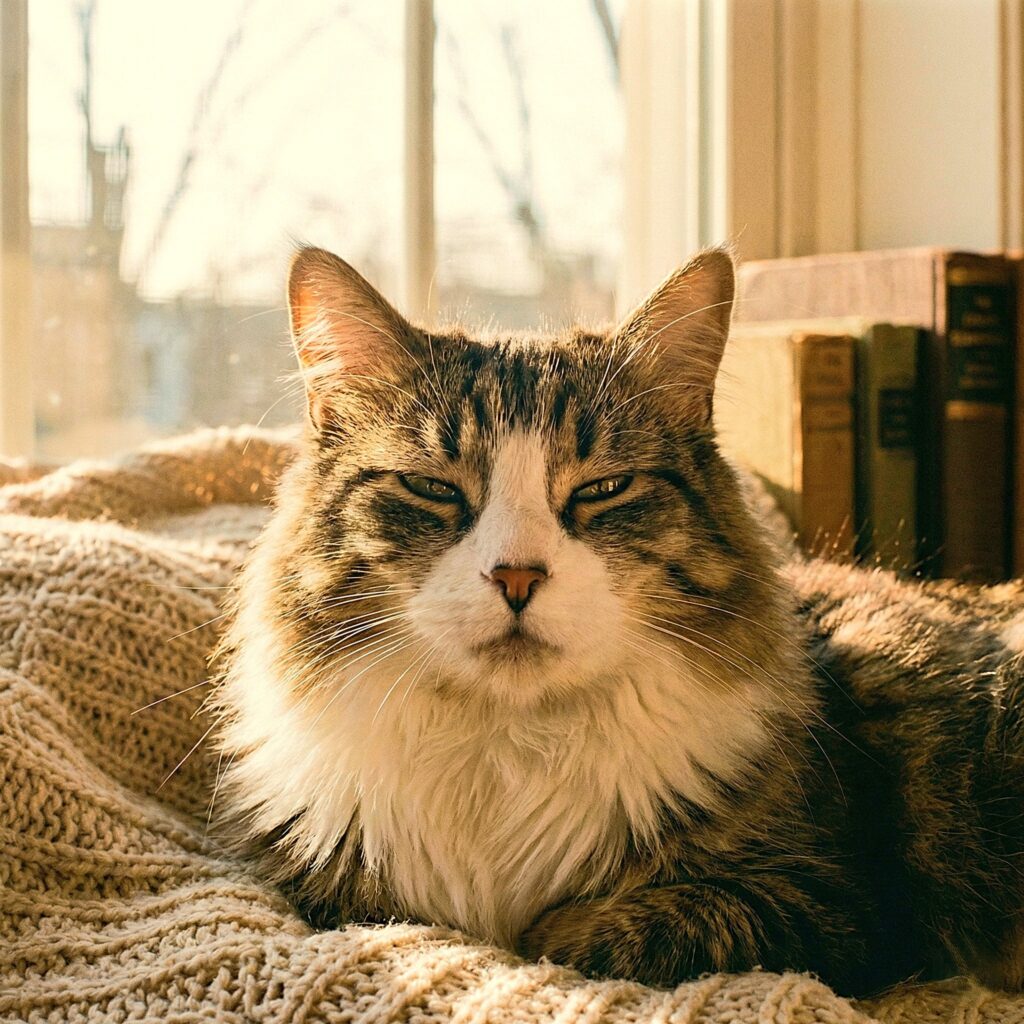
Cats show affection through subtle body language and behaviors rather than overt displays. Key signs include slow blinking, purring, kneading (making biscuits), head bunting, showing their belly, and following you around the house. While dogs may jump and wag their tails, cats express love by building trust, marking you with their scent, and seeking your proximity.
Summary Table: Signs Your Cat Loves You
| Sign of Affection | What It Looks Like | What It Means |
| Slow Blinking | Softly closing and opening eyes while looking at you. | A “cat kiss” signaling complete trust and safety. |
| Head Bunting | Rubbing their head or cheeks against you. | Marking you with pheromones; claiming you as family. |
| Kneading | Pushing paws in and out on soft surfaces or your lap. | A comfort behavior from kittenhood showing contentment. |
| Purring | A rhythmic, vibrating rumble from the throat. | Intense relaxation, happiness, and self-soothing. |
| The “Question Mark” Tail | Tail held high with a curve at the tip. | A friendly greeting and happiness to see you. |
| Showing the Belly | Rolling over to expose the stomach. | The ultimate sign of trust (not always an invite to touch!). |
| Grooming | Licking your skin or hair. | Social bonding and mixing their scent with yours. |
How Cats Show Affection: The Ultimate Guide to Feline Love Language
Cats are often misunderstood as aloof or independent, especially when compared to dogs. However, this reputation is largely unfair. Cats are incredibly affectionate animals, but their evolutionary history as solitary hunters means they communicate differently. They rely heavily on scent marking, subtle body language, and trust-based behaviors to bond with their social group.
When a cat chooses to interact with you, it is a deliberate decision. Unlike pack animals that rely on social cohesion for survival, a cat’s affection is a genuine choice. Learning to decode these signals strengthens the bond between you and your pet, ensuring you can respond appropriately to their “I love yous.”
Read Also: How Cats Recognize Their Owners
1. The Power of Scent: Marking You as Family
One of the most biologically significant ways cats show love is through scent. Cats have scent glands located on their cheeks, lips, forehead, flanks, and paws. When they rub these areas against you, they are depositing pheromones.
Head Bunting (Bunting)
If your cat bumps their head against your hand, face, or legs, they are engaging in a behavior called bunting. This is not just a demand for pets; it is a territorial and social gesture.
By rubbing their scent glands on you, they are marking you as “safe” and part of their territory. In the wild, cats in a colony rub against each other to create a “group scent.” When your cat does this to you, they are chemically claiming you as part of their family.
Cheek Rubbing
Similar to head bunting, cheek rubbing allows cats to deposit pheromones from the glands near their mouth. You will often see cats do this on doorframes, furniture, and your hands.
When a cat rubs their face on you, they are mixing their scent with yours. This creates a familiar and comforting environment for them. It is a sign that they feel completely at ease in your presence.
Read Also: Why Cats Rub Against You
2. Vocalizations: The Sound of Love
While cats use body language primarily, they also developed specific vocalizations to communicate with humans. Interestingly, adult cats rarely meow at each other; they reserve that sound for their human caregivers.
The Complexity of Purring
Purring is the most recognizable sign of feline happiness. A cat’s purr is a low-frequency vibration that signals contentment. When your cat curls up in your lap and begins to rumble, it is a clear indicator that they feel safe and relaxed. However, it is important to note context.
Cats may occasionally purr when in pain or stressed as a self-soothing mechanism. If your cat is purring while relaxed, eating, or being petted, it is pure affection.
Trilling and Chirping
Have you ever heard your cat make a high-pitched, bird-like sound when you walk into a room? This is called a trill or a chirp. Mother cats use this sound to tell their kittens to follow them.
When your cat directs this sound at you, it is a friendly greeting. They are acknowledging your presence and inviting you to interact with them. It is a cheerful “hello” that signifies they are happy to see you.
Read Also: Why Cats Chirp or Chatter at Birds
3. Physical Contact and Tactile Signs
Cats are tactile creatures. The way they touch you—or allow you to touch them—speaks volumes about their feelings.
Kneading (Making Biscuits)
Kneading is when a cat rhythmically pushes their front paws in and out against a soft surface, such as a blanket, a pillow, or your lap. This behavior begins in kittenhood. Kittens knead their mother’s belly to stimulate milk flow during nursing.
When an adult cat kneads you, they are regressing to that kitten-like state of safety and comfort. It is an instinctive emotional response to feeling loved and nurtured.
While the accompanying claws can sometimes be sharp, you should take it as a huge compliment. Place a thick blanket on your lap to protect your skin while letting your cat continue this comforting ritual.
Grooming (Allogrooming)
If your cat licks your hand, hair, or face, they are engaging in allogrooming. In cat colonies, mutual grooming is a bonding activity that reinforces social hierarchies and reduces tension.
By licking you, your cat is not only cleaning you but also adding their scent to your skin. It is a caretaking behavior that shows they view you as a trusted companion.
Love Bites
Overstimulation can sometimes lead to biting, but there is a difference between an aggressive bite and a “love bite.” A love bite is gentle and does not break the skin.
It often happens during play or petting. It is a playful gesture, similar to how kittens wrestle and nip at each other.
If the biting becomes too hard, simply stop moving your hand to signal that the play has gone too far, but understand that the intent was likely affectionate playfulness.
4. Body Language Cues
The Slow Blink
The slow blink is one of the most powerful tools in a cat’s communication arsenal. In the animal kingdom, direct prolonged eye contact is often seen as a threat or a challenge.
When a cat looks at you and slowly closes and opens their eyes, they are breaking that stare to show they are not a threat and that they trust you not to hurt them.
Behaviorists call this a “cat kiss.” You can return the sentiment by looking at your cat, softening your gaze, and slowly blinking back. If your cat blinks in return or turns their head away, you have successfully communicated affection in their language.
The “Question Mark” Tail
A cat’s tail acts as an emotional barometer. If a cat approaches you with their tail held high in the air, they are confident and friendly.
If the tip of the tail is curved over, looking like a question mark or a shepherd’s crook, it indicates a high level of happiness and curiosity. This is a standard greeting among friends in the feline world.
Exposing the Belly
When a cat rolls over on their back and exposes their stomach, they are showing you their most vulnerable side. The abdomen contains vital organs, and in a fight, a cat will protect this area at all costs. By exposing it, they are demonstrating absolute trust that you will not attack them.
Important Note: Unlike dogs, a cat showing their belly is rarely a request for a belly rub. If you touch their stomach, their defensive instincts may kick in, leading to a scratch or bite. Instead, admire the display of trust from a distance or offer a gentle head scratch instead.
5. Behavioral Signs of Attachment
Bringing You Gifts
Outdoor cats often bring home dead mice or birds, while indoor cats might bring you toys. There are several theories behind this behavior.
Some behaviorists believe the cat is treating you as a kitten who does not know how to hunt, trying to teach you.
Others believe they are simply sharing their “prey” with the rest of the pack. Regardless of the motive, bringing a gift is a sign that your cat considers you family and wants to contribute to the group’s success.
Sleeping Near You
Cats are most vulnerable when they are sleeping. Choosing a sleeping spot requires a sense of security. If your cat chooses to sleep on your bed, on your lap, or even just in the same room as you, they are relying on you for protection. They feel safe enough to lower their guard completely in your presence.
Shadowing and Following
Does your cat follow you into the kitchen, the bedroom, and even the bathroom? This behavior, often called “shadowing,” shows that your cat enjoys your company. They are interested in what you are doing and want to be involved. In the wild, feline mothers and kittens stay close together. By following you, your cat is maintaining social cohesion. They are essentially supervising you to ensure you stay safe and perhaps hoping for a treat along the way.
Tailoring Your Response
Understanding these signs helps you respond in a way your cat understands.
- Reciprocate the Slow Blink: Build trust by blinking back.
- Respect the Belly: Look, don’t touch, to maintain their confidence.
- Accept Gifts Graciously: Even if it’s a toy mouse, praise them for their contribution.
- Provide Scent Soakers: Scratching posts and beds allow them to mark their territory, making them feel more secure.
By recognizing these subtle cues, you move beyond the myth of the “aloof cat” and discover a pet that is deeply bonded, affectionate, and constantly communicating their love.
Conclusion
Feline affection is nuanced, biological, and deeply rooted in trust. From the chemical signals of head bunting to the vulnerability of a slow blink, your cat is constantly telling you how much they care.
They do not need to jump or bark to show their devotion; they simply need you to learn their language. Pay attention to the quiet moments, the purr on a quiet evening, the gentle nudge against your leg, or the sleeping weight at the end of your bed. These are the true signs of a cat’s enduring love.