
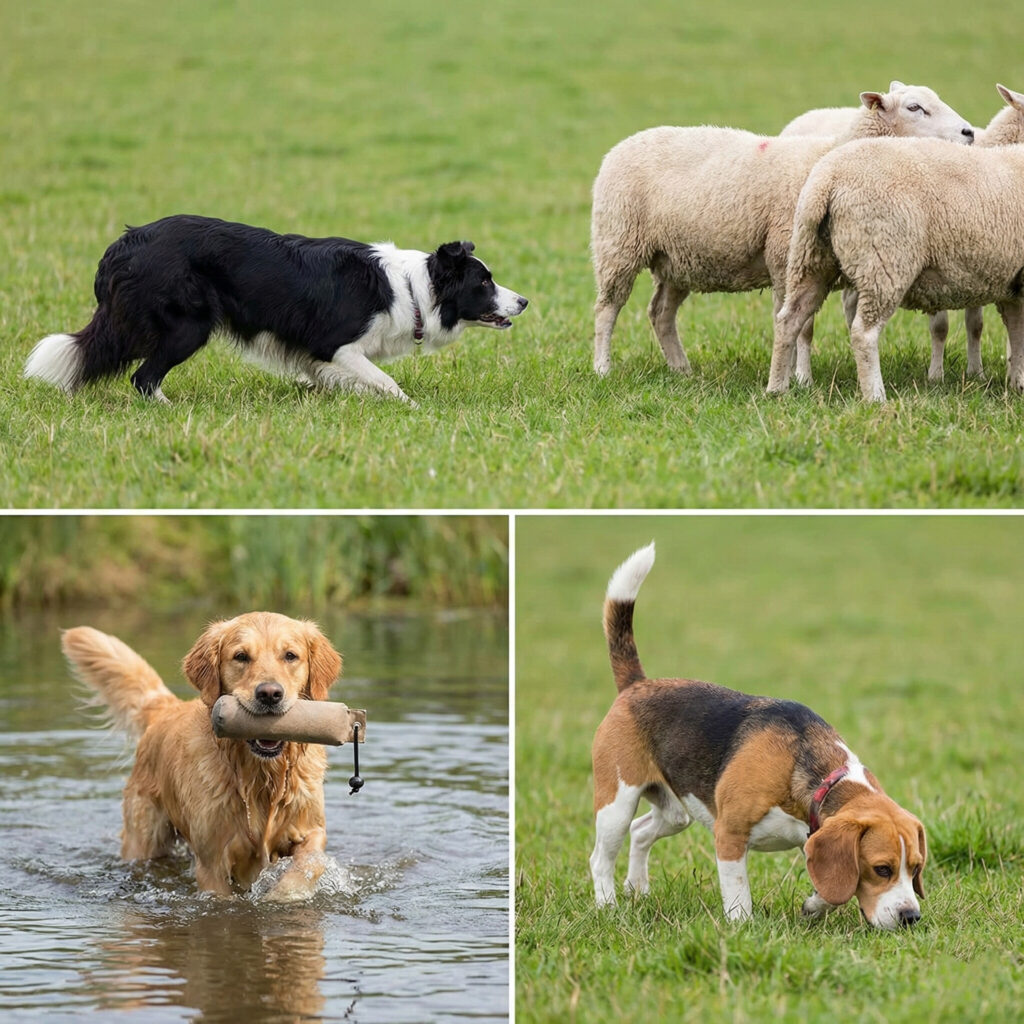
Breed traits significantly influence behavior because dogs were selectively bred for thousands of years to perform specific tasks like hunting, herding, or guarding. These deep-seated genetic instincts often manifest today as predictable behavioral tendencies, energy levels, and temperaments, regardless of training. While the environment plays a role, a dog’s breed provides the blueprint for its natural inclinations.
Summary Table
| Breed Group Category | Original Purpose | Common Behavioral Traits Today | Typical Energy Level |
| Herding Dogs | Controlling movement of livestock. | Intense focus, chasing movement, nipping heels, highly trainable, reactive. | Very High |
| Sporting Dogs | Assisting hunters by retrieving or pointing. | Eager to please, high retrieval drive, “mouthy” (likes carrying objects), social. | High |
| Working/Guardian | Pulling sleds, guarding property, rescue. | Independent, protective, strong-willed, sometimes wary of strangers. | Medium to High |
| Terriers | Hunting vermin and small animals underground. | High prey drive (chasing/digging), tenacious, vocal, energetic, feisty. | High |
| Scent/Sight Hounds | Tracking prey using powerful senses. | Independent, stubborn when following a scent, loud baying/howling. | Varied (Scent: Med/High, Sight: Sprinters) |
| Toy/Companion | Providing comfort and company. | Affectionate, alert barking, generally lower exercise needs, people-focused. | Low to Medium |
Introduction to Breed Traits and Behavior
Have you ever wondered why a Border Collie stares intensely at a moving tennis ball, or why a Beagle obsessively follows its nose, ignoring your calls? The answer lies largely in genetics.
While every dog is an individual with a unique personality, breed traits provide a significant framework for how a dog naturally behaves. Understanding these traits isn’t about stereotyping; it’s about understanding the historical “job description” your dog was built for.
For centuries, humans selectively bred dogs not just for how they look, but for how they act. We needed dogs that could herd sheep all day, sit quietly in a duck blind, or fiercely protect a homestead.
Today, our dogs may not be working on farms, but those genetic behavioral blueprints remain active beneath the surface.
The Science: Selective Breeding and Instincts
Behavior is influenced by both genetics (nature) and environment (nurture). Breed traits fall squarely into the “nature” category.
When early breeders selected dogs, they were picking for specific behavioral drives. A “drive” is an internal motivation to perform a certain action.
If a farmer needed a herding dog, they bred the two dogs that showed the most intense focus and the quickest responses to livestock movement. Over many generations, these behaviors became hardwired instincts.
These instincts are self-rewarding. A Labrador Retriever feels good when it is carrying something in its mouth because its brain releases dopamine when it fulfills its genetic purpose.
Understanding this helps owners realize that their dog isn’t “bad” when it acts on instinct; it is simply doing what it was designed to do.
Analyzing Behavior by Breed Groups
The easiest way to understand how breed influences behavior is to look at the major breed groups categorized by their original jobs.
The Herding Group
Examples: Border Collies, German Shepherds, Australian Shepherds, Corgis.
These dogs were bred to control the movement of other animals, often animals much larger than themselves. They needed intelligence, endurance, and the ability to make independent decisions quickly.
How this influences modern behavior:
- Motion Sensitivity: Herding breeds are often obsessed with things that move. This can translate to chasing cars, bicycles, joggers, or children.
- Nipping: To move a stubborn cow, a dog might nip at its heels. In a home, Corgis or Aussies may try to “herd” running children by nipping at their ankles.
- Hyper-Focus: They have an intense stare used to intimidate livestock. You might see this stare directed at a ball before you throw it.
- High Mental Energy: A bored herding dog is often a destructive dog. They need a “job” to do, such as puzzle toys, agility training, or advanced obedience.
The Sporting Group (Hunters)
Examples: Golden Retrievers, Labrador Retrievers, Pointers, Spaniels.
These dogs were developed to work closely with human hunters. Their jobs involved finding game birds, pointing them out, and retrieving them after they were shot without damaging the meat.
How this influences modern behavior:
- Eager to Please: Because they had to work cooperatively with humans at a distance, they usually have very biddable (trainable) temperaments and want to make their owners happy.
- Mouthiness: Retrievers were bred to carry things gently. In a home, this means they love carrying shoes, toys, or pillows around. They can also be “mouthy” when excited, grabbing your hands.
- High Sociability: Generally, these breeds are friendly with strangers and other dogs, as aggressive dogs wouldn’t work well in hunting parties.
- Water and Scent: Many sporting breeds have a natural affinity for water and a strong desire to follow bird scents.
Read Also: Why Routine Walks Improve Behavior
The Working and Guardian Group
Examples: Rottweilers, Dobermans, Siberian Huskies, Great Pyrenees, Boxers.
This is a diverse group with jobs ranging from pulling heavy sleds over vast distances to guarding property or livestock from predators.
How this influences modern behavior:
- Independence: Sled dogs and livestock guardians often had to work far from humans and make their own decisions. This can manifest today as stubbornness or a lack of immediate recall.
- Protectiveness: Guardian breeds have a natural suspicion of strangers and a deep instinct to protect their territory and family. This requires careful socialization to prevent aggression.
- Physical Strength and Stamina: These dogs were bred for hard labor. A Husky, built to run 50 miles a day in the snow, will likely destroy your couch if given only a 10-minute walk around the block.
The Terrier Group
Examples: Jack Russell Terriers, Bull Terriers, Scottish Terriers, Cairn Terriers.
The name “terrier” comes from the Latin word “terra,” meaning earth. These dogs were bred to go underground to hunt vermin like rats, foxes, and badgers. They had to be incredibly brave, tenacious, and willing to face a cornered animal in a dark tunnel.
How this influences modern behavior:
- High Prey Drive: Terriers are often triggered by small, quick-moving animals. They are the most likely group to chase (and unfortunately catch) squirrels, cats, or hamsters.
- Digging: Because their original job involved digging into burrows, many terriers have a strong instinct to dig in your backyard.
- Tenacity and Feistiness: Terriers do not back down easily. If engaged in a game of tug-of-war or a disagreement with another dog, they can be very intense and persistent.
- Barking: They were often bred to bark underground so their handlers knew where they were. They are often vocal watchdogs.
The Hound Group (Scent and Sight)
Examples: Beagles, Bloodhounds (Scent); Greyhounds, Whippets (Sight).
Hounds were bred to pursue prey. They are generally divided into those that use their noses (scent hounds) and those that use their eyes and speed (sight hounds).
How this influences modern behavior:
- Nose-Blindness: Scent hounds like Beagles seem to lose their hearing when their nose turns on. Once they catch an interesting scent, they will follow it relentlessly, making off-leash reliability very difficult.
- The Bay: Many scent hounds don’t just bark; they “bay” or howl loudly when trailing a scent. This is a distinct, booming sound.
- Zero to Sixty: Sight hounds like Greyhounds are sprinters. They are often couch potatoes inside, but have explosive bursts of energy outside if they see something to chase.
The Toy and Companion Group
Examples: Pugs, Chihuahuas, Cavalier King Charles Spaniels, Maltese.
Unlike the other groups, the primary “job” of these dogs for centuries has been companionship. They were bred to sit on laps, warm beds, and provide affection.
How this influences modern behavior:
- Attachment: These dogs often form extremely strong bonds with their owners and can be prone to separation anxiety if left alone for long periods.
- Alert Barking: While small, they often take their role as watchdogs seriously and will alert you to any new noise or delivery person.
- Lower Exercise Needs: Generally, their physical requirements are lower than working breeds, making them suitable for apartment living, though they still need daily walks.
Read Also: How to Build a Dog-Friendly Backyard
The Important Role of Environment and Training
It is crucial to remember that breed is not destiny. It is a blueprint.
Genetics loads the gun, but environment pulls the trigger. A dog’s behavior is a complex mix of its breed genetics, its early socialization as a puppy, the training it receives, and its individual personality.
You can have a lazy Border Collie or a hyperactive Pug, though they are outliers.
Socialization: Exposing a puppy positively to many different people, environments, sounds, and other animals between 8 and 16 weeks of age is critical. A poorly socialized Golden Retriever can be fearful and reactive, despite breed expectations of friendliness.
Training: Training teaches a dog how to handle its instincts in a human world. You might not be able to train the herding instinct out of a shepherd, but you can train them to redirect that energy to a frisbee instead of a bicycle.
Practical Applications for Dog Owners
Understanding breed traits is a practical tool for prospective and current dog owners.
1. Choosing the Right Dog:
Don’t choose a dog based solely on looks. If you live in a small apartment and work long hours, a high-energy working breed like a Belgian Malinois is a recipe for disaster. Be honest about your lifestyle and choose a breed whose energy levels and natural tendencies match yours.
2. Tailoring Training and Play:
Use your dog’s instincts to your advantage.
- If you have a Terrier, use a flirt pole (a toy on a string at the end of a pole) to satisfy their urge to chase prey in a controlled way.
- If you have a Retriever, indulge their love of carrying things by teaching them to fetch your slippers or carry their own toys on a walk.
- If you have a Scent Hound, look into “nose work” classes where they get to use their amazing sniffing abilities to find hidden scents.
Conclusion
Recognizing how breed traits influence behavior is the key to a harmonious relationship with your dog. When you understand that your dog’s “annoying” habit might actually be a centuries-old genetic imperative, it changes your perspective from frustration to understanding.
By acknowledging their hardwired needs and providing appropriate outlets for those instincts, you honor the history of the breed while helping them live happily in the modern world.