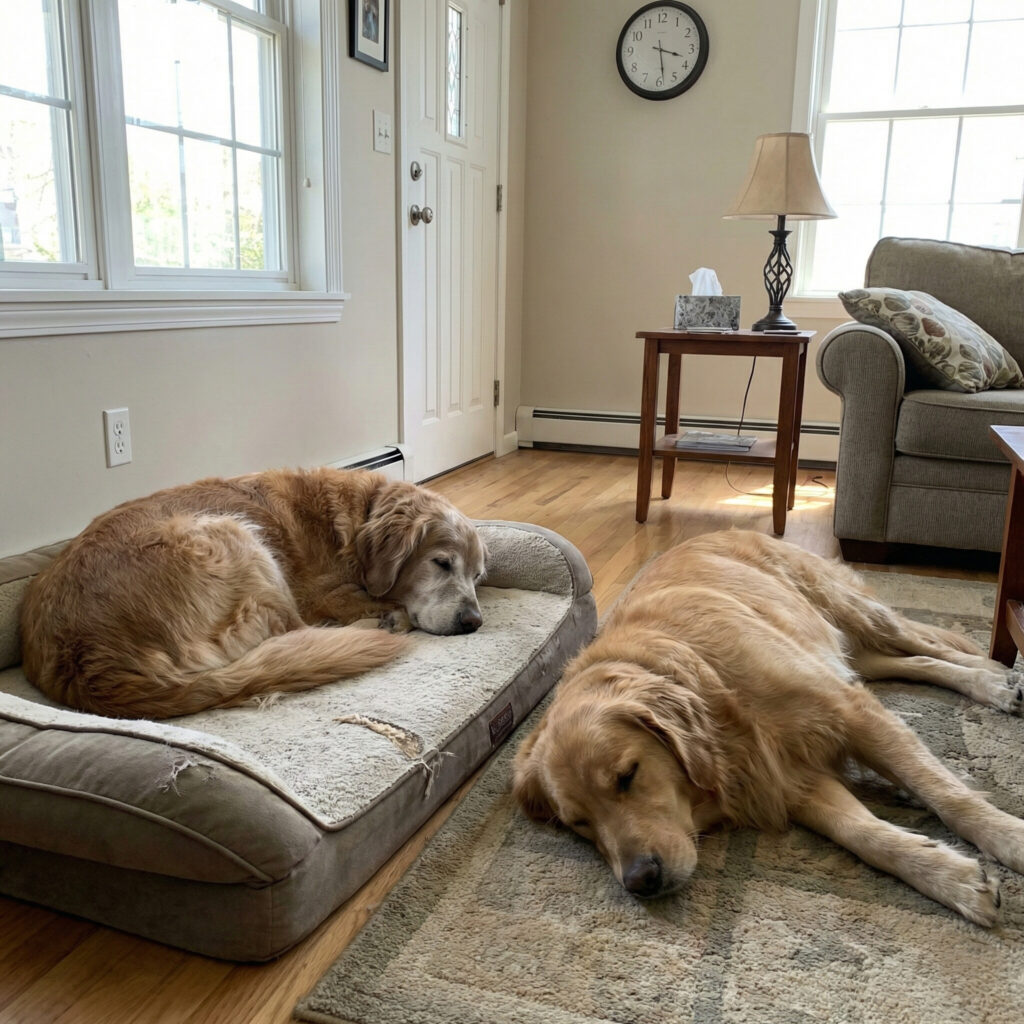
As dogs enter their senior years, their sleep patterns change significantly due to physiological and cognitive shifts. While older dogs tend to sleep more total hours in a 24-hour period, often up to 16 to 18 hours, their nighttime sleep becomes more fragmented. They may nap frequently during the day but wake often at night due to discomfort from arthritis, a weakened bladder requiring more bathroom trips, or anxiety caused by Cognitive Dysfunction Syndrome (CDS), often called “doggie dementia.”
Summary Table
| Feature | Adult Dog Norm | Senior Dog Norm | Potential Concern (See Vet) |
| Total Daily Sleep | 12–14 Hours | 16–18+ Hours | Sudden, extreme lethargy or inability to wake fully. |
| Sleep Consistency | Long, uninterrupted night sleep. | Shorter nighttime sleep blocks; frequent waking. | Pacing, panting, or vocalizing all night long. |
| Napping Habits | Occasional daytime naps. | Frequent “catnaps” throughout the entire day. | Napping in unusual places or getting “stuck” in corners. |
| Nighttime Waking | Rare, usually due to external noise. | Common, due to pain, bladder needs, or confusion. | Waking up terrified, confused, or incontinent in bed. |
| Deep Sleep Cycles | Frequent cycles of REM (dreaming) sleep. | Fewer deep sleep cycles; lighter sleep overall. | Complete lack of dreaming movements (twitching/paddling). |
How Aging Affects Dog Sleep Patterns
If you share your home with an aging dog, you have likely noticed changes in their daily routine. The energetic pup who once bugged you for a walk at 6:00 AM might now sleep until 9:00 AM. Conversely, the dog that used to sleep through the night like a log might now be tapping around the kitchen floor at 3:00 AM.
Just like humans, as dogs age, their bodies and brains go through significant changes that directly impact how, when, and how well they sleep. Recognizing what is normal aging versus what might indicate a medical issue is crucial for maintaining your senior dog’s quality of life.
Understanding these shifts in canine sleep patterns helps you make necessary adjustments to their environment and routine, ensuring their golden years are as restful as possible.
Read Also: How to Care for Senior Dogs at Home
The “Normal” Aging Process and Sleep
It is a common misconception that older dogs just “sleep all the time.” While the total volume of sleep increases, the quality and structure of that sleep change dramatically.
Increased Total Sleep Time
The most obvious change is the amount of time spent asleep. An average adult dog sleeps about 12 to 14 hours a day. A senior dog, depending on their breed and size, may increase that to 16, 18, or even 20 hours a day.
This happens because older bodies need more time to repair. Their metabolism slows down, and they simply have less energy to burn during the day. If your older dog seems to be turning into a professional napper, that is generally okay.
Changes in Sleep Structure and Circadian Rhythm
While they sleep more overall, they sleep less soundly at night. Young dogs typically have a consolidated block of sleep at night. Senior dogs shift toward a “polyphasic” sleep pattern. This means their sleep is broken into many smaller chunks throughout a 24-hour cycle.
As dogs age, their internal body clock, or circadian rhythm, can become less defined. They may not distinguish between day and night as clearly as they used to, leading to more daytime dozing and more nighttime waking.
Furthermore, older dogs spend less time in REM (Rapid Eye Movement) sleep, which is the deep, restorative sleep stage where dreaming occurs. Their sleep becomes lighter, making them easier to wake up.
Physical Causes for Sleep Disruption
If your senior dog is waking up frequently at night, it is rarely just because they aren’t tired. There is usually a physical underlying cause disturbing their rest.
Pain and Discomfort (Osteoarthritis)
The leading cause of restless nights in geriatric dogs is pain. Arthritis is extremely common in aging joints. When a dog lies in one position for too long, their joints stiffen up and become painful.
This pain forces them to wake up, shift positions, pace around to loosen up their joints, and try to get comfortable again. You might hear them groaning as they lie down or see them hesitating before jumping onto a couch they used to clear easily.
A standard dog bed that was fine five years ago may no longer provide the support needed for achy hips and shoulders.
Bladder and Kidney Changes
As dogs age, the muscles controlling the bladder weaken. Simultaneously, conditions like kidney disease or diabetes become more common, both of which increase thirst and urine production.
This combination means your senior dog simply cannot “hold it” for eight hours overnight anymore. They wake up because the urge to urinate is urgent.
If they cannot wake you up in time, or if they have mobility issues that make getting outside difficult, this can lead to indoor accidents, which are stressful for both the dog and the owner.
Respiratory and Heart Issues
Heart disease, prevalent in certain breeds as they age, can cause coughing, especially when lying down. These coughing fits will wake the dog repeatedly. Similarly, a collapsing trachea in smaller breeds or general respiratory weakness can make breathing harder while lying flat, causing restless sleep.
Read Also: Signs Your Dog Is Becoming a Senior
Cognitive Changes: Canine Dementia and Sleep
Perhaps the most challenging aspect of aging for pet owners to manage involves mental changes.
Cognitive Dysfunction Syndrome (CDS)
Often referred to as “doggie dementia,” CDS is similar to Alzheimer’s disease in humans. It is a progressive condition affecting the brain’s functioning. One of the primary symptoms of CDS is a severe disruption of the sleep-wake cycle.
Dogs with CDS often experience sunsetting or “sundowning.” As evening approaches and the house gets quiet and dark, their anxiety increases. They become confused about where they are or what they should be doing.
Signs of CDS related to sleep include:
- Nighttime Pacing: Walking aimlessly in circles or back and forth across a room for hours at night.
- Vocalizing: Barking, howling, or whining at night for no apparent reason.
- Confusion: Waking up looking startled or getting “trapped” behind furniture or in corners.
- Day/Night Reversal: Sleeping all day and being completely awake all night.
Increased Anxiety
Even without full-blown CDS, older dogs can become more anxious. Their senses of sight and hearing are declining. Waking up in the dark when they cannot see well or hear familiar house sounds can be terrifying for them, leading to panting, whining, and an inability to settle back down.
When to Worry: Red Flags That Need a Vet Visit
While changes are normal, suffering is not. You should not assume severe restlessness is just “old age.” You need to consult your veterinarian if you notice:
- Sudden Changes: A sleep pattern shift that happens overnight rather than gradually.
- Signs of Pain: Whimpering when standing up, reluctance to climb stairs, or aggression when touched in certain areas.
- Excessive Panting at Night: This can indicate pain, anxiety, or heart issues.
- New Incontinence: If a previously house-trained dog starts wetting the bed.
- Severe Pacing and Confusion: The hallmarks of CDS require veterinary intervention to manage.
Tips to Help Your Senior Dog Sleep Better
You can significantly improve your aging dog’s sleep quality through environmental changes and proactive management.
Upgrade Their Bedding
Get rid of flat mats. Invest in a high-quality orthopedic memory foam bed. The foam needs to be thick enough so that when the dog lies down, their elbows and hips do not sink through to the hard floor beneath.
A supportive bed reduces pressure on arthritic joints, allowing for longer periods of rest. Placing several beds in their favorite spots encourages them to rest comfortably wherever they are.
Establish a Consistent Routine
Older dogs rely heavily on routine to feel secure, especially if their cognition is declining. Feed them, walk them, and put them to bed at the exact same times every single day. A predictable schedule helps reset their circadian rhythm.
Manage Water and Potty Breaks
While your dog always needs access to fresh water, try to limit excessive intake right before bed if incontinence is an issue. Ensure you take them out for a final potty break right before you go to sleep.
If they wake frequently, you may need to schedule a 3:00 AM potty run into your own routine.
Adjust Exercise
Senior dogs still need exercise to keep their bodies moving and tire them out for sleep, but the type of exercise must change. Instead of intense running or fetch, switch to shorter, slower “sniff walks.” Mental stimulation, like puzzle toys, can also tire them out effectively without straining their joints.
Talk to Your Vet About Aids
If pain is keeping your dog awake, your vet can prescribe safe pain management medication (NSAIDs, gabapentin, etc.).
If anxiety or CDS is the culprit, there are medications and supplements (such as melatonin, SAMe, or specific prescription drugs like Selegiline) that can help normalize sleep cycles and reduce nighttime anxiety. Never give your dog human sleep aids without explicit veterinary instructions.
Create a Safe Night Environment
If your dog’s vision is failing, add nightlights near their bed and along the path to their water bowl or the door. If they have stairs, they might fall down in the dark. Use a baby gate to keep them contained in a safe area overnight.
Conclusion
Watching a beloved dog age is bittersweet. While the days of endless energy may be gone, the senior years can be a time of deep bonding and sweet companionship.
By understanding that changes in sleep patterns are often tied to physical comfort or cognitive health, you can take proactive steps to manage them.
A supportive bed, a steady routine, and good veterinary care can help your old friend get the rest they deserve.