
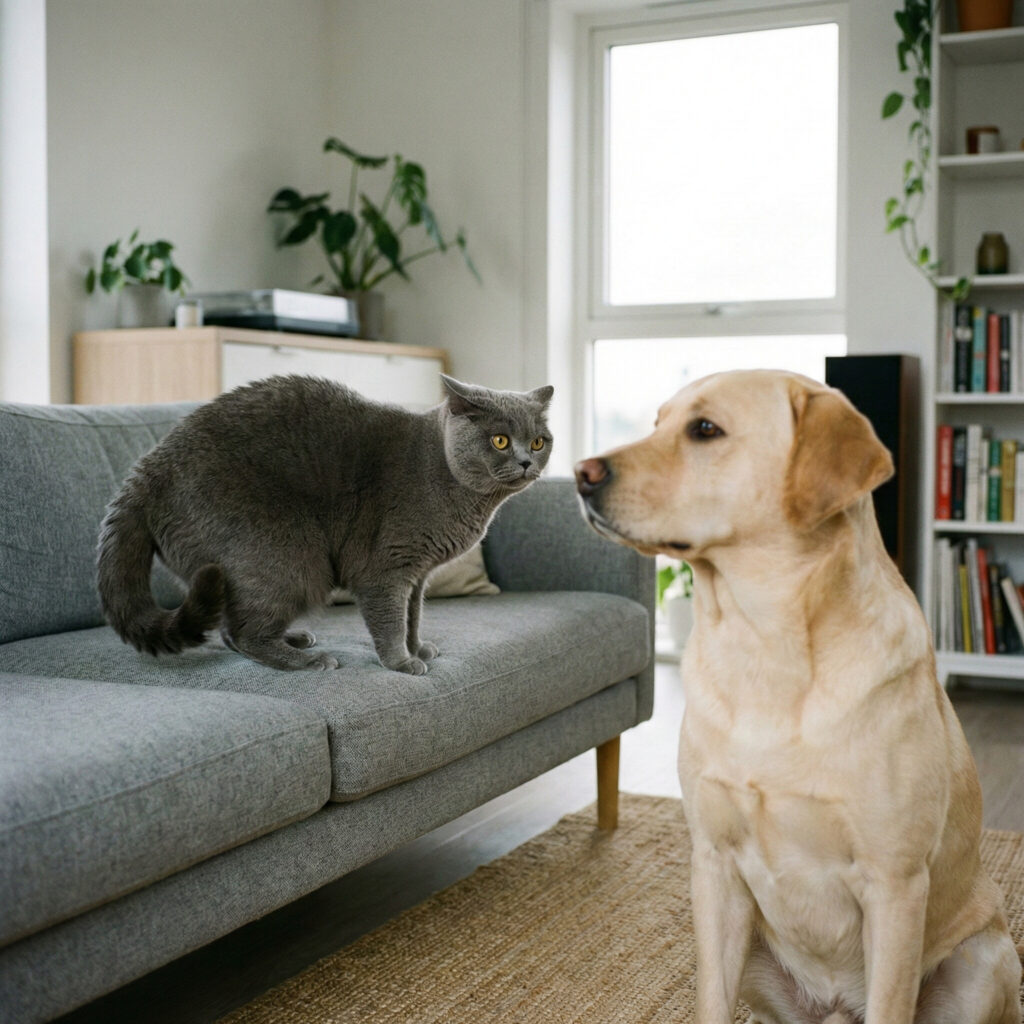
Dogs and cats communicate differently due to their evolutionary history; dogs are pack animals that value social hierarchy and direct interaction, while cats are solitary hunters that prioritize subtle signals and territory. While a wagging tail in a dog often signals happiness or excitement, a wagging tail in a cat usually indicates irritation or impending aggression. Understanding these distinct vocalizations, body language cues, and scent-marking behaviors is essential for preventing conflict and ensuring a harmonious multi-pet household.
Summary Table
| Feature | Dogs (Canines) | Cats (Felines) |
| Primary Nature | Social, pack-oriented | Solitary, independent hunters |
| Tail Wagging | Happiness, excitement, arousal | Irritation, anger, focus |
| Vocalization | Barks, whines, howls (communicative) | Meows (mostly for humans), purrs, hisses |
| Eye Contact | Affection or challenge (staring) | Aggression (staring) or trust (slow blink) |
| Belly Exposure | Submission, asking for belly rubs | Defensive position, trust (but not a rub invite) |
| Greeting Style | Sniffing rear ends, jumping, licking | Nose-to-nose touching, head bunting |
Dog vs. Cat Communication Styles
Understanding the language of your pets is crucial for building a strong bond. Dogs and cats speak entirely different dialects of body language. Misinterpreting these signals often leads to scratches, bites, or stressed-out animals. This guide breaks down exactly how our two favorite companions express themselves.
Read Also: How Cats and Dogs React to Strangers
Evolutionary Roots of Communication
To understand why they act the way they do, we must look at their history.
- Dogs are Pack Animals: Their survival historically depended on working together. They needed clear, loud, and obvious signals to coordinate a hunt or establish who is in charge.
- Cats are Solitary Hunters: In the wild, cats hunt alone. They didn’t need to communicate constantly with a group. Their signals are subtle, designed to avoid conflict or mark territory without a physical fight.
Vocalizations: Barks vs. Meows
Sound is the most obvious form of communication, but it serves different purposes for each species.
Dog Sounds
Dogs use their voices to alert the pack, warn off intruders, or express needs.
- Barking: This is versatile. It can mean “danger,” “play with me,” or “I’m bored.” The pitch matters; a high-pitched bark is usually playful, while a low growl is a warning.
- Whining: Often indicates submission, pain, or a desire for attention.
- Howling: A long-distance communication tool used to locate pack members.
Cat Sounds
Adult cats rarely meow at each other. That is a language they developed specifically to talk to humans.
- Meowing: Used to get your attention for food, a door opening, or petting.
- Purring: Usually a sign of contentment, but cats also purr when they are in pain or frightened to soothe themselves.
- Hissing/Growling: A clear defensive warning. It means “back off now.”
- Chirping: Often seen when a cat spots a bird or bug they cannot reach.
Tail Language: The Most Common Misunderstanding
The tail is the most expressive part of a pet’s body, but it is also a false friend for pet owners. If you treat a cat’s tail like a dog’s tail, you will likely get scratched.
The Dog Tail
- Loose, Wide Wag: A relaxed, happy dog.
- Stiff, High Wag: Arousal or dominance. This dog is alert and might react aggressively.
- Tucked Tail: Fear or submission. The dog is trying to look smaller.
The Cat Tail
- Thumping/Swishing: Irritation or annoyance. The faster it moves, the angrier the cat is.
- High and Quivering: A very happy greeting. This is the cat equivalent of a big smile.
- Puffed Up: Severe fear. The cat is trying to look bigger to ward off a threat.
- Question Mark Shape: A curled tip indicates a playful, friendly mood.
Read Also: Dogs vs. Cats: Which Gets Bored Faster
Eye Contact and Facial Expressions
Eyes convey intent. In the animal kingdom, staring is rarely polite.
Canine Eyes
- Soft Gaze: Relaxed eyes with normal pupil size indicate a calm dog.
- Whale Eye: If a dog turns its head but looks at you, showing the whites of the eyes, it is stressed or guarding something.
- Hard Stare: A direct, unblinking stare is a threat or challenge.
Feline Eyes
- The Slow Blink: If a cat looks at you and slowly closes its eyes, it is a sign of ultimate trust and love. It is often called a “cat kiss.” You can do it back to them to communicate safety.
- Dilated Pupils: This can mean fear, but it also happens when a cat is in “hunt mode” and about to pounce on a toy.
- Direct Stare: Like dogs, an unblinking stare is an act of aggression or dominance.
Posture and Physical Space
How a pet holds their body tells the full story.
Belly Exposure
- Dogs: Rolling over is a sign of submission or a request for a belly rub. It is a vulnerable position that shows they trust you not to hurt them.
- Cats: A cat showing its belly is defensive. By rolling on their back, they can use all four sets of claws and their teeth to fight. Do not rub the belly of a cat in this position unless you know them very well.
Greetings
- Dogs: They greet nose-to-tail. Sniffing the rear end provides chemical information about the other dog’s diet, sex, and health.
- Cats: They greet nose-to-nose. They prefer to sniff faces and head bunt (rub their head against you) to exchange scents.
Read Also: Why Dogs Crave Attention While Cats Prefer Space
Scent Marking and Pheromones
We cannot smell this part of the conversation, but it is vital for pets.
- Urine Marking: Both unneutered male dogs and cats spray urine to claim territory.
- Face Rubbing (Bunting): Cats have scent glands on their cheeks. When they rub against your leg or the furniture, they are marking you as “safe” and “theirs.”
- Scratching: Cats scratch furniture not to ruin it, but to leave a visual mark and a scent mark from glands in their paws.
- Anal Glands: Dogs release scents from these glands when they are scared or during greetings to identify themselves.
How to Help Dogs and Cats Get Along
If you have a multi-pet household, you need to act as the translator.
- Create Escape Routes: Cats need high places (vertical territory) like cat trees or shelves where they can observe the dog without being touched.
- Manage Resources: Feed them separately. Dogs can be resource guarders, and cats will not eat if they feel threatened.
- Learn the Cut-Off Signals: If the dog is staring and stiff, or the cat is swishing its tail, separate them immediately.
- Swap Scents: Before introducing them face-to-face, let them smell each other’s bedding. This introduces their chemical signals safely.
By recognizing these differences, you can prevent misunderstandings. A cat is not a small dog, and a dog is not a large cat. Respect their distinct languages, and you will have a happier home.