

We love our dogs. They are family members, playmates, and loyal companions. However, we might not always love what they do to our backyards. If you are a dog owner, you know the struggle. You want a beautiful, relaxing outdoor space, but your dog needs a place to run, dig, and do their business. These two desires often clash, resulting in muddy patches, yellow grass spots, dug-up flower beds, and ruined plants.
The good news is that you don’t have to choose between having a happy dog and having a nice yard. With strategic planning and dog-friendly landscaping, you can have both. This approach is about designing an outdoor environment that accommodates your dog’s natural behaviors while maintaining aesthetic appeal and durability.
Creating a pet-safe yard goes beyond just putting up a fence. It involves choosing the right materials, selecting safe plants, and designating specific zones for different activities. A well-designed dog-friendly yard provides mental stimulation and physical exercise for your pet, which can actually reduce destructive behaviors rooted in boredom.
This comprehensive guide explores 12 detailed ideas to transform your yard into a durable, safe, and fun haven for your pooch that you will enjoy too.
Core Principles of Dog Landscaping
Before diving into specific ideas, it is helpful to understand the three core principles that make a yard truly dog-friendly. Keeping these in mind will help you make better decisions for your specific space.
1. Safety First
The most critical aspect of any pet environment is safety. This means ensuring your yard is secure so your dog cannot escape. It also means removing any potential hazards. The biggest hidden hazard in many gardens is toxic plants. Many common and beautiful flowers and shrubs can be poisonous if ingested by a dog. A safe yard also avoids using dangerous chemicals, such as certain commercial fertilizers, pesticides, or cocoa mulch, which is toxic to dogs.
2. Durability and Resilience
Dogs are hard on landscapes. They run the same paths repeatedly, their urine contains nitrogen that burns grass, and they may dig when bored or hunting critters. A successful dog yard uses tough materials that can withstand heavy traffic. Standard Kentucky bluegrass often fails under the pressure of a large, active dog. You need solutions that bounce back or don’t wear down in the first place.
3. Stimulation and Enrichment
A bored dog is a destructive dog. If your yard is just a flat square of grass, your dog will find ways to entertain themselves, often by digging up your prize roses or barking at neighbors. A great landscape design includes elements that engage a dog’s senses. This includes things to sniff, places to explore, shade to rest in, and room to run.
12 Dog-Friendly Landscaping Ideas
Here are 12 detailed ideas to help you build the perfect backyard for your canine companion.
1. Upgrade to Durable, Urine-Resistant Ground Cover
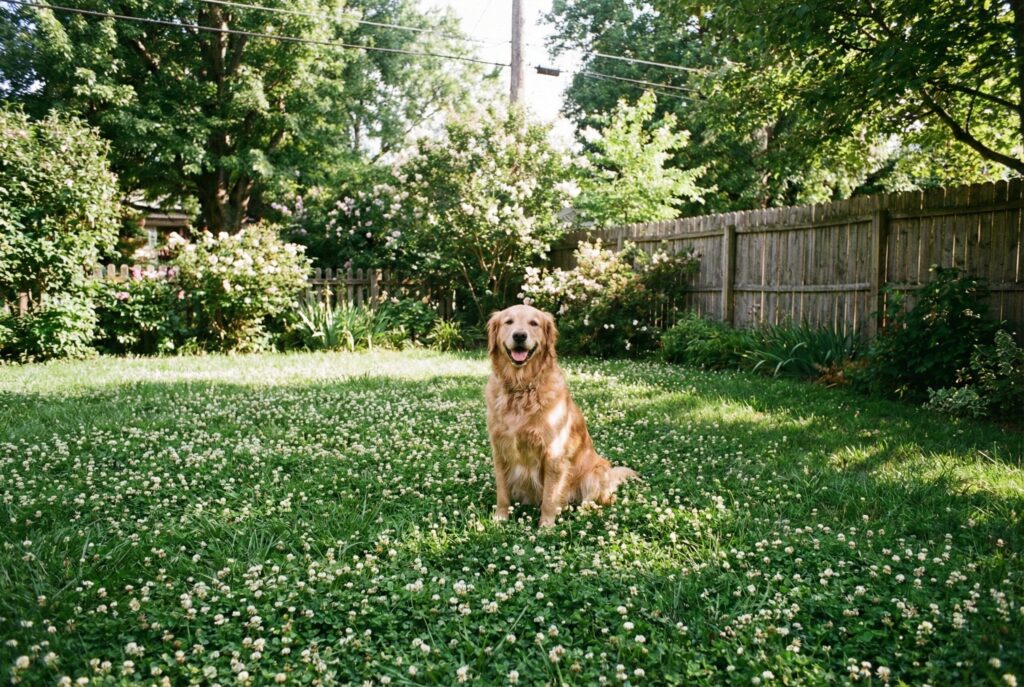
The biggest headache for most dog owners is maintaining a green lawn. Female dogs, in particular, cause those familiar yellow burn spots because their urine has a high concentration of nitrogen. Furthermore, the constant patter of paws creates mud paths along fence lines.
If you want to keep real grass, you need a tougher variety. Consider switching to tall fescue. Tall fescue is known for having a deep root system, making it more drought-tolerant and resilient to foot traffic than standard turf grasses. It handles dog urine better than any other variety.
Another excellent option is clover. Mixing white clover into your lawn, or having a clover-only lawn, is highly practical. Clover stays green even when exposed to dog urine. It is soft on paws, requires less mowing than grass, and naturally fertilizes the soil. It is very durable and fills in bare spots quickly, repairing damage from running dogs.
2. Install Artificial Turf for a Zero-Maintenance Solution
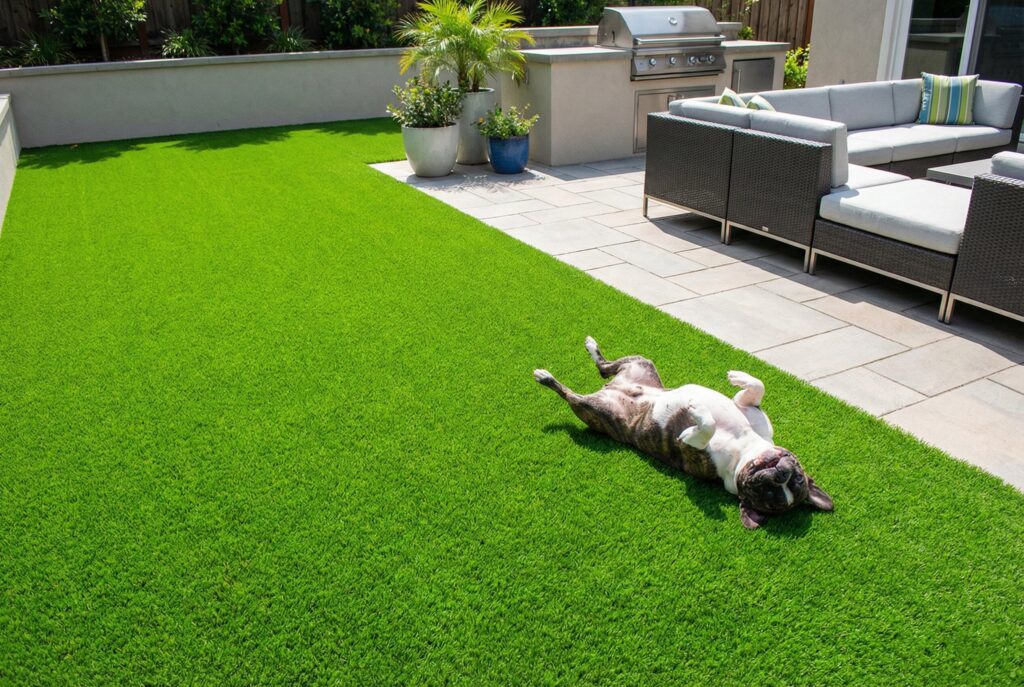
If you are tired of the mud, the mowing, and the yellow spots, artificial turf is the ultimate solution. Modern synthetic lawns look incredibly realistic and feel soft to the touch.
For dog owners, artificial turf is a game-changer. It is completely resistant to digging. Dogs cannot tear it up like real grass. It is also immune to urine burns. When your dog goes to the bathroom, liquids drain through the perforated backing into the base layer below. Solids are easily scooped up, and the area can be hosed down to keep it clean.
When choosing artificial grass for dogs, look for products specifically designed for pets. These usually have superior drainage capabilities and antimicrobial infill that helps prevent odors. Be aware that synthetic grass can get hot in direct summer sun, so ensure there are shaded areas available or hose it down on scorching days before letting your dog play.
3. Create Designated “Patrol Paths” with Hardscaping
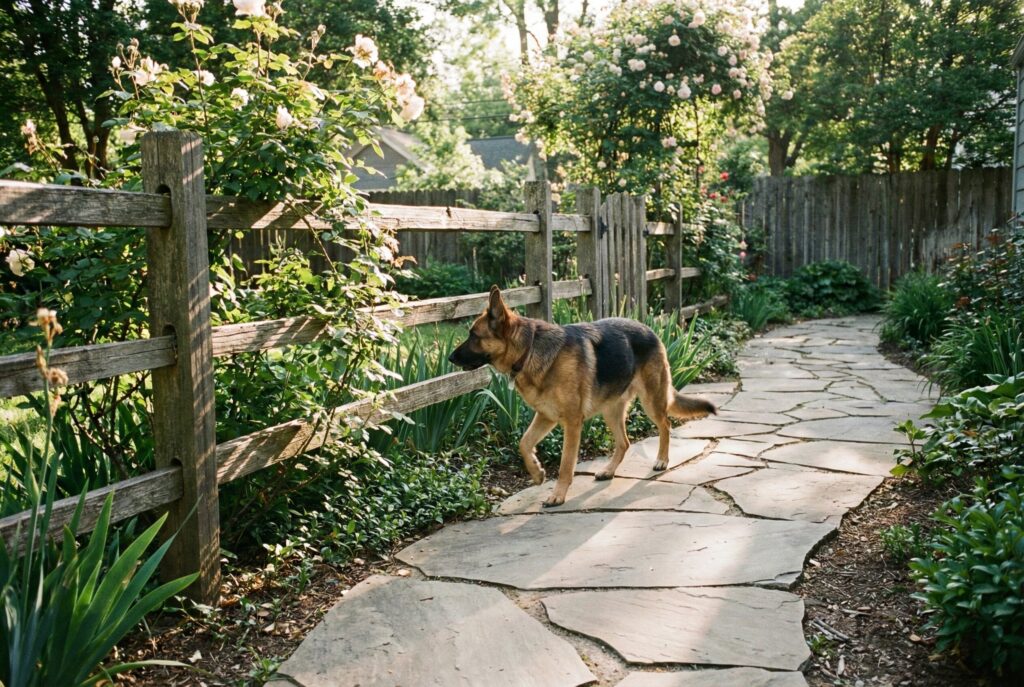
Dogs are creatures of habit. They often feel the need to patrol the perimeter of their territory to keep it safe. You have likely seen the worn-down dirt paths right along your fence line where your dog runs back and forth. Instead of fighting this natural instinct, design for it.
Turn these worn paths into intentional landscape features using hardscaping materials. Create a dedicated path along the fence using materials that are easy on paws but tough enough for constant traffic.
Smooth flagstone pavers stepped into the ground work well. Crushed granite or fine gravel are also good options, provided the pieces are not sharp. Decomposed granite packs down tight and creates a natural look. By providing a clear, comfortable path, you encourage your dog to use it instead of tearing up the adjacent grass or garden beds. This keeps their paws cleaner and your yard looking neater.
4. Build a Dedicated Digging “Sandbox”
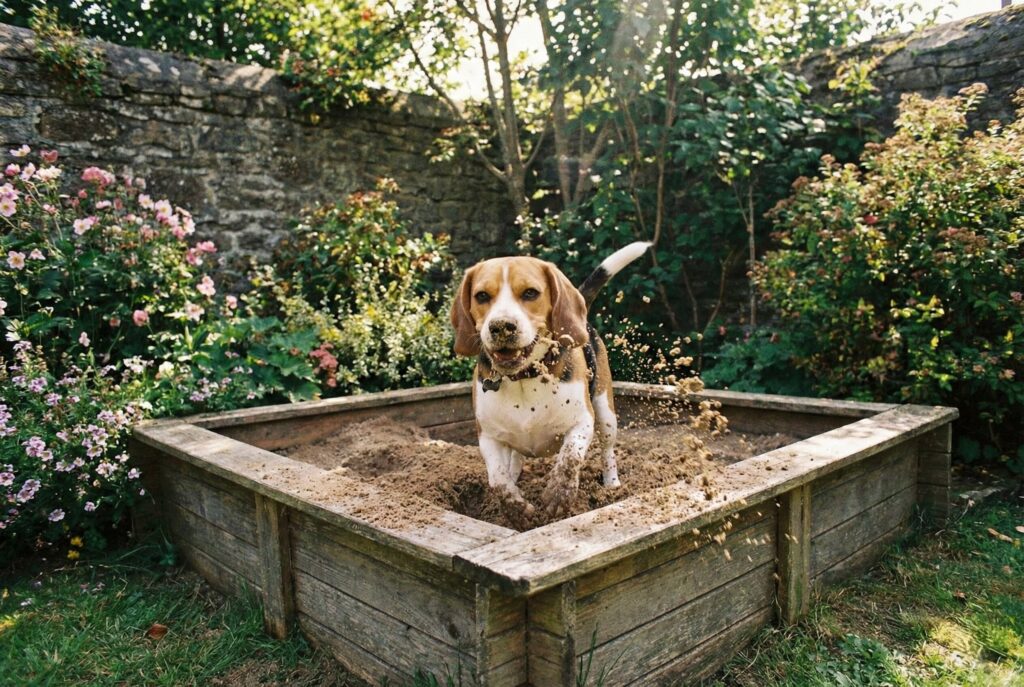
Digging is a natural instinct for many dog breeds. Terriers were bred to hunt varmints in the ground, and northern breeds often dig to create cool spots to lie down. Trying to train this instinct out of a dog completely is difficult and often frustrating.
A better approach is to redirect the behavior to an acceptable location. Create a designated digging zone in a corner of your yard. This is essentially a sandbox for your dog.
Frame a small area with untreated lumber or landscape timbers. Fill it with sand or a mix of loose soil and sand. To encourage your dog to use it, bury some of their favorite durable toys or bones just beneath the surface. When you catch your dog digging in your flower bed, gently lead them to the sandbox and encourage them to dig there instead. Praise them when they use the right spot.
5. Incorporate Dog-Safe, Resilient Planting
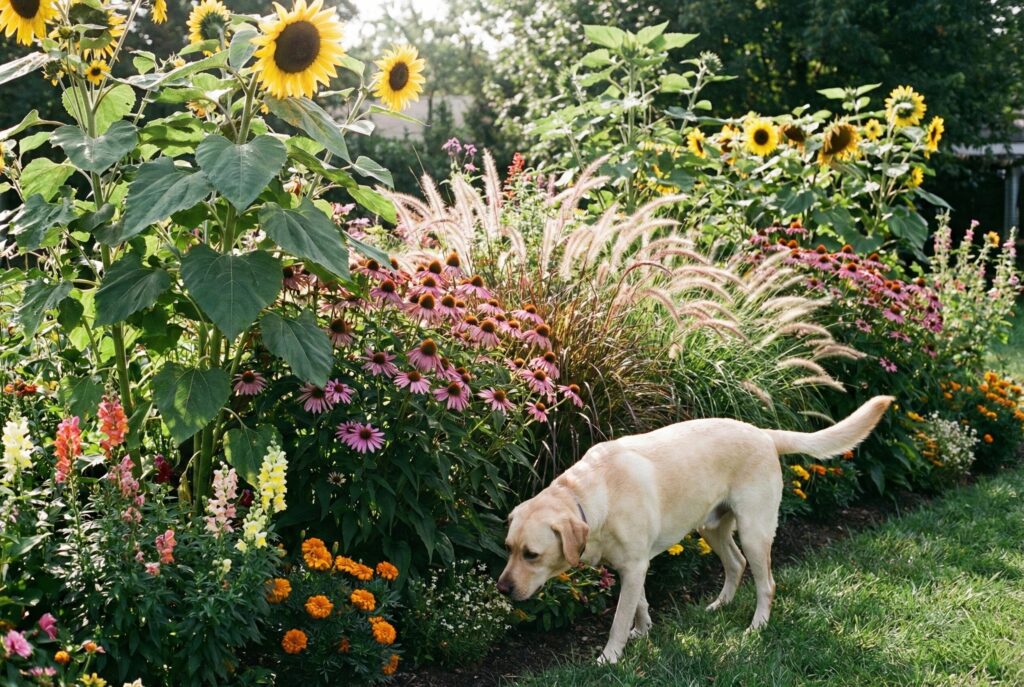
A dog-friendly yard can still be full of beautiful plants. The key is selecting plants that are non-toxic and tough enough to survive an occasional trampling or tail wag.
Always verify a plant’s safety with lists provided by reputable sources like the ASPCA before planting. Some safe options include sunflowers, zinnias, marigolds, snapdragons, and many herbs like rosemary and thyme.
For structural plantings, choose sturdy shrubs that bounce back if brushed against. Ornamental grasses are fantastic for dog yards. They are generally resilient, add beautiful movement and texture to the landscape, and dogs often enjoy rustling through them. If a dog runs over an ornamental grass, it usually springs right back up. Place more delicate plants in raised beds or behind decorative low fencing to protect them.
6. Use Fencing Strategically for Zones
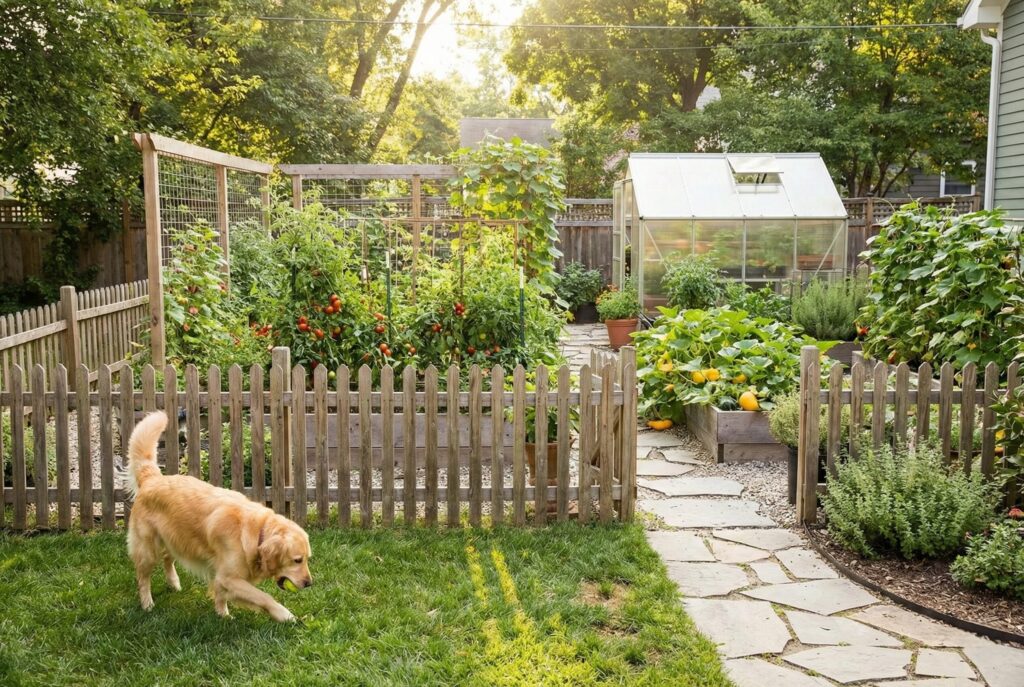
While perimeter fencing keeps your dog in the yard, internal fencing keeps your dog out of specific areas. If you have a vegetable garden, a delicate flower bed, or a compost pile, you need physical barriers.
You do not need to build a fortress. Often, a short, decorative picket fence or wire garden fencing is enough to deter a dog. It acts as a visual and physical reminder that the area is off-limits.
For raised garden beds, ensure they are tall enough so your dog is not tempted to jump in. Two to three feet is usually sufficient for most breeds. This zoning allows you to have delicate plants and vegetables without worrying about them being trampled or consumed by a curious canine.
7. Install Cool Shade Structures
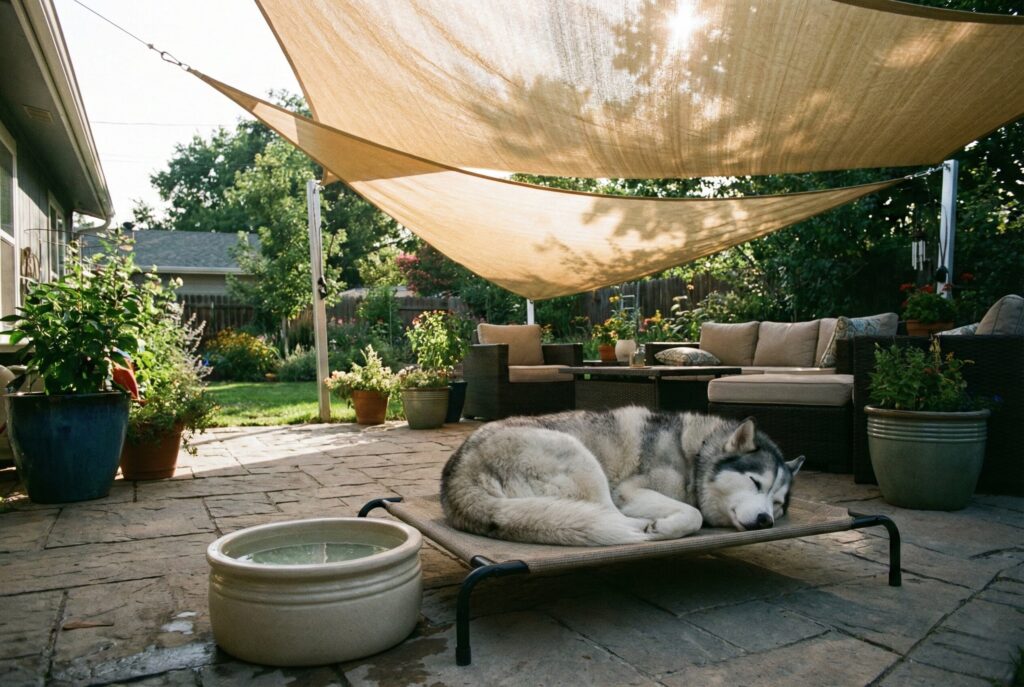
Dogs can overheat quickly, especially during the summer months after vigorous play. Providing accessible shade is a health necessity.
If you have mature trees, you have natural shade. If not, you need to create it. A simple pergola or gazebo can provide a wonderful shady retreat. You can train dog-safe climbing vines, such as certain types of climbing roses or jasmine (check specific varieties for toxicity), over the structure for added beauty and cooling.
For a simpler solution, install a shade sail. These fabric canopies are stretched between posts or attached to the side of the house to create large shaded areas over patios or grass. Ensure there is always cool, fresh water available in the shaded zone.
8. Add Water Features for Hydration and Play
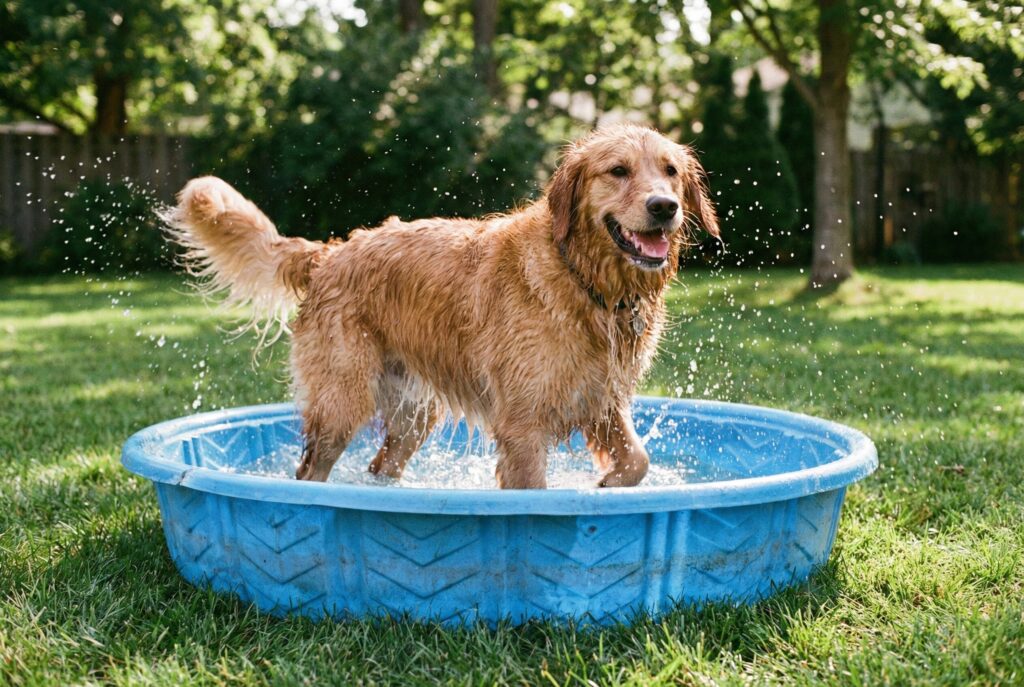
Many dogs love water. Adding a water feature can provide endless entertainment and a necessary spot to cool off.
At the most basic level, ensure you have heavy, spill-proof water bowls placed in shaded areas. For more active fun, consider a hard plastic kiddie pool. It’s an inexpensive way for your dog to splash around on a hot day. Just remember to empty and refill it regularly to prevent mosquito breeding and algae growth.
For a more integrated landscape feature, you could build a shallow, sloping splash fountain. Avoid deep ponds, which can be a drowning hazard for smaller pets or wildlife and are difficult to keep clean with dogs using them. A “disappearing” fountain, where water bubbles up over stones and drains into a hidden reservoir below, is a safe and attractive option that dogs love to drink from.
9. Create Agility and Play Elements
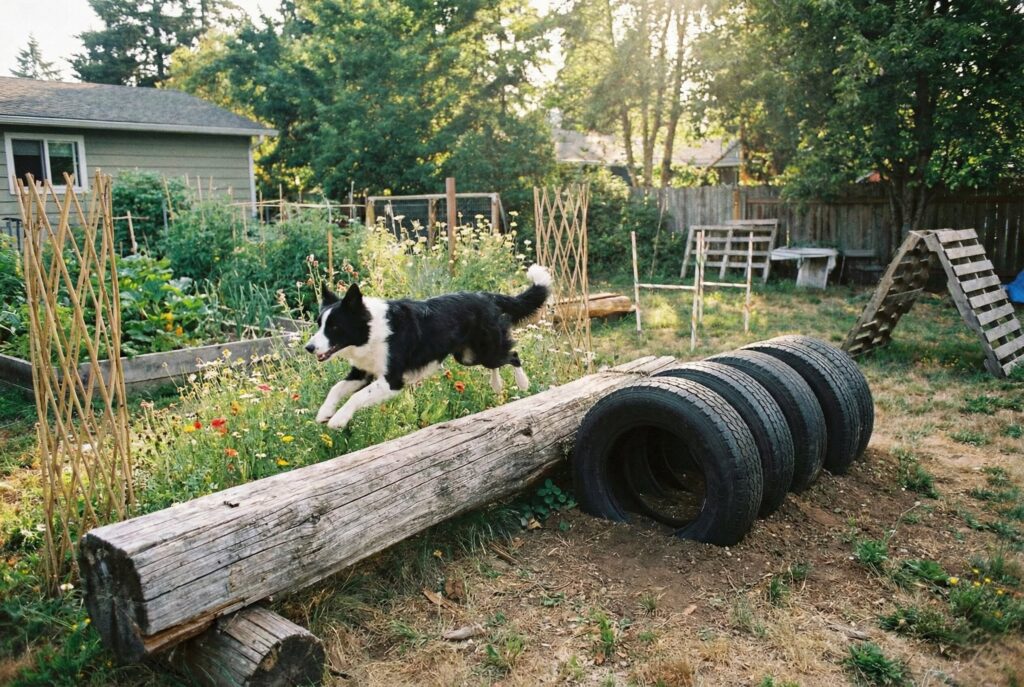
Turn your backyard into a private dog park by incorporating play structures. This is especially great for high-energy breeds that need lots of physical and mental stimulation.
You don’t need professional competition equipment. You can use natural materials to create fun obstacles. Large logs secured to the ground can become balance beams. Used tires set firmly into the ground create a tunnel to run through or a platform to jump onto.
You can also buy pre-made agility ramps, weave poles, or jumps. By giving your dog things to climb over, under, and through, you help burn off energy that might otherwise go toward digging or barking.
10. Designate a Specific “Potty Patrol” Station
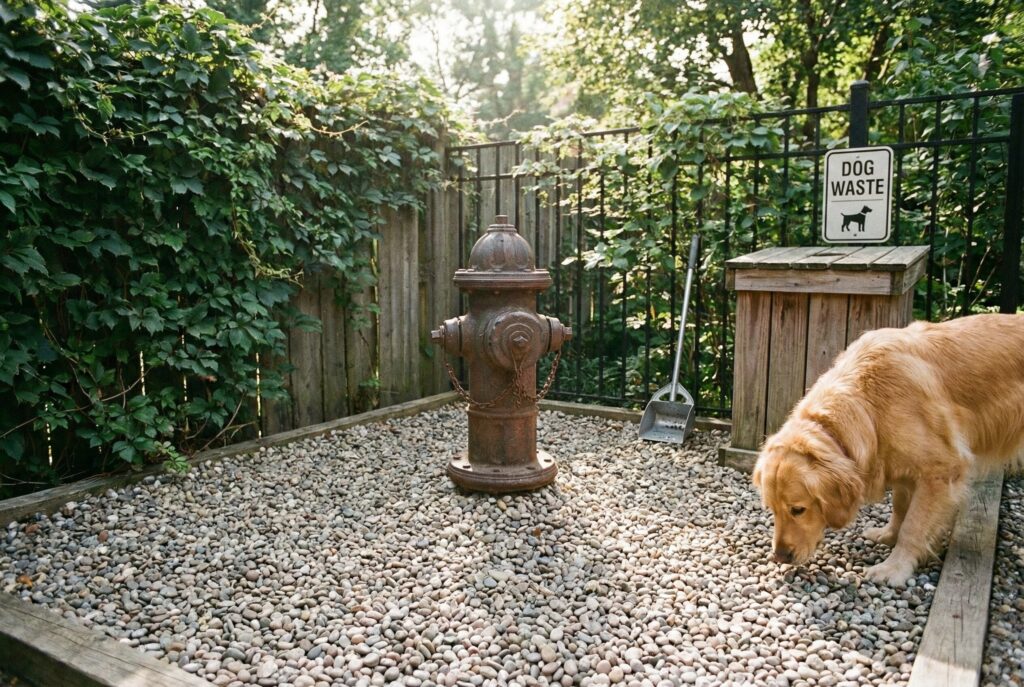
Cleaning up dog waste is the least fun part of owning a dog. You can make this easier by training your dog to use one specific area of the yard for their bathroom needs.
Choose a corner of the yard that is away from your main patio or eating areas. Cover this area with materials that drain well and are easy to clean. Pea gravel is an excellent choice for a potty area. Liquids drain through it instantly, and solids sit on top for easy scooping. The smooth texture is usually acceptable to dogs.
Wood chips or mulch can also work, but they need to be replaced more often as they absorb urine odors over time. Having a designated spot keeps the rest of your yard cleaner and makes daily poop-scooping much faster.
11. Incorporate Sensory Garden Areas

Dogs experience the world primarily through their noses. A visually pretty yard might be boring to a dog. Create a sensory landscape that engages their sense of smell.
Plant dog-safe herbs along paths where your dog brushes past them, releasing their scent. Rosemary, lavender, and mint are good choices (mint can be invasive, so plant it in pots buried in the ground).
Leave some areas slightly “wild” with taller dog-safe grasses where interesting bug scents might hide. You can also add different textures for them to walk on, like a patch of smooth river stones next to a patch of soft moss. This mental stimulation tires a dog out just as effectively as physical exercise.
12. Install “View Ports” in Solid Fencing
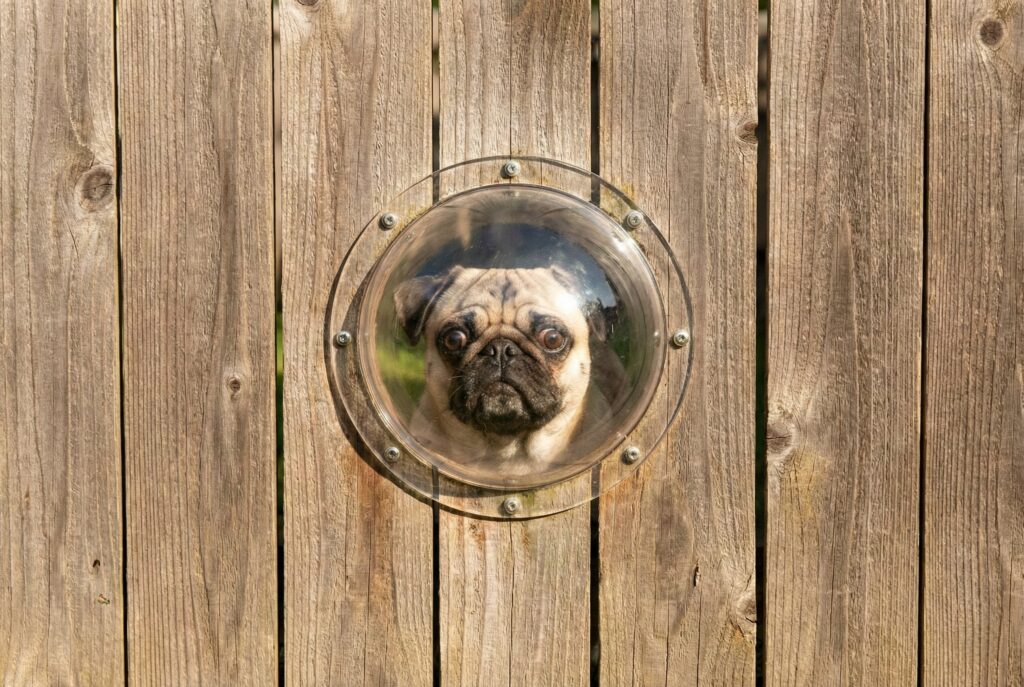
Dogs bark at fences because they can hear or smell something on the other side but cannot see it. This barrier frustration often leads to incessant barking at passersby, squirrels, or other dogs.
If you have a solid wood or vinyl fence, consider installing a “view port.” This can be a literal plexiglass bubble window installed in the fence at the dog’s eye level. It allows them to satisfy their curiosity without feeling threatened or needing to defend their territory blindly.
Alternatively, you can replace a section of solid fencing with a sturdy wire mesh panel in a spot that overlooks a street or park. Often, once a dog can see what is making the noise, they become less anxious and bark less.
Important Safety Note: Plants to Avoid
When landscaping for dogs, what you don’t plant is just as important as what you do. Many common garden plants are highly toxic to dogs, causing symptoms ranging from upset stomachs to fatal organ failure.
Always double-check any plant before bringing it into your yard. Here is a list of some common hazardous plants to avoid absolutely:
- Sago Palm: All parts are poisonous, but the seeds are deadly. It causes liver failure.
- Lilies: Many varieties, including Tiger, Day, Asiatic, and Easter lilies, are highly toxic, especially to cats, but also dangerous to dogs.
- Azalea and Rhododendron: Ingesting even a few leaves can cause serious heart and gastrointestinal issues.
- Oleander: Extremely toxic; contains compounds that affect the heart.
- Tulip and Daffodil Bulbs: The bulbs contain the highest concentration of toxins. If you plant these, ensure your dog cannot dig them up.
- Castor Bean: Contains ricin, a highly potent toxin.
Conclusion
Creating a dog-friendly yard is an investment in your dog’s happiness and your own peace of mind. By incorporating durable materials, providing enriching activities, and ensuring safety, you can build a space that handles the rough-and-tumble life of a dog while remaining a beautiful oasis for you.
You no longer have to battle muddy paws and destroyed gardens. With a little planning, you and your furry best friend can both enjoy the backyard to its fullest.