
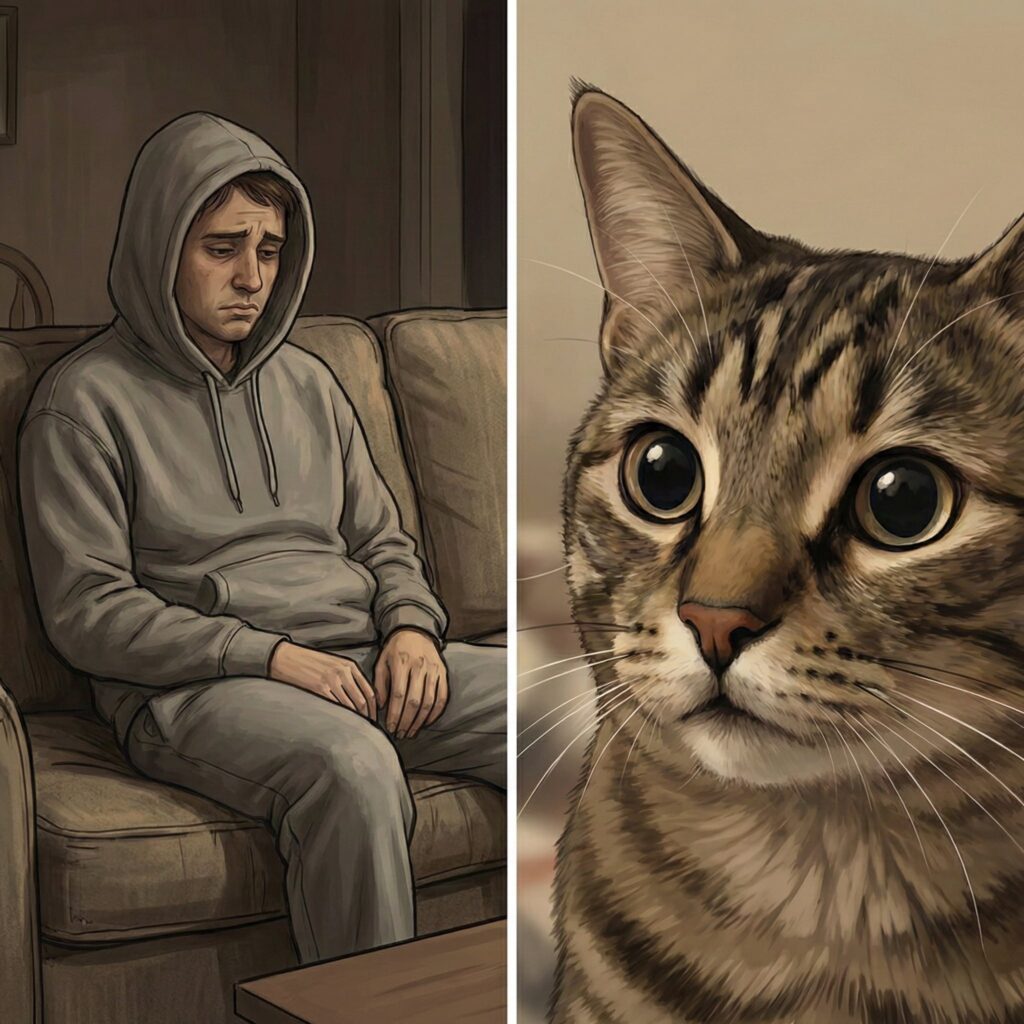
Yes, research suggests cats can recognize and respond to human emotions, though they may not understand them exactly like humans do. Studies show cats can distinguish between happy and angry facial expressions, recognize emotional shifts in their owner’s voice, and use “social referencing” to gauge safety based on human reactions. They are highly attuned to auditory, visual, and even chemical cues.
Summary Table
| Feature | Key Finding |
| Facial Recognition | Cats can distinguish between happy and angry human faces, especially their owners’. |
| Voice Detection | They are sensitive to tone and pitch, reacting differently to “cat-directed speech” vs. normal speech. |
| Social Referencing | In uncertain situations, 79% of cats look to their owners for emotional cues on how to react. |
| Scent Sensitivity | Cats can smell chemical changes (like pheromones) released when humans feel fear or stress. |
| Empathy Level | It is likely a mix of learned associations (angry voice = danger) and genuine social bonding rather than deep cognitive empathy. |
Do Cats Understand Human Emotions? Detailed Breakdown
Every cat owner has a story about a time their feline friend seemed to know they were sad. Maybe your cat curled up on your lap after a bad day or hid under the bed when you were angry. But is this just a coincidence, or do cats genuinely understand what we are feeling?
For years, science focused heavily on dogs, assuming cats were too aloof to care about human feelings. However, recent studies in feline cognition have proven this wrong. Cats are not just solitary hunters; they are observant social partners who pay close attention to our faces, voices, and even our scent to read the room.
Read Also: Why Cats Chirp or Chatter at Birds
1. Can Cats Read Facial Expressions?
One of the biggest breakthroughs in understanding cat intelligence comes from studies on facial recognition. Researchers at Oakland University found that cats behave differently when presented with smiling faces versus frowning ones.
- The Findings: Cats were more likely to approach, purr, and rub against owners who displayed “happy” facial expressions compared to “angry” ones.
- Learned Behavior: Interestingly, this ability seems to be learned. Cats essentially memorize that a smile often leads to treats or petting, while a frown might mean being ignored or a loud noise.
- Owner Specificity: Cats are much better at reading their own human’s face than a stranger’s face. This suggests their “emotional intelligence” is built on their specific bond with you.
2. The Power of Voice: Tone Matters
While cats are visual, their hearing is their superpower. They can hear frequencies far above human capability, making them incredibly sensitive to the tone and pitch of your voice.
- Cat-Directed Speech: You know that high-pitched “baby voice” you use for your cat? Studies show cats respond significantly more to this “cat-directed speech” (CDS) than to a normal speaking voice.
- Emotional Mapping: When owners speak in an angry or sharp tone, cats often display stress behaviors like tail twitching or freezing. When the tone is soft and rhythmic, cats are more likely to relax.
- Auditory Recognition: A study from the University of Tokyo confirmed that cats can distinguish their owner’s voice from a stranger’s, even when they don’t see the person. They may not come when called, but their ears twitch; they are listening.
Read Also: How to Introduce a New Cat to Your Home
3. Social Referencing: Looking to You for Answers
Have you ever seen your cat encounter a weird new object, like a robotic vacuum or a fan? Before they decide to attack it or run away, they often look at you. This is called social referencing.
In a study published in Animal Cognition, researchers placed a fan with streamers in a room with a cat and their owner.
- If the owner looked scared: The cat became anxious and moved away from the object.
- If the owner looked happy/calm: The cat was more likely to approach the object and investigate.
This proves that cats view humans as a source of information. They trust your emotional reaction to decide if an environment is safe or dangerous.
4. Scent of Emotion: Smelling Fear
We often say animals can “smell fear,” and biologically, this is true. When humans experience strong emotions like fear or stress, our bodies release specific chemicals and pheromones in our sweat.
- Olfactory Sense: A cat’s sense of smell is 14 times stronger than a human’s.
- Chemosignals: Research suggests cats can detect these chemical changes. If you are anxious, your scent profile changes. This is why a cat might act differently when you are sick or stressed, even if you are trying to act normal. They aren’t reading your mind; they are reading your chemistry.
5. Do They Feel Empathy?
This is the most debated question. Empathy implies stepping into someone else’s shoes and feeling what they feel.
- Cognitive Empathy: It is unlikely that cats possess complex cognitive empathy (understanding why you are sad).
- Emotional Contagion: It is more likely that they experience “emotional contagion.” This is a primitive form of empathy where they “catch” your mood. If you are stressed, you might move jerkily or speak sharply, which stresses the cat. If you are sad and lethargic, the cat may mirror that low energy.
- The Bond Factor: Despite the science, thousands of anecdotes describe cats wiping away tears or purring on a painful injury. Whether this is true empathy or just a reaction to your behavior change, the result is the same: they offer comfort.
Read Also: What Does It Mean When a Dog Avoids Eye Contact?
Signs Your Cat is Reacting to Your Emotion
If you are wondering if your specific cat is tuned in, look for these signs:
- The Slow Blink: If you are calm and look at them, do they blink slowly back? This is a “cat kiss” indicating trust and a shared positive state.
- Head Butting (Bunting): This marks you with their scent, claiming you as safe and part of their group, often done when you are calm or when they want to comfort you.
- Purring: While usually a sign of happiness, cats also purr to self-soothe or soothe others (like injured kittens). A cat purring on a sick owner might be trying to “heal” the situation.
- Shadowing: Following you from room to room when you are upset is a form of guarding and social support.
Summary
Do cats understand human emotions? The science says yes, to a significant degree. They are not mind readers, but they are expert observers. By combining visual cues (facial expressions), auditory signals (voice tone), and chemical inputs (scent), they build a detailed picture of your emotional state. They may not know why you are crying over a movie, but they know you are upset, and for many cats, that is reason enough to stay close.