
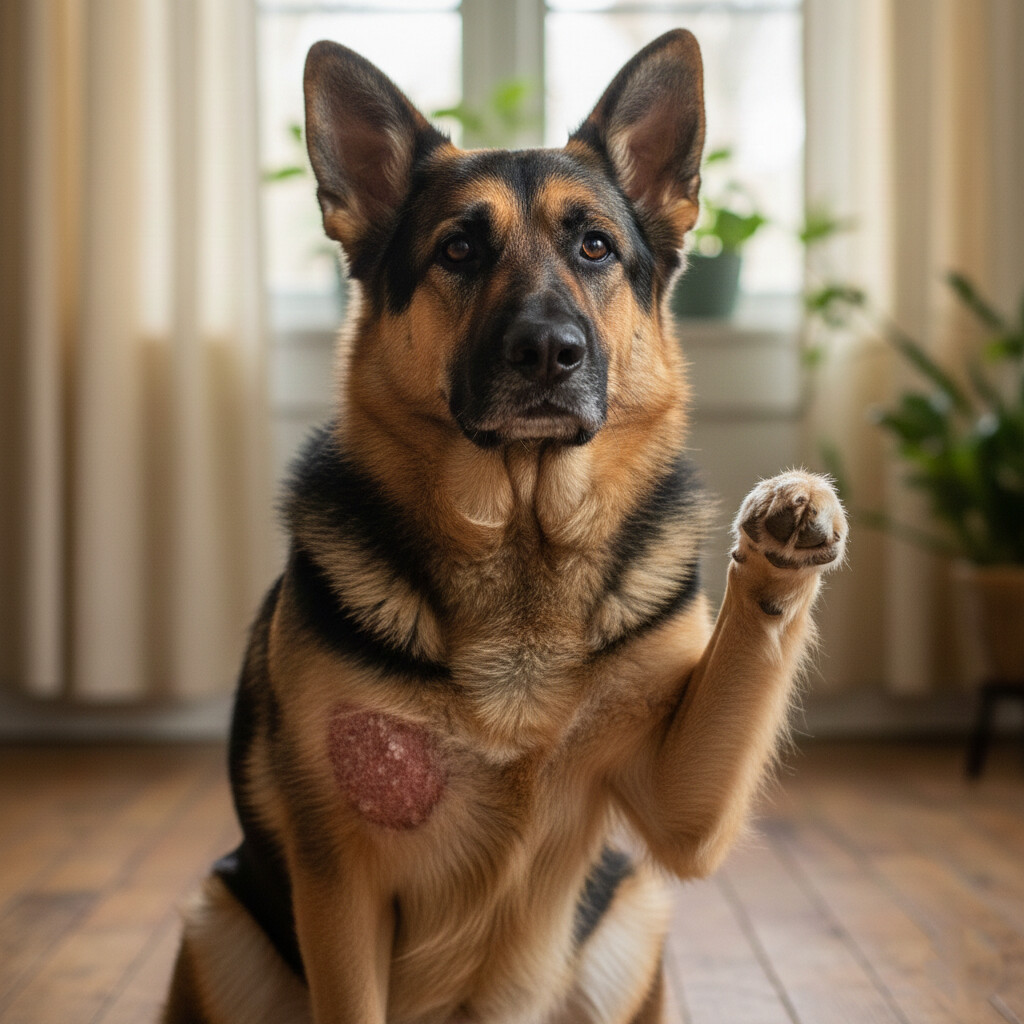
The most common skin problems in dogs include allergic dermatitis (caused by fleas, food, or environment), bacterial infections (pyoderma), fungal infections (yeast and ringworm), and parasitic infestations (mange, fleas, and ticks). These conditions often present with similar symptoms such as excessive itching (pruritus), redness, hair loss (alopecia), and scabs. Immediate veterinary diagnosis is essential because untreated skin issues can lead to severe secondary infections and chronic pain.
Summary Table
| Condition | Primary Cause | Key Symptoms |
| Allergic Dermatitis | Pollen, food, or flea saliva | Intense itching, paw licking, ear infections |
| Pyoderma | Bacterial infection (often Staphylococcus) | Pus-filled bumps (pustules), crusts, circular redness |
| Yeast Infection | Malassezia fungus overgrowth | Greasy skin, musty odor, thickened “elephant” skin |
| Sarcoptic Mange | Sarcoptes scabiei mites | Extreme itching, hair loss on elbows/ears, contagious |
| Demodectic Mange | Demodex mites (immune issue) | Patchy hair loss, usually not itchy unless infected |
| Ringworm | Fungal infection (Dermatophytosis) | Circular bald patches, scaly skin, brittle hair |
| Hot Spots | Self-trauma (licking/chewing) | Moist, raw, red, painful lesions that appear suddenly |
| Seborrhea | Genetic or secondary to other issues | Excessive dandruff (dry) or greasy coat (oily) |
Why Canine Skin Health Matters
Your dog’s skin is their largest organ and their first line of defense against illness. When the skin barrier is compromised, it opens the door to bacteria, fungi, and viruses. Skin issues are one of the top reasons owners visit the vet, yet they are often misunderstood.
A small itch can quickly escalate into a painful, full-body infection if the underlying cause is not addressed.
This guide breaks down the specific conditions you need to know to keep your dog comfortable and healthy.
Read Also: How to Tell If Your Dog Is Dehydrated
1. Allergic Dermatitis (The Itch That Won’t Quit)
Allergies are the leading cause of skin issues in dogs. Just like humans get hay fever, dogs get itchy skin. Veterinary dermatologists classify these into three main categories.
Flea Allergy Dermatitis (FAD)
This is the most common skin disease in pets. It is not the flea biting the dog that causes the main problem; it is an allergic reaction to the flea’s saliva. Even a single bite can send a sensitive dog into a scratching frenzy for weeks.
- Symptoms: Hair loss at the base of the tail (the “flea triangle”), scabs on the back, and biting at the hind legs.
- Diagnosis: Finding “flea dirt” (black specks that turn red when wet) or live fleas.
- Treatment: Strict year-round flea prevention (oral or topical) for all pets in the household.
Atopic Dermatitis (Environmental Allergies)
Canine atopy is a genetic predisposition to develop allergic symptoms to harmless environmental substances. Common triggers include grass, pollen, mold spores, and dust mites. This is often seasonal but can become year-round.
- Symptoms: Rubbing the face on carpets, licking paws until they are stained brown (from saliva), and recurrent ear infections.
- Treatment: Treatments include injections like Cytopoint, oral meds like Apoquel, medicated baths, or immunotherapy (allergy shots).
Food Allergies
True food allergies are rarer than environmental allergies but still significant. They are usually caused by the protein source in the food (chicken, beef, dairy), not grains.
- Symptoms: Itching that is non-seasonal, chronic ear infections, and sometimes gastrointestinal issues like gas or soft stool.
- Diagnosis: A strict “elimination diet” using a prescription hydrolyzed protein food for 8 to 12 weeks. No other treats or flavored medications are allowed during this time.
2. Parasitic Infections
Beyond fleas, other microscopic invaders can cause severe skin distress.
Sarcoptic Mange (Scabies)
Caused by the Sarcoptes scabiei mite, this condition is intensely itchy and highly contagious to other dogs and even humans. The mites burrow into the skin to lay eggs.
- Key Signs: Itching so severe the dog cannot sleep, hair loss on ear flaps and elbows, and a “pinnal-pedal reflex” (thumping the back leg when you scratch the ear).
- Treatment: Prescription parasiticides (isoxazoline class drugs are very effective).
Demodectic Mange (Demodex)
Demodex mites live naturally on all dogs. Issues arise when the dog’s immune system is immature (puppies) or compromised (sick/elderly dogs), allowing the mites to overpopulate. It is generally not contagious.
- Key Signs: Patches of hair loss around the eyes (“spectacles”), face, and feet. It is usually not itchy unless a secondary bacterial infection sets in.
- Treatment: Many puppy cases resolve on their own, but widespread cases require medication to kill the mites.
Read Also: How Often Should Dogs Visit the Vet?
3. Bacterial and Fungal Infections
Infections are often “secondary,” meaning they happen because the dog was scratching at an allergy or parasite, creating an open wound for germs to enter.
Pyoderma (Bacterial Infection)
This translates literally to “pus in the skin.” It is usually caused by Staphylococcus pseudintermedius, a bacterium found naturally on dogs. When the skin is broken, this bacterium invades.
- Superficial Pyoderma: Affects the top layer. Look for “collarettes” (circular rings of peeling skin) and pustules (looks like a pimple).
- Deep Pyoderma: Affects deeper layers. Causes pain, bleeding, and oozing tracts.
- Treatment: Antibiotics (oral or injectable) and chlorhexidine shampoos.
Yeast Dermatitis (Malassezia)
Yeast loves warm, moist environments. If your dog smells like corn chips or old cheese, it is likely a yeast infection.
- Locations: Ear canals, between paw pads, armpits, and neck folds.
- Appearance: The skin becomes thick, dark, and rubbery (lichenification) and is often greasy.
- Treatment: Antifungal oral medications (like ketoconazole) and topical wipes or shampoos.
Ringworm (Dermatophytosis)
Despite the name, this is a fungus, not a worm. It is the same fungus that causes athlete’s foot in humans.
- Appearance: distinct circular patches of hair loss with a red, crusty outer ring. The hair in the lesion may be broken and brittle.
- Zoonotic Warning: This can spread easily to humans and other pets.
- Diagnosis: A fungal culture or PCR test is required to confirm.
4. Acute Skin Conditions
These conditions appear suddenly and can be quite dramatic.
Hot Spots (Acute Moist Dermatitis)
A hot spot is a localized area of skin inflammation and infection. It can appear within hours. It starts with a minor itch (bug bite, matting fur), and the dog chews it until it becomes a raw, weeping wound.
- Triggers: Warm weather, swimming (trapped moisture), and flea bites.
- Management: The area must be shaved to let air in and cleaned with an antiseptic. The dog usually needs a cone (E-collar) to stop the trauma.
Acral Lick Granuloma
This is a frustration for many owners. It is a raised, red, hard sore usually on the front wrist or paw. It is caused by obsessive, relentless licking.
- Causes: It can be physical (pain in the joint, allergy) or psychological (boredom, anxiety, OCD).
- Treatment: This is difficult to cure. It requires breaking the lick cycle (bandaging, cone), treating the underlying cause, and sometimes using bitter sprays or anxiety medication.
5. Chronic and Hormonal Skin Disorders
Sometimes the skin problem is a window into an internal health issue.
Seborrhea
This is a defect in how the skin creates outer cells (keratinization).
- Seborrhea Sicca: Dry, scaling skin with white dandruff flakes.
- Seborrhea Oleosa: Oily, greasy skin with yellow-brown clumps of fat adhering to the hair.
- Treatment: This is usually managed, not cured, using specific keratolytic shampoos (containing sulfur, salicylic acid, or coal tar) to regulate cell production.
Hormonal Imbalances (Endocrine Alopecia)
If a dog is losing hair symmetrically (the same on both sides of the body) and is not itchy, vets suspect hormones.
- Hypothyroidism: Low thyroid hormone causes a dull, brittle coat, hair loss on the tail (“rat tail”), weight gain, and thickened dark skin.
- Cushing’s Disease (Hyperadrenocorticism): Too much cortisol causes thin, paper-like skin, hair loss on the trunk, a pot-bellied appearance, and calcium deposits in the skin (calcinosis cutis).
6. Lumps, Bumps, and Tumors
Not all skin issues are rashes; some are growths. While many are benign, you cannot tell by looking.
- Lipomas: Soft, movable fatty tumors under the skin. Usually harmless, but should be monitored.
- Sebaceous Cysts: Blocked oil glands that look like a wart or a pimple. They may rupture and release a white, pasty substance.
- Mast Cell Tumors: The “great imitator.” These are cancerous tumors that can look like a bug bite, a wart, or a lump. They can swell and shrink. Always have a vet check any new lump.
Comprehensive Symptoms Checklist
If you notice any of these signs, it is time to schedule a vet visit. Do not wait for “home remedies” to work while the condition worsens.
- Pruritus (Itching): Is your dog scratching, licking, or chewing more than normal?
- Alopecia (Hair Loss): Are there bald patches, or is the coat thinning?
- Erythema (Redness): Is the belly or ear flap bright pink or red?
- Odor: Is there a “yeasty,” musty, or metallic smell?
- Texture Changes: Is the skin scaly, greasy, or hard like elephant skin?
- Lesions: Do you see pustules, scabs, or open sores?
- Behavioral Changes: Is the dog restless, shaking their head, or rubbing against furniture?
Read Also: How Stress Affects a Dog’s Health
Diagnosis: What to Expect at the Vet
A veterinary dermatologist or general vet will perform a “dermatologic workup.” They cannot diagnose simply by looking.
- Skin Scraping: Using a blade to gently scrape skin cells to look for mites under a microscope.
- Cytology (Tape Prep): Using clear tape to lift cells from the skin, then staining them to look for bacteria or yeast.
- Fungal Culture (DTM): Plucking hairs to see if ringworm grows in a special medium.
- Biopsy: Taking a small tissue sample to send to a pathologist for analysis (used for autoimmune diseases or tumors).
- Blood Tests: Checking thyroid levels or organ function if hormonal issues are suspected.
Treatment Options
Modern veterinary medicine has advanced significantly in treating itchiness.
- Apoquel (Oclacitinib): A daily pill that blocks the itch signal in the nervous system.
- Cytopoint (Lokivetmab): An injectable antibody that neutralizes the protein causing the itch (lasts 4-8 weeks).
- Antibiotics/Antifungals: Essential for clearing secondary infections.
- Topical Therapy: Medicated mousses, sprays, and shampoos are often preferred over oral meds to treat the skin directly without systemic side effects.
Prevention and Home Care
While you cannot prevent genetic allergies, you can maintain a healthy skin barrier.
- Parasite Control: Never skip flea and tick prevention, even in winter. This is the #1 way to prevent skin disease.
- Diet and Nutrition: Feed a high-quality diet rich in Omega-3 and Omega-6 fatty acids (or add fish oil supplements) to support the skin barrier.
- Regular Grooming: Brushing distributes natural oils and removes dead hair. However, avoid over-bathing, which can strip the skin of oils. Use a moisturizing, soap-free shampoo.
- Check Routine: Once a week, run your hands over your dog’s entire body to check for new lumps, ticks, or scabs.
Conclusion
Skin problems in dogs are rarely “just cosmetic.” They are often painful and frustrating for your pet. The cycle of “itch-scratch-infect” can escalate rapidly, damaging the skin and affecting your dog’s mood and sleep. Early identification of the specific entity, whether it is a mite, a fungus, or an allergen, is the key to a cure.