
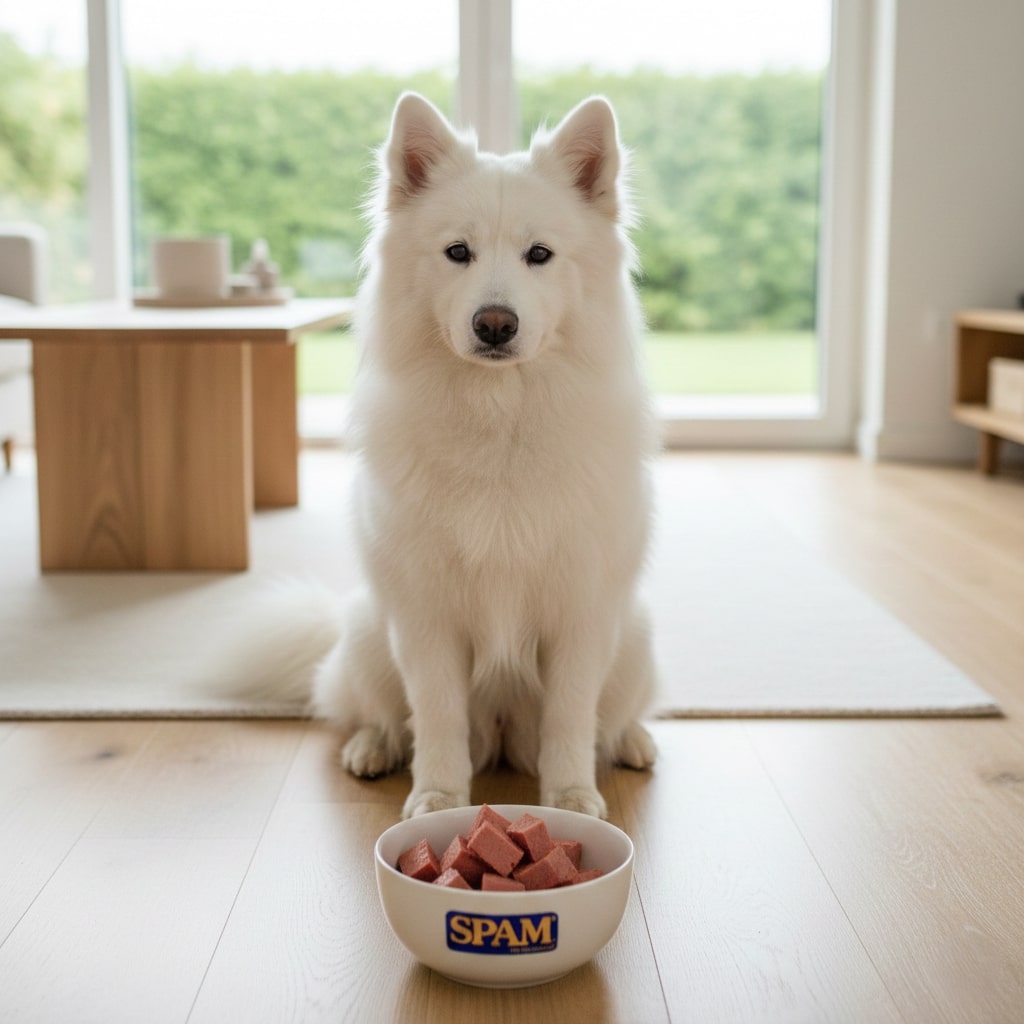
Short Answer: No, dogs should not eat Spam. While a tiny piece is unlikely to be fatal, Spam contains extremely high levels of salt, fat, and preservatives like sodium nitrite, which are harmful to dogs. Regular consumption can lead to serious health issues such as pancreatitis, salt poisoning, and obesity.
Summary Table
| Feature | Details |
| Safe for Dogs? | No (Not recommended) |
| Toxic? | No, but highly unhealthy. |
| Key Danger | Extremely high sodium (salt) content. |
| Secondary Danger | High fat content (risk of Pancreatitis). |
| Harmful Ingredients | Sodium Nitrite, modified potato starch, processed pork. |
| Immediate Symptoms | Thirst, vomiting, diarrhea (if eaten in large amounts). |
Why Spam Is Bad for Dogs
Spam is a processed canned meat made primarily from pork, water, salt, potato starch, sugar, and sodium nitrite. While humans can enjoy it in moderation, a dog’s digestive system processes these ingredients differently.
Here are the three main reasons why you should keep Spam away from your dog:
Read Also: Can Dog Eat Strawberry Ice Cream?
1. Excessive Sodium (Salt)
Spam is loaded with salt to preserve the meat. A single serving of Spam can contain nearly one-third of a human’s daily recommended sodium intake. For a dog, this amount is massive.
- Risk: Excessive salt can lead to dehydration and, in severe cases, sodium ion poisoning.
- Symptoms: Extreme thirst, frequent urination, vomiting, diarrhea, tremors, and seizures.
2. High Fat Content
Spam is very fatty. While dogs need some fat in their diet, the high concentration of saturated fats found in processed meats is difficult for them to digest.
- Risk: High-fat foods are a leading cause of pancreatitis in dogs. This is a painful and potentially life-threatening inflammation of the pancreas.
- Symptoms: Hunched back (from abdominal pain), vomiting, lethargy, and loss of appetite.
3. Preservatives and Spices
Spam contains sodium nitrite (a preservative) and flavorings that are unnecessary and potentially harmful to dogs.
- Risk: Sodium nitrite has been linked to blood disorders in dogs when consumed in high quantities over time.
- Garlic/Onion Alert: Some flavored varieties of Spam (like “Garlic” or “Jalapeño”) may contain garlic or onion powder, which are toxic to dogs and can damage their red blood cells.
What Happens If My Dog Eats Spam?
If your dog sneaks a small cube of Spam that fell on the floor, they will likely be fine. However, you should monitor them closely.
If They Eat a Small Amount:
- Give them plenty of fresh water to help flush out the extra salt.
- Watch for loose stool or mild digestive upset.
- Do not feed them any other treats for the rest of the day.
If They Eat a Large Amount (e.g., half a can):
- Contact your veterinarian immediately.
- Watch for signs of bloat, vomiting, or extreme lethargy.
- The vet may recommend inducing vomiting or administering IV fluids to manage sodium levels.
Read Also: Can Dogs Be Racist?
Better Alternatives to Spam
If you want to give your dog a special meat treat, skip the processed stuff and go for whole, natural foods.
- Plain Boiled Chicken: No skin, no bones, and absolutely no seasoning.
- Lean Ground Beef: Boiled or cooked without oil and drained of fat.
- Turkey: Plain, cooked white meat (avoid the fatty skin).
- Carrots or Green Beans: Great low-calorie, crunchy snacks.