
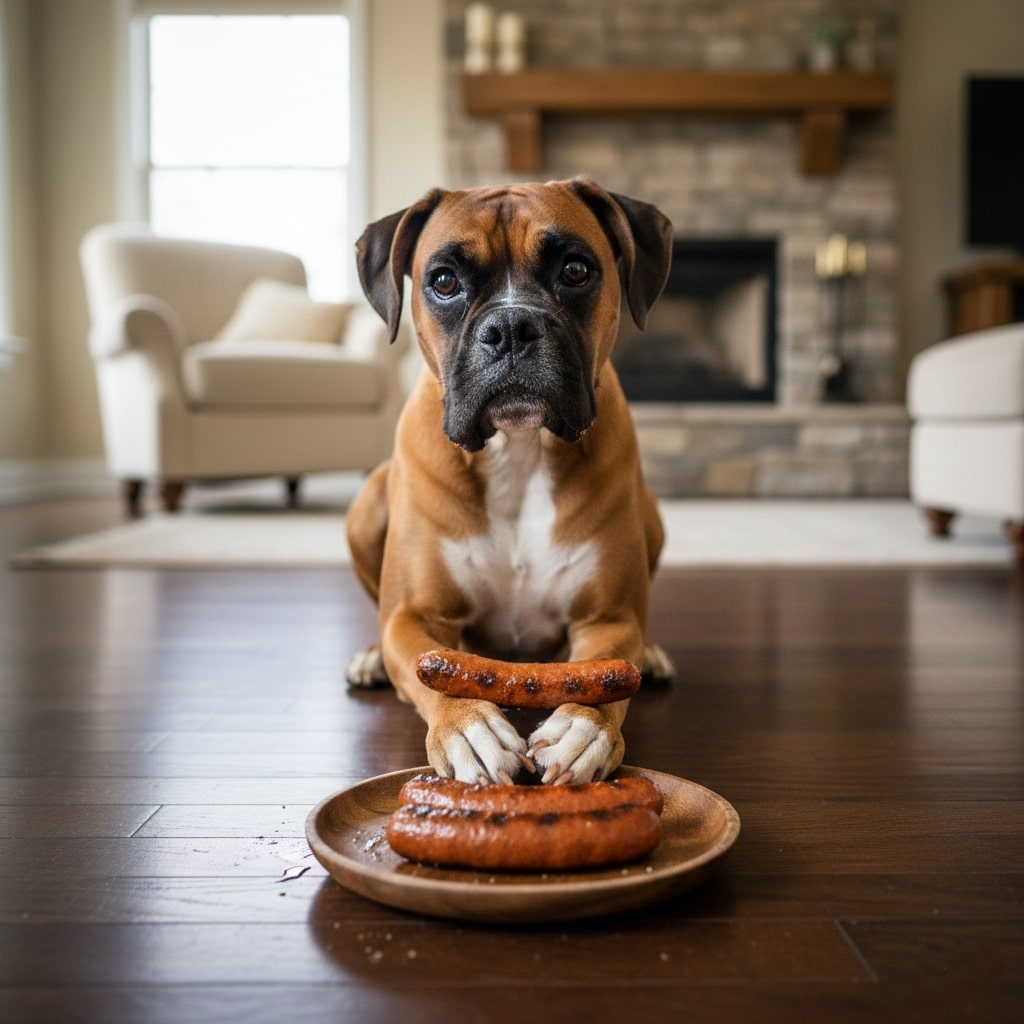
Can dogs eat sausage? Generally, no. While a small bite of plain, cooked sausage is rarely fatal, sausages are unhealthy for dogs. They contain high levels of salt, fat, and dangerous seasonings like garlic and onion powder. Eating sausage can lead to stomach upset, dehydration, and serious conditions like pancreatitis or kidney damage.
Summary Table: Is Sausage Safe for Dogs?
| Feature | Details |
| Is it Toxic? | The meat itself is not, but ingredients like onion and garlic are toxic. |
| Main Risks | Pancreatitis (from fat), Kidney damage (from salt), Poisoning (from spices). |
| Safe Amount | None is best. A crumb likely won’t hurt, but avoid whole sausages. |
| Better Alternatives | Plain cooked chicken, turkey, or beef (no salt/seasoning). |
| When to Call Vet | If the dog eats raw sausage, sausage with onions/garlic, or shows signs of illness. |
Why Sausage is Bad for Dogs? Detailed Breakdwon
Sausage is a processed meat designed for human taste buds, not canine digestion. Even though dogs love the smell of meat, the ingredients hidden inside sausage make it a dangerous treat.
Read Also: Can Cats Eat Sausage?
1. High Salt Content (Sodium)
Sausages are preserved with heavy amounts of salt. A single sausage link can contain more salt than a small dog should have in an entire day.
- The Risk: Excessive salt can cause severe dehydration and sodium ion poisoning.
- Symptoms: Excessive thirst, vomiting, diarrhea, tremors, and seizures.
2. High Fat Content
Sausages, especially pork varieties, are incredibly fatty. Dogs struggle to digest high concentrations of fat.
- The Risk: Eating fatty foods can trigger pancreatitis, a painful and potentially fatal inflammation of the pancreas.
- Symptoms: Hunched back (from pain), repeated vomiting, lethargy, and loss of appetite.
3. Toxic Seasonings (Onion and Garlic)
Almost all sausages—whether breakfast links, Italian sausage, or bratwurst—contain spices.
- The Risk: Onion and garlic (powder or raw) are toxic to dogs. They attack red blood cells and cause anemia.
- Note: It does not take a large amount of garlic powder to make a small dog sick.
4. Preservatives (Nitrates and Nitrites)
Processed meats contain chemical preservatives to keep them pink and fresh. These chemicals constitute “empty calories” and have been linked to cancers and digestion issues in dogs when consumed regularly.
Read Also: Can Dogs Eat Mango?
Risks by Sausage Type
Not all sausages are created equal, but most are unsafe. Here is a breakdown of common types:
Breakfast Links and Patties
These are usually high in fat and maple syrup or sugar.
- Verdict: Avoid. The sugar and fat combination can cause obesity and diabetes over time.
Italian Sausage and Bratwurst
These are often the most dangerous because they are heavily seasoned.
- Verdict: Strictly Avoid. They almost always contain garlic, onion, paprika, and spicy peppers that burn a dog’s stomach.
Turkey or Chicken Sausage
These seem healthier because they are leaner, but they are still processed.
- Verdict: Risky. Only feed this if you are 100% sure it contains no onion or garlic powder. Even then, the salt content is likely too high.
Raw Sausage
- Verdict: Never feed raw sausage. Raw pork and other meats carry a high risk of Salmonella and E. coli bacteria. It creates a risk for both the dog and the humans handling the dog afterward.
Read Also: Can Dogs Eat Garlic?
What Happens If My Dog Eats Sausage?
If your dog steals a sausage off the floor, don’t panic. Follow these steps:
- Check the Ingredients: Try to find the packaging. Did the sausage contain onion or garlic?
- Estimate the Amount: Did they eat a tiny crumb or a whole pack?
- Watch for Symptoms: Monitor your dog closely for the next 24 hours.
Call your veterinarian immediately if you see
- Vomiting or bloody diarrhea.
- Pale gums (a sign of anemia from onion toxicity).
- Abdominal pain (whining when you touch their belly).
- Extreme lethargy or collapse.
Healthier Alternatives
If you want to treat your dog to meat, stick to whole, unprocessed options.
- Plain Boiled Chicken: No skin, no bones, no salt.
- Plain Ground Beef or Turkey: Cooked and drained of grease.
- Carrot Sticks: Great for crunch and low in calories.
- Commercial Dog Treats: Look for jerky made specifically for dogs (check the label to ensure it is sourced safely).