
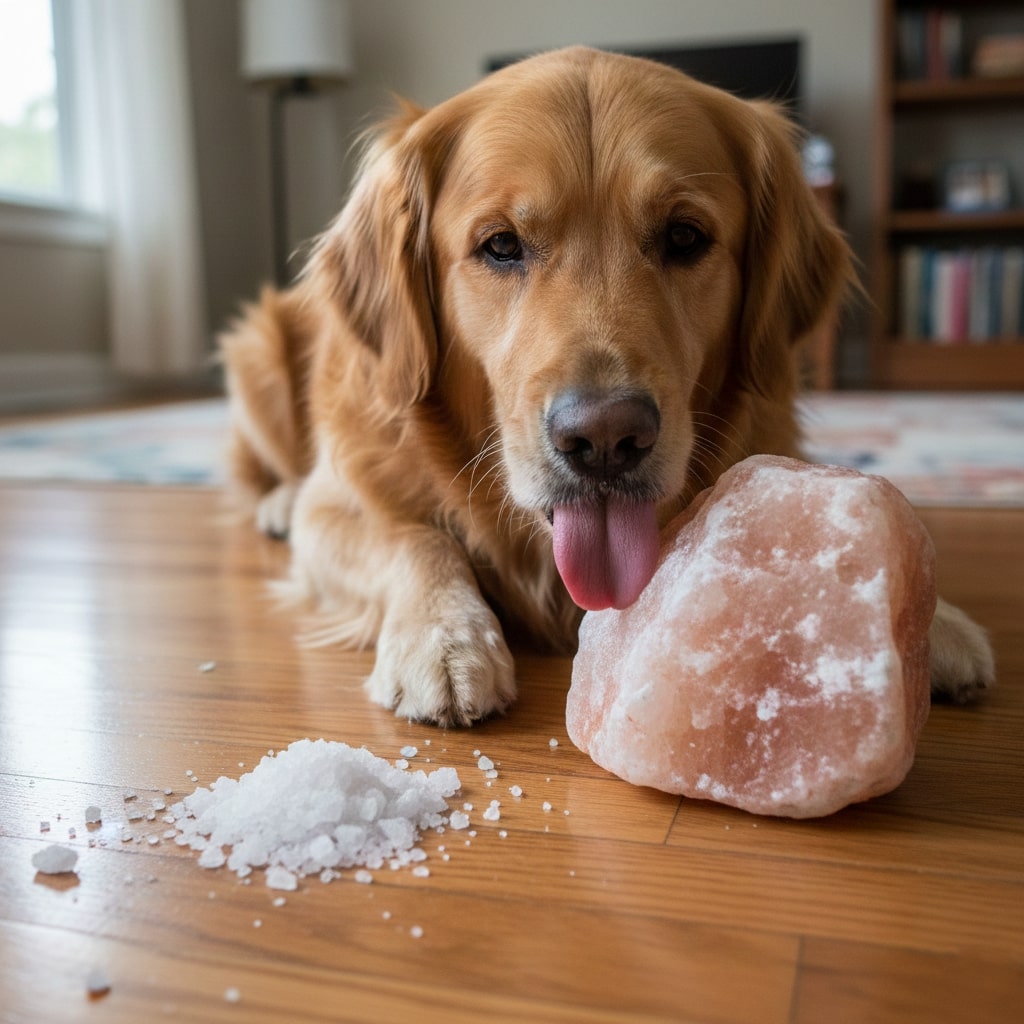
No, dogs should not eat added salt. While dogs need a tiny amount of sodium for their bodies to function, their regular dog food already provides 100% of their daily requirement. Eating salty human foods can quickly lead to dehydration, vomiting, and a life-threatening condition called sodium ion poisoning. If your dog eats a large amount of salt, contact your veterinarian immediately.
Summary Table: Is Salt Safe for Dogs?
| Key Question | Answer |
| Is salt toxic to dogs? | Yes, in moderate to large amounts. |
| Safe daily limit? | Most dogs get all they need (approx. 0.25g – 1.5g) from their kibble. |
| Toxic dosage? | Approximately 2–4 grams of salt per kilogram of body weight. |
| Main Danger | Sodium Ion Poisoning (Salt Toxicity). |
| First Sign of Trouble | Extreme thirst and excessive urination. |
| Immediate Action | Provide fresh water and call the vet. |
Why Is Salt Bad for Dogs?
Salt (sodium chloride) plays a role in fluid balance and nerve function for both humans and dogs. However, humans can tolerate high levels of salt because we sweat it out and have larger bodies. Dogs do not process excess sodium the same way.
When a dog eats too much salt, the balance of electrolytes in their body is disrupted. To correct this, their cells release water into the blood to dilute the salt. This causes the cells to shrink and can lead to severe damage, especially in the brain.
This condition is medically known as Sodium Ion Poisoning or Hypernatremia.
Read Also: Can Dogs Eat Sugar?
How Much Salt Is Fatal?
The lethal dose of salt for dogs is approximately 4 grams per kilogram (2.2 lbs) of body weight. However, signs of toxicity can appear at much lower levels (around 2 grams per kilogram).
- Small Dogs: Are at much higher risk. A single bag of salty chips or a piece of cured meat can be dangerous for a Chihuahua or Yorkie.
- Large Dogs: Have a higher tolerance but are still susceptible to poisoning if they ingest substances like playdough, rock salt, or brine.
Symptoms of Salt Poisoning in Dogs
If your dog has raided the pantry or drunk ocean water, symptoms usually appear within 3 hours, but they can take days to fully manifest. Watch for these warning signs:
- Excessive Thirst and Urination: This is the body trying to flush out the sodium.
- Vomiting and Diarrhea: Often the first physical sign of rejection.
- Lethargy: The dog appears tired, weak, or “out of it.”
- Swollen Tongue or Lips: Caused by fluid retention.
- Loss of Appetite: Refusing to eat.
- Neurological Signs (Severe Toxicity):
- Tremors or muscle spasms.
- Disorientation and confusion.
- Seizures (convulsions).
- Coma.
Warning: If you see neurological signs like seizures or stumbling, this is a medical emergency. Go to an emergency vet immediately.
Read Also: How Much Salt Can Kill a Cat?
Common Sources of Hidden Salt
Many owners accidentally poison their dogs by sharing “just a bite” of human food. Be vigilant about keeping these items out of reach:
- Processed Meats: Ham, bacon, pepperoni, and hot dogs are loaded with sodium.
- Salty Snacks: Potato chips, pretzels, popcorn, and crackers.
- Condiments: Soy sauce (very toxic), ketchup, and steak sauce.
- Household Items:
- Homemade Playdough: This is a major hazard because it contains massive amounts of salt.
- Rock Salt (Ice Melt): Dogs may lick this off their paws in winter.
- Paintballs: These contain electrolytes that act like salt in the body.
- Ocean Water: Dogs playing at the beach often swallow saltwater, which leads to “beach diarrhea” or poisoning.
What to Do If Your Dog Eats Salt
If you suspect your dog has eaten a salty item, do not panic, but act quickly.
1. Assess the Amount
Determine exactly what they ate and how much. A Great Dane eating one pretzel is likely fine; a Pug eating a tablespoon of salt is in danger.
2. Provide Water
Give your dog immediate access to fresh, cool water. Let them drink small amounts frequently. Do not force them to drink, as this can cause vomiting.
3. Call the Vet or Poison Control
Contact your veterinarian or the ASPCA Animal Poison Control Center. Be ready to tell them your dog’s weight and what they ate.
4. Watch for Symptoms
Monitor your dog closely for the next few hours. If they vomit multiple times or seem dizzy, take them to the clinic.
Read Also: Can Dogs Eat Garlic?
Healthy, Low-Sodium Alternatives
You can still treat your dog without using salty human foods. Stick to these safe, low-sodium options:
- Vegetables: Raw carrots, green beans, or cucumber slices.
- Fruits: Apple slices (no seeds), blueberries, or watermelon.
- Plain Meat: Boiled chicken or turkey with no added salt or seasoning.
- Peanut Butter: Make sure it is unsalted and Xylitol-free.
Conclusion
Salt is not a safe treat for dogs. While a dropped pretzel likely won’t hurt a large dog, consistent feeding of salty human leftovers or accidental ingestion of household items can be fatal. Stick to dog-specific treats and fresh vegetables to keep your pet safe and hydrated.