
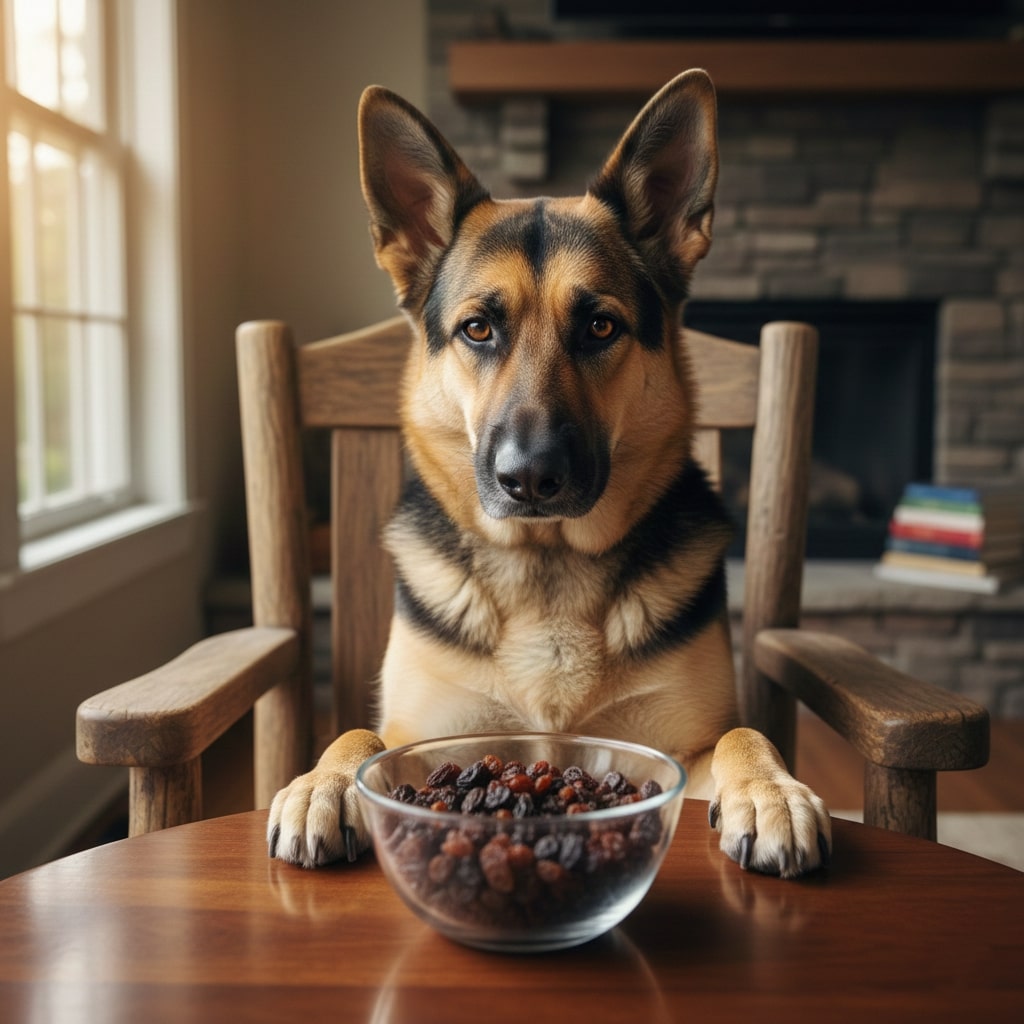
No, dogs can never eat raisins. Raisins and grapes are highly toxic to dogs and can cause sudden, fatal kidney failure. There is no “safe” amount; even a single raisin can be dangerous for some dogs. If your dog ingests raisins, you must contact a veterinarian or an emergency animal poison control center immediately.
Summary Table: Are Raisins Safe for Dogs?
| Feature | Details |
| Toxicity Level | Severe / Life-Threatening |
| Toxic Part | Flesh and skin of grapes/raisins (all varieties) |
| Toxic Substance | Tartaric Acid (suspected) |
| Safe Amount | None (zero tolerance) |
| Key Risk | Acute Kidney Failure (Renal Failure) |
| Onset of Symptoms | Usually within 6–12 hours |
| Immediate Action | Call Vet / Poison Control immediately |
Can Dogs Have Raisins? Detailed Breakdown
The simple answer is no. You should never feed your dog raisins, grapes, currants, or sultanas. While humans enjoy these as healthy snacks, they pose a severe health risk to canines.
It does not matter if the raisins are:
- Cooked in bread or cookies
- Raw
- Organic or non-organic
- Seedless or seeded
All forms are dangerous.
Read Also: Can Dogs Eat Chocolate?
Why Are Raisins Toxic to Dogs?
For a long time, the exact reason raisins were toxic remained a mystery. Recently, researchers have identified tartaric acid as the likely culprit.
- Tartaric Acid: This substance is found in high concentrations in grapes and raisins. Dogs are uniquely sensitive to it, unlike humans or other animals.
- Kidney Damage: When a dog digests tartaric acid, it attacks the kidneys, leading to acute renal failure (sudden kidney failure).
- Unpredictability: Different grapes have different levels of tartaric acid, and different dogs have different sensitivity levels. This is why one dog might eat a handful and be fine, while another eats two raisins and becomes critically ill. Because you cannot predict the reaction, you must treat every ingestion as a medical emergency.
Symptoms of Raisin Poisoning
Symptoms often do not appear immediately. They usually develop within the first 6 to 24 hours after ingestion.
Early Signs (0 – 24 hours)
- Vomiting: This is the most common early sign. You may see pieces of raisin in the vomit.
- Diarrhea: Often combined with lethargy.
- Loss of Appetite: Refusing to eat dinner or treats.
- Lethargy: Appearing unusually tired, weak, or “quiet.”
Severe Signs (24 – 48 hours – Kidney Failure)
- Excessive Thirst: Drinking far more water than usual.
- Excessive Urination: Or, conversely, no urination at all (anuria), which indicates the kidneys have shut down.
- Abdominal Pain: Whimpering when you touch their belly.
- Foul Breath: Often smells like urine or ammonia.
- Coma or Seizures.
Read Also: Can Dogs Eat Oatmeal?
What to Do If Your Dog Eats Raisins
If you suspect your dog has eaten even a single raisin, do not wait for symptoms. Once the kidneys are damaged, it is often irreversible.
- Stop them from eating more: Remove the source immediately.
- Call for help: Contact your veterinarian or a poison control hotline immediately.
- ASPCA Animal Poison Control Center: (888) 426-4435
- Pet Poison Helpline: (855) 764-7661
- Do not induce vomiting unless told to: Sometimes a vet will instruct you to induce vomiting using hydrogen peroxide, but you should only do this if explicitly instructed by a professional.
- Head to the vet: Time is critical.
How Vets Treat Raisin Toxicity
Veterinary treatment focuses on two things: getting the poison out and supporting the kidneys.
- Decontamination: The vet may induce vomiting (emesis) and administer activated charcoal to absorb toxins in the stomach before they enter the bloodstream.
- Fluid Therapy: This is the most critical step. The vet will likely put your dog on intravenous (IV) fluids for 48 hours to flush the toxins out and support kidney function.
- Monitoring: They will check blood work daily to monitor creatinine and BUN levels (indicators of kidney health).
Read Also: Can Dogs Eat Peanut Butter?
Safe Fruit Alternatives
If you want to give your dog a healthy, sweet treat, skip the raisins and try these safe alternatives (in moderation):
- Blueberries: Packed with antioxidants.
- Apples: Sliced, without seeds or core.
- Watermelon: Flesh only, no rind or seeds.
- Bananas: High in potassium (feed sparingly due to sugar).
- Strawberries: Fresh or frozen.
Prevention Tips
- Store securely: Keep raisins, raisin bran, granola bars, and baked goods high up in closed cabinets.
- Watch the floor: If you drop a raisin while cooking, pick it up immediately.
- Educate guests: Tell children and house guests never to share their trail mix or cookies with the dog.