
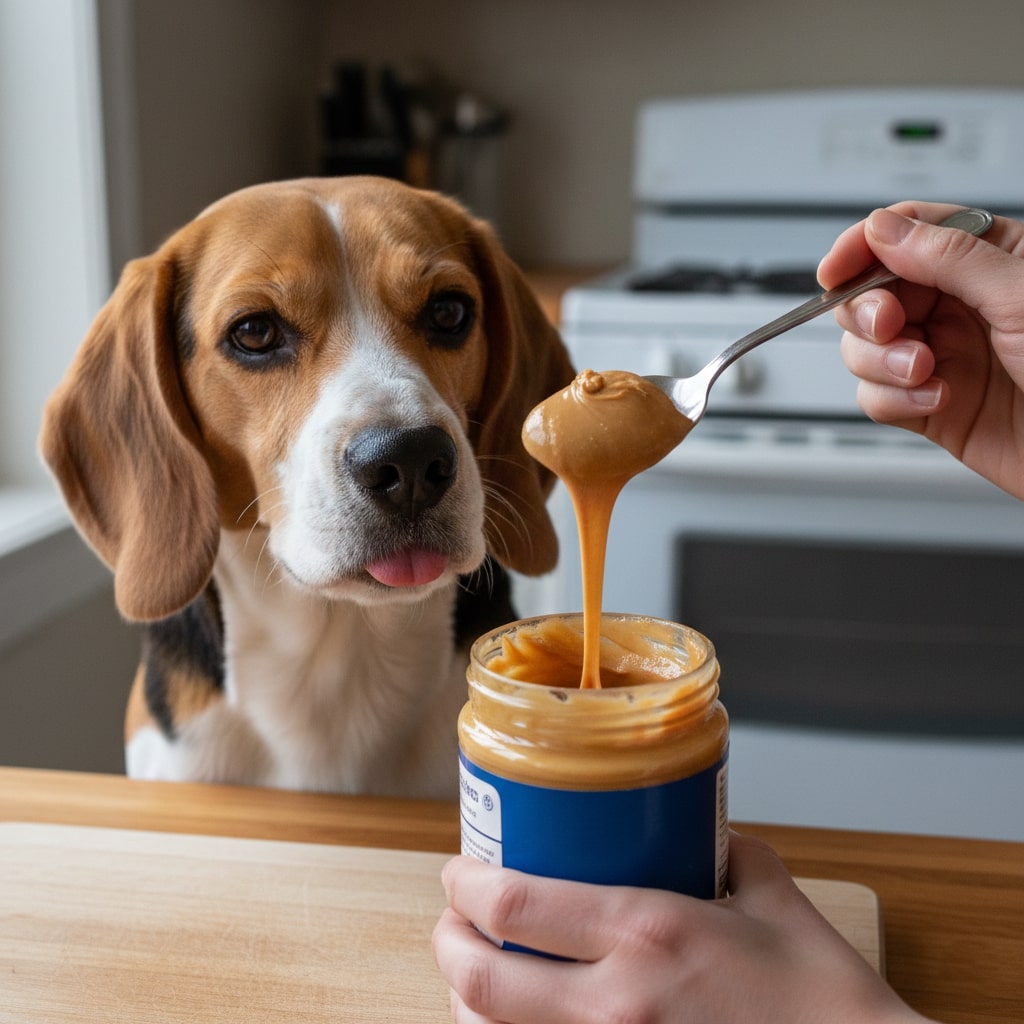
Yes, dogs can eat peanut butter, provided it does not contain Xylitol. Most peanut butter is safe and a great source of protein and healthy fats. However, Xylitol, an artificial sweetener found in many “sugar-free” or “diet” brands, is extremely toxic and deadly to dogs. Always check the label. Moderation is key because peanut butter is high in calories and fat.
Summary Table: Is Peanut Butter Safe for Dogs?
| Type of Peanut Butter | Safe for Dogs? | Notes & Risks |
| Natural Peanut Butter | Best Choice | Look for one ingredient: Peanuts. (Maybe salt). |
| Regular Creamy/Chunky | Safe | Safe if it contains sugar/salt, but less healthy. |
| Sugar-Free / Diet | DANGER | Often contains Xylitol, which causes liver failure. |
| Peanut Butter with Chocolate | NO | Chocolate is toxic to dogs. |
| Almond/Cashew Butter | Yes | Generally safe alternatives, but high in fat. |
| Macadamia Nut Butter | NO | Toxic. Causes vomiting and tremors. |
Can Dogs Have Peanut Butter?
For most dogs, peanut butter is one of the best high-value treats available. It is not just a tasty snack; it contains nutrients that can be good for your dog’s health in small amounts.
Nutritional Benefits
- Protein: Helps build muscle and repair tissue.
- Healthy Fats: Good for skin and coat health.
- Vitamins: Contains Vitamin B (Niacin) and Vitamin E.
However, because it is so rich in fats, it should be treated as an occasional reward, not a daily meal replacement.
Real Also: Can Dogs Eat Rice?
The #1 Danger: Xylitol Poisoning
Before you give your dog even a lick of peanut butter, you must read the ingredients label.
Some manufacturers, especially those making “low-sugar,” “keto,” or “diet” peanut butters, use a sweetener called Xylitol (sometimes listed as Birch Sugar).
Why is Xylitol Toxic?
- Hypoglycemia: In dogs, Xylitol causes a massive, rapid release of insulin. This crashes their blood sugar levels within 10 to 60 minutes.
- Liver Necrosis: High doses can cause acute liver failure, which is often fatal.
Symptoms of Xylitol Poisoning:
- Vomiting
- Weakness or lethargy
- Staggering/Lack of coordination
- Collapsing
- Seizures
Emergency: If your dog eats peanut butter containing Xylitol, take them to the vet immediately. Every minute counts.
Read Also: Can Dogs Eat Bread?
Other Health Risks to Watch For
Even if your peanut butter is Xylitol-free, there are risks if you feed too much.
1. Pancreatitis
Peanut butter is high in fat. If a dog eats too much fat at once, or eats high-fat foods over a long period, it can inflame the pancreas. Pancreatitis is painful and requires veterinary care. Symptoms include a hunched back, vomiting, and refusal to eat.
2. Obesity
A single tablespoon of peanut butter has nearly 100 calories. For a small dog, that is a huge portion of their daily calorie limit. Overfeeding leads to weight gain, joint issues, and heart problems.
Read Also: Can Dogs Eat Yogurt?
3. Aflatoxins
Peanuts can contain naturally occurring molds called aflatoxins. While major brands test for this strictly, cheaper or homemade brands might have trace amounts. Generally, commercial human-grade peanut butter is safe.
4. Added Sugar and Salt
Many commercial brands (like Jif or Skippy) add sugar and salt. While not toxic, excess sugar leads to diabetes and dental issues, and excess salt is bad for dogs with heart or kidney conditions.
How to Choose the Best Peanut Butter
When shopping for your dog, “simple” is always better.
- The Gold Standard: Look for “Natural” peanut butter.
- Ideal Ingredients: The label should read: “Peanuts” or “Peanuts, Salt.”
- Avoid: “Hydrogenated vegetable oil,” “Xylitol,” or “Birch Sugar.”
Creamy vs. Crunchy?
Both are generally safe.
- Creamy: Better for small dogs to prevent choking.
- Crunchy: Okay for larger dogs, but ensure they don’t inhale the nuts.
Safe Serving Sizes
Adhere to the “10% Rule”: Treats should not make up more than 10% of your dog’s daily calories.
- Small Dogs (under 20 lbs): 1/2 teaspoon per day.
- Medium Dogs (20-50 lbs): 1 teaspoon per day.
- Large Dogs (50+ lbs): Up to 1 tablespoon per day.
Read Also: Can Dogs Eat Chicken?
Creative Ways to Feed Peanut Butter
Peanut butter is a versatile tool for dog owners. Here are the best ways to use it:
- The Distraction Toy (Kong): Stuff a hollow rubber toy (like a Kong) with peanut butter and freeze it. This keeps your dog busy for 30+ minutes and helps with separation anxiety.
- The “Pill Pockets” Hack: If your dog refuses to take medicine, hide the pill inside a small ball of peanut butter. The strong smell masks the scent of the medicine.
- Bath Time Helper: Smear a little peanut butter on the wall of the shower or tub. Your dog will lick it off while you wash them, making bath time stress-free.
Conclusion
Can dogs eat peanut butter? Yes! It is one of the safest and most beloved dog treats, as long as you check the label for Xylitol first. Stick to unsalted, natural peanut butter, keep portions small to avoid weight gain, and use it as a tool for training or giving medication.