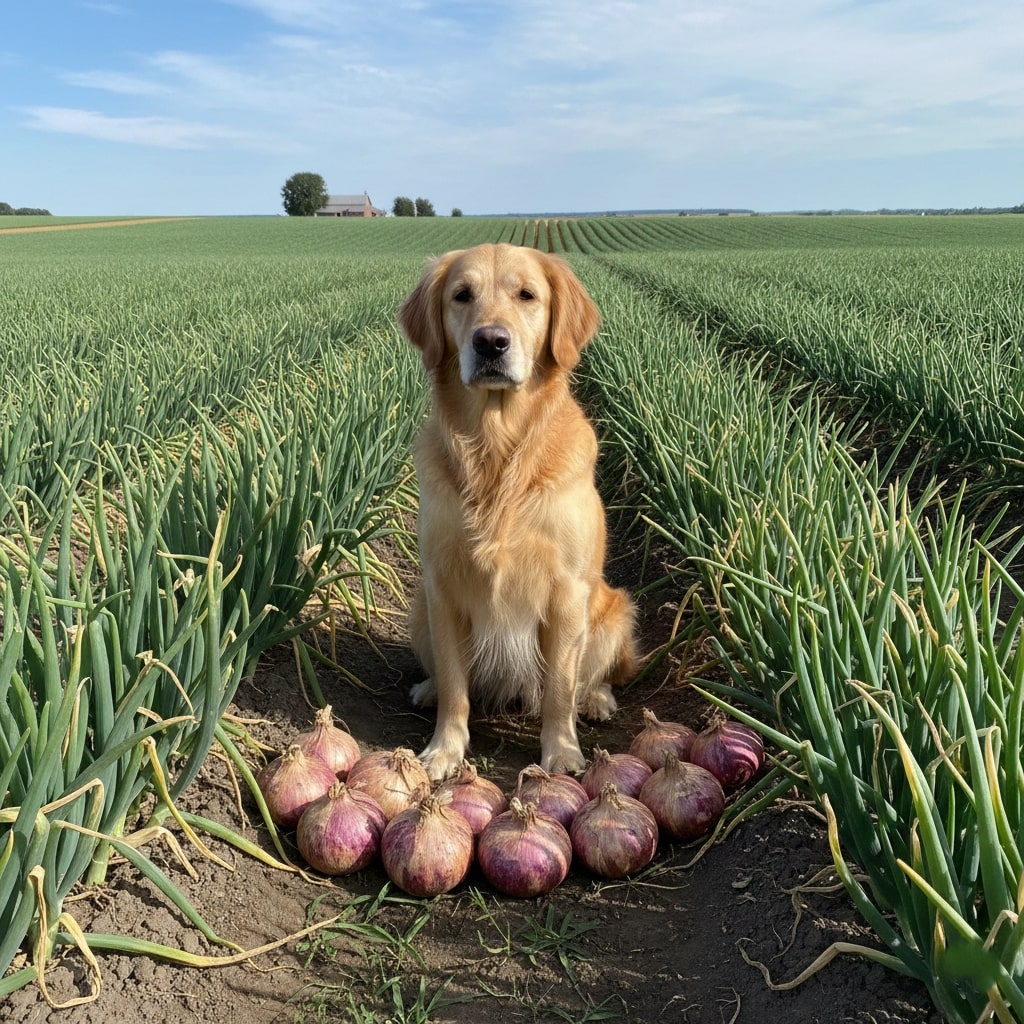
No, dogs cannot eat onions. All parts of the onion plant, flesh, leaves, juice, and processed powders, are toxic to dogs. Ingesting onions causes damage to a dog’s red blood cells, leading to a condition called hemolytic anemia. Even small amounts, whether raw, cooked, or fried, can be dangerous and require immediate veterinary attention.
Summary Table: Are Onions Safe for Dogs?
| Feature | Details |
| Can dogs eat onions? | No, never. |
| Toxic Component | N-propyl disulfide (sulfur compound). |
| Toxic Forms | Raw, cooked, fried, dried, powdered, broth. |
| Main Health Risk | Hemolytic Anemia (destruction of red blood cells). |
| Deadly? | Yes, if untreated or consumed in large amounts. |
| Immediate Action | Call your veterinarian or Pet Poison Helpline immediately. |
Why Are Onions Bad for Dogs?
Onions belong to the Allium plant family, which also includes garlic, chives, leeks, and shallots. While these vegetables are healthy for humans, they contain a toxic compound called N-propyl disulfide.
Because dogs do not have the enzyme required to digest this compound, it attaches to their red blood cells. This causes “oxidative damage,” essentially weakening the cell walls until the blood cells burst and die. When many blood cells die at once, the dog develops hemolytic anemia, meaning their body cannot get enough oxygen.
Read Also: Can Dogs Eat Raisins?
Does Cooking Make Onions Safe?
No. Cooking, frying, or boiling onions does not break down the toxic compound.
- Raw onions: Toxic.
- Cooked onions: Toxic.
- Onion powder: Extremely toxic. Because it is concentrated, a very small amount of powder can cause massive damage compared to a slice of fresh onion.
Symptoms of Onion Toxicity in Dogs
Symptoms might not appear immediately. It can take 24 hours to several days after eating the onion for signs to show.
Early Warning Signs
- Lethargy: The dog seems unusually tired or weak.
- Decreased Appetite: They refuse to eat.
- Vomiting and Diarrhea: General stomach upset.
Read Also: Can Dogs Eat Apples?
Severe Symptoms (Anemia)
- Pale Gums: Instead of pink, gums look white, grey, or yellowish.
- Reddish Urine: The urine may look pink or red (this is due to hemoglobin from burst blood cells).
- Panting/Fast Heart Rate: The dog is struggling to get oxygen.
- Fainting: In severe cases due to lack of oxygen.
How Much Onion is Toxic?
Toxicity depends on the weight of the dog, but generally, any amount is risky.
- The 0.5% Rule: Research suggests that consuming just 0.5% of their body weight in onions can result in toxicity.
- Cumulative Effect: The poison builds up. A dog that eats small amounts of onion scraps every day for a week is at just as much risk as a dog that eats one whole onion at once.
Size Matters
- Small Dogs (e.g., Chihuahuas, Yorkies): A few bites of an onion ring or a dish seasoned heavily with onion powder can be life-threatening.
- Large Dogs (e.g., Labs, Shepherds): They may survive eating a small piece of dropped onion, but it is still unsafe and can cause sickness.
Common Hidden Sources of Onions
Owners often accidentally poison dogs by feeding them “human food” without realizing it contains onions. Watch out for these sources:
- Pizza: Sauce often contains onion and garlic powder.
- Baby Food: Some stages of meat-based baby food contain onion powder.
- Chinese Food: Often heavily seasoned with onion and garlic.
- Stuffing: A major danger during holidays like Thanksgiving.
- Tomato Sauce/Pasta Sauce: Almost always contains onions.
- Broth: Store-bought chicken or beef broth usually contains onions.
What to Do If Your Dog Eats Onions
If you suspect your dog has eaten onions, do not wait for symptoms to appear. Once symptoms like red urine show up, the damage to the blood cells has already happened.
- Determine the Amount: Try to estimate how much they ate and what type (raw vs. powder).
- Check the Time: Note when they ate it.
- Call the Vet: Contact your veterinarian or an emergency animal hospital immediately.
- Alternative: Call the ASPCA Animal Poison Control Center (888-426-4435) or the Pet Poison Helpline.
- Do Not Induce Vomiting (Unless instructed): Only induce vomiting if a vet tells you to do so.
Read Also: Can Dogs Eat Fish?
Treatment
Veterinarians usually treat this by:
- Inducing vomiting (if the ingestion was recent) to remove the toxin.
- Administering activated charcoal to absorb the toxin in the gut.
- Providing IV fluids to flush the kidneys.
- In severe anemia cases, a blood transfusion may be necessary to replenish red blood cells.
Safe Vegetable Alternatives
If you want to give your dog a healthy, crunchy treat, skip the onions and try these safe alternatives:
- Carrots: Crunchy and good for teeth.
- Cucumbers: Low calorie and hydrating.
- Green Beans: Plain and high in fiber.
- Pumpkin: Great for digestion (plain, not pie filling).
- Sweet Potatoes: Cooked and plain.