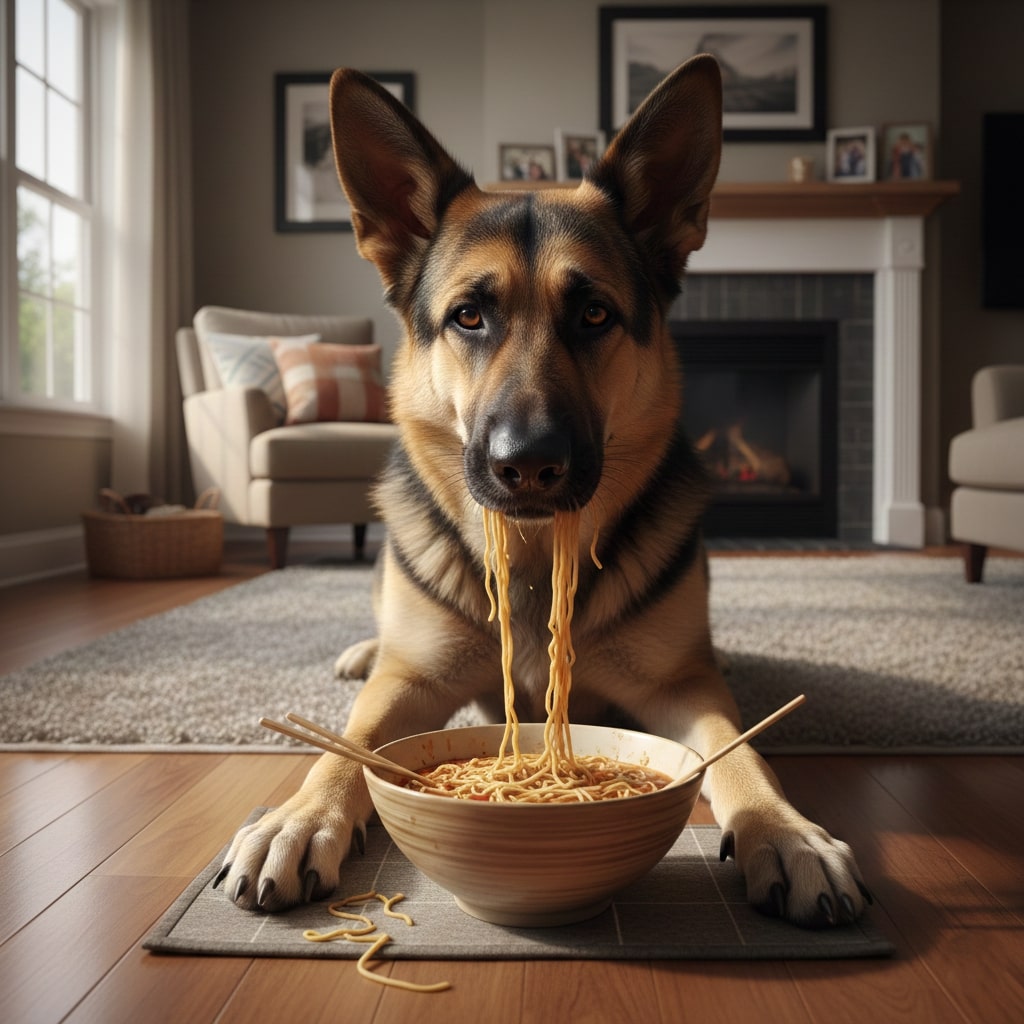
Yes, dogs can eat noodles, but only if they are plain and cooked. Plain pasta or egg noodles are generally safe in moderation as an occasional treat. However, you must avoid instant noodles (like ramen) due to extremely high sodium and preservative content. Never feed your dog noodles covered in sauces, especially those containing garlic or onions, which are toxic to dogs.
Summary Table: Are Noodles Safe for Dogs?
| Noodle Type | Safe for Dogs? | Key Risks / Notes |
| Plain White Pasta | Yes (Moderation) | High in carbs; low nutritional value. |
| Whole Wheat Pasta | Yes (Moderation) | Good fiber, but check for wheat allergies. |
| Instant Noodles / Ramen | NO | Extremely high sodium, MSG, and preservatives. |
| Egg Noodles | Caution | Safe if plain, but avoid if dog is allergic to eggs. |
| Noodles with Sauce | NO | Sauces often contain garlic, onion, excess salt, or sugar. |
| Raw / Dry Noodles | NO | Hard to digest; can cause intestinal blockage. |
Can Dogs Eat Noodles? Detailed Guide
If you are cooking spaghetti and drop a strand on the floor, it is usually harmless if your dog snacks on it. However, noodles should not become a staple in your dog’s diet. While they aren’t poisonous on their own, the way they are prepared and the additives in them can cause serious health issues.
Here is everything you need to know about feeding noodles to your canine companion.
Read Also: Can Dogs Eat Cake?
1. The Good: Plain and Simple
Noodles are primarily made of flour, water, and sometimes eggs. These ingredients are generally safe for dogs.
- Carbohydrates: Noodles provide energy, but dogs typically get enough carbs from their regular dog food.
- Texture: Soft, cooked noodles are easy for dogs to chew and swallow.
If you want to give your dog a noodle, make sure it is boiled in plain water without added salt or oil.
2. The Bad: Instant Noodles and Ramen
You should never feed your dog instant noodles or pre-packaged ramen.
- Sodium Overload: A single packet of instant ramen can contain more sodium than a large dog needs in an entire day. Salt toxicity can lead to dehydration, seizures, and organ failure.
- Preservatives & Additives: Ingredients like MSG (Monosodium Glutamate) and tertiary butylhydroquinone (TBHQ) are processed chemicals that are difficult for dogs to digest.
3. The Ugly: Toxic Sauces and Seasonings
The biggest danger isn’t usually the noodle itself, but what you put on top of it.
- Garlic and Onions: These are highly toxic to dogs. They damage red blood cells and can cause anemia. Most pasta sauces (marinara, alfredo, pesto) are loaded with them.
- Butter and Oil: Fatty foods can upset a dog’s stomach and, in severe cases, trigger pancreatitis, a painful and potentially fatal inflammation of the pancreas.
- Spices: Spicy foods can cause vomiting, diarrhea, and excessive thirst.
Read Also: Can Dogs Eat Pineapple?
Common Health Risks
Wheat and Gluten Allergies
Most noodles are made from wheat. If your dog is allergic to wheat or sensitive to gluten, eating pasta can cause:
- Itchy skin or ear infections.
- Vomiting or diarrhea.
- Gas and bloating.
If you notice these signs after feeding pasta, switch to a grain-free diet and consult your vet.
Weight Gain
Noodles are calorie-dense but nutrient-poor for dogs. They are empty calories. Regular consumption can lead to obesity, which puts stress on your dog’s joints and heart.
How to Safely Feed Noodles to Your Dog
If you decide to share a noodle treat, follow these rules:
- Cook it thoroughly: Do not feed raw, crunchy pasta. It can swell in the stomach or cause blockages.
- Keep it plain: No salt, butter, oil, or sauce.
- Cut it up: If you have a small dog, cut long spaghetti strands into small pieces to prevent choking.
- Practice moderation: One or two noodles is a treat; a whole bowl is a meal replacement that lacks necessary nutrients.
Read Also: Can Dogs Eat Blueberries?
When to Call a Vet
If your dog accidentally eats a bowl of spicy ramen or pasta covered in garlic sauce, watch for these symptoms:
- Vomiting or diarrhea.
- Lethargy (extreme tiredness).
- Pale gums (a sign of anemia from onion/garlic toxicity).
- Excessive thirst or urination (signs of salt poisoning).
Contact your veterinarian immediately if you observe any of these behaviors.
Final Verdict
Dogs can eat noodles, but they usually shouldn’t make a habit of it. There are many healthier treat options available, such as carrots, green beans, or plain cooked chicken, which offer better nutritional value without the carb overload.