
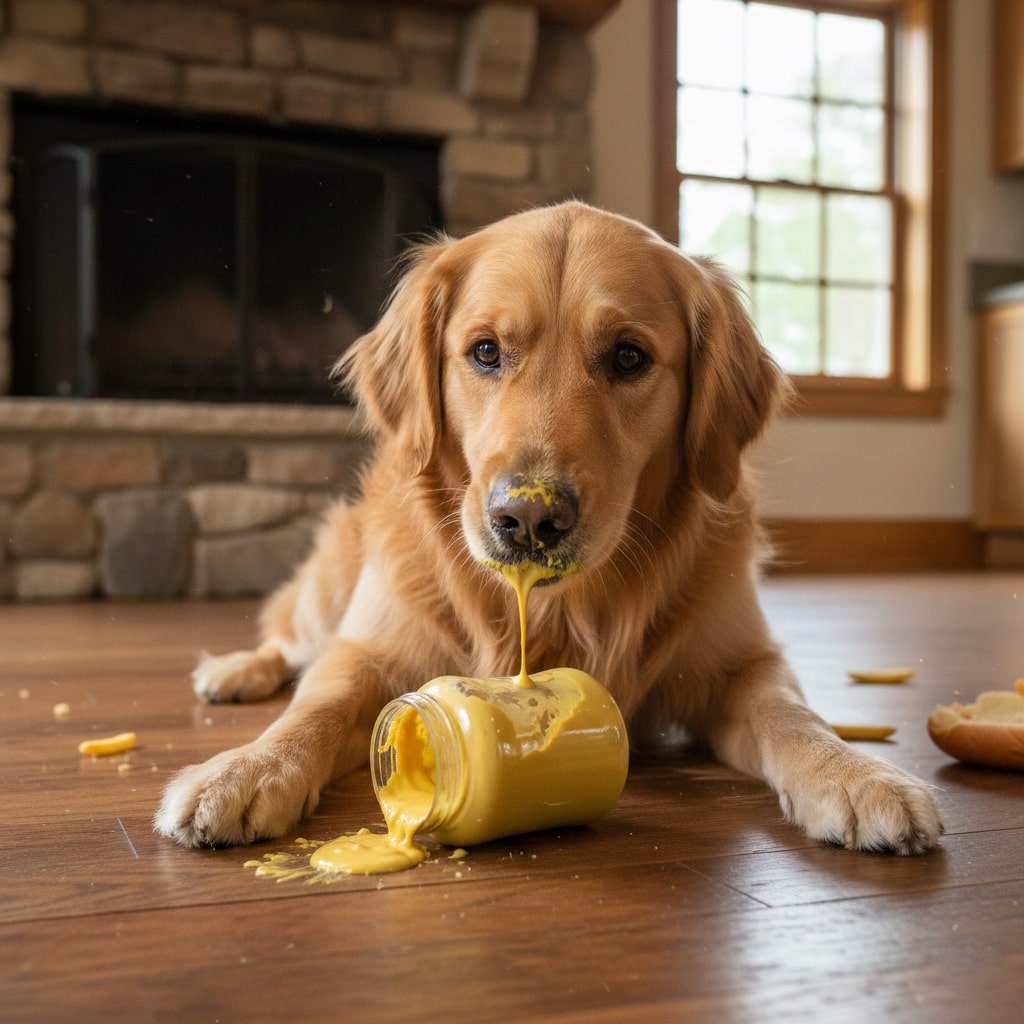
No, dogs should not eat mustard. Mustard seeds (used to make the condiment) contain compounds called isothiocyanates, which irritate a dog’s digestive system. While a small lick of yellow mustard might not kill a dog, it can cause vomiting, diarrhea, and stomach pain. However, cooked mustard greens are generally safe for dogs in moderation.
Summary Table: Is Mustard Safe for Dogs?
| Type of Mustard | Safe? | Reason |
| Yellow / Dijon / Honey Mustard | No | Contains toxic seeds and often salt/sugar. |
| Mustard Seeds / Powder | No | Highly concentrated toxicity. Dangerous. |
| Mustard Greens | Yes (Moderation) | Nutritious if steamed and plain. |
| Honey Mustard Dressing | No | High sugar, fats, and potential garlic/onion. |
Can Dogs Have Mustard? Detailed Guide
We all love adding a little kick to our hot dogs or sandwiches, but sharing your plate with your dog isn’t always safe. When it comes to mustard, the rule is simple: keep the condiment away from your pet.
While mustard is not usually fatal in small amounts, it is toxic enough to cause your dog significant discomfort and illness.
Read Also: Can Dogs Eat Bacon?
Why is Mustard Bad for Dogs?
The main danger lies in the mustard seeds. Whether you are using yellow, spicy brown, or Dijon mustard, they are all derived from the seeds of the mustard plant.
Mustard seeds contain isothiocyanates. This chemical compound acts as a severe gastrointestinal irritant for dogs. When a dog ingests mustard, this compound attacks the lining of their stomach and intestines, leading to inflammation and digestive distress.
Furthermore, prepared mustard (the yellow stuff in the bottle) is rarely just mustard seeds. It often contains other ingredients that are harmful to dogs:
- Vinegar: Can be tough on a dog’s stomach.
- Sugar: Bad for dental health and weight.
- Garlic or Onion Powder: These are highly toxic to dogs and can cause anemia.
Read Also: Can Dogs Eat French Fries?
Different Types of Mustard: What is Safe?
Not all “mustard” products are created equal. It is important to distinguish between the plant and the processed sauce.
1. Prepared Mustard (Yellow, Dijon, Spicy)
Status: Unsafe.
This is the condiment you squeeze onto food. Because it is made from concentrated seeds, it poses the highest risk of digestive upset. Even “Honey Mustard” is unsafe due to the sugar content and seed base.
2. Mustard Seeds and Powder
Status: Highly Unsafe.
Ground mustard or whole seeds are used in cooking and dry rubs. These are much more potent than the liquid condiment. If your dog eats dry mustard powder, they are likely to get sick very quickly because the concentration of isothiocyanates is much higher.
3. Mustard Greens
Status: Safe (in moderation).
Surprisingly, the leafy green part of the mustard plant is safe for dogs. Mustard greens are a source of Vitamin A and Vitamin K.
- How to serve: Steamed or boiled plain (no salt, butter, or spices).
- Warning: Do not feed them raw in large quantities, as raw greens can suppress thyroid function if eaten excessively.
Read Also: Can Dogs Eat Ice Cream?
Symptoms of Mustard Toxicity in Dogs
If your dog licks a tiny drop off the floor, they will likely be fine. However, if they eat a packet of mustard or lick a sandwich covered in it, watch for these signs of gastroenteritis (stomach inflammation):
- Vomiting (This is the most common reaction)
- Diarrhea
- Abdominal pain (Whimpering or hunching over)
- Excessive drooling
- Lethargy or weakness
Note: In the past, vets sometimes used mustard powder to induce vomiting in dogs who swallowed poison. Do not do this at home. It is an outdated method that can cause severe complications. Always call your vet instead.
What to Do If Your Dog Eats Mustard
- Check the Ingredients: If the mustard contained garlic or onion powder, call your vet immediately, even if the dog only ate a little.
- Estimate the Amount: Did they have a lick, or did they eat a whole bottle? A lick requires monitoring; a large amount requires a vet visit.
- Monitor for Illness: Watch your dog for the next 24 hours. If they vomit more than once, have bloody diarrhea, or seem extremely weak, take them to the clinic.
- Provide Water: Make sure they have access to fresh water to help flush their system, but do not force them to drink.
Safe Condiment Alternatives
If you want to add some flavor or moisture to your dog’s dry food, skip the mustard and try these dog-safe options instead:
- Plain Pumpkin Puree: Great for digestion.
- Plain Greek Yogurt: Good source of probiotics (check for Xylitol first—it must be Xylitol-free).
- Unsalted Peanut Butter: A classic treat (again, ensure no Xylitol).
- Low-Sodium Chicken Broth: Adds flavor without the toxicity.