
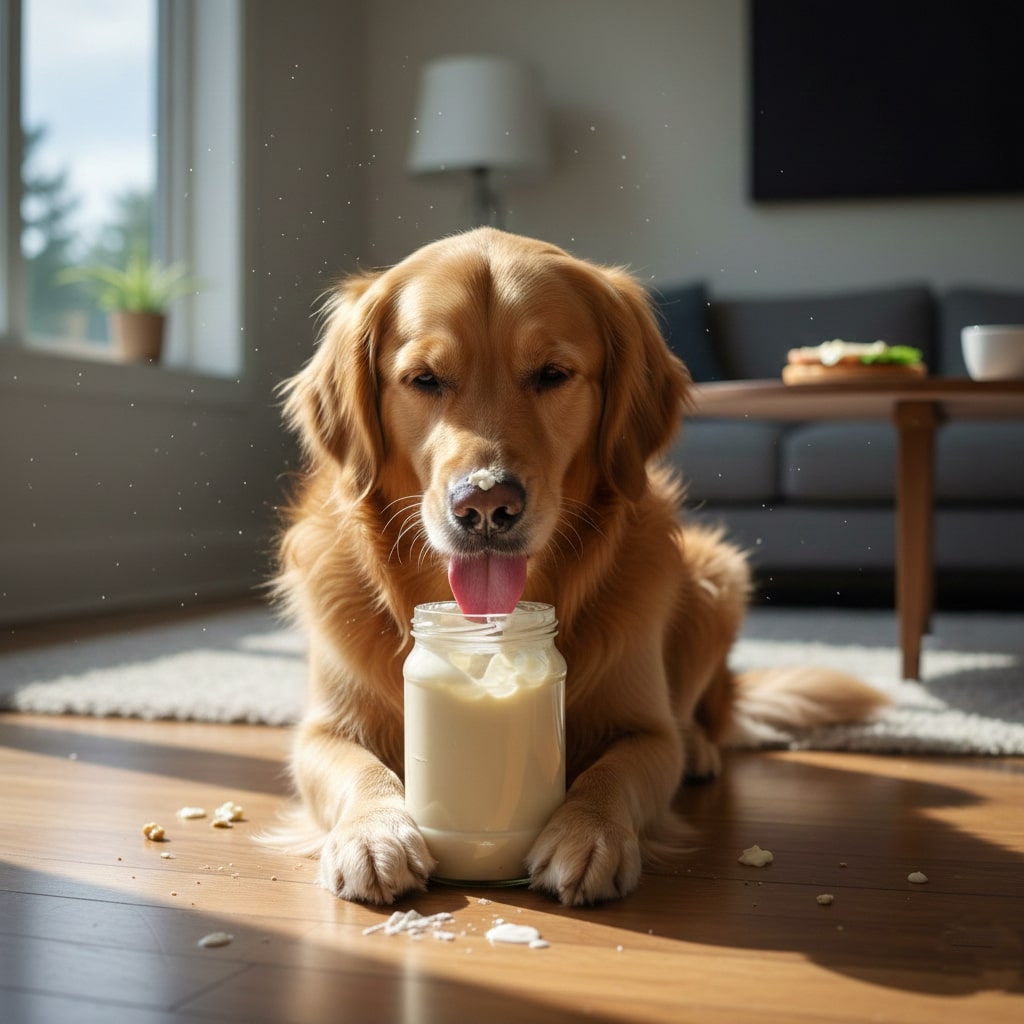
Technically, yes, dogs can eat mayonnaise because it is not toxic to them. However, it is not recommended. Mayonnaise is incredibly high in fat, which can cause upset stomachs, weight gain, and in severe cases, pancreatitis. While a small lick won’t hurt most dogs, it offers no nutritional benefits and should not be a regular part of their diet.
Summary Table: Is Mayonnaise Safe for Dogs?
| Feature | Verdict |
| Is it Toxic? | No (unless it contains garlic or onions). |
| Is it Healthy? | No. |
| Main Risk | High fat content and Pancreatitis. |
| Safe Serving Size | A small lick accidentally dropped is fine. |
| Key Ingredients | Oil, egg yolks, vinegar/lemon juice. |
| When to Call a Vet | If the dog eats a large amount or shows signs of pain/vomiting. |
Can Dogs Have Mayonnaise? Detailed Breakdown
As dog owners, we often share “people food” with our pets. While some items like carrots or plain chicken are great, condiments are usually tricky.
Mayonnaise is not poisonous to dogs. If your dog licks a spoon or cleans up a small drop from the floor, they will likely be perfectly fine. However, just because they can eat it doesn’t mean they should.
Read Also: Can Dogs Eat Mustard?
The Main Ingredients
To understand the risk, you have to look at what is inside the jar. Store-bought mayonnaise usually contains:
- Oil: Usually soybean or vegetable oil (very high fat).
- Egg Yolks: Generally safe, but high in cholesterol.
- Vinegar or Lemon Juice: Acidic, which can upset a dog’s stomach.
- Seasonings: Salt, sugar, and sometimes mustard.
Why Mayonnaise is Bad for Dogs
While not toxic, mayonnaise is problematic for canine health for several specific reasons.
1. Extremely High Fat Content
This is the number one reason to avoid feeding your dog mayo. Dogs do not process high amounts of fat as easily as humans do. A sudden intake of fatty foods can cause severe gastrointestinal upset.
2. Risk of Pancreatitis
The most serious risk of eating fatty foods like mayonnaise is pancreatitis. This is an inflammation of the pancreas that is incredibly painful and can be life-threatening.
- Symptoms: Vomiting, diarrhea, lethargy, hunched back (from abdominal pain), and loss of appetite.
- If your dog eats a large amount of mayo and shows these signs, take them to a vet immediately.
3. Obesity and Weight Gain
Mayonnaise is calorie-dense. For small dogs, even a teaspoon of mayo adds a significant amount of empty calories. Regular consumption will lead to obesity, which stresses the joints and heart.
4. Dangerous Additives
Always check the label. Some flavored mayonnaises (like Aioli) contain ingredients that are actually toxic to dogs:
- Garlic and Onion: Often found in fancy mayos or sandwich spreads. These are toxic to dogs and damage their red blood cells.
- Xylitol: While rare in standard mayo, reduced-fat or “diet” condiments sometimes use artificial sweeteners like Xylitol, which is lethal to dogs even in small amounts.
Read Also: Can Dogs Eat Chips?
Common Myths vs. Facts
Myth: Mayonnaise is dairy.
Fact: No. Mayonnaise is made of oil and eggs. It does not contain milk or lactose, so lactose intolerance is not the issue here; fat is.
Myth: It makes their coat shiny.
Fact: While fat helps coat health, the bad fats in mayo are not the right source. You are better off using salmon oil or coconut oil, which provide health benefits without the risks of processed condiments.
Myth: Homemade mayo is safer.
Fact: Homemade mayo often uses raw eggs. This introduces the risk of Salmonella, which can affect dogs (and the humans handling the dog’s bowl). Store-bought mayo uses pasteurized eggs, which eliminates this specific bacteria risk, though the fat risk remains.
What to Do If Your Dog Eats Mayonnaise
If your dog gets into a jar of mayo, don’t panic. Assess the situation using this checklist:
- Check the Ingredients: Ensure there is no onion, garlic, or Xylitol listed on the jar.
- Estimate the Amount: A few licks is fine. Half a jar is a problem.
- Watch for Symptoms: Keep an eye on your dog for the next 24 hours. Look for:
- Vomiting
- Runny stool (Diarrhea)
- Gas or bloating
- Diet Adjustment: Skip their next meal or feed them a bland diet (boiled chicken and white rice) to help their stomach settle.
When to call the vet: If your dog is a small breed and ate a large amount, or if they are vomiting repeatedly, call your veterinarian.
Read Also: Can Dogs Eat Biscuits?
Better Alternatives to Mayonnaise
If you need a “wet” food to mix with dry kibble or to hide medication, skip the mayo and try these healthier options:
- Plain Greek Yogurt: Contains probiotics that are good for the gut (check for Xylitol first!).
- Cottage Cheese: Low fat and high protein (in moderation).
- Pure Pumpkin Puree: Excellent for digestion (ensure it is plain, not pie filling).
- Peanut Butter: A dog favorite (ensure it is unsalted and Xylitol-free).
Final Verdict
Keep the mayonnaise on your sandwich and out of the dog bowl. While it isn’t poison, the high fat content makes it a risky treat that isn’t worth the potential stomach ache or vet bill.