
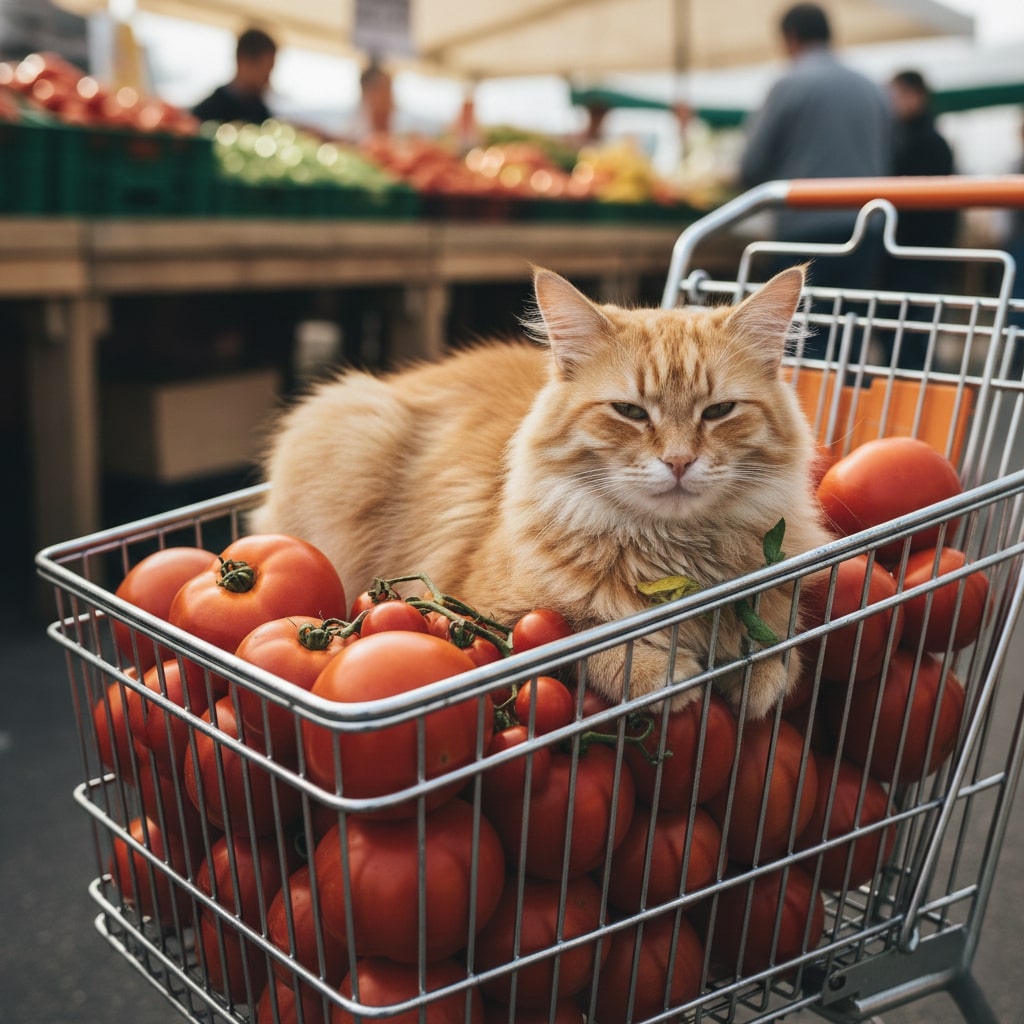
Generally, no. While a small bite of a ripe red tomato is unlikely to harm your cat, the green parts (stems, leaves, unripe fruit) contain toxins called solanine and tomatine that are dangerous to felines. Additionally, processed tomato products like ketchup or sauces often contain garlic and onions, which are highly toxic to cats.
Summary Table: Are Tomatoes Safe for Cats?
| Item | Safe for Cats? | Risk Level | Why? |
| Ripe Red Tomato | Yes (in moderation) | Low | Non-toxic flesh, but acidic and offers little nutritional value. |
| Green Unripe Tomato | No | High | Contains solanine & tomatine (toxins). |
| Leaves & Stems | No | High | Highest concentration of toxins. |
| Tomato Sauce/Soup | No | High | Often contains garlic, onions, and excess salt/sugar. |
| Ketchup | No | Moderate | High sugar, salt, and preservatives. |
Can Cats Have Tomatoes?
As a cat owner, you might be tempted to share your salad or sandwich fixings with your feline friend. But when it comes to tomatoes, the answer isn’t a simple “yes” or “no.” It depends entirely on the part of the plant and how ripe it is.
1. The Danger Zone: Unripe Tomatoes and Plants
The tomato plant belongs to the Nightshade family (Solanaceae), which is notorious for containing toxic alkaloids.
- Green (Unripe) Tomatoes: These contain high levels of Tomatine and Solanine. These compounds act as a natural defense for the plant but are poisonous to cats.
- Leaves and Stems: These parts have the highest concentration of toxins. If you grow tomatoes in your garden, keep your cat away from the vines.
Read Also: Why Cats Don’t “Taste” Spicy Food
Why is this dangerous?
Cats are small animals with unique metabolisms. Even a small amount of tomatine can cause gastrointestinal distress or more severe symptoms in a small kitten.
2. The Exception: Ripe Red Tomatoes
As a tomato ripens, the levels of tomatine and solanine drop drastically.
- Flesh: The flesh of a fully ripe, red tomato is generally considered non-toxic.
- Quantity: If your cat eats a small wedge of a cherry tomato, they will likely be fine.
However, just because they can eat it doesn’t mean they should. Cats are obligate carnivores, meaning their digestive systems are optimized for meat, not fibrous plant matter. Tomatoes are acidic and can cause a tummy ache even without the toxins.
Read Also: Common Human Foods Toxic to Cats
3. Beware of Tomato Sauce, Ketchup, and Soups
You should never feed your cat processed tomato products. The danger here isn’t usually the tomato itself, but the additives:
- Garlic and Onions: These are frequently added to pasta sauces and soups. Both are highly toxic to cats and can cause dangerous anemia (damage to red blood cells).
- Salt: High sodium levels can lead to dehydration or salt poisoning.
- Sugar/Xylitol: Ketchup is loaded with sugar, and some “sugar-free” versions use Xylitol, which is toxic to many pets.
Symptoms of Tomato Poisoning in Cats
If your cat has nibbled on a green tomato or chewed a tomato vine, watch closely for these symptoms of Solanine Toxicity:
- Digestive Issues: Vomiting, diarrhea, hypersalivation (drooling).
- Physical Signs: Dilated pupils, weakness, lethargy.
- Severe Signs: Slow heart rate, confusion, or tremors.
Note: If you notice any of these signs, contact your veterinarian immediately.
Read Also: Can Cats Eat Potatoes?
Better Alternatives to Tomatoes for Cats
If you want to give your cat a healthy treat, skip the tomatoes and try these feline-safe vegetables (always cooked plain, no salt/seasoning):
- Steamed Broccoli: High in fiber.
- Cooked Carrots: Crunchy and sweet (good source of beta-carotene).
- Green Beans: A low-calorie snack many cats enjoy.
- Pumpkin: Great for digestion (use plain canned pumpkin, not pie filling).
Final Verdict
While a tiny piece of ripe tomato won’t hurt, the risks of unripe parts and additives in sauces make tomatoes a poor treat choice. Stick to meat-based treats or safe veggies to keep your kitty healthy and happy.