
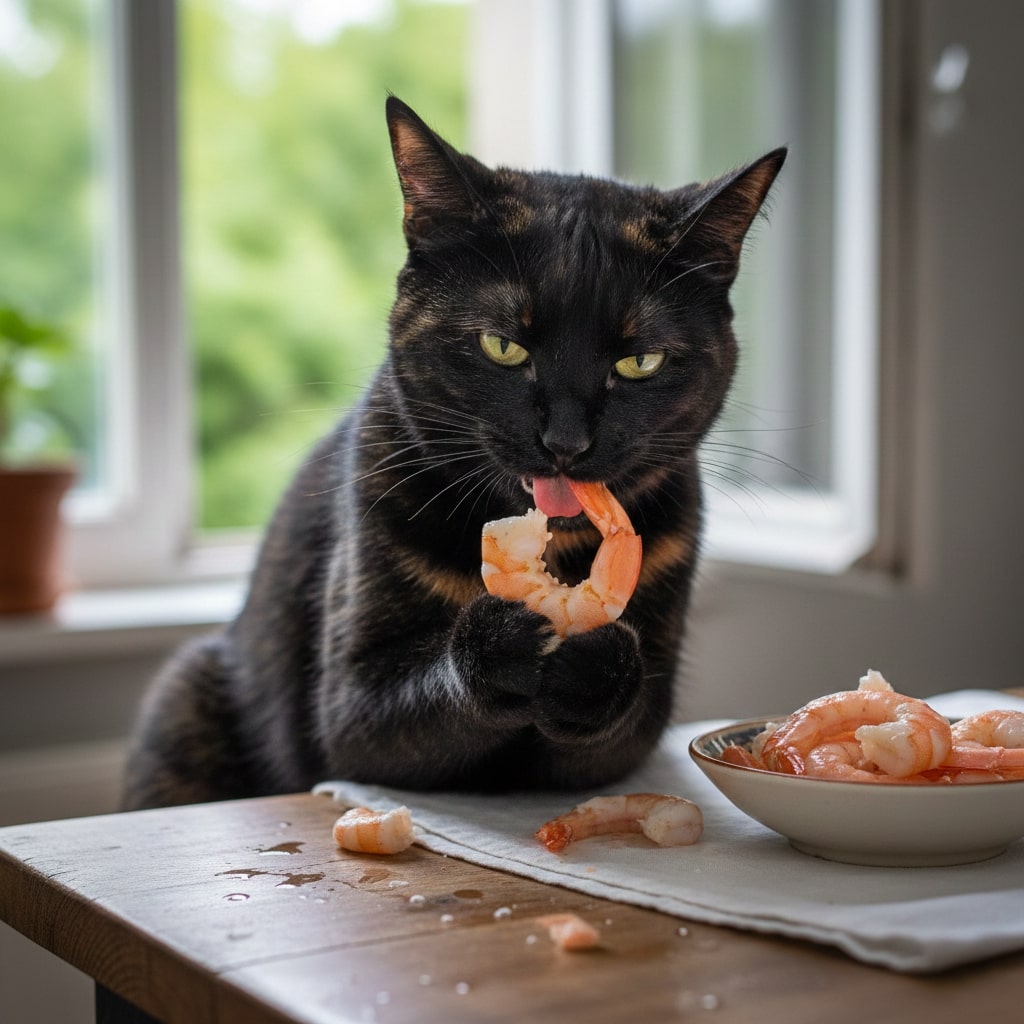
Yes, cats can eat shrimp. However, it must be cooked plain (boiled or steamed) and fully cleaned, meaning the shell, tail, and digestive vein are removed. Never feed your cat raw shrimp, fried shrimp, or shrimp cooked with spices like garlic, onion, or butter. Shrimp should only be an occasional treat, not a meal replacement.
Summary Table: Is Shrimp Safe for Cats?
| Feature | Safe? | Details |
| Cooked Shrimp | Yes | Best boiled or steamed with no additives. |
| Raw Shrimp | No | High risk of bacteria and parasites. |
| Shrimp Tails/Shells | No | Choking hazard and can damage the digestive tract. |
| Fried/Seasoned | No | Oils and spices (garlic/onion) are toxic or unhealthy. |
| Nutritional Benefit | High | Rich in protein, phosphorus, and antioxidants. |
Nutritional Benefits of Shrimp for Cats
Shrimp is more than just a tasty snack; it contains nutrients that support a healthy cat diet when served in moderation.
- High Protein: Cats are obligate carnivores, meaning they need meat. Shrimp is packed with lean protein which helps build muscle and maintain energy.
- Antioxidants: It contains astaxanthin, an antioxidant that can support the immune system and reduce inflammation.
- Taurine: This is an essential amino acid for cats. It supports healthy vision, digestion, and heart function.
- Vitamins and Minerals: Shrimp provides Vitamin B12, niacin, and phosphorus, which contribute to a healthy metabolism and strong bones.
- Omega-3 Fatty Acids: Though not as high as in fatty fish, shrimp still offers some healthy fats that are good for your cat’s skin and coat.
Read Also: Can Cats Eat Pizza?
The Dangers of Feeding Shrimp to Cats
While the meat itself is safe, how the shrimp is prepared and served can pose significant risks.
Raw Shrimp Risks
You should never feed raw seafood to your cat. Raw shrimp can carry harmful bacteria like Salmonella, E. coli, and Listeria, as well as parasites. These can cause severe food poisoning, resulting in vomiting, diarrhea, and dehydration.
Shells and Tails
The hard parts of the shrimp are dangerous.
- Choking Hazard: The rigid texture makes shells and tails difficult to chew and swallow.
- Digestive Damage: Sharp edges on the tails or shells can scratch or puncture the esophagus or intestines as they pass through.
Toxic Seasonings
Human food is often prepared with ingredients that are toxic to cats.
- Garlic and Onion: Even in powder form, these destroy a cat’s red blood cells and cause anemia.
- Butter and Oil: High fat content can cause pancreatitis (inflammation of the pancreas) and upset stomachs.
- Salt: Excessive sodium can lead to salt poisoning, causing excessive thirst and urination, or even seizures in severe cases.
Read Also: Can Cats Eat Ice Cream?
How to Safely Prepare Shrimp for Your Cat
If you want to share this treat with your pet, follow these simple preparation steps:
- Buy Fresh or Frozen: Ensure the shrimp has not been pre-seasoned or breaded.
- Clean Thoroughly: Remove the head, shell, and tail completely. Devein the shrimp (remove the black line running down the back).
- Cook Plain: Boil or steam the shrimp in plain water. Do not use oil, butter, salt, or spices.
- Cool Down: Let the shrimp cool completely to room temperature before serving so you don’t burn your cat’s mouth.
- Cut into Pieces: Slice the shrimp into small, bite-sized pieces to prevent choking.
Frequently Asked Questions
Can cats serve shrimp as a main meal?
No. While shrimp is high in protein, it lacks other essential vitamins and minerals required for a balanced feline diet. It should be treated as a snack. Adhere to the 10% rule: treats should make up no more than 10% of your cat’s daily caloric intake.
Can cats serve shrimp as a main meal?
No. While shrimp is high in protein, it lacks other essential vitamins and minerals required for a balanced feline diet. It should be treated as a snack. Adhere to the 10% rule: treats should make up no more than 10% of your cat’s daily caloric intake.
Are cats allergic to shrimp?
Yes, it is possible. Just like humans, cats can develop shellfish allergies.
Signs of an allergic reaction include:
1. Scratching or itchy skin
2. Vomiting or diarrhea
3. Hair loss due to over-grooming
4. Swelling around the face
Can cats eat freeze-dried shrimp?
Yes, freeze-dried shrimp is often sold specifically as a cat treat. This is usually a safe option because it is typically made from a single ingredient (shrimp) without added preservatives or salts. Always check the ingredient label to be sure.