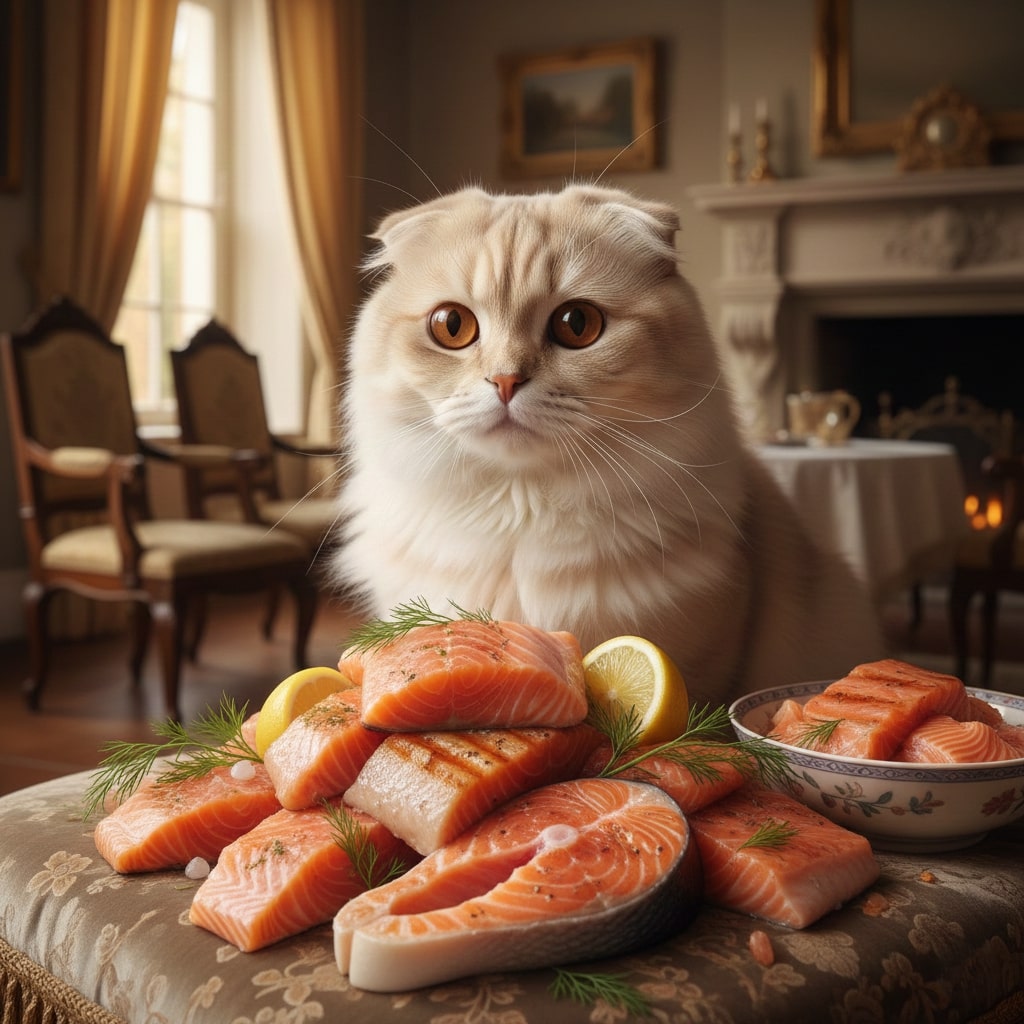
Yes, cats can eat salmon as long as it is fully cooked and prepared without seasonings. Cooked salmon is an excellent source of protein and omega-3 fatty acids that support your cat’s immune system and coat health. However, you should never feed raw salmon to cats because it may contain parasites and bacteria like Salmonella or Listeria. Additionally, avoid smoked or seasoned salmon, as high salt content and spices are toxic to felines.
Summary Table: Is Salmon Safe for Cats?
| Salmon Type | Safe? | Key Precautions |
| Cooked (Plain) | Yes | Best option. Bake, grill, or poach without oil or salt. |
| Raw / Sushi | No | Risk of bacterial poisoning and Vitamin B1 deficiency. |
| Canned | Maybe | Only if packed in water with no added salt or preservatives. |
| Smoked | No | Too high in sodium; can cause dehydration or poisoning. |
| Skin | Yes | Safe in moderation if cooked and scale-free. |
The Benefits of Salmon for Cats: Detailed Guide
Salmon is often found in commercial cat foods for a good reason. When served correctly, it offers significant nutritional value for felines.
- High-Quality Protein: Cats are obligate carnivores, meaning they need meat to survive. Salmon provides the animal-based protein required for muscle maintenance.
- Omega-3 Fatty Acids: The healthy fats in salmon (specifically EPA and DHA) help reduce inflammation, improve joint mobility in older cats, and keep their fur shiny and soft.
- Taurine: Like most meats, salmon contains taurine, an essential amino acid that supports heart health and vision.
- Vitamins and Minerals: It is a good source of Vitamin B12, Vitamin B6, and Selenium.
Read Also: Can Dogs Eat Fish?
The Risks: Raw and Canned Salmon
While cooked fish is healthy, other forms of salmon can be dangerous. Understanding these risks is vital for pet safety.
Why You Should Avoid Raw Salmon
Feeding your cat raw fish exposes them to severe health risks.
- Bacterial Infection: Raw fish often carries harmful bacteria such as Salmonella, E. coli, and Listeria. These can cause severe vomiting, diarrhea, and fever in cats—and can even spread to humans in the household.
- Vitamin B1 Deficiency: Raw fish contains an enzyme called thiaminase. This enzyme breaks down thiamine (Vitamin B1). Over time, this can lead to a deficiency causing neurological issues, seizures, and even death.
- Parasites: Flukes and other intestinal parasites are common in raw salmon, leading to digestive distress.
The Problem with Canned and Smoked Salmon
- Canned Salmon: This is often high in sodium. Excessive salt can lead to electrolyte imbalances. If you must use canned fish, choose versions packed in spring water with “no salt added.”
- Smoked Salmon (Lox): This is cured with high amounts of salt and sometimes sugar. It is not suitable for cats and can strain their kidneys.
Read Also: Can Cats Eat Crab?
How to Safely Prepare Salmon for Your Cat
If you want to treat your cat to a home-cooked meal, follow these preparation guidelines to ensure safety.
1. Choose Fresh Fillets
Start with a high-quality, fresh, or frozen pink or sockeye salmon fillet. Avoid pre-marinated options from the grocery store.
2. Remove All Bones
Small fish bones are a major choking hazard. They can also splinter and puncture the cat’s mouth, throat, or digestive tract. Always double-check for pin bones before cooking.
3. Cook Thoroughly
Cook the salmon until it flakes easily. You can:
- Poach it in plain water.
- Bake it in the oven.
- Grill it (ensure no charring).
- Do not use: Oil, butter, garlic, onions, salt, or pepper. Garlic and onions are toxic to cats.
4. Portion Control
Salmon should be a treat, not a meal replacement. It lacks the complete nutritional profile of formulated cat food.
- Serving Size: One or two small chunks (about the size of a die) is sufficient.
- Frequency: Feed salmon no more than once a week.
Read Also: Can Cats Eat Shrimp?
When to Call the Vet
Most cats tolerate cooked salmon well. However, some cats may have fish allergies. Watch for these symptoms after feeding:
- Vomiting or diarrhea.
- Scratching or excessive grooming (signs of itchy skin).
- Swelling around the mouth.
If you suspect your cat has eaten raw salmon or is showing signs of illness, contact your veterinarian immediately.