
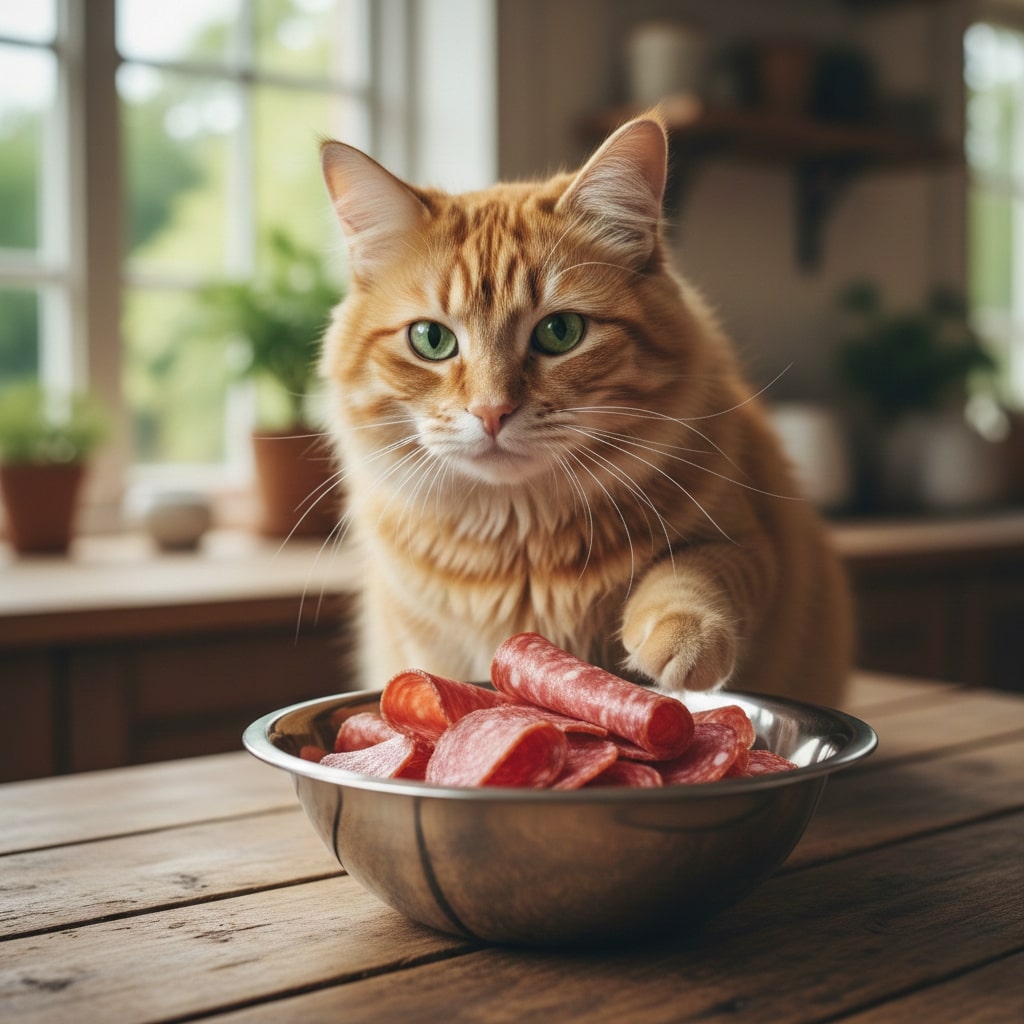
Can Cats Eat Salami? No, it is generally unsafe. While a tiny nibble likely won’t kill a healthy cat, salami is not recommended due to its high salt, fat, and preservative content. It often contains garlic and onion powder, which are toxic to cats. Frequent consumption can lead to salt poisoning, obesity, and digestive issues.
Summary Table: Is Salami Safe for Cats?
| Feature | Details |
| Safe for Cats? | No (Not recommended) |
| Is it Toxic? | Ingredients like garlic and onion are toxic. |
| Main Risks | Salt poisoning, dehydration, pancreatitis, obesity. |
| Max Serving | None is best. If accidental, a piece the size of a fingernail. |
| Safe Alternative | Plain cooked chicken, turkey, or freeze-dried meat treats. |
| When to see a Vet | If the cat eats a large amount or shows signs of vomiting/lethargy. |
Can Cats Have Salami? (Detailed Breakdown)
If you are making a sandwich and your cat is staring at you with big, pleading eyes, you might be tempted to toss them a piece of salami. You should avoid doing this.
While cats are carnivores and love meat, processed deli meats like salami are designed for humans, not felines. The way salami is cured and seasoned makes it potentially dangerous for your pet.
Read Also: Can Cats Eat Ham?
4 Reasons Why Salami is Bad for Cats
1. Dangerous Sodium Levels (Salt Poisoning)
Salami is loaded with salt to preserve it. A single slice of salami can contain more sodium than a cat should eat in an entire day.
- The Risk: Cats cannot process large amounts of salt. Eating too much can lead to sodium ion poisoning.
- The Signs: Excessive thirst, frequent urination, tremors, and in severe cases, seizures.
Read Also: Can Cats Eat Bread?
2. Toxic Seasonings (Garlic & Onion)
Most salami recipes use garlic powder, onion powder, and other spices for flavor.
- The Risk: Garlic and onion are part of the Allium family and are highly toxic to cats. They damage a cat’s red blood cells, leading to anemia.
- Note: Garlic powder is much more concentrated than fresh garlic, making it even more dangerous.
3. High Fat Content
Salami is a fatty meat. While cats need healthy fats, the saturated fats in processed pork are difficult for them to digest in large quantities.
- The Risk: A high-fat diet can lead to rapid weight gain (obesity) and painful conditions like pancreatitis (inflammation of the pancreas).
4. Preservatives (Nitrates)
Cured meats contain nitrates and other chemical preservatives to keep them fresh. These chemicals are not part of a natural feline diet and can cause digestive upset.
Read Also: Can Cats Eat Cheese?
Symptoms to Watch For
If your cat accidentally stole a slice of salami, watch them closely for the next 24 hours. Look out for these symptoms:
- Vomiting or Diarrhea: The most common sign of digestive upset.
- Lethargy: Acting unusually tired or weak.
- Excessive Thirst: Drinking far more water than usual (a sign of high salt intake).
- Pale Gums: A potential sign of anemia from garlic/onion toxicity.
Urgent: If your cat displays tremors, seizures, or difficulty breathing, contact your veterinarian immediately.
Better Alternatives to Salami for Cats
If you want to treat your cat, stick to simple, single-ingredient treats that mimic their natural diet.
Safe “Human Food” Treats:
- Cooked Chicken: Plain, boiled, or baked (no skin, no bones, no seasoning).
- Cooked Turkey: Lean and high in protein.
- Canned Tuna: Strictly as an occasional treat (in water, not oil).
- Cooked Eggs: Scrambled or hard-boiled (no salt or butter).
Unsafe Processed Meats to Avoid:
- Pepperoni (often spicier than salami)
- Bologna
- Hot Dogs
- Bacon (too salty and fatty)
- Jerky (often has garlic/onion powder)
Frequently Asked Questions
Can a cat eat just one slice of salami?
One slice is likely too much salt for a small cat. If they eat one slice, they probably won’t die, but they might get an upset stomach. It is best to avoid it entirely.
Can kittens eat salami?
Absolutely not. Kittens have very sensitive digestive systems and are much smaller than adults. A small amount of salt or garlic that might only upset an adult cat’s stomach could be very dangerous for a kitten.
Is hard salami or soft salami worse?
A: Both are bad. Hard salami is often tougher and harder to chew, which can be a choking hazard, while soft salami is just as high in fat and sodium.
My cat ate salami with garlic, what do I do?
Check the ingredient label. If garlic or onion is listed, call your vet. They may ask you to monitor for signs of anemia (pale gums, weakness) or bring the cat in for preventative care.
Final Verdict
Can cats eat salami? No. The risks of salt poisoning and garlic toxicity outweigh any protein benefits. Keep your deli meats in the fridge and give your cat a piece of plain cooked chicken instead.