
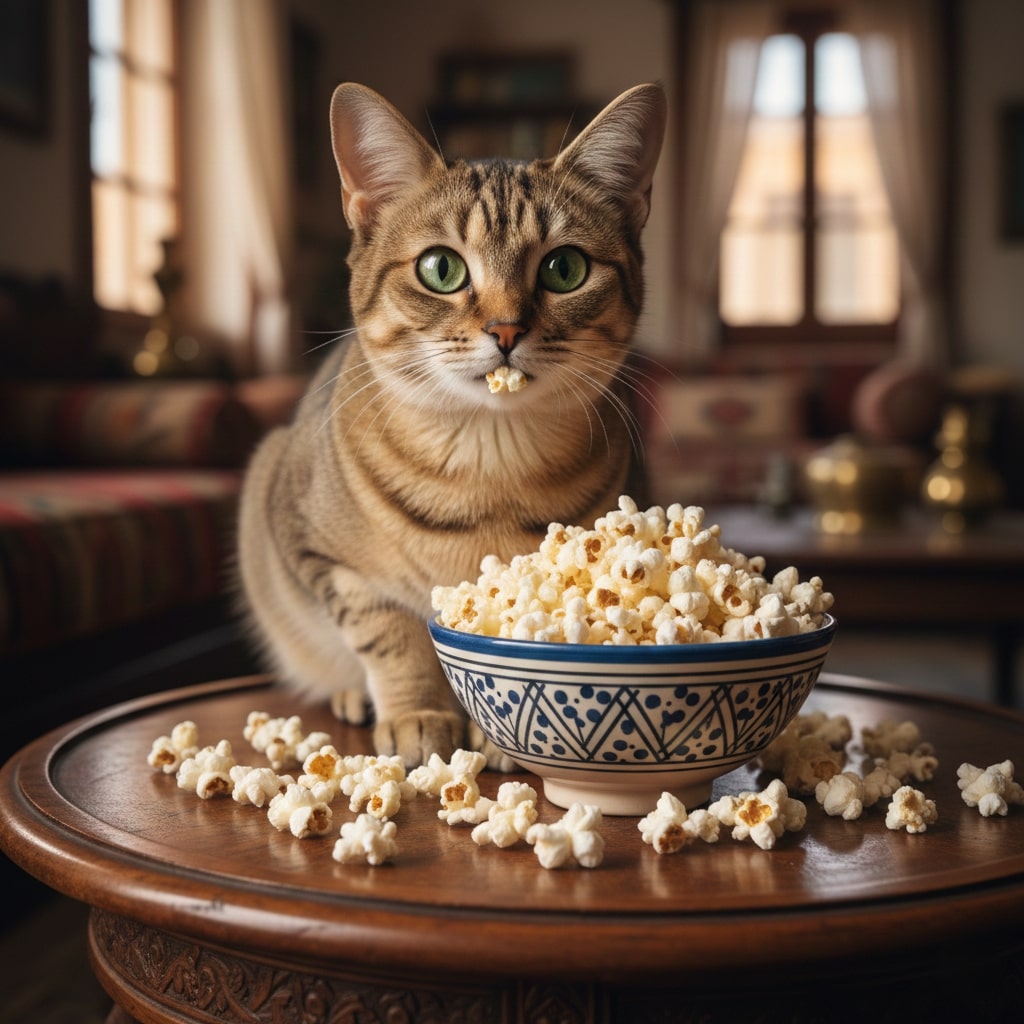
Yes, cats can eat popcorn, but only if it is fully popped, plain, and unsalted. Popcorn itself is not toxic to cats, but common toppings like butter, salt, caramel, and garlic are unhealthy and potentially dangerous. Additionally, unpopped kernels pose a significant choking hazard and can damage a cat’s teeth.
Summary
| Feature | Details |
| Is it Toxic? | No, plain corn is not toxic. |
| Is it Healthy? | No, it provides almost no nutritional value for cats. |
| Safe Serving | Air-popped, plain, fully cooked. |
| Unsafe Toppings | Butter, salt, sugar, chocolate, garlic, onion powder. |
| Major Risks | Choking on kernels, upset stomach, salt poisoning. |
| Portion Size | 1 or 2 pieces occasionally. |
Can Cats Have Popcorn?: The Detailed Breakdown
While the short answer is “yes,” the reality is a bit more complicated. It all comes down to how the popcorn is prepared.
Read Also: How Long Does Dry Cat Food Last
1. Plain, Air-Popped Popcorn (Safe)
If you pop the corn yourself using an air popper and add absolutely nothing to it, it is safe for your cat in very small amounts. Corn is often used as a filler in commercial cat foods, so their digestive systems can handle it in moderation.
2. Microwave and Movie Theater Popcorn (Unsafe)
Most pre-packaged microwave popcorn or popcorn you buy at the movies is loaded with artificial flavors, heavy fats, and massive amounts of salt. These are bad for cats.
- Butter/Oil: Can cause vomiting, diarrhea, and in severe cases, pancreatitis (inflammation of the pancreas).
- Salt: Cats are very sensitive to sodium. Too much salt can lead to dehydration or salt poisoning.
- Artificial Sweeteners: Some “kettle corn” or diet snacks use sweeteners (like Xylitol) that can be toxic to pets.
The Dangers of Toppings
The corn isn’t usually the problem; the toppings are. Here is why you must avoid sharing seasoned popcorn:
- Salt: Excessive salt can cause excessive thirst and urination, and severe cases lead to sodium ion poisoning.
- Butter and Grease: Cats have trouble digesting large amounts of fat. This can lead to messy digestive issues like diarrhea.
- Garlic and Onion Powder: Gourmet popcorn often uses these spices. Garlic and onion are highly toxic to cats and can destroy their red blood cells, causing anemia.
- Chocolate or Caramel: Chocolate is toxic to cats. Sugar and caramel can cause dental issues and contribute to feline obesity and diabetes.
Read Also: How to Know If a Cat is Hungry?
Physical Risks: Kernels and Hulls
Even if the popcorn is plain, there are physical risks involved with the texture of the snack.
- Choking Hazard: The unpopped kernels (often called “old maids”) are hard and round. They can easily get stuck in a cat’s throat.
- Dental Damage: Unpopped kernels are hard enough to fracture a cat’s tooth.
- Gum Irritation: The thin, flaky shells (hulls) can get stuck between a cat’s teeth or trapped in their gums, leading to irritation or infection.
Do Cats Need Corn?
No. Cats are obligate carnivores. This means their bodies are designed to get nutrition almost exclusively from meat. They require high protein and moderate fat.
Popcorn is a carbohydrate (grain). While it gives humans fiber and energy, it gives cats “empty calories.” It fills them up without providing the vitamins or proteins they need to survive. Feeding them too much popcorn can make them lose their appetite for their regular, nutritious cat food.
Read Also: Can Cats Have Pistachio?
How to Feed Popcorn Safely
If you cannot resist those pleading eyes, follow these rules to treat your cat safely:
- Air Pop Only: Do not use oil or butter.
- Inspect It: Remove any jagged hulls or half-popped kernels.
- Keep it Plain: No salt, no cheese dust, no sugar.
- Limit Quantity: Give them only one or two pieces at a time.
- Monitor Them: Watch your cat while they eat to ensure they don’t choke.
Better Snack Alternatives
If you want to bond with your cat over a snack, consider these healthier options that provide actual nutritional benefits:
- Freeze-dried Chicken or Salmon: High in protein and very safe.
- Cat Grass: Good for digestion.
- Small pieces of cooked plain turkey: No skin or bones.
- Commercial Cat Treats: Formulated specifically for feline health.
Read Also: Why Cats Beg for Food That’s Bad for Them
When to See a Vet
If your cat manages to steal a large amount of seasoned popcorn, watch for these signs of illness:
- Vomiting or diarrhea.
- Lethargy (extreme tiredness).
- Decreased appetite.
- Tremors or seizures (signs of sodium poisoning).
If you notice any of these, contact your veterinarian immediately.