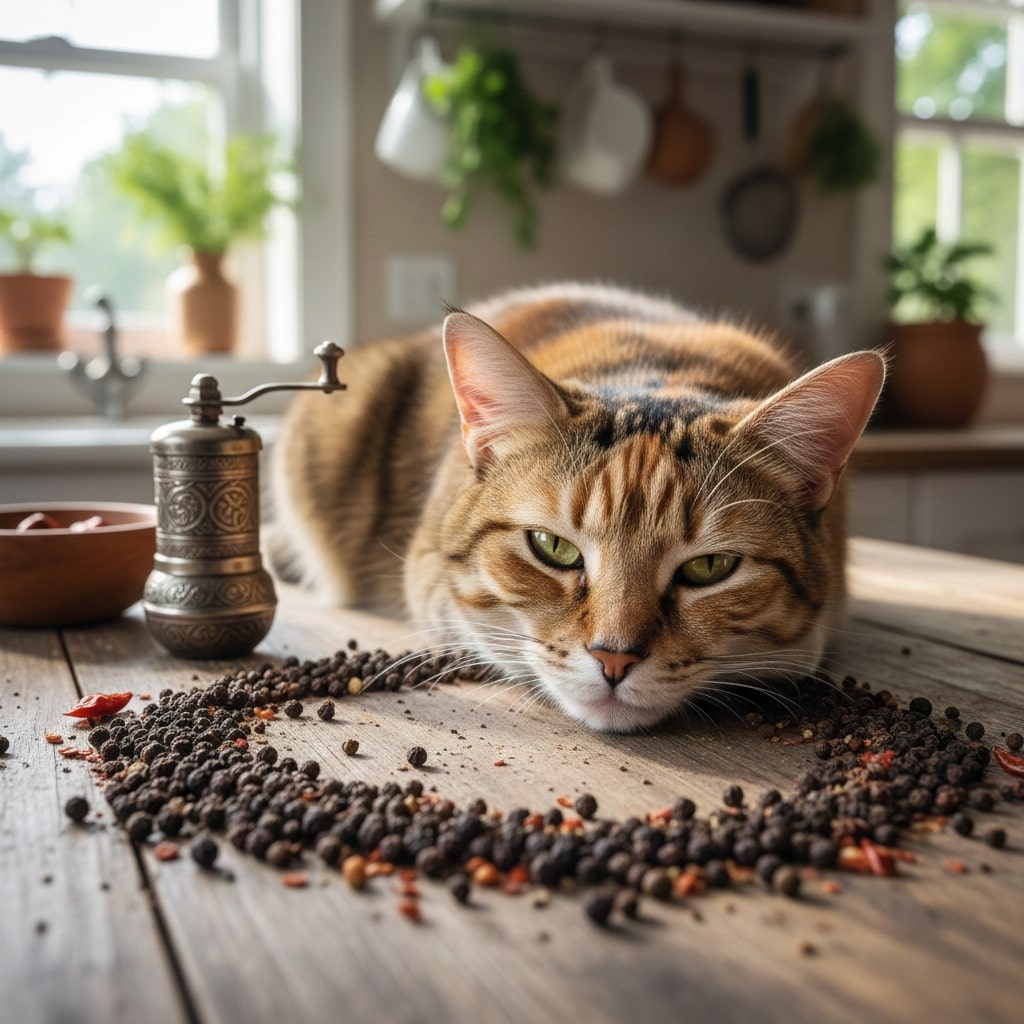
Cats should generally avoid black pepper and spicy chili peppers. While black pepper is not strictly toxic, it is a strong irritant to a cat’s nose and stomach, often causing sneezing or digestive upset. Spicy peppers (like cayenne or jalapeños) contain capsaicin, which can cause severe pain and gastrointestinal distress. However, sweet bell peppers are safe for cats to eat in moderation as a crunchy treat.
Summary Table: Is Pepper Safe for Cats
| Type of Pepper | Safe for Cats? | Risk Level | Key Component |
| Black Pepper | No (Avoid) | Moderate (Irritant) | Piperine / Terpenes |
| Bell Peppers | Yes (Safe) | None (in moderation) | Vitamins / Water |
| Chili/Cayenne | No (Danger) | High (Pain/Distress) | Capsaicin |
| Pink Peppercorns | No (Avoid) | Moderate (Toxic potential) | Phenolics |
Can Cats Have Black Pepper?
The simple answer is no, you should not give your cat black pepper.
While a tiny amount of black pepper dropped on the floor likely won’t kill a cat, it is not a safe food supplement. Black pepper contains terpenes and essential oils that are irritating to a cat’s sensitive system.
Why Black Pepper is Bad for Cats
- Smell Sensitivity: A cat’s sense of smell is much stronger than a human’s. The strong aroma of black pepper is offensive to them and can trigger respiratory irritation.
- Stomach Upset: Ingesting black pepper can irritate the lining of a cat’s stomach, leading to vomiting or diarrhea.
- The “Achoo” Effect: Just like humans, cats will sneeze if they inhale pepper, but for them, the irritation can be much more intense and uncomfortable.
Read Also: Can Cats Eat Broccoli?
Symptoms of Black Pepper Ingestion
If your cat licks a seasoned steak or spills the pepper shaker, watch for these signs:
- Excessive sneezing
- Runny nose or eyes
- Coughing
- Vomiting or nausea
Can Cats Eat Bell Peppers?
Yes! Bell peppers are safe for cats.
Unlike black pepper or spicy chilies, bell peppers (red, green, yellow, or orange) belong to the Capsicum family but do not contain capsaicin, the chemical that makes peppers spicy.
Read Also: Can Cats Eat Popcorn?
Are Bell Peppers Healthy for Cats?
Cats are obligate carnivores, meaning they get their nutrition primarily from meat. They do not need vegetables. However, bell peppers are not harmful and can be a low-calorie snack.
- Hydration: Bell peppers have a high water content.
- Vitamins: They contain Vitamin C and beta-carotene (though cats produce their own Vitamin C).
- Texture: Some cats enjoy the crunch of a raw slice of pepper.
How to Serve Bell Peppers
If you want to share a bell pepper with your cat:
- Wash it thoroughly to remove pesticides.
- Remove seeds and stems, as these can be hard to digest.
- Cut into tiny pieces to prevent choking.
- Serve plain. Do not cook them with onions, garlic, or oil, as these are toxic to cats.
Can Cats Eat Spicy Peppers (Chili, Cayenne, Jalapeño)?
Absolutely not. You must never feed a cat spicy peppers.
Spicy peppers contain Capsaicin, the chemical compound that gives peppers their “heat.” While humans might enjoy the burn, it creates a painful and distressing experience for a cat.
The Dangers of Capsaicin
Because cats are smaller and more sensitive than humans, even a mild spice can feel like a chemical burn to them.
- Oral Pain: It burns their mouth, tongue, and throat immediately.
- Digestive Distress: It can cause severe stomach cramps, vomiting, and explosive diarrhea.
- Dehydration: The resulting vomiting can quickly dehydrate a cat.
Warning: Never use cayenne pepper or chili powder as a “deterrent” to keep cats away from furniture or gardens. It can get on their paws, and when they groom themselves, they can rub it into their eyes, causing severe pain and potential blindness.
Read Also: Is Paprika Safe for Cats?
What to Do If Your Cat Eats Pepper
If your cat accidentally eats a piece of food seasoned with black pepper or a piece of chili pepper, stay calm and observe them.
For Black Pepper
- Offer fresh water to help wash out the taste.
- Watch for sneezing or vomiting.
- They will likely be fine after a few hours.
For Spicy/Chili Peppers
- Do not induce vomiting unless told to by a vet.
- Offer water or a small amount of milk (if your cat tolerates dairy) to help neutralize the burn.
- Call your Veterinarian immediately if you see signs of distress, persistent vomiting, or if they are pawing at their mouth in pain.
Conclusion
When it comes to pepper, keep it simple: Bell peppers are an okay snack, but keep the spice rack away from your cat. Black pepper causes irritation, and chili peppers cause pain. Always stick to plain, meat-based treats for the best health of your pet.