
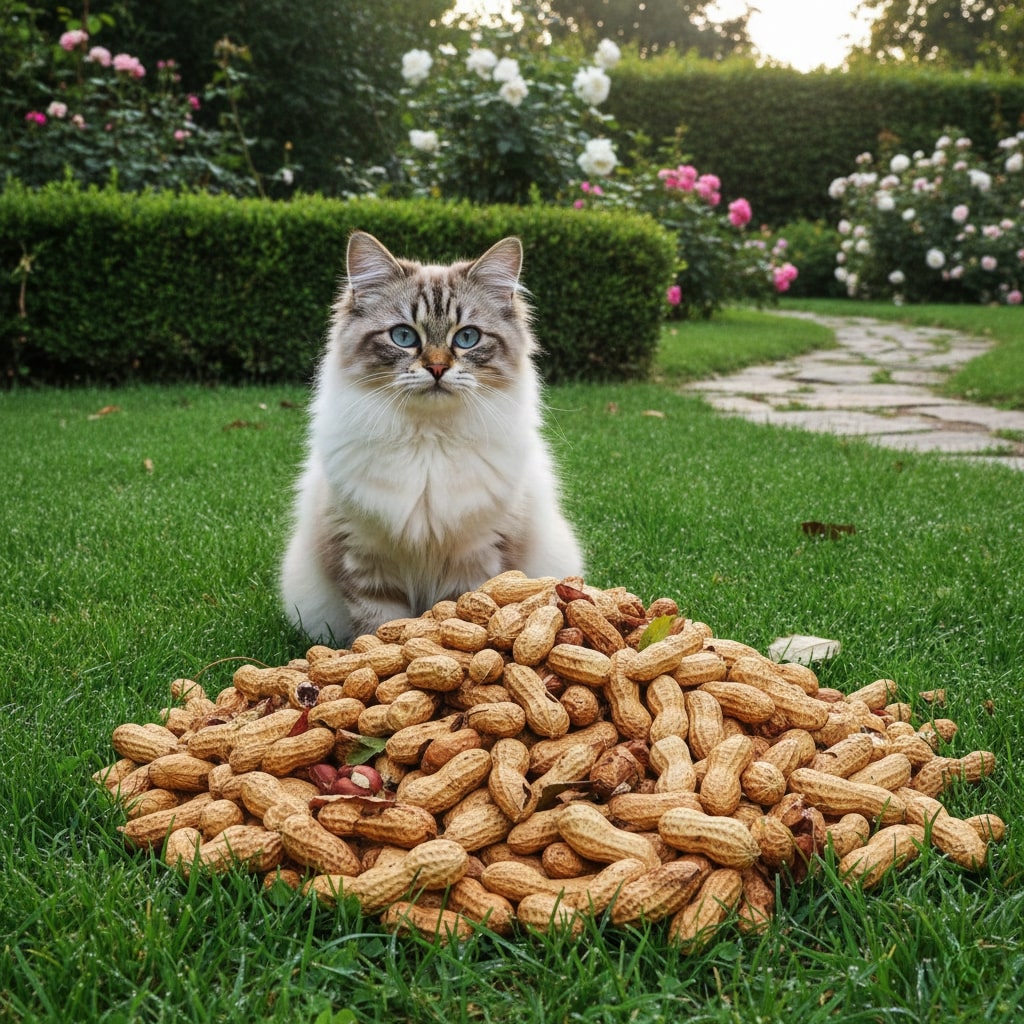
Yes, cats can eat peanuts, but only in very small moderation. They are not toxic to cats, but they are high in fat and can cause vomiting or diarrhea if overeaten. Always serve them unsalted, unseasoned, and out of the shell. Strictly avoid peanut butter containing Xylitol, an artificial sweetener that is highly toxic to pets.
Summary Table: Are Peanuts Safe for Cats
| Feature | Details |
| Is it Toxic? | No (Peanuts are safe; Xylitol in peanut butter is toxic). |
| Nutritional Value | Low for cats (high plant protein, which cats don’t need). |
| Key Risks | High fat content, choking hazard, salt poisoning, additives. |
| Safe Serving Size | 1/4 of a peanut or a tiny lick of peanut butter (rarely). |
| Best Preparation | Raw or dry-roasted, unsalted, no shell. |
| Medical Warning | Avoid if cat has diabetes, obesity, or kidney issues. |
Can Cats Have Peanuts? Detailed Breakdown
While peanuts are technically safe for cats to eat, they fall into the category of “can, but probably shouldn’t.”
Cats are obligate carnivores. This means their digestive systems are designed to process meat, not plant-based foods. While a human might get energy and good fats from peanuts, a cat’s body does not process plant proteins efficiently.
If your cat happens to eat a dropped peanut from the floor, they will likely be fine. However, making peanuts a regular part of their diet is not recommended by veterinarians.
The Main Risks of Feeding Peanuts to Cats
Before sharing your snack, consider these potential dangers:
1. High Fat Content
Peanuts are very high in fat. Even healthy fats are difficult for a cat to digest in large quantities. A diet too high in fat can lead to:
- Gastrointestinal upset: Vomiting, diarrhea, and stomach pain.
- Obesity: Rapid weight gain, which stresses joints.
- Pancreatitis: A painful and potentially life-threatening inflammation of the pancreas caused by high-fat foods.
2. Salt and Seasonings
Most peanuts sold in stores are roasted, salted, or flavored (e.g., honey roasted, spicy, garlic).
- Salt: Too much salt can lead to sodium ion poisoning (salt toxicity). Symptoms include excessive thirst, tremors, and seizures.
- Flavorings: Ingredients like garlic and onion powder are toxic to cats and destroy their red blood cells. Sugar and honey can lead to diabetes and dental issues.
3. Choking Hazards
The size and texture of a whole peanut pose a choking risk, especially for kittens or cats who tend to swallow treats whole without chewing. The hard shell is also a major choking hazard and can cause intestinal blockages if swallowed.
4. Peanut Allergies
While rare in cats compared to humans, feline peanut allergies do exist. Watch for these signs after feeding:
- Itching or excessive scratching.
- Swelling around the mouth.
- Sneezing or wheezing.
Can Cats Eat Peanut Butter?
This is a more complex question than whole peanuts. While standard peanut butter is generally non-toxic, it comes with a specific, deadly risk.
The Xylitol Warning
Many low-sugar or “diet” peanut butters use an artificial sweetener called Xylitol.
- Xylitol is extremely toxic to dogs and cats.
- Even small amounts can cause a rapid drop in blood sugar (hypoglycemia) and liver failure.
- Always check the label. If you see Xylitol, keep it far away from your cat.
Texture Issues
Peanut butter is thick and sticky. It can stick to the roof of a cat’s mouth or throat, causing them to panic or choke.
Nutritional Breakdown: Why Cats Don’t Need Nuts
You might think the protein in peanuts is good for your cat, but the source of protein matters.
- Amino Acids: Cats require specific amino acids like taurine, which are found in animal meat. Peanuts do not contain taurine.
- Digestibility: Cats have a short digestive tract geared toward meat. They cannot break down plant cell walls effectively to absorb nutrients from nuts.
Feeding your cat peanuts essentially gives them “empty calories”—energy that makes them full but provides none of the essential nutrients they need to survive.
How to Safely Feed Peanuts (If You Must)
If your cat seems curious and you want to offer a tiny taste, follow these strict guidelines to ensure safety:
- Remove the Shell: Never give a cat a peanut in the shell.
- Check Ingredients: Ensure the peanuts are 100% plain. No salt, sugar, oil, chocolate, or spices.
- Portion Control: Cut one peanut into small, manageable pieces. Do not feed more than one peanut occasionally (once every few weeks).
- Monitor: Watch your cat closely after they eat it for any signs of choking or an allergic reaction.
Better Alternatives to Peanuts for Cats
If you want to treat your cat, stick to snacks that support their carnivorous biology. Great alternatives include:
- Freeze-dried Chicken or Salmon: High in protein and easy to digest.
- Commercial Cat Treats: Formulated with added vitamins and taurine.
- Cooked Egg (Plain): A great source of digestible protein.
- Cat Grass: Helps with digestion and hairballs.
Final Verdict
Cats can eat peanuts, but they add no nutritional value and carry risks like high fat and choking. It is best to avoid them and stick to meat-based treats designed specifically for feline health.