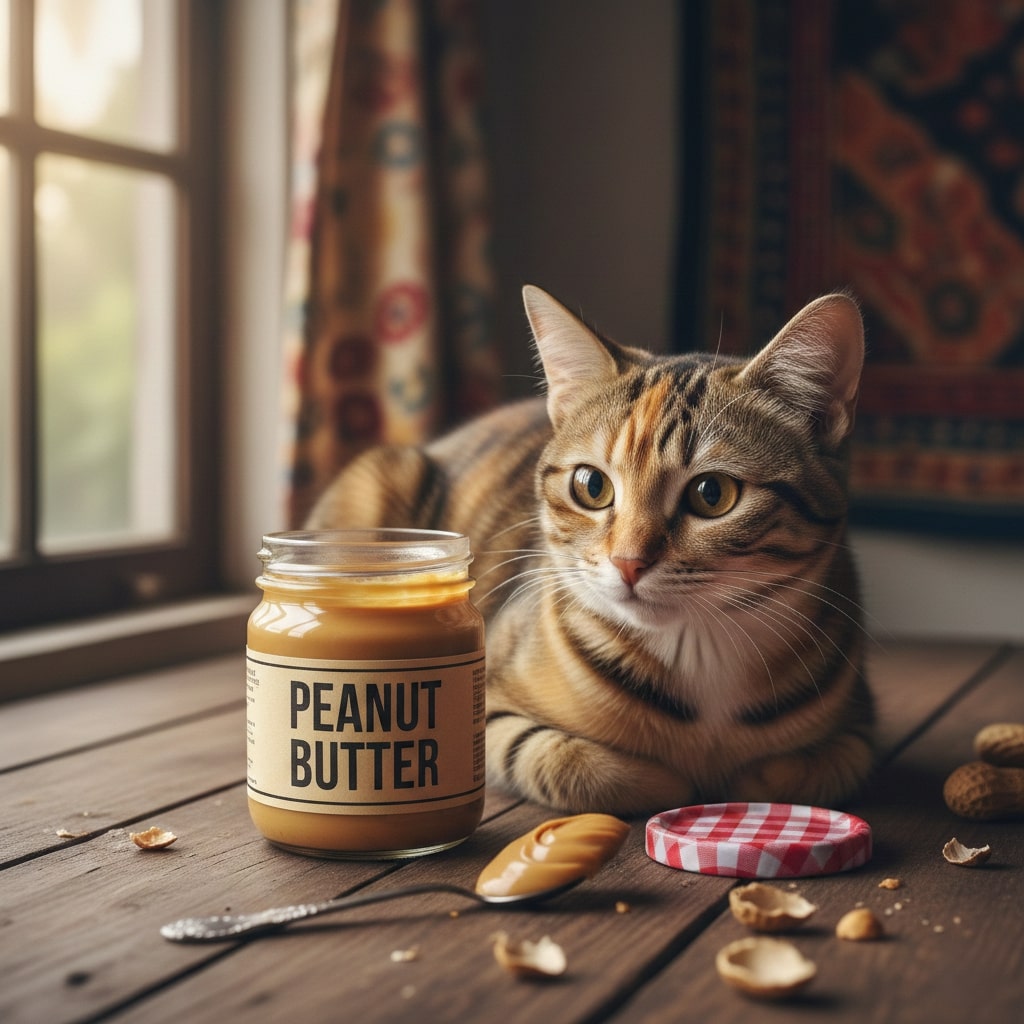
Technically, yes, cats can eat peanut butter in very small amounts, but they should not eat it regularly. It offers no nutritional value for cats and poses risks like choking, obesity, and toxicity if it contains xylitol. It is best used only as a rare tool to hide medication, not as a treat.
Summary Table: Is Peanut Butter Safe for Cats
| Feature | Details |
| Is it Toxic? | Generally no (unless it contains Xylitol). |
| Nutritional Value | Very low (high fat, low useful protein). |
| Safe Serving Size | A tiny lick (approx. 1/8 teaspoon). |
| Main Risks | Choking, stomach upset, obesity, sweetener toxicity. |
| Best Use | Hiding pills or medication. |
| Safe Alternatives | Cooked chicken, tuna, commercial lickable treats. |
Can Cats Have Peanut Butter? Detailed Breakdown
While peanut butter is a favorite treat for dogs, it is not ideal for cats.
While a small lick of peanut butter won’t kill a healthy cat, it provides zero health benefits and comes with several downsides.
The 3 Main Risks of Peanut Butter
1. Xylitol Toxicity (Deadly Sweetener)
The biggest danger is Xylitol (also listed as birch sugar). This artificial sweetener is commonly found in “sugar-free” or “low-fat” peanut butter brands.
- The Danger: Xylitol is highly toxic to dogs and potentially dangerous to cats. It can cause a sudden drop in blood sugar (hypoglycemia) and liver failure.
- The Rule: Never give your cat peanut butter without checking the label for Xylitol first.
2. Choking Hazard
Peanut butter is thick and sticky. Cats have smaller throats than humans or dogs, and they do not have the jaw movement required to clear sticky substances from the roof of their mouth.
- The Danger: A large glob can get stuck in a cat’s throat, blocking their airway.
3. High Fat & Calorie Content
Peanut butter is calorie-dense. A single tablespoon contains about 100 calories. For an average 10-pound cat, this is nearly half of their daily caloric requirement.
- The Consequence: Regular consumption leads to rapid weight gain, obesity, and potentially diabetes. The high oil content can also cause immediate stomach upset, vomiting, or diarrhea.
Can I Use Peanut Butter to Give My Cat a Pill?
Yes, this is the only time experts recommend using peanut butter. If your cat refuses to swallow a pill, coating it in a tiny amount of peanut butter can mask the texture and smell.
How to do it safely:
- Check ingredients: Ensure NO Xylitol, chocolate, or added spices.
- Use a tiny amount: Use just enough to coat the pill (pea-sized amount).
- Watch them eat: Monitor your cat to ensure they swallow it without choking.
Signs of Peanut Allergy in Cats
Just like humans, cats can be allergic to peanuts. If you give your cat peanut butter for the first time, watch for these symptoms:
- Itching or excessive scratching.
- Swelling around the face or mouth.
- Vomiting or diarrhea immediately after eating.
- Difficulty breathing.
If you see these signs, contact your veterinarian immediately.
Better Alternatives to Peanut Butter
If you want to treat your cat, skip the peanut butter and opt for high-protein snacks that align with their biological needs.
- Cooked Chicken or Turkey: Plain, unseasoned, and boneless.
- Tuna: Canned tuna in water (not oil), fed sparingly due to mercury.
- Commercial “Lickable” Treats: Brands like Churu or Applaws make puree treats specifically designed for cats.
- Freeze-Dried Minnows: A crunchy, single-ingredient treat that cleans teeth.
Final Verdict
Can cats eat peanut butter? Yes, but they probably shouldn’t. The risks (choking, obesity, toxic ingredients) outweigh the benefits. Stick to meat-based treats to keep your feline friend healthy and lean.