
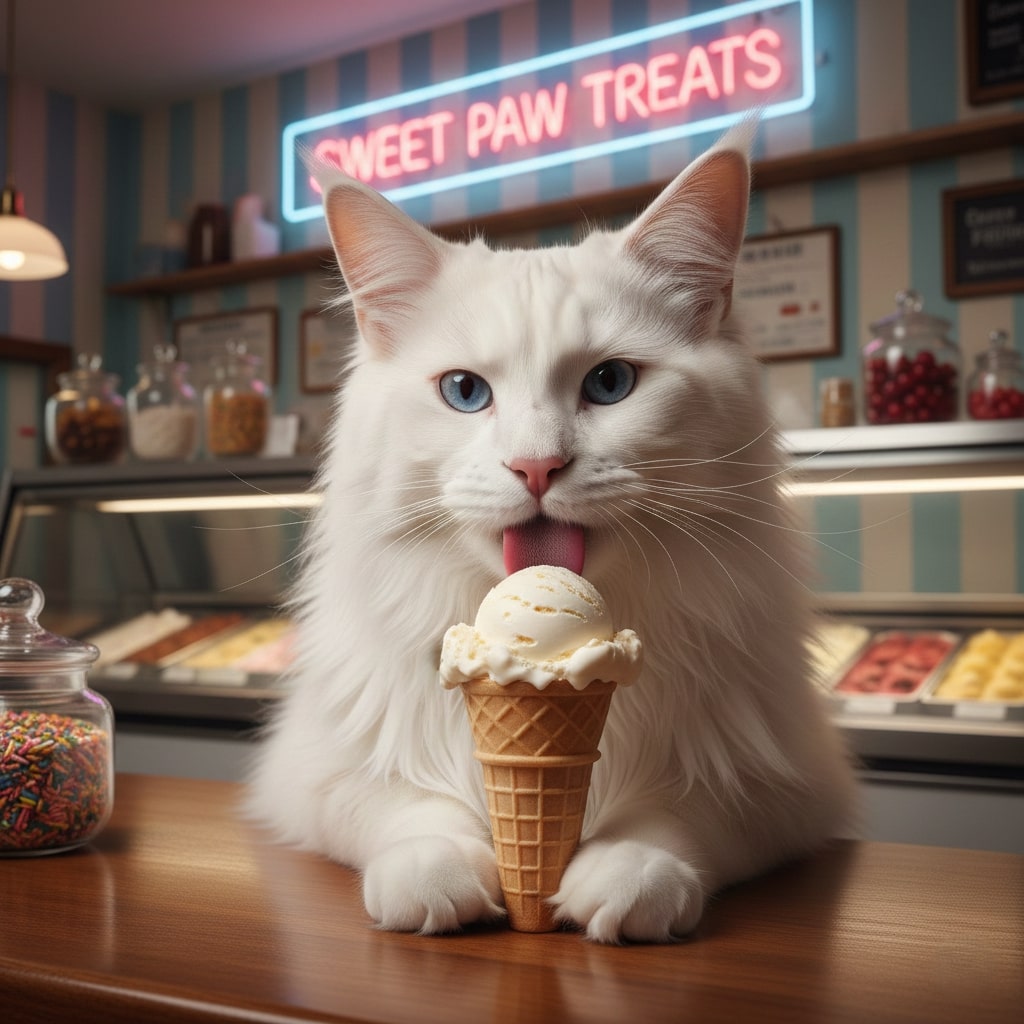
No, cats should not eat ice cream. Most adult cats are lactose intolerant, meaning their bodies cannot digest dairy properly, leading to an upset stomach, diarrhea, and vomiting. Additionally, ice cream is high in sugar and fat, which promotes obesity, and certain flavors may contain ingredients like chocolate or xylitol that are toxic to felines.
Summary Table: Is Ice Cream Safe for Cats?
| Feature | Details |
| Is it safe? | Generally, no. It is not recommended. |
| Main Health Issue | Lactose intolerance (digestive upset). |
| Toxic Ingredients | Chocolate, Xylitol (artificial sweetener), Caffeine, Raisins. |
| Common Symptoms | Diarrhea, vomiting, gas, bloating. |
| Safe Alternatives | Frozen goat milk, ice cubes, frozen tuna water. |
Can Cats Have Ice Cream? Detailed Guide
It is tempting to share a cold treat with your pet on a hot summer day, but ice cream is one of the worst options for a cat. While a lick or two of vanilla might not kill them, it offers zero nutritional value and several potential health risks.
The main reasons you should avoid feeding your cat ice cream include:
- Lactose Intolerance: This is the biggest hurdle.
- High Sugar Content: Cats cannot taste sweetness, but the calories still count.
- High Fat Content: This can lead to pancreatitis or obesity.
- Toxic Additives: Some ingredients in ice cream are poisonous to pets.
Read Also: Can Cats Eat Honey?
Understanding Lactose Intolerance in Cats
The image of a cat lapping up a saucer of milk is a myth. While kittens drink their mother’s milk, their bodies stop producing the enzyme lactase as they grow up. Lactase is required to break down lactose, the sugar found in dairy products.
When an adult cat eats dairy, the lactose sits in their stomach instead of being digested. This fermentation process draws water into the intestine and creates gas.
Symptoms of lactose intolerance include:
- Diarrhea (often within 8 to 12 hours)
- Vomiting
- Gas and bloating
- Abdominal pain
The Problem With Sugar and Fat
Even if you find “lactose-free” ice cream, it is still not a healthy snack. Cats are obligate carnivores. This means their digestive systems are designed to process meat, protein, and animal fats, not processed sugars and carbohydrates.
Feeding your cat high-sugar foods can lead to diabetes and obesity. Furthermore, the high fat content in heavy cream can trigger pancreatitis, a painful inflammation of the pancreas that requires veterinary attention.
Read Also: Can Dog Eat Strawberry Ice Cream?
Dangerous Ingredients to Avoid
Never feed your cat ice cream without checking the label. Some common human ingredients are strictly toxic to felines.
1. Chocolate
Chocolate contains theobromine and caffeine. Both are dangerous stimulants for cats. Even a small amount of chocolate ice cream can cause tremors, seizures, or heart issues.
2. Xylitol (Artificial Sweetener)
Many “sugar-free” or “low-calorie” ice creams use Xylitol. This sweetener causes a rapid drop in blood sugar (hypoglycemia) in pets and can lead to liver failure.
3. Raisins or Macadamia Nuts
Fancy ice cream flavors often have mix-ins. Raisins and grapes can cause kidney failure in cats, and macadamia nuts affect their nervous system.
4. Coffee
Coffee-flavored desserts contain caffeine, which raises blood pressure and can cause cardiac arrhythmias in small animals.
Can Kittens Eat Ice Cream?
No, kittens should not eat ice cream. While kittens still have the enzyme to digest milk, they need specific nutrients found in their mother’s milk or a specialized kitten formula. Cow’s milk and the sugar found in ice cream can upset their sensitive stomachs and cause severe diarrhea, which is dangerous for a small, growing body.
Read Also: Can Cats Eat Bread?
What is “Brain Freeze” in Cats?
You may have seen viral videos of cats eating ice cream and making a funny face. This is essentially a “brain freeze.”
When something very cold hits the roof of a cat’s mouth, it causes the blood vessels to constrict and then rapidly dilate. This triggers pain receptors. While it isn’t toxic, it is painful and stressful for the cat. Purposely causing your pet pain for a video is not recommended.
Safe Frozen Alternatives
If you want to give your cat a cold treat during the summer, there are much safer and healthier options than human dessert.
- Frozen Tuna Water: Next time you open a can of tuna (in water, not oil), freeze the drained liquid in an ice cube tray.
- Goat Milk: Some pet stores sell fermented goat milk designed for pets. It has less lactose than cow’s milk and contains probiotics. You can freeze this into small cubes.
- Plain Ice Cubes: Many cats enjoy simply batting around and licking a plain ice cube on the floor.
- Commercial Cat Treats: Look for “squeeze tube” treats (like Churu) and put them in the freezer for 10 minutes before serving.
What to Do If Your Cat Ate Ice Cream
If your cat licked a small amount of vanilla ice cream off your spoon, they will likely be fine. However, you should watch them closely for the next 24 hours.
Monitor for these signs:
- Vomiting or repeated gagging.
- Runny stool or diarrhea.
- Lethargy (acting tired or hiding).
- Loss of appetite.
If the ice cream contained chocolate, xylitol, or coffee, do not wait for symptoms. Call your veterinarian or a pet poison helpline immediately.