
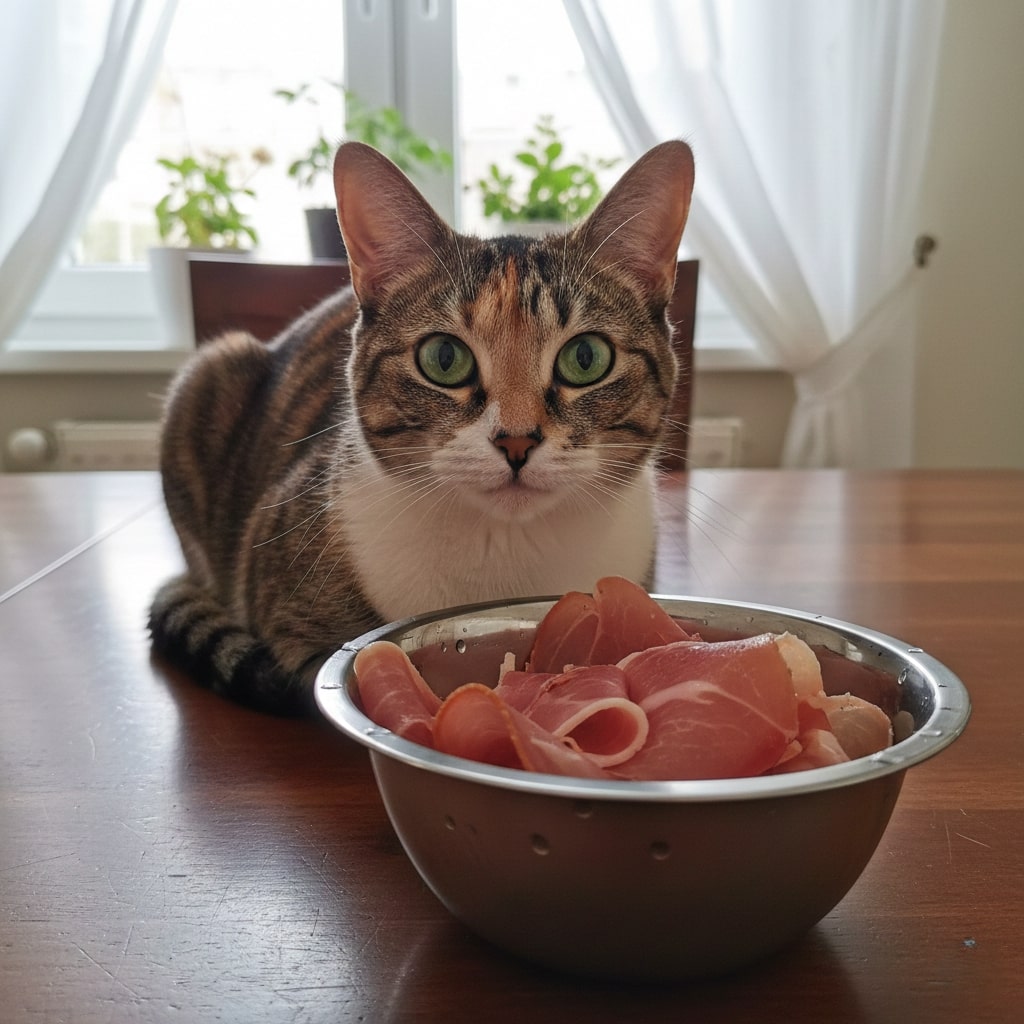
Yes, but only in tiny amounts as a rare treat. While ham is not toxic to cats, it is high in salt and fat, which can be harmful if eaten frequently. It offers little nutritional value compared to regular cat food. Always serve it plain, cooked, and boneless. Avoid it entirely if your cat has kidney issues or heart disease.
Summary Table: Is Ham Safe for Cats?
| Feature | Safe for Cats? | Details |
| Cooked Ham | Yes (Rarely) | Only plain, small pieces without seasoning. |
| Raw Ham | No | Risk of bacteria like Salmonella and E. coli. |
| Ham Bones | No | Choking hazard; can splinter and damage the stomach. |
| Deli Ham | Caution | Often loaded with sodium and preservatives (nitrates). |
| Seasoned Ham | No | Garlic and onion seasonings are toxic to cats. |
| Main Risks | High Risk | Sodium Poisoning, Pancreatitis, Obesity. |
Can Cats Have Ham?
Cats are obligate carnivores, which means they need meat to survive. However, not all meat is created equal. While ham is a protein, it is a processed meat designed for humans, not felines.
The Dangers of Feeding Ham to Cats
Even though cats love the smell and taste of ham, it comes with several health risks that every cat owner should know.
1. Sodium Ion Poisoning (Salt Toxicity)
Ham is cured with salt. A single slice of ham contains far more sodium than a cat needs in a whole day. Excessive salt intake can lead to dehydration, excessive thirst, and in severe cases, sodium ion toxicosis, which can be fatal.
2. Pancreatitis
Ham is high in fat. A sudden intake of fatty foods can inflame the pancreas, leading to pancreatitis. This is a painful condition that causes vomiting, diarrhea, and loss of appetite.
Read Also: Can Cats Eat Bacon?
3. Toxic Seasonings
Many hams are cooked with garlic and onions (fresh or powder). These ingredients are toxic to cats and can damage their red blood cells, leading to anemia.
4. Preservatives
Processed meats like deli ham often contain nitrates and nitrites to preserve color and shelf life. These chemicals are not healthy for your cat’s digestive system.
Safe Serving Sizes
If you cannot resist those pleading eyes, follow these strict rules to keep your kitty safe:
- Portion Control: A piece no larger than a half-inch cube.
- Frequency: No more than once every few weeks.
- Preparation: It must be cooked and plain. Rinse it with water to remove excess surface salt.
Read Also: Can Cats Eat Salami?
Better Alternatives to Ham for Cats
If you want to treat your cat to “human food,” try these healthier, cat-safe options that are rich in protein and lower in salt:
- Plain Cooked Chicken: (Skinless and boneless)
- Cooked Turkey: (Plain, no gravy)
- Fish: (Salmon or Tuna packed in water, occasionally)
- Cooked Eggs: (Scrambled or boiled, no salt)
Note: Always consult your veterinarian before introducing new foods, especially if your cat has a pre-existing condition like kidney disease or diabetes.