
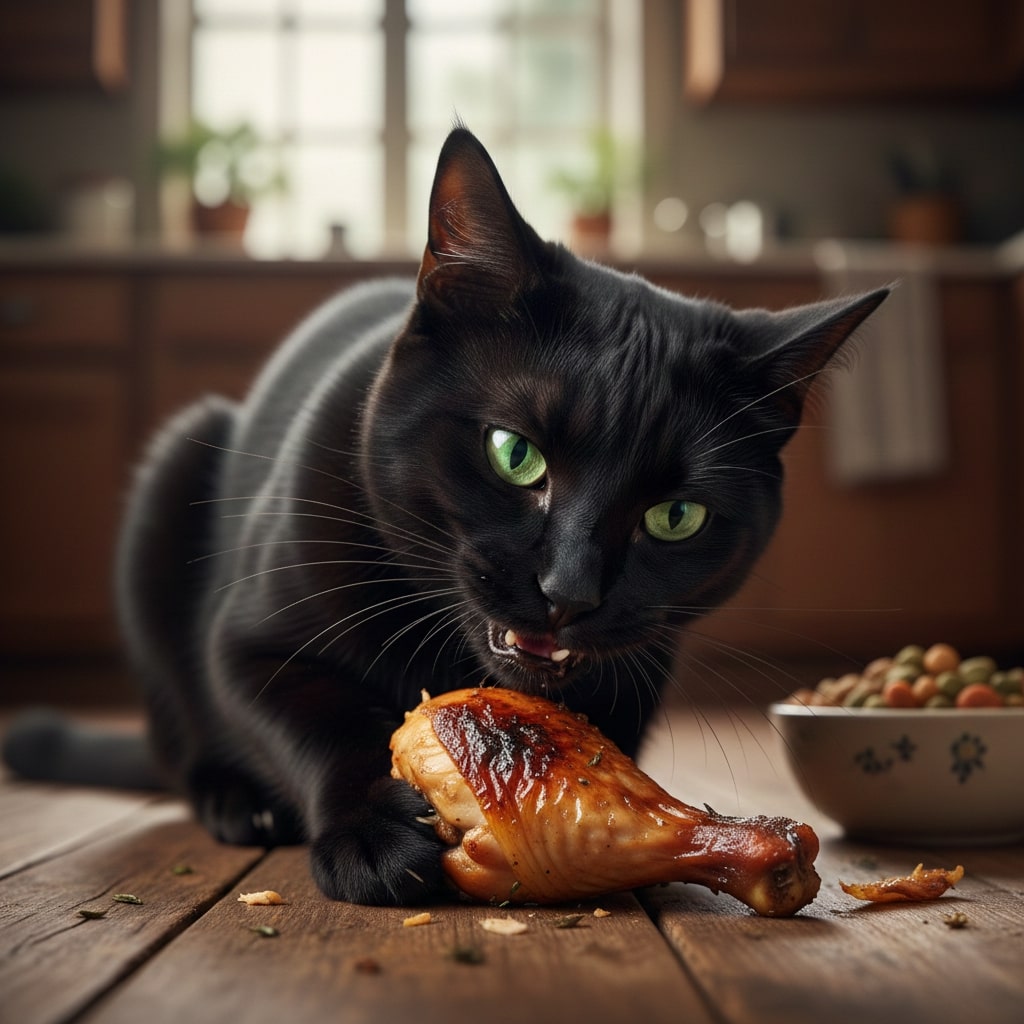
Yes, cats can eat chicken. In fact, chicken is one of the healthiest human foods you can share with your feline friend. However, it must be prepared correctly—cooked thoroughly, unseasoned, and boneless. While raw chicken is biologically natural for cats, it carries significant bacterial risks for household pets.
Summary Table
| Feature | Verdict | Important Notes |
| Is it Safe? | Yes | Best served plain and cooked. |
| Preparation | Boiled or Baked | No salt, garlic, onions, or oil. |
| Can they eat bones? | NO (Cooked) | Cooked bones splinter and cause internal damage. |
| Can they eat raw? | Risky | High risk of Salmonella and E. coli. |
| Portion Size | Small | Should not exceed 10% of daily calories. |
Why Chicken is Great for Cats
Cats are obligate carnivores, which means their bodies are designed to get nutrients primarily from animal tissue. Chicken is often the primary ingredient in high-quality commercial cat foods for good reason.
- High-Quality Protein: Essential for muscle growth and energy.
- Taurine: A critical amino acid that cats cannot produce on their own. It is vital for their heart health and vision.
- Weight Management: Plain chicken breast is lean and low in calories, making it a good treat for overweight cats (in moderation).
- Arachidonic Acid: An essential fatty acid needed for healthy skin and fur.
Read Also: Can Cats Eat Eggs?
The Dangers: How NOT to Feed Chicken
While the meat itself is healthy, the way it is served can turn a healthy treat into a medical emergency.
1. Never Feed Cooked Bones
This is the most important rule. When chicken bones are cooked, they become brittle and dry. If a cat chews on them, they can shatter into sharp shards. These splinters can puncture the:
- Throat
- Stomach
- Intestines
Note: While some owners feed raw bones (which are softer), most veterinarians advise against it due to the risk of choking and tooth fractures.
Read Also: Why Processed Foods Are Dangerous for Pets
2. Avoid Toxic Seasonings
We love flavor, but our cats don’t need it. Ingredients commonly used to cook chicken are toxic to felines:
- Onions and Garlic: These can damage red blood cells and cause anemia.
- Salt: Excessive salt can lead to electrolyte imbalances and dehydration.
- Oils/Butter: High fat content can cause pancreatitis or upset stomach.
3. The Raw Chicken Debate
Some cat owners advocate for a “raw food diet” (often called BARF), mimicking what a wild cat would eat. However, the American Veterinary Medical Association (AVMA) generally discourages this for household pets due to pathogens.
- Bacteria: Raw chicken often carries Salmonella, Campylobacter, and E. coli.
- Cross-Contamination: These bacteria can remain on your cat’s mouth or paws, spreading to humans in the house (a high risk for children or immunocompromised owners).
Read Also: Can Cats Eat Bread?
How to Prepare Chicken for Your Cat
If you want to give your cat a safe, healthy treat, follow these simple steps:
- Choose the Right Cut: Boneless, skinless chicken breast is the best option. It is low in fat and high in protein.
- Cook Plain: Boil the chicken in water or bake it. Do not add any salt, oil, or spices.
- Cool Down: Ensure the meat is cool to the touch before serving.
- Shred or Cube: Cut the meat into small, bite-sized pieces to prevent choking.
- Serve as a Topper: Place a small amount on top of their regular kibble or serve it as a standalone treat.
Frequently Asked Questions
Can cats eat chicken skin?
Ideally, no. Chicken skin is very high in fat. While a tiny piece won’t kill them, too much fat can cause diarrhea, vomiting, or pancreatitis.
Can cats have chicken broth?
Yes, but only if it is homemade and plain. Store-bought broth is usually loaded with sodium, onion powder, and garlic, which are toxic.
Can cats eat fried chicken?
No. The breading contains unhealthy carbs and grease, and the seasoning (garlic/onion) is dangerous. Remove the breading and wash the meat thoroughly if you must share a piece, but it’s better to avoid it.
Can cats be allergic to chicken?
Surprisingly, yes. Chicken is one of the most common food allergens for cats. If you notice your cat scratching excessively, losing hair, or having chronic tummy issues after eating chicken, consult your vet.
Summary
Chicken is a fantastic, protein-rich treat for cats when prepared simply. Stick to plain, boiled, boneless chicken breast to avoid the risks of bacterial infection, toxicity from seasonings, or internal injury from cooked bones.
Check your cat’s current food label. Is “Chicken” or “Chicken Meal” listed as the first ingredient? If so, they are likely already getting the benefits! If you want to introduce fresh chicken treats, start with a teaspoon-sized amount today to ensure it agrees with their stomach.