
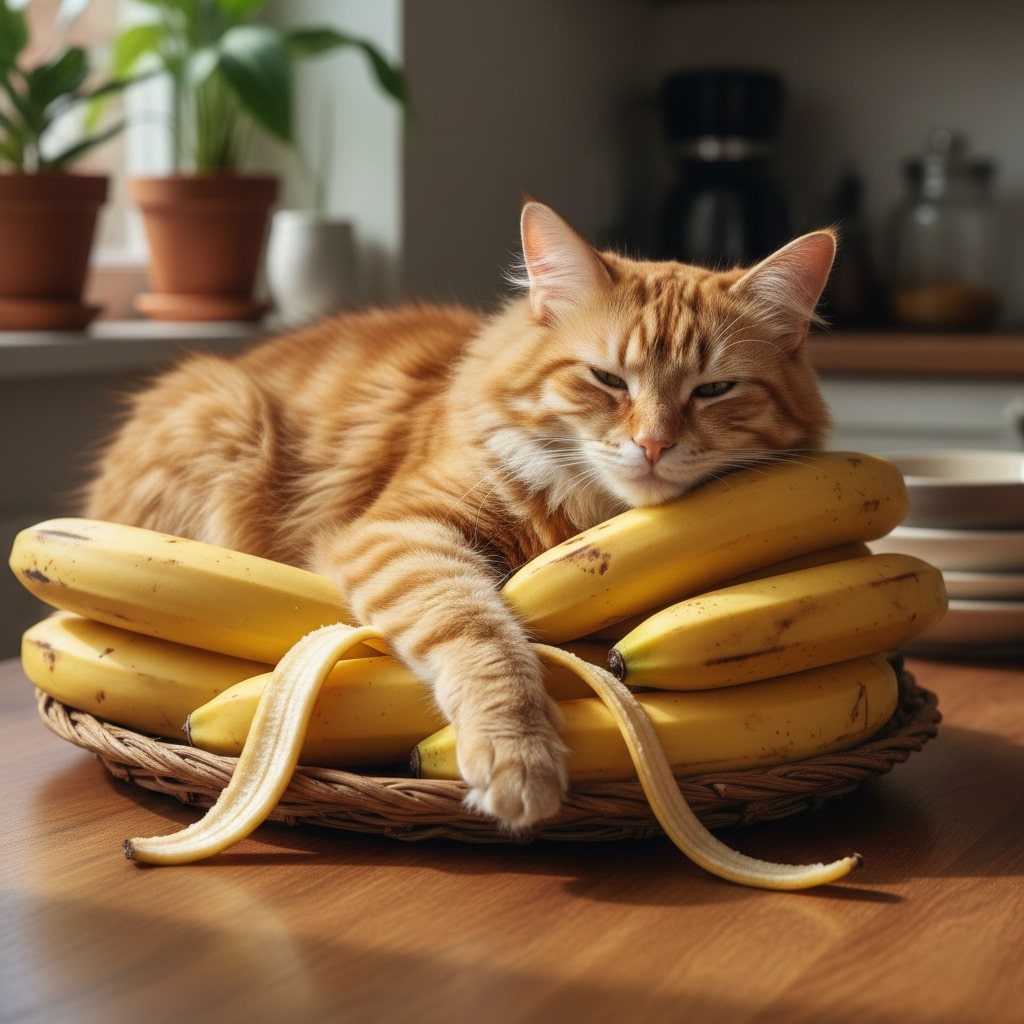
Yes, cats can eat bananas in small amounts. They are non-toxic to felines. However, because cats are “obligate carnivores” (meaning they need meat to survive), bananas offer them little nutritional value. The high sugar content can also cause digestive issues or weight gain if eaten too often. Treat bananas as a rare snack, not a meal.
Summary Table: Are Bananas Safe for Cats?
| Feature | Details |
| Is it Toxic? | No, bananas are safe and non-toxic. |
| Can they eat the peel? | No, peels are a choking hazard and hard to digest. |
| Key Risk | High sugar content can lead to obesity or diabetes. |
| Main Benefit | Potassium and fiber (though meat is a better source). |
| Serving Size | 1 small slice (about 1 inch) occasionally. |
| Frequency | Once every few weeks is best. |
Can Cats Eat Bananas? The Detailed Breakdown
If you are peeling a banana for breakfast and your cat is staring at you with curiosity, you might wonder if it’s safe to share a bite.
The simple answer is yes. Bananas are not poisonous to cats. If your cat sneaks a bite while you aren’t looking, you do not need to rush to the emergency vet.
However, just because they can eat them doesn’t mean they should eat them regularly. Cats have very different digestive systems from humans. They process food differently, and what is a healthy snack for you might just be empty calories for your cat.
Read Also: Can Cats Eat Apples?
Why Cats Don’t “Need” Fruit
Cats are obligate carnivores. This is a fancy way of saying their bodies are biologically designed to get nutrients almost exclusively from meat.
- They don’t need fruits or vegetables to stay healthy.
- They actually lack the taste receptors for “sweetness.” If your cat likes bananas, it’s likely because of the texture or smell, not the sugary taste!
Potential Benefits of Bananas for Cats
While bananas shouldn’t replace cat food, they do contain nutrients that are technically good for them. If your cat enjoys a rare nibble, they might get a tiny boost of:
- Potassium: Supports kidney and heart health.
- Vitamin B6: Helps with organ function.
- Fiber: Can help with digestion (in very small amounts).
Note: Your cat should already be getting all these nutrients from their high-quality cat food. They don’t need a banana to stay healthy.
The Risks: Why You Should Be Careful
Before you start slicing up a fruit salad for your pet, you need to know the downsides.
1. High Sugar Content
Bananas are full of natural sugars and carbohydrates. Since cats don’t process sugar well, eating too much can lead to:
- Obesity: Unnecessary weight gain puts stress on their joints.
- Diabetes: Frequent sugar spikes can lead to long-term insulin issues.
- Upset Stomach: Too much sugar often causes vomiting or diarrhea in cats.
2. Choking Hazards
The texture of a banana is thick and starchy. If you give a cat a large chunk, it can get stuck in their throat. This is especially risky for cats who tend to “inhale” their treats without chewing.
3. The Banana Peel Problem
Never let your cat eat the banana peel.
While the fruit inside is soft, the peel is tough, fibrous, and bitter.
- Indigestible: A cat’s stomach cannot break down the thick skin.
- Blockages: Swallowing pieces of peel can cause intestinal blockages, which may require surgery.
- Pesticides: Peels often hold the residue of sprays and chemicals used during farming.
Read Also: Can Cats Eat Tomatoes?
How to Safely Feed Bananas to Your Cat
If you want to test if your cat likes this tropical treat, follow these safety rules:
- Peel it completely: Remove all skin and stringy bits.
- Cut it small: Slice a small piece, no bigger than 1 inch or the size of a kibble.
- Mash it (Optional): Mashing the banana makes it easier for them to lick and swallow without choking.
- The 10% Rule: Treats (including fruit) should never make up more than 10% of your cat’s daily calorie intake.
Can Kittens Eat Bananas?
It is best to avoid giving bananas to kittens. Their stomachs are very sensitive and still developing. A specific diet formulated for kittens is crucial for their growth. Filling them up on sugar and starch can upset their digestion and rob them of the protein they need to grow.
Signs of an Allergic Reaction
Although rare, some cats can be allergic to bananas. When introducing this food for the first time, watch for these signs over the next 24 hours:
- Itching or excessive scratching (especially around the mouth).
- Swelling of the face or paws.
- Vomiting or diarrhea soon after eating.
- Difficulty breathing (this is an emergency).
If you see any of these signs, stop feeding them bananas immediately and contact your vet.
Final Verdict
Bananas are a safe occasional treat, but they are not a necessary part of your cat’s diet. If your cat turns their nose up at a banana, don’t worry, they aren’t missing out on anything special!