
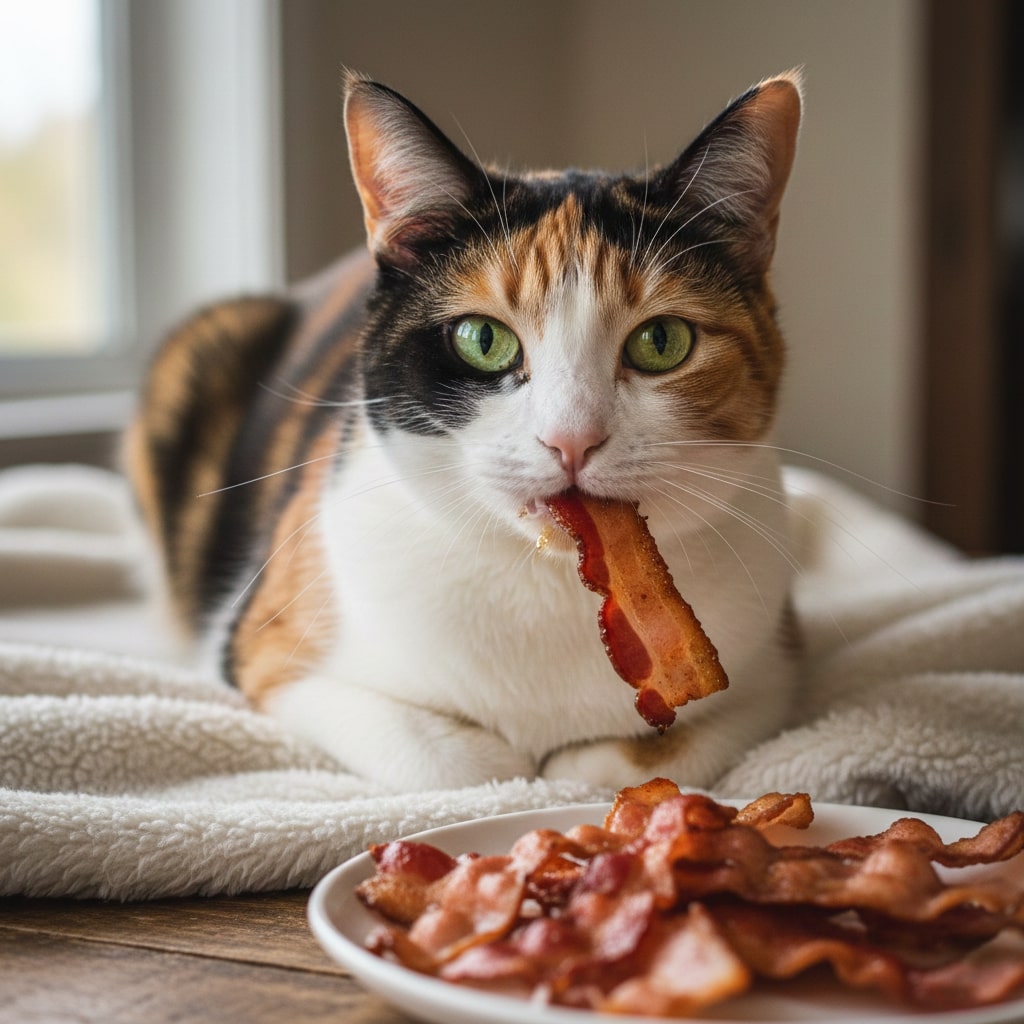
Can Cats Eat Bacon? No, cats should not eat bacon. While a tiny nibble of cooked bacon is unlikely to kill them, it is not safe for regular consumption. Bacon is loaded with salt and fat, which can lead to severe health issues like pancreatitis, obesity, and sodium ion poisoning. Even turkey bacon contains harmful preservatives like sodium nitrite that are dangerous for felines.
Summary Table: Is Bacon Safe for Cats?
| Feature | Verdict | Key Risk/Benefit |
| Cooked Bacon | Avoid | High salt & fat; risk of dehydration & pancreatitis. |
| Raw Bacon | Never | Risk of parasites (Trichinosis) and bacterial infections. |
| Bacon Grease | Never | Pure fat; causes immediate digestive upset & vomiting. |
| Turkey Bacon | Avoid | Still highly processed with sodium & nitrates. |
| Safe Alternative | Yes | Plain cooked chicken, turkey, or freeze-dried meat treats. |
Can Cats Have Bacon?
Technically, cats can physically eat bacon, but they should not. As obligate carnivores, cats crave meat, so the smell of frying bacon is irresistible to them. However, bacon is a processed meat designed for humans, not felines. It does not provide the “healthy fats” cats need and instead overloads their system with sodium and preservatives.
If your cat steals a small piece of cooked bacon off the floor, they will likely be fine. But feeding it as a treat, even rarely, can trigger serious, long-term health problems.
Read Also: Can Cats Eat Yogurt?
The 3 Big Health Risks
1. High Salt Content (Sodium Poisoning)
A single slice of bacon contains roughly 137 mg of sodium. A 10-pound cat only needs about 42 mg of sodium per day.
- The Danger: Eating just half a slice can exceed their daily limit by 300%.
- Symptoms: Excessive thirst, lethargy, vomiting, seizures, and in severe cases, kidney damage or coma.
2. High Fat Content (Pancreatitis)
Bacon is roughly 50% fat. While cats use fat for energy, the sheer volume of saturated fat in bacon is too difficult for their digestive system to process efficiently.
- The Danger: A high-fat meal can trigger pancreatitis (inflammation of the pancreas). This is a painful, life-threatening condition where digestive enzymes start attacking the pancreas itself.
- Symptoms: Repeated vomiting, hunched back (abdominal pain), diarrhea, and loss of appetite.
3. Harmful Preservatives (Nitrates)
Most bacon is cured with “curing salts” that contain sodium nitrite and nitrates.
- The Danger: These chemical compounds preserve color and prevent botulism in meat, but they are linked to vascular issues and can be toxic to pets in large amounts.
Read Also: Can Cats Eat Pepperoni?
Raw vs. Cooked Bacon vs. Grease
Can Cats Eat Raw Bacon?
No. Raw bacon poses a double threat. It contains the same high salt levels as cooked bacon, plus the risk of pathogens.
- Parasites: Raw pork often carries Trichinella spiralis, a parasite causing trichinosis.
- Bacteria: Salmonella and E. coli are common in raw pork products.
Is Bacon Grease Safe?
Absolutely not. Bacon grease is essentially liquefied fat and salt. Licking the pan or a plate with grease is the fastest way to trigger an upset stomach or an acute attack of pancreatitis.
Read Also: Why Cats Don’t “Taste” Spicy Food
Frequently Asked Questions
Can Cats Eat Turkey Bacon?
No. While turkey bacon is lower in fat than pork bacon, it is still a processed meat. It is often chemically cured and contains high levels of sodium to mimic the flavor of real bacon. It offers no nutritional benefit over plain, cooked turkey breast.
What Should I Do If My Cat Ate Bacon?
If your cat ate a small piece (fingernail-sized):
- Monitor them: Watch for vomiting or diarrhea over the next 24 hours.
- Provide water: Ensure they have fresh water to help flush out the excess salt.
If your cat ate a large amount (a whole slice or more) or raw bacon:
- Contact your Vet: especially if your cat is small, elderly, or has kidney issues.
Safe Alternatives to Bacon
If you want to treat your cat, stick to single-ingredient proteins that mimic their natural diet:
- Plain Cooked Chicken: Boiled or baked, no seasoning.
- Plain Turkey: Removes skin and bones.
- Freeze-Dried Liver: A nutrient-dense powerhouse for cats.
- Commercial Cat Treats: Formulated to be low in sodium.